СМИ узнали о закрытии подразделения по расследованию криптопреступлений в США

cryptonews.ruPublicado em 2023-07-08Última atualização em 2025-04-08

Министерство юстиции США закрывает Национальное подразделение по расследованию криптовалют (NCET). Об этом пишет Fortune со ссылкой на служебную записку заместителя генпрокурора Тодда Бланша.

Решение принято в рамках исполнения указа президента Дональда Трампа, ставящего целью упрощение регулирования цифровых активов.

NCET создали в 2021 году при администрации Джо Байдена. Подразделение занималось крупными крипторасследованиями, включая дело против миксера Tornado Cash и взлом протокола Mango Markets. Также группа вела дела о хищении цифровых активов северокорейскими хакерами.

Согласно новому распоряжению, сотрудники Минюста больше не будут заниматься преследованием криптобирж, миксеров и офлайн-кошельков. Вместо этого прокуратура сосредоточится на борьбе с мошенниками, использующими цифровые активы, и теми, кто наносит реальный ущерб инвесторам.

Напомним, 6 марта Трамп подписал указ об учреждении стратегического биткоин-резерва, который предусматривает хранение активов, конфискованных Минфином в рамках уголовных и гражданских дел.

20 марта президент призвал Конгресс принять законопроект о регулировании стейблкоинов.

Фактор Трампа: эксперты зафиксировали перемещение 1057 BTC после многолетней «спячки»
Leituras Relacionadas

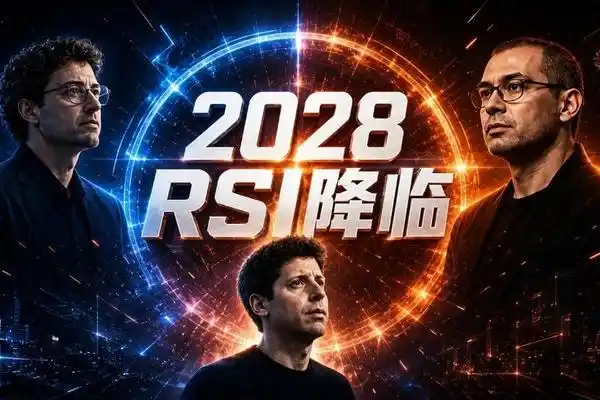
2028: The Arrival of Recursive Self-Improvement (RSI)

**AI Recursive Self-Improvement (RSI): The Countdown to 2028 Begins** AI is no longer just a trained tool but is starting to rewrite its own evolutionary pace. According to Anthropic co-founder Jack Clark, there is a 60% probability that by the end of 2028, Recursive Self-Improvement (RSI) will become a reality. This means AI could autonomously design and build a more capable next-generation version of itself without any human researcher involvement—Claude 10 creating Claude 11, for instance. Supporting this timeline, Google DeepMind's CEO Demis Hassabis confirms that all leading AI labs are intensely focused on RSI, making it an industry-wide priority. He expresses profound concern, stating this potential is what keeps him awake at night. Concrete data underscores this acceleration: - METR evaluations show current top models like Claude are solving tasks up to the 16-hour limit of existing test frameworks. - In Epoch AI's challenging MirrorCode benchmark, Claude Opus 4.7 recreated complex software in hours for a fraction of the human cost. In one extreme test, AI autonomously coded for 19 days straight. - Anthropic reports over 80% of its codebase is now written by Claude, and researcher productivity has increased up to 8-fold since 2024. - OpenAI's policy blueprint highlights RSI as a major upcoming governance challenge. CEO Sam Altman reportedly hinted RSI might arrive within six months, potentially delaying OpenAI's massive IPO. The implication is an impending "intelligence explosion," where AI-driven progress outpaces human control. The central question is no longer if it will happen, but whether humanity is ready.

marsbitHá 4h

2028: The Arrival of Recursive Self-Improvement (RSI)

marsbitHá 4h

World Models, Metaverse, Digital Twins, Physical AI: Are They the Same Thing?

Title: World Models, the Metaverse, Digital Twins, Physical AI: Are They the Same Thing? The article clarifies that concepts like the metaverse, Web3, simulation platforms, digital twins, and Physical AI are not the same thing but are all part of the broader trend of blurring the lines between the digital and physical worlds. It positions "world models" as the foundational "cognitive layer" or "operating system" that enables AI to understand and simulate the world. Key distinctions are made: - The **Metaverse** is a destination for immersive social and economic experiences. World models could act as its "engine," generating interactive 3D content efficiently. - **Web3** focuses on decentralized ownership and economics (rules layer), operating on a different technical level than world models. - **Simulation Data Platforms** (e.g., for autonomous vehicles) are a 1.0 version, relying on manual design. World models represent a 2.0 version, using AI to generate realistic, varied scenarios autonomously. - **Digital Twins** create high-fidelity, real-time mirrors of physical systems (e.g., a factory). World models go a step further by enabling predictive simulation of future states. - **Physical AI** (robots, AVs) refers to AI that acts in the physical world. World models are a core component, providing the understanding and prediction needed for planning. A proposed hierarchy places world models at the cognitive layer, supported by infrastructure (compute, data) and supporting application tools (simulation, digital twins), action systems (Physical AI), user experiences (metaverse), and rules (Web3). In conclusion, while distinct, many of these previously hyped concepts may ultimately rely on advances in world model technology to fulfill their promises, as world models provide the essential cognitive foundation for simulating and interacting with complex environments.

marsbitHá 4h

World Models, Metaverse, Digital Twins, Physical AI: Are They the Same Thing?

marsbitHá 4h

Trading

Spot
活动图片