CRO演绎史上最荒唐治理闹剧,700亿代币凭空增发

Odaily星球日报Publicado em 2025-03-18Última atualização em 2025-03-18

Resumo

好消息是官方已提议销毁1亿代币,再等700年,供应量就恢复啦!

原创 | Odaily星球日报(@OdailyChina

作者|Azuma(@azuma_eth

CRO演绎史上最荒唐治理闹剧,700亿代币凭空增发

Crypto.com 及其附属区块链 Cronos 近期演绎了区块链历史上最荒唐的一次治理闹剧 —— 700 亿代币(CRO 当前总供应量为 300 亿)被凭空增发,尽管散户极力反对,但在官方的“一票否决权”面前,社区的声音完全变成了笑话。

起因:官方提议重新增发 700 亿代币

事件的起因可追溯至 3 月 3 日。

当日,Cronos 发文宣布拟提出一项大胆的计划(属实大胆),以重塑 Cronos 的黄金时代,并投入大量资金来支持 Cronos 路线图(包括 ETF)和美国成为加密货币世界之都的雄心。为了支持该计划,Cronos 提议逆转 2021 年 2 月的 700 亿代币销毁事件(注意,Cronos 的 X 公告甚至没敢明确提这一数字),并使用该份额来构建 Cronos 战略储备。

具体而言,Cronos 提议将这 700 亿 CRO 重新发行至 Cronos 战略储备托管钱包中,使 CRO 总供应量恢复到创世之初的 1000 亿。新增发的代币将锁仓 10 年(以 CRO 创世之日计算),之后按月线性解锁。

进展:社区极力反对,官方疑似“做票”

显然,不管 Cronos 将该提案吹嘘的如何冠冕堂皇,如此大规模的增发必然会导致 CRO 的价值稀释,普通持币用户不可能忽视这一点。

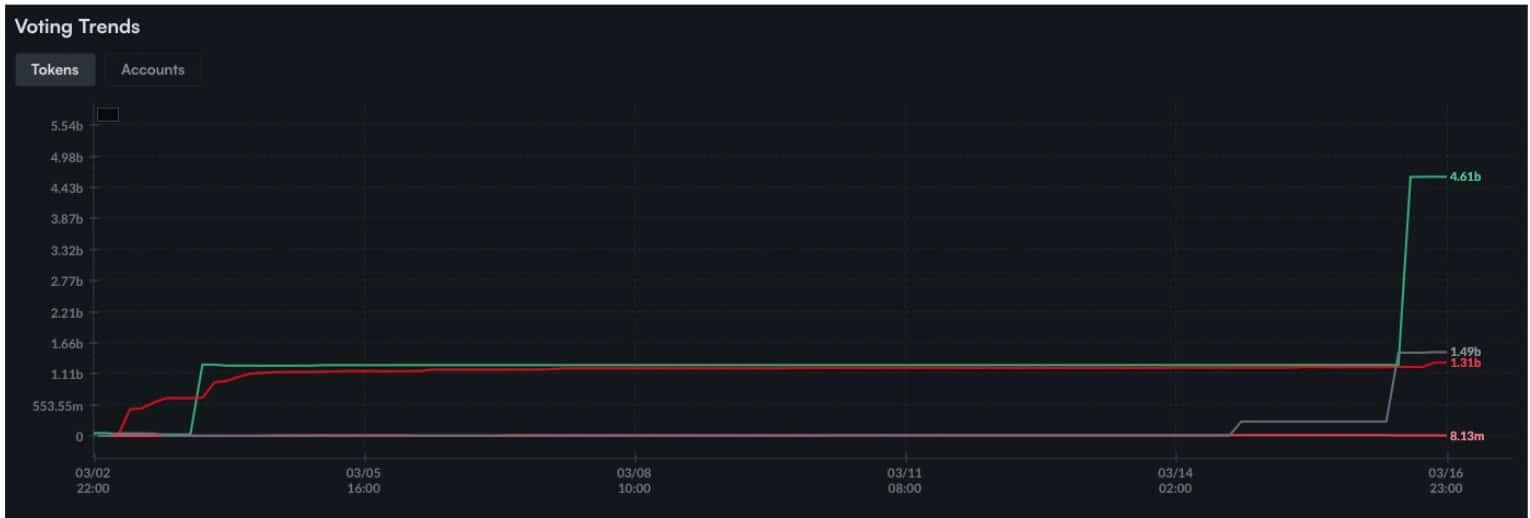
Mintscan 治理投票记录显示,在该提案开始投票后的首日,该提案的反对率高达 95.7% ,基本可以说遭到了社区的极致反对……然而,这并没有什么卵用。

如下图所示,随着某股神秘力量的出手,赞成率(绿线)很难便扭转了反对率(红线)—— 暂时忽略最后绿线的翘头。
CRO演绎史上最荒唐治理闹剧,700亿代币凭空增发

之所以称其为神秘力量,是因为在 3 月 3 日至 3 月 17 日的绝大部分治理周期内,赞成票始终以一种很不自然的微弱优势领先于反对票 —— 似乎该神秘力量一度想要维持一种正、反意见很激烈的“假象”。

高潮:这下彻底不演了!

这种违和的平衡一度持续到了投票结束之前。

根据 Cronos 的治理规则(何必还搞这一套呢),治理提案的通过除了对赞成率有要求外,还要求投票参与率超过 33.4% 的法定比例,而当时该提案的投票参与率并没有满足这一条件。换句话说,即便此时赞成率更高,提案也无法通过。  

所以 Cronos 干脆演都不演了 —— 最后一刻约 33.5 亿 CRO 直接入场投下了赞成票。这也是为什么上图中最后绿线会突然抬头。 

根据 UnChained 的披露,三个独立消息源透露,Crypto.com 和 Cronos 实际控制着 70-80% 的票权。

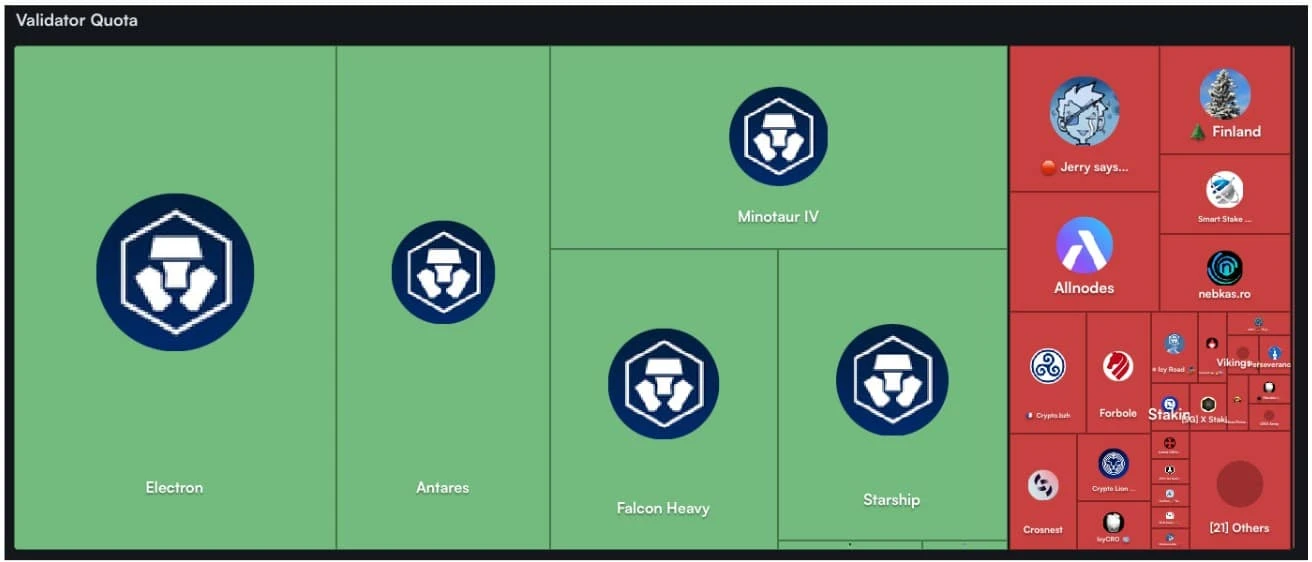
此前之所以一度维持均势,是因为 Crypto.com 控制的验证节点中暂时只有 Starship 和 Falcon Heavy 出了手,而在最后一刻 Electron、Antares 和 Minotaur IV 等另外三个验证节点也下了场。

你可以在下图中很清晰的看到官方实力和散户的票权之悬殊。
CRO演绎史上最荒唐治理闹剧,700亿代币凭空增发

最终,提案在官方势力的参与下“有惊无险”的通过, 700 亿 CRO 日后将正式铸造并等待进入流通。

针对这一荒谬的治理闹剧,大量 CRO 持币者均表达了极其失望的态度,甚至有人直言这就是对社区的侮辱。

彩蛋:告诉你什么叫真正的侮辱!

这就算是侮辱了吗?Cronos 显然并不这么想。

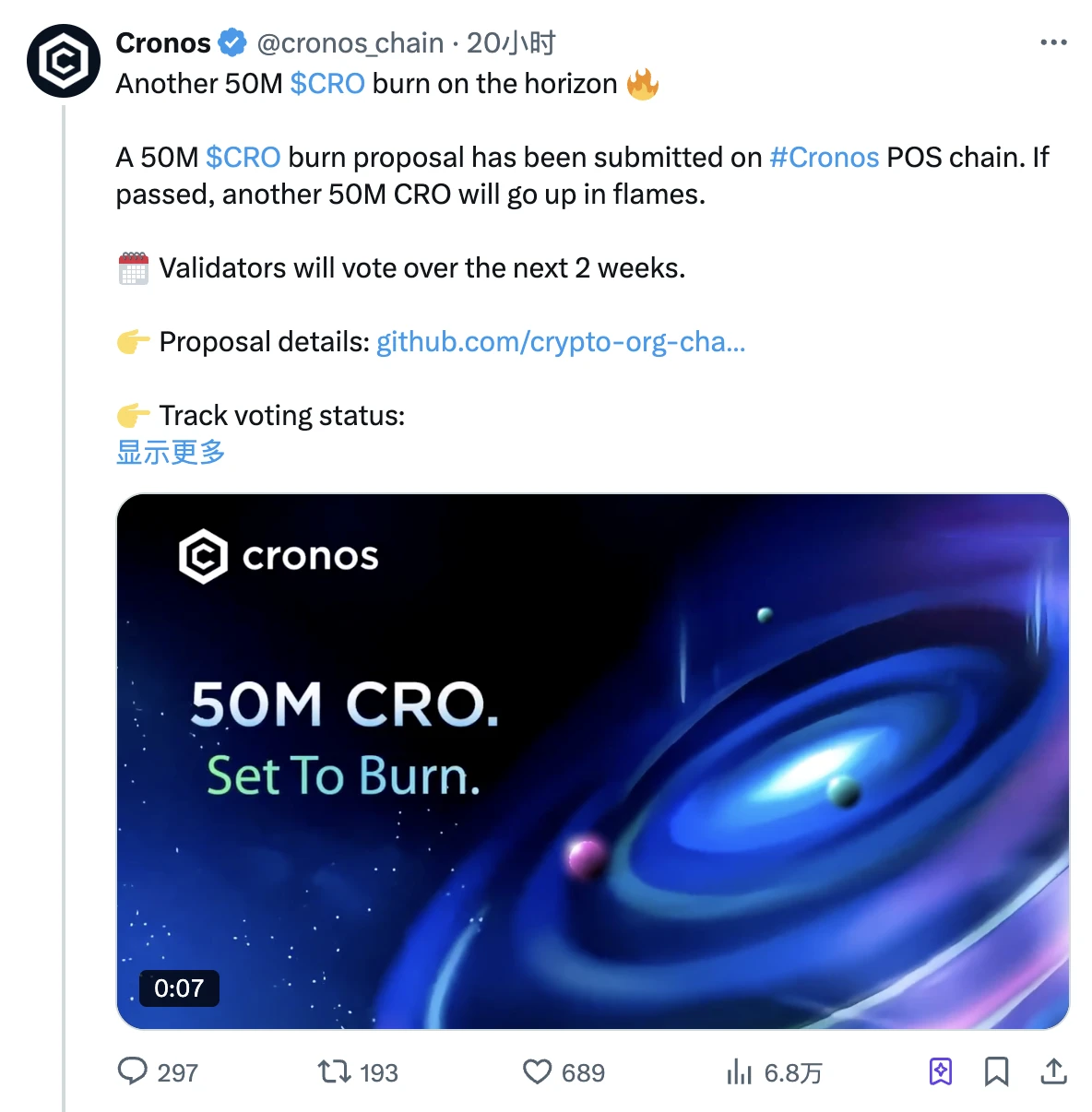
上述提案通过后,Cronos 于 X 高调宣发了另一项提案,提议销毁 5000 万 CRO —— 足足占 700 亿的 0.07% ,这才叫真正的侮辱!
CRO演绎史上最荒唐治理闹剧,700亿代币凭空增发

根据 Cronos 贴出的历史销毁记录,每年将执行两期销毁,每期 5000 万 CRO,合计每年 1 亿 CRO。

有社区成员就此调侃表示:“看起来只需要大约 1400 次销毁就能消除这 700 亿 CRO 了。所以只需再等 700 年,就能恢复目前的供应量。

还得是 Cronos,这可能就是打造“百年企业”的思维吧。

Leituras Relacionadas

The Impact of OUSD on Circle, Tether, and Paxos: Not a Simple Negative, but a More Complex Competitive Landscape

OUSD's Impact on Circle, Tether, and Paxos: A Nuanced Competitive Reshuffle The launch of OUSD, a new stablecoin initiative, has complex implications for the stablecoin market. For Circle (CRCL), the initial 15-20% stock drop reflects legitimate competitive concerns but is not a "death sentence." Circle retains deep liquidity, existing integrations, and first-mover advantages. A potential restructuring or termination of its Coinbase partnership could even double its net revenue in the short term, providing more competitive freedom. However, OUSD, backed by Stripe's engineering and product strengths, could become the default stablecoin within the Stripe ecosystem for new adopters, challenging USDC's position. OUSD does not solve the core barrier for corporate adoption: it remains a credit exposure to its issuer (likely a Bridge-related entity), which, like Circle, is not an investment-grade entity. Large banks and asset managers could still capture the most lucrative enterprise use cases. Circle must accelerate its payment/fintech product development and consider defensive M&A. For Tether, OUSD targets a different market segment. Tether will continue focusing on distribution channels not prioritized by Stripe or Circle. Its market share may decline over time, but within a significantly growing total market. Paxos faces the greatest pressure. OUSD undermines the key selling points of its USDG stablecoin, and Paxos's regulatory advantages may diminish as frameworks mature. This poses a more existential challenge, explaining Paxos's recent shift back to its brokerage-as-a-service business.

marsbitHá 1h

The Impact of OUSD on Circle, Tether, and Paxos: Not a Simple Negative, but a More Complex Competitive Landscape

marsbitHá 1h

OUSD's Impact on Circle, Tether, and Paxos: Not a Simple Negative, but a More Complex Competitive Reshuffle

This article analyzes the impact of the newly announced stablecoin OUSD, backed by a consortium including Stripe, on major incumbents like Circle (USDC), Tether (USDT), and Paxos (USDG). For Circle, the announcement is not a simple negative. While the initial market reaction was rational, it's not a "death sentence." Circle retains deep liquidity, existing integrations, and first-mover advantage. A potential restructuring or termination of its exclusive revenue-sharing deal with Coinbase could even near-double its net income in the short term, providing more competitive flexibility. However, within the Stripe ecosystem, OUSD, with its strong engineering and product focus, could become the default choice, displacing USDC for new integrations. Circle must accelerate its own fintech product development and consider defensive M&A. OUSD does not directly threaten Tether's core markets, which focus on different distribution channels. Tether's market share may decline over time but within a significantly growing overall market. Paxos faces the greatest pressure. OUSD undermines the primary value proposition of its USDG stablecoin, and Paxos's regulatory advantages may erode as frameworks mature, posing a more existential challenge. This explains Paxos's recent strategic pivot towards brokerage-as-a-service. A fundamental unresolved issue for enterprise adoption remains: if issued by a Bridge-related entity, OUSD, like USDC, still represents a credit exposure to a non-investment-grade issuer, unless a parent company guarantee is provided. Large banks and asset managers entering the space later could still compete for the most lucrative enterprise use cases.

链捕手Há 1h

OUSD's Impact on Circle, Tether, and Paxos: Not a Simple Negative, but a More Complex Competitive Reshuffle

链捕手Há 1h

Trading

Spot
活动图片