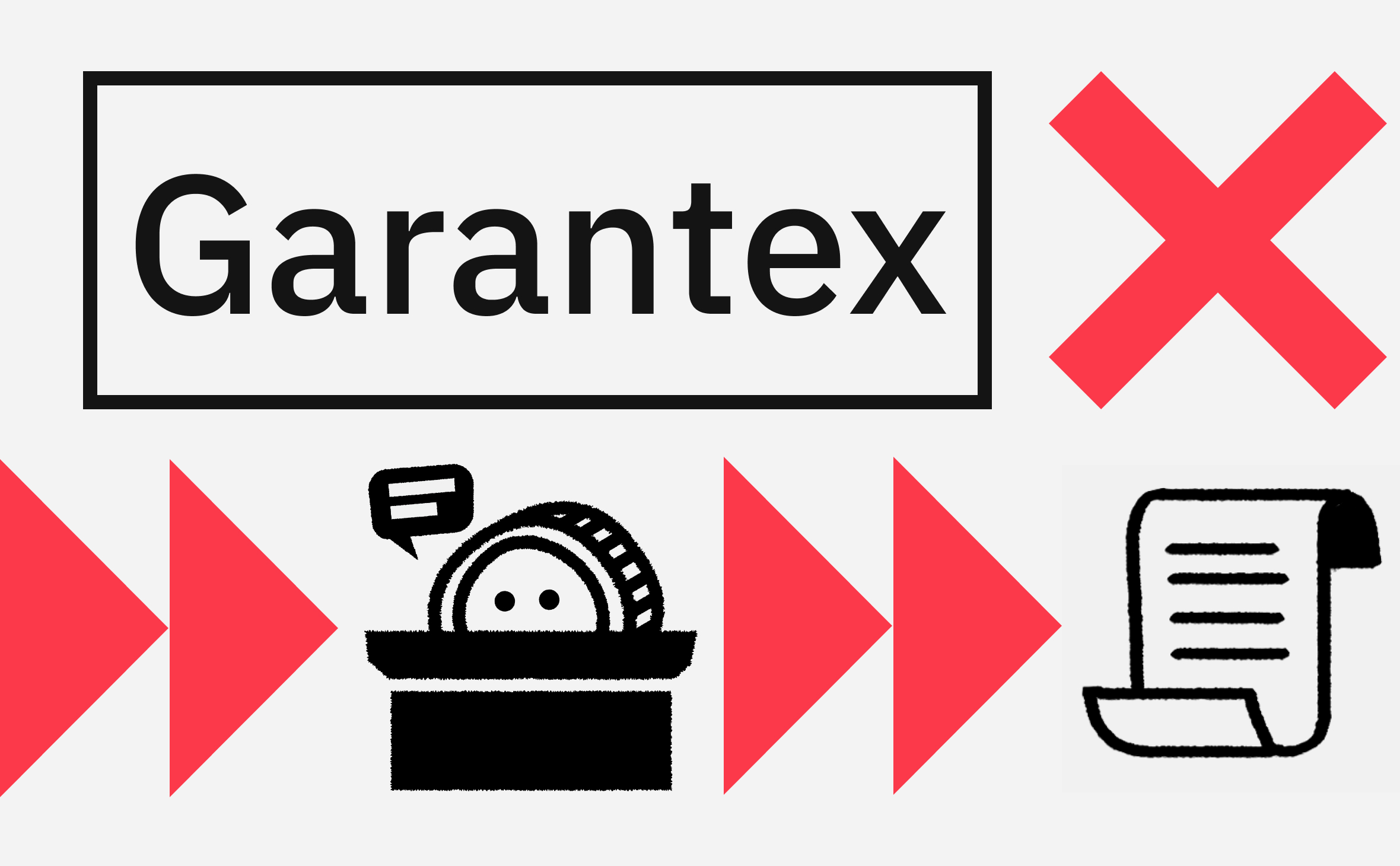
США заявили о блокировке $26 млн и сайтов российской криптобиржи Garantex

RBK-cryptoPublicado em 2025-03-07Última atualização em 2025-03-07

Официальные обвинения последовали на следующий день после того, как Garantex заявила о блокировке своих кошельков на 2,5 млрд руб. и приостановке всех операций

Министерство юстиции США и Секретная служба США (US Secret Service) объявили о конфискации доменов криптовалютной биржи Garantex и заморозке ее активов в рамках международной операции, проведенной совместно с правоохранительными органами Германии и Финляндии. Власти США обвиняют платформу в отмывании денег, содействии преступным организациям и нарушении санкционного режима.

6 марта российская криптобиржа Garantex сообщила о том, что Tether, эмитент крупнейшего по капитализации стейблкоина USDT, заблокировал криптовалюту на кошельках биржи на сумму 2,5 млрд руб. В Tether не прокомментировали запрос «РБК-Крипто» и не ответили на вопрос, с чем была связана блокировка, но перенаправили с этим вопросом в Секретную службу США. Позже, 7 марта служба и Минфин опубликовали собственные пресс-релизы с обвинениями.

По заявлениям самой Garantex, биржа была лидером по рублевой ликвидности, предоставляя доступ к криптовалютам без ограничений для пользователей из России. Площадка поддерживла работу с рублем и любыми российскими банковскими картами.

Согласно данным Garantex, стейблкоин USDT был самой популярной криптовалютой среди россиян. Объемы торгов в паре «рубль — USDT» на бирже значительно превышают объемы торгов другими криптовалютными парами. Команда платформы обратила внимание на то, что все токены USDT, находящиеся на российских кошельках, могут быть сейчас под угрозой.

24 февраля Европейский Союз включил Garantex в новый пакет антироссийских санкций, а под санкциями США платформа находится с апреля 2022 года.

По данным опубликованных 7 марта обвинений, с момента основания в 2019 году Garantex обработала не менее $96 млрд в криптовалютных транзакциях. 6 марта по решению суда в Восточном округе Вирджинии были изъяты три домена биржи — Garantex.org, Garantex.io и Garantex.academy. Посетители этих сайтов теперь видят сообщение о конфискации, а сами домены больше не могут использоваться для предоставления услуг.

В рамках расследования Минюст США предъявил обвинения двум администраторам биржи — 46-летнему Алексею Бесчокову (гражданину Литвы, проживающему в России) и 40-летнему Александру Мира Серда (гражданину России, проживающему в ОАЭ). Они обвиняются в заговоре с целью отмывания денег, а Бесчоков дополнительно — в нарушении санкционного законодательства США и управлении незарегистрированным платежным сервисом.

Следствие утверждает, что обвиняемые знали об использовании Garantex для отмывания преступных доходов и скрывали следы этих операций. В частности, по версии Минюста США, биржа не предоставила российским правоохранительным органам полную информацию об аккаунте, зарегистрированном на имя Мира Серды, хотя в аналогичных случаях передавала данные по другим пользователям.

Секретная служба США также сообщила о заморозке более $26 млн в криптовалютных активах, связанных с биржей. Власти утверждают, что эти средства использовались для отмывания денег на платформе.

Согласно Минюсту, после введения санкций против Garantex в апреле 2022 года Бесчоков и его сообщники продолжили работу биржи, несмотря на запреты. Их действия включали перераспределение криптовалютных кошельков для сокрытия транзакций и привлечение американских пользователей, что, по мнению следствия, было нарушением санкционного режима.

Бесчокову и Мире Серде грозит до 20 лет лишения свободы по обвинению в отмывании денег. Бесчоков также может получить еще 20 лет по обвинению в нарушении санкций и 5 лет за ведение незарегистрированного платежного бизнеса.

Как уточняет Минюст США, в операции участвовали Европол, Федеральная уголовная полиция Германии, финское Национальное бюро расследований, нидерландская полиция и эстонские правоохранительные органы. Дополнительную поддержку оказали аналитическая компания Elliptic и эмитент стейблкоина Tether, который ранее заморозил $26 млн на адресах Garantex.

Leituras Relacionadas

Just now, DeepSeek V4 updates with DSpark, improving inference speed by 80%

DeepSeek has updated its DeepSeek V4 model with the DSpark speculative decoding framework, achieving a significant 60-85% speedup in generation for Flash models and 57-78% for Pro models while maintaining the same overall throughput. This engineering-focused update, rather than a core architectural change, introduces DSpark to address latency and throughput bottlenecks in high-concurrency production environments. DSpark combines high-throughput parallel generation with adaptive load-aware verification. Its key innovations include a semi-autoregressive generation architecture to model dependencies within token blocks and a hardware-aware confidence-scheduled verification system. This system uses a confidence head to predict token acceptance probabilities, allowing it to dynamically optimize verification length per request and allocate compute only to tokens with the highest expected payoff. The asynchronous scheduler is designed for real-world deployment, ensuring zero-overhead scheduling and continuous CUDA graph replay while preserving the target model's output distribution. In tests across mathematical reasoning, code generation, and daily dialogue, DSpark outperformed state-of-the-art models like Eagle3 and DFlash, increasing average acceptance length by 26.7%-30.9% and 16.3%-18.4% respectively on Qwen3 target models. DeepSeek also open-sourced DeepSpec, a full-stack codebase for training and evaluating speculative decoding draft models, providing a standardized toolkit that includes data preparation tools, model implementations, training code, and evaluation scripts.

marsbitHá 3h

Just now, DeepSeek V4 updates with DSpark, improving inference speed by 80%

marsbitHá 3h

BIT Research: The 2028 Halving Is Not the End, the Real Shake-Up of the Bitcoin Mining Industry Is Just Beginning

The Bitcoin mining industry is undergoing its most complex structural adjustment since inception. Despite Bitcoin's price holding near $61,000 and the network hash rate approaching a record 1 ZH/s, miner profitability is deteriorating. The industry is operating close to its breakeven point, with the 2028 halving expected to accelerate consolidation. The challenges extend beyond the halving's subsidy reduction; the industry's revenue model has yet to successfully transition towards a fee-driven structure. Increasingly, mining companies are evolving from simple Bitcoin producers into infrastructure and energy operators, including providers of AI/HPC computing power. Competition is shifting from pure hash rate expansion to business model upgrades. Economic pressure is evident. The theoretical daily mining revenue at current prices is around $78 million, yet the actual figure is only about $33 million—a 136% gap. Transaction fees remain low at roughly $220k daily, far below historical implied levels. With a current estimated industry-wide breakeven price near $65,000, mining alone is struggling to generate ideal profits. The 2028 halving is projected to push the fundamental production cost floor to approximately $93,289. This will likely accelerate a shift towards consolidation among larger, well-capitalized miners with diversified revenue streams. Competitive advantage will belong to institutionalized players with access to low-cost energy, AI/HPC hosting operations, and stronger balance sheets. In essence, Bitcoin mining is transitioning from a "mining business" to an "infrastructure business." Future profitability and resilience will depend less on block rewards and more on diversified income sources like energy management and computational infrastructure services. For investors, the key question is not the halving itself, but which miners can successfully navigate this business model transformation.

marsbitHá 5h

BIT Research: The 2028 Halving Is Not the End, the Real Shake-Up of the Bitcoin Mining Industry Is Just Beginning

marsbitHá 5h

This is How God Karpathy Uses Claude?

Andrej Karpathy, a prominent figure in AI, has reportedly joined Anthropic, leading to a noticeable decrease in his open-source contributions and social media activity. A document claiming to be his personal "CLAUDE.md" file—a set of instructions for the Claude AI to follow within a specific codebase—has been circulating online. While its authenticity is unverified, the content aligns closely with Karpathy's publicly shared principles on effective AI-assisted programming. The document outlines key rules for AI coding assistants, emphasizing the importance of reading existing code thoroughly before writing new code to maintain consistency. It advises against over-engineering, advocating for simple, surgical modifications that match the project's existing style. Other guidelines include clarifying assumptions upfront, writing meaningful tests, thoughtful debugging, and carefully considering dependencies. The core message is that these principles help prevent common AI coding failures, such as introducing unnecessary abstractions, style drift, or making invisible architectural decisions. The community has noted that even experts like Karpathy require detailed instructions to guide AI effectively, akin to managing a junior developer. A related GitHub repository, "andrej-karpathy-skills," which encapsulates these ideas, is reported to significantly reduce Claude's code error rate. Ultimately, the advice stresses that the best CLAUDE.md is tailored to one's own tech stack and coding practices.

marsbitHá 5h

This is How God Karpathy Uses Claude?

marsbitHá 5h

Trading

Spot
活动图片