Доля альткоинов в крипторезерве США увеличится — эксперты

cryptonews.ruPublicado em 2023-11-03Última atualização em 2025-03-03

После недавнего заявления президента Дональда Трампа о создании национального крипторезерва США, внимание инвесторов сосредоточилось на американских альткоинах

В состав крипторезерва США уже входят такие альткоины, как Ethereum (ETH), XRP (XRP), Solana (SOL) и Cardano (ADA). Эксперты ожидают, что в будущем к ним присоединятся Chainlink (LINK), Ondo (ONDO) и Litecoin (LTC).

Почему LINK, ONDO и LTC считаются перспективными

Chainlink (LINK) выделяется, поскольку он включен в индекс Coinbase 50 и представлен в трасте Grayscale. Также он связан с World Liberty Finance, компанией, управляемой семьей Трампа.
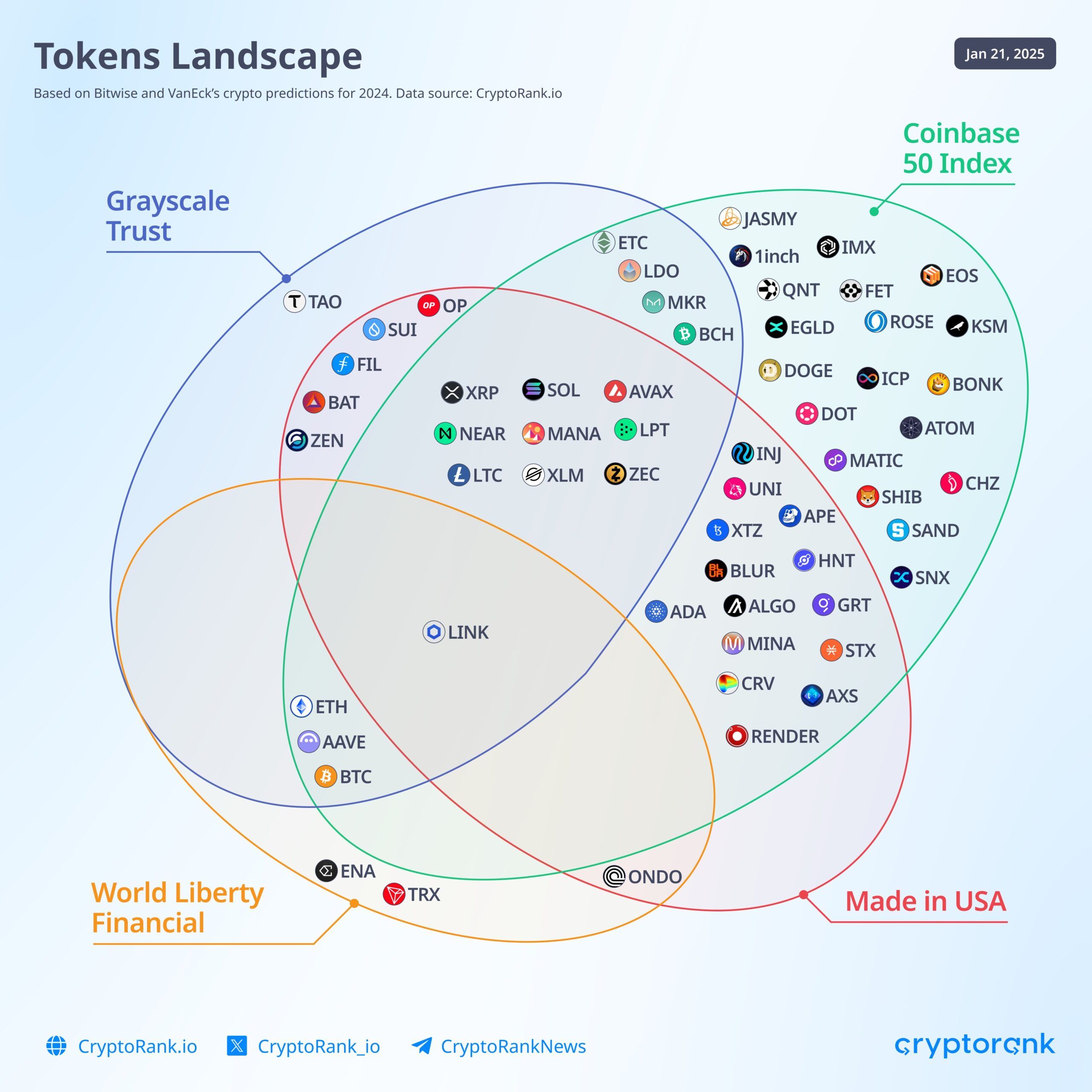
Альткоины, созданные в США. Источник: Cryptorank.

Квинтен, основатель weRate, считает, что технология LINK может сыграть ключевую роль в переводе стратегических активов США на блокчейн.

«LINK будет частью Криптостратегического резерва. Chainlink поможет в различных процессах, от доказательства резервов до перевода на блокчейн стратегических активов, таких как золото и валюты», — отметил он в своем прогнозе.

Ondo (ONDO) также рассматривается как перспективный вариант, поскольку World Liberty Financial владеет токенами Ondo. Кроме того, Дональд Трамп-младший, соучредитель WLFI, активно участвует в мероприятиях Ondo.

«Трамп подтвердил создание стратегического крипторезерва, и его компания World Liberty Financial владеет Ondo. Дональд Трамп-младший и другие основатели WLFI выступали на саммите Ondo. Ondo также является американской криптовалютой. Это подтверждает, что либо Ondo будет включен в резерв, либо Трамп выберет Ondo для токенизации фондового рынка», — заявил Investor Not Telling в своем прогнозе.

Читайте также: Трамп раскрыл состав национального криптовалютного резерва США

Генеральный директор Ondo Натан Оллман подтвердил, что Ondo — это американская блокчейн-компания, занимающаяся токенизацией казначейских облигаций США. В планах компании — расширение на акции, облигации и ETF.

Создатель контента JRNY Crypto предположил, что в резерв может войти и Litecoin (LTC). Он отметил, что LTC является сильным кандидатом для запуска спотового ETF. Аналитики Bloomberg оценивают вероятность одобрения такого ETF в 90%.

«Все монеты, упомянутые в резерве, — американские… Я считаю, что LTC добавят в резерв и он получит разрешение на запуск ETF», — предсказал JRNY Crypto.

Резкий рост рынка токенов «Made in America»

После заявления Трампа рыночная капитализация криптовалют категории «Made in USA Coins» выросла на 12%, достигнув почти $500 млрд, по данным CoinMarketCap. Это в 16 раз больше, чем капитализация созданных в Китае монет «Made in China Coins». Это подчеркивает предпочтение инвесторов к проектам из США.

Объем торгов этой группой альткоинов увеличился на 300% за последние сутки, превысив $82 млрд. Лидером по объему стал XRP.
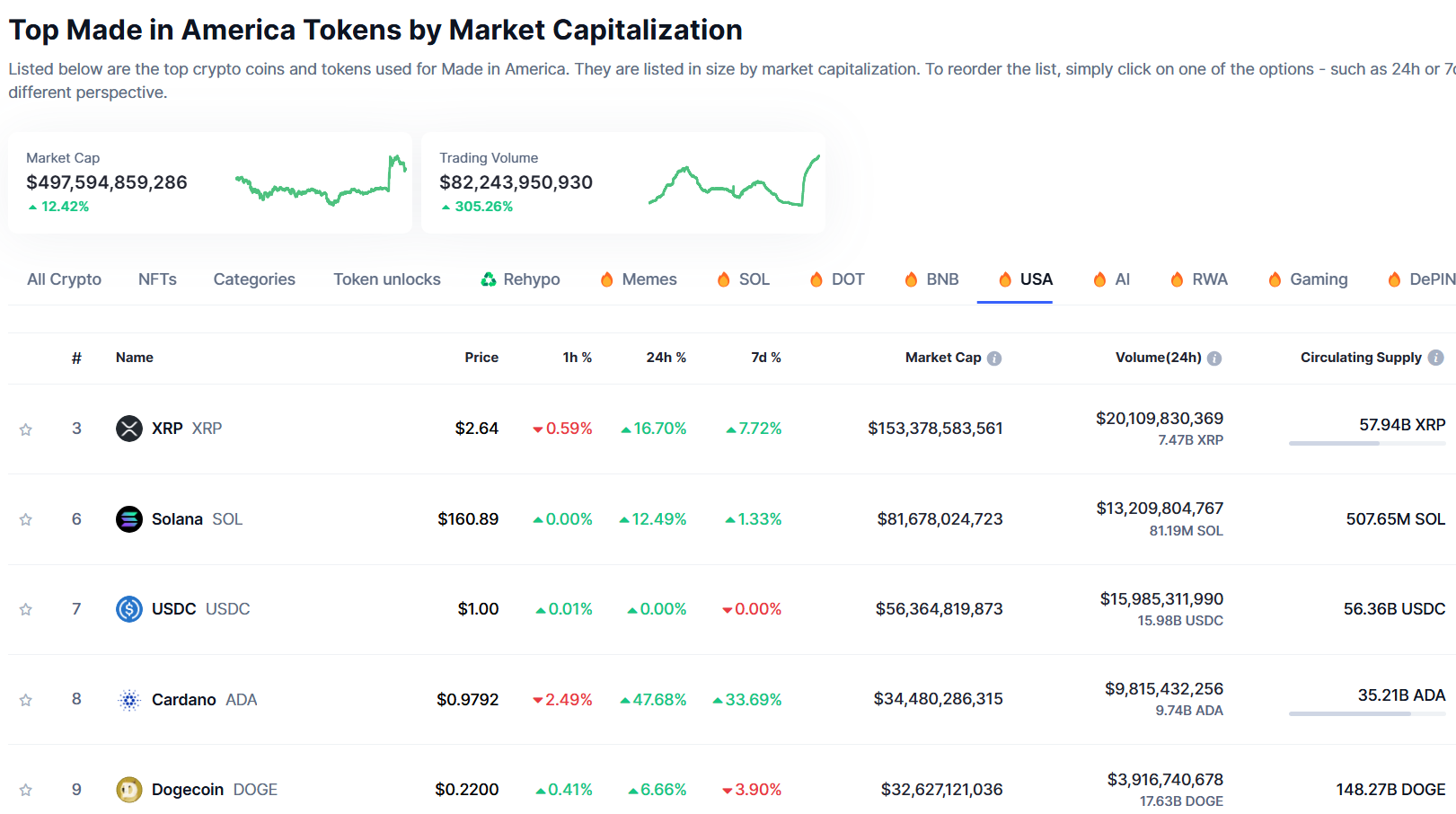
Топ токенов Made in America по рыночной капитализации. Источник: CoinMarketCap.

Несмотря на ажиотаж, план создания крипторезерва США вызвал споры. Многие лидеры индустрии выступают против включения в него альткоинов. Они утверждают, что только биткоин подходит для национальных резервов.


Leituras Relacionadas

Opinion: AI Bubble Bursts, Bitcoin and Other Risky Assets Are the First to Be Impacted

BIS Warns AI Investment Boom Could Trigger Market Stress, Impacting Bitcoin First The Bank for International Settlements (BIS) warns that a potential bursting of the "AI bubble" could tighten liquidity and severely impact risk assets like Bitcoin in the near term. Major tech firms are projected to spend over $1 trillion on AI infrastructure in 2025-2026. The BIS cautions that if returns fail to meet expectations, a sudden withdrawal of financing could turn this investment boom into a prolonged bust, creating ripple effects across financial markets. While AI holds long-term economic promise, the current scale and speed of investment, coupled with intense competition and physical bottlenecks (e.g., semiconductors, power grids), mirror historical bubbles. The report highlights that the AI funding web—spanning corporate debt, private credit, and complex vendor agreements—makes systemic risks harder to see. A disappointment in AI adoption could transmit stress through this chain, widening credit spreads and pressuring weaker borrowers. For Bitcoin, the initial reaction to such a market shock would likely be defensive. As liquidity tightens, investors typically sell liquid assets first, and Bitcoin often trades in line with other risk assets during portfolio de-risking. Recent correlations, like Bitcoin's drop following a sharp decline in South Korea's stock market, support this view. However, the longer-term outcome for Bitcoin depends on the policy response. If an AI-driven credit crunch forces central banks to inject liquidity and ease policy eventually, it could reignite Bitcoin's narrative as a hedge against monetary debasement. Yet, traders betting on this outcome may first have to endure significant market volatility and potential price declines.

marsbitHá 1h

Opinion: AI Bubble Bursts, Bitcoin and Other Risky Assets Are the First to Be Impacted

marsbitHá 1h

South Korea Reaps Riches, America Turns Hostile

The US has filed a collective antitrust lawsuit in California against Samsung, SK Hynix, and US-based Micron, alleging they colluded to create a "RAMpocalypse" by slashing traditional DRAM production and raising prices 700% over four years amid the AI boom. This lawsuit targets the heart of the AI supply chain: High Bandwidth Memory (HBM), critical for Nvidia's GPUs. Currently, SK Hynix (57%), Samsung (22%), and Micron (21%) dominate global HBM production. The case highlights a deeper US concern: in the AI era, South Korea, through its HBM dominance, is capturing an estimated 35% of global AI profits, second only to the US (49%). SK Hynix's operating profit margin recently hit a record 72%. In response to the lawsuit, South Korea announced a massive $800 trillion won investment to build four new chip plants, doubling down on its strategic position. Analysts see the lawsuit not merely as a consumer price issue but as strategic pressure. It aims to support Micron's US manufacturing expansion (subsidized by the CHIPS Act) and secure America's share of AI profits by bringing more HBM production onshore. However, South Korea's rapid execution and massive cash flow from current HBM sales give it a significant speed advantage over US build-out timelines. The conflict underscores a fundamental shift: AI infrastructure like GPUs and HBM is becoming a new form of strategic national resource, akin to oil. While Nvidia and Korean memory giants are interdependent, the struggle over profit distribution and industrial sovereignty in this new landscape is just beginning. This lawsuit may be the first major skirmish in the AI resource wars.

marsbitHá 1h

South Korea Reaps Riches, America Turns Hostile

marsbitHá 1h

Trading

Spot
活动图片