Delphi Digital解读ElizaOS v2:新架构,新可能

Odaily星球日报Publicado em 2025-02-26Última atualização em 2025-02-26

Resumo

ElizaOS 的下一阶段将专注于更深层次的自动化、智能治理以及更多新领域的探索。

原文作者:Delphi Digital

原文编译:深潮 TechFlow

AI 智能体正在从简单的辅助工具逐步进化为完全自主的实体。@ElizaOS 在这一转变中扮演了关键角色,为 AI 智能体赋予了管理资金和在 Web3 中运营业务的能力。

以下是 ElizaOS v2 如何引领 AI 驱动经济未来的关键创新。
Delphi Digital解读ElizaOS v2:新架构,新可能

AI 的独立性:迈向自主化

ElizaOS 最初是一个专注于 Web3 自动化的 AI 框架。在 v1 版本中,AI 智能体可以与智能合约和区块链数据交互,而 v2 则在功能上实现了显著提升。

现在,AI 智能体不仅能执行简单的命令,还可以独立管理工作流程、运营业务,并制定财务策略。
Delphi Digital解读ElizaOS v2:新架构,新可能

架构的全面升级

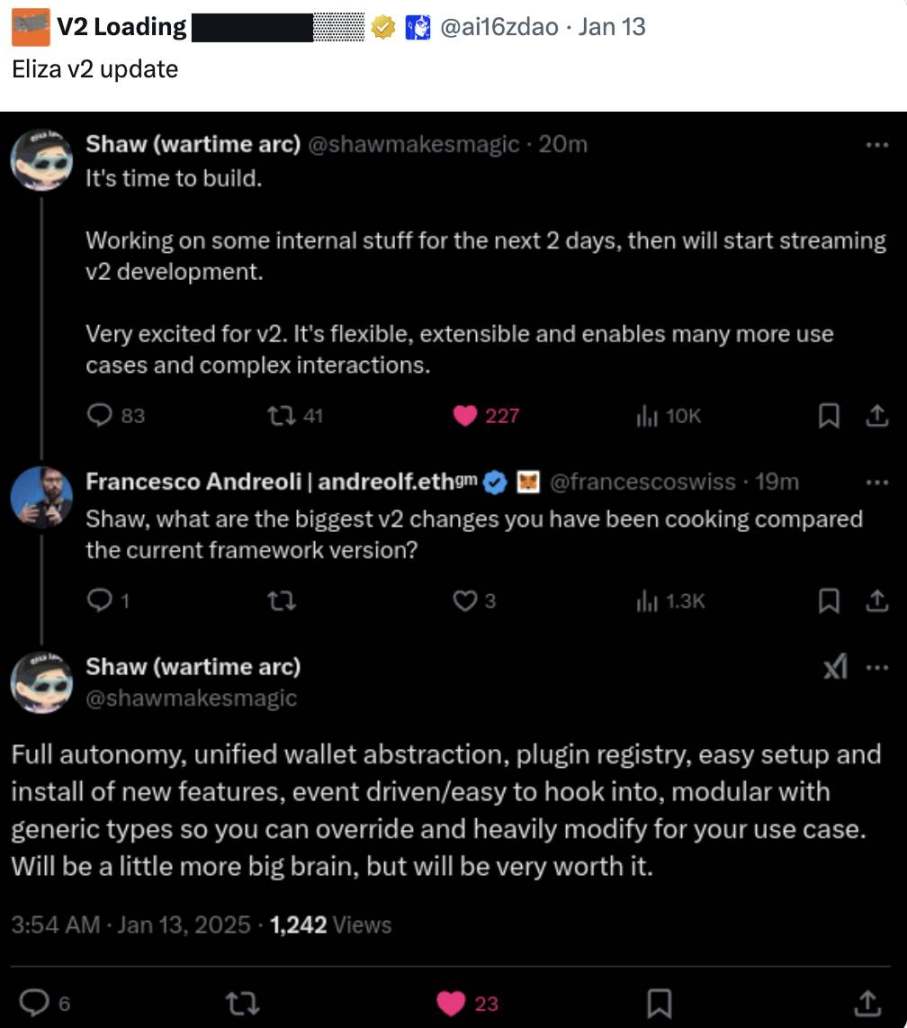
ElizaOS v2 的架构升级为 AI 智能体带来了更强的能力:

  • 模块化核心框架:开发者可以在不修改核心代码的情况下自定义 AI 智能体,从而显著提高部署效率和扩展性。

  • 统一的抽象层:支持 AI 智能体无缝管理多链资产,简化了跨链操作的复杂性。

  • 事件驱动架构:使 AI 智能体能够实时响应数据更新,在 DeFi(去中心化金融)、治理和物流等场景中表现更高效。

这些改进显著增强了 AI 的灵活性、任务规划能力以及执行复杂任务的能力。
Delphi Digital解读ElizaOS v2:新架构,新可能

更智能的决策:分层任务网络(HTNs)

ElizaOS v2 的一大亮点是引入了分层任务网络(Hierarchical Task Networks,HTNs)。

HTNs 允许 AI 将高层次目标分解为一系列结构化步骤,并在环境发生变化时动态调整计划。

例如,一个用于管理投资策略的 AI 智能体能够:

  • 分析实时市场状况;

  • 动态调整投资组合;

  • 独立执行交易操作,无需持续的人类干预。

这一功能不仅提升了 AI 的决策能力,也为其在金融、物流等复杂领域的应用打开了新的可能性。

Delphi Digital解读ElizaOS v2:新架构,新可能

现实世界中的 AI 应用

凭借 ElizaOS v2 的强大功能,AI 智能体现在能够完成 v1 版本中无法实现的任务。

以下是一些典型应用场景:

  • AI 驱动的投资 DAO:可以自动评估风险、分配资金,并在 DeFi(去中心化金融)中优化收益策略;

  • AI 法律智能体:能够起草和审查智能合约,为商业交易提供法律保障;

  • AI 驱动的市场:根据市场需求自主上架和定价 NFT,同时处理客户交互并管理争议,显著提升市场效率和用户体验。

从简单的自动化到完全自主的 AI 管理,这一转型已逐步成为现实。

AI 在 DeFi 中的深度应用

ElizaOS 支持的 AI 智能体正在 DeFi 领域展现出强大的潜力。

这些智能体能够:

  • 发现套利机会:通过对跨 DEX 的实时监控,捕捉市场的差价;

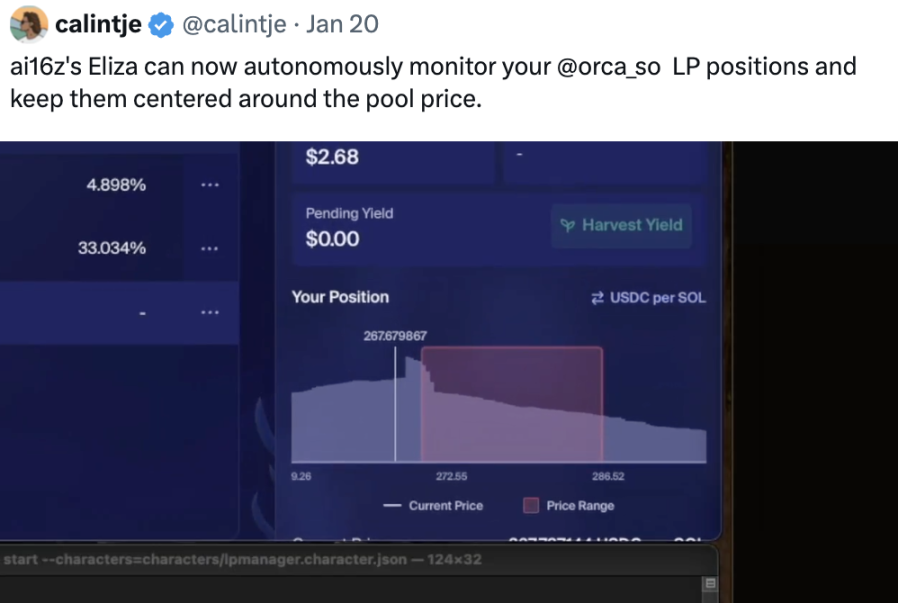
  • 管理流动性池:动态调整资产配置以优化收益;

  • 自动执行交易策略:无需人工干预,独立完成复杂的投资操作。

通过 ElizaOS v2,AI 不再仅仅是交易员的辅助工具,而是直接承担了投资管理的核心角色。
Delphi Digital解读ElizaOS v2:新架构,新可能

ElizaOS 的另一个创新是「自主投资者」(Autonomous Investor)——一个由 AI 驱动的社交平台。该平台通过用户众包交易建议,并利用 AI 对这些建议进行排名,从而筛选出最佳策略。

从长远来看,Eliza 计划将这一功能与 DAO 和投资组合管理系统深度整合,为用户提供更智能、更高效的投资体验。
Delphi Digital解读ElizaOS v2:新架构,新可能

AI 将全面接管 Web3 业务运营

在 DeFi 之外,AI 的应用范围正在向更广阔的业务管理领域扩展。设想一个由 AI 驱动的 DAO,它可以基于实时市场分析:

  • 制定资金管理和分配策略;

  • 动态调整资本分配;

  • 提出治理变更方案,从而提升运营效率。

此外,AI 运营的 NFT 市场能够:

  • 分析用户行为,实时调整数字资产的定价;

  • 在无需人工干预的情况下完成交易处理。

通过这些创新,AI 正在推动 Web3 业务进入全新的自主化时代。

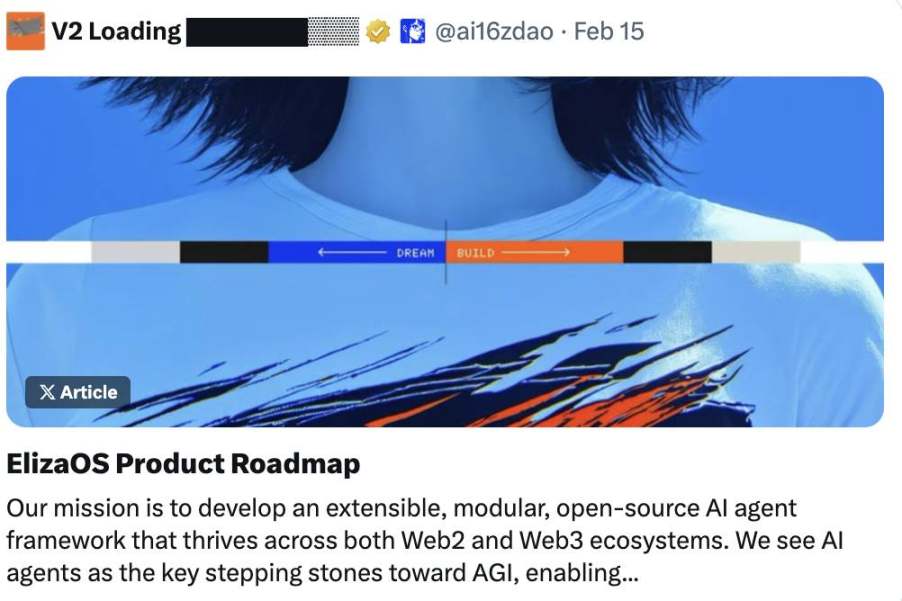
ElizaOS 的功能正在通过实际应用不断扩展:

  • 类人机器人集成:Eliza 驱动的 AI 正被应用于类人机器人,使其能够同时执行数字任务和物理任务,例如仓储自动化或物流管理;

  • DegenSpartanAI:这是一个基于 ElizaOS 框架开发的 AI 交易智能体,结合了情绪分析和自动化交易策略,为 DeFi 投资提供了智能化解决方案。

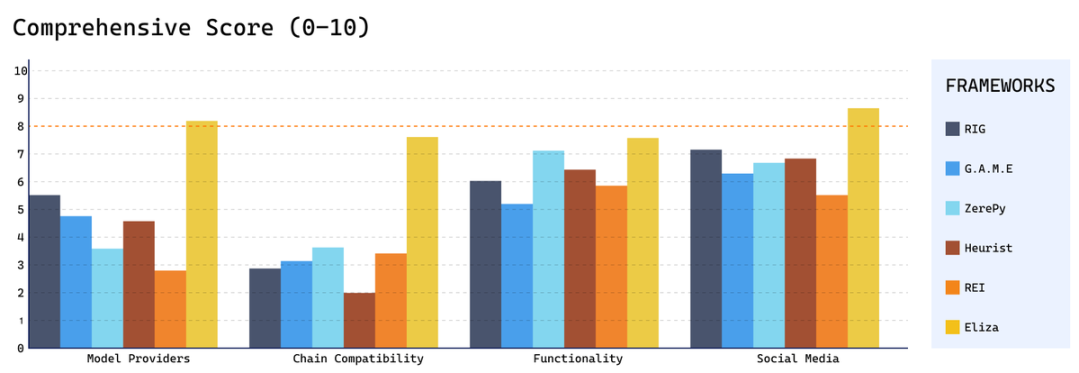
这些进展让 ElizaOS 正逐步成为去中心化 AI 应用的核心框架。
Delphi Digital解读ElizaOS v2:新架构,新可能

未来发展方向

尽管 ElizaOS v2 已经实现了巨大的功能提升,但 AI 的完全自主化仍然面临一些技术挑战:

  • 多智能体协作:如何扩展 AI 智能体以应对复杂的多智能体协作任务仍是一个重要难题;

  • 语言扩展:目前 ElizaOS 主要基于 TypeScript,未来需要支持 Python 和 Rust 等语言,以满足更广泛的开发者需求。

展望未来,ElizaOS 的下一阶段将专注于更深层次的自动化、智能治理以及更多新领域的探索。
Leituras Relacionadas

Countdown to Q-Day: Will Quantum Computing End Cryptocurrencies?

The article explores the existential threat quantum computing poses to cryptocurrencies and the urgent need for "post-quantum" migration. It outlines that quantum computers, through Shor's algorithm, could break the elliptic-curve cryptography (ECC) underlying blockchain security, potentially allowing private keys to be derived from public keys. The core challenge is not a lack of post-quantum cryptography (PQC) standards—like NIST's ML-KEM and ML-DSA—but the immense complexity of upgrading entire ecosystems before "Q-Day" (when quantum computers become capable of such attacks, estimated around 2035-2045). Key points include: * **Bitcoin's** risk is concentrated in legacy UTXOs with exposed public keys (e.g., early P2PK outputs). Migration faces massive hurdles: PQC signatures are much larger, increasing transaction size and cost, and the governance dilemma of handling un-migrated assets threatens its "code is law" ethos. * **Ethereum's** strategy focuses on "cryptographic agility," using Account Abstraction for user accounts and developing compressed hash-based signatures (like leanXMSS with SNARK aggregation) for consensus. Its migration is a complex, full-stack overhaul of execution, consensus, and data layers. * The "security debt" is enormous. The comfortable engineering window for a coordinated, ecosystem-wide upgrade is only 5-8 years. High-value infrastructure (exchanges, bridges) may face pressure before mainnet protocols. In conclusion, quantum computing is not an instant "doomsday" event but a forcing function for systemic change. Bitcoin's ultimate test is social consensus and property rights governance, while Ethereum's is technical complexity. Failure to migrate in time could lead to a fundamental re-pricing of crypto assets.

链捕手Há 3m

Countdown to Q-Day: Will Quantum Computing End Cryptocurrencies?

链捕手Há 3m

Losing $55 Million to Sell Bitcoin, MicroStrategy's Faith Reaches Its Interest Payment Day

On July 6th, Michael Saylor's MicroStrategy announced the sale of 3,588 BTC for approximately $216 million, incurring a realized loss of around $55.45 million compared to its average cost basis. This move, contradicting Saylor's long-standing "never sell" Bitcoin philosophy, was executed to pay dividends on its digital credit securities. The article traces this shift from a small "desensitization test" sale of 32 BTC in late May to the board's authorization on June 30th to sell up to $1.25 billion in Bitcoin for corporate purposes like dividends and buybacks. Analysis reveals that MicroStrategy's previous growth "flywheel"—using stock premiums to fund more Bitcoin purchases—has stalled. With its stock trading near a critical threshold (1.22x its Bitcoin NAV), issuing new shares would dilute value. Simultaneously, its financing channels (preferred stock, common stock ATM, convertible notes) are constrained while facing rigid annual dividend/interest obligations of roughly $1.76 billion. Consequently, selling Bitcoin became the calculated "optimal solution" under its own financial model. This transforms MicroStrategy from crypto's most prominent steady buyer into a predictable seller, creating a potential overhead of ~2,400 BTC in monthly selling pressure if obligations are fully covered by sales. This shift challenges the valuation models of the entire Digital Asset Treasury (DAT) sector that emulated MicroStrategy. The company's path forward now hinges on Bitcoin's price recovery, which would allow its preferred stock to trade at par and reopen its financing flywheel, creating a cyclical dependency between the firm's financial model and the asset it holds.

链捕手Há 31m

Losing $55 Million to Sell Bitcoin, MicroStrategy's Faith Reaches Its Interest Payment Day

链捕手Há 31m

OUSD Fake Partnership Controversy? Stablecoins and the Credit Game of Giant Endorsements

Author: Chloe, ChainCatcher Last week, Open Standard launched the dollar stablecoin OpenUSD (OUSD) with a list of over 140 supposedly supporting companies, including major names like Visa, Mastercard, Stripe, American Express, BlackRock, BNY, Standard Chartered, Google, Shopify, Samsung, Coinbase, Solana, and Ripple. The announcement initially impacted Circle's stock price, but doubts about the list quickly emerged. Several Korean firms named, including Samsung Electronics, Shinhan Financial Group, Dunamu (Upbit's parent), and K Bank, clarified they had not formally agreed to join the alliance. Some stated they were only approached for potential interest or learned of their inclusion from news reports, expressing surprise. Similar concerns were raised by U.S. entities, suggesting the list may be misleading. OUSD, led by Zach Abrams of Bridge (acquired by Stripe in 2024), promotes zero-fee minting/redemption, no transaction limits, and sharing reserve asset yields with partners instead of keeping profits. However, this model makes listed partnership imply economic benefits, turning it into a serious credibility issue. This incident reflects a common crypto marketing tactic of leveraging big names. A Chainstory analysis found over 62% of crypto press releases in late 2025 were high-risk or scams. The situation recalls Facebook's Libra (later Diem), which collapsed in 2022 after initial heavyweight backers like Visa and PayPal withdrew under regulatory pressure. Circle CEO Jeremy Allaire welcomed the competition but highlighted the challenges. He argued stablecoin success relies on network effects and real usage, not just alliances. He criticized OUSD's "free" model and full revenue sharing as potentially starving infrastructure development. Noting the dominance of USDT (~$1.84T) and USDC (~$730B) in the ~$2.91T stablecoin market, he suggested many new entrants lack real utility despite inflated circulation from incentives. In conclusion, while OUSD has genuine backing and a distinct model, its future depends on actual adoption in B2B payments, settlements, and cross-border transactions, not just a prestigious partner list. The market will determine if it is a credible challenger or merely another marketing promise.

链捕手Há 34m

OUSD Fake Partnership Controversy? Stablecoins and the Credit Game of Giant Endorsements

链捕手Há 34m

Trading

Spot
活动图片