stETH Depegging: What are the Consequences?

Huobi ResearchPublicado em 2022-06-16Última atualização em 2022-06-16

Resumo

stETH is a token offered by the biggest Ethereum 2.0 liquid staking protocol Lido. stETH represents an ownership of ETH staked on Lido. By holding stETH, users gain staking rewards on a daily basis.

Abstract

stETH is a token offered by the biggest Ethereum 2.0 liquid staking protocol Lido. stETH represents an ownership of ETH staked on Lido. By holding stETH, users gain staking rewards on a daily basis. The price of stETH has been trading close to the price of ETH for the majority of its lifetime. However, its price has been trading below the price of ETH recently, and liquidity is becoming scarce across its second-hand markets. There are worries concerning the depeg.

This report delves into the major factors causing the declining price of stETH:

1) FUD generated by the collapse of Luna and UST;

2) Celsius selling their stETH (Lido) positions on Curve to supply the withdrawals of their users;

3) Alamenda Research dumping stETH on Curve;

4) Liquidations on AAVE against undercollateralized as stETH price declines;

5) Increased probability of postponing the “Difficulty Bomb” in ETH 2.0 transition.

In the end of this report, we will discuss the likelihood of stETH price and market behavior in the short-term and long-term and highlight potential opportunity of stETH amidst FUD and bear market sentiment.

1. Much attention has been drawn to the stETH/ETH “depeg”

The stETH/ETH "depeg" has triggered worries in the market, especially around how the devaluing of stETH might cause subsequent liquidations across the lending market. stETH has been trading at approximately 1:1 with ETH most of the time. However, recently, its price dropped and liquidity has been depleted out as liquidity providers are withdrawing their funds. stETH/ETH is now trading at 0.94 at the time of writing.
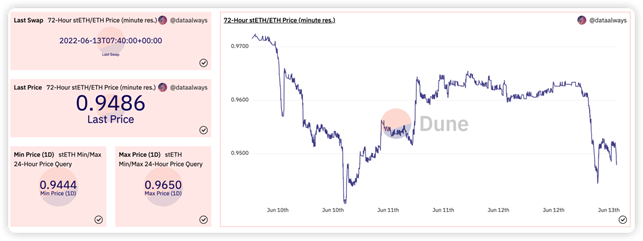
Figure 1: stETH/ETH ratio

Source: Dune@dataalways

There are worries that a further decline in stETH price will cause a chain of serious consequences. In the following, we will delve into:

1) the reasons why stETH has been trading below ETH, why its liquidity is being drained and the current unpegging scenario of stETH/ETH (Chapter 2);

2) stETH market behavior in the short-term and long-term (Chapter 3).

2. Causes behind decline of stETH price

There are possibly five major factors contributing to the declining price of stETH.

2.1 Luna and Terra Collapse

The collapse of Luna and UST certainly posed fear and incited selling pressure across the market. People lost confidence and the price of stETH was driven down to 0.96 ETH as a result of the Luna and UST collapse.

However, the collapse of UST alone would only have limited effect on stETH prices, because UST and stETH are underpinned by different mechanisms and are fundamentally unrelated. The initial correlation for price decreases can be explained by the bear market sentiment as well as diminishing confidence among investors.

stETH is backed by ETH and it does not require being traded at 1:1 to ETH to work. stETH represents the stake in staking ETH 2.0, and trades at market price based on the demand/supply on its second-hand markets. If we look at other stETH tokens (offered by other protocols for liquid ETH 2.0 staking), we can conclude that a 1:1 stETH to ETH price is not a guarantee (see Figure below for BETH).
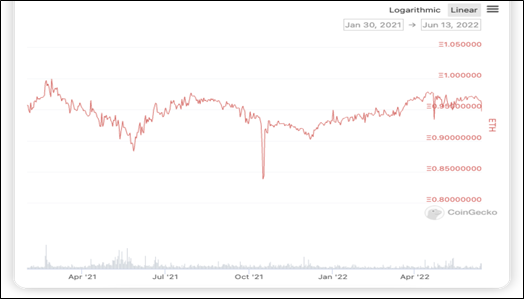
Figure 2: BETH/ETH

Source: Coingecko.com

2.2 Celsius Incident

Celsius took a huge loss from staking stETH on Stakehound as Stakehound had misplaced the keys to over 38,000 Ethereum tokens that they had deposited on behalf of clients. Celsius and other customers are now stuck with the Stakehound stETH token, which is currently nearly worthless. Celsius wallets have at least 42,306 Stakehound staked Ethereum (0xdfe66b14d37c77f4e9b180ceb433d1b164f0281d). This equates to a loss of almost US$71 million according to Ethereum prices as of today (14 June 2022).

This incident was revealed in the news one week ago, and upon knowing their investment was in a precarious position, users on Celsius rushed to redeem their positions. The withdrawal rate was rapid, at around 50,000 ETH per week, which forced Celsius to sell other assets like stETH (staked on Lido) for ETH on stETH second-hand markets like Curve to acquire more liquidity, take out loans against stETH to support withdrawal and temporarily pause withdrawals and transfers in the worst-case scenario.

Today, Celsius has paused all withdrawals, transfers and swaps due to extreme market conditions.
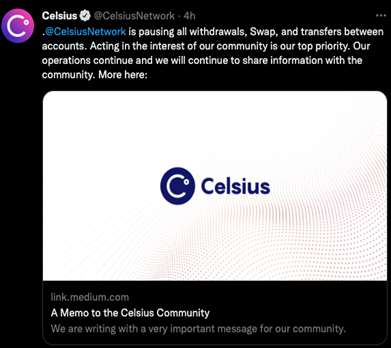
Figure 3: Celsius pauses withdrawals

Source: Celsius Twitter

The decision by Celsius was probably caused by insufficient liquidity. In fact, only 27% of Celsius' ETH holdings is liquid, the rest is either staked in ETH 2.0 or stETH. Celsius had no choice but to sell their stETH staked on Lido(0xae7ab96520DE3A18E5e111B5EaAb095312D7fE84).
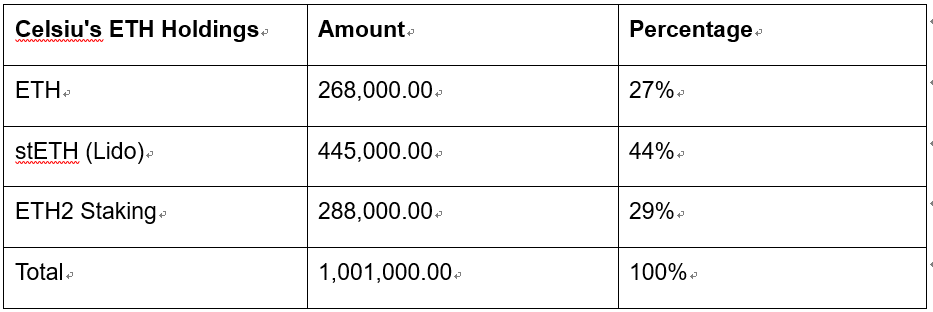
From the table above, we know that Celsius previously held about 445,000 stETH (staked on Lido) worth US$1.4 billion. Currently there is only around 132,000 stETH in the liquidity pool on Curve. (recorded on 11 June 2022)

It is difficult for Celsius to sell their stETH for ETH as the depth of liquidity is insufficient to support their selling.
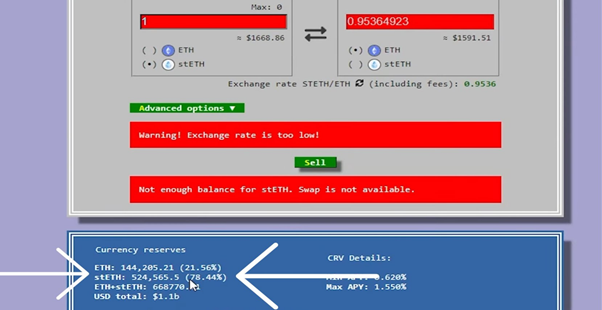
Figure 4: Curve

Source: curve.finance
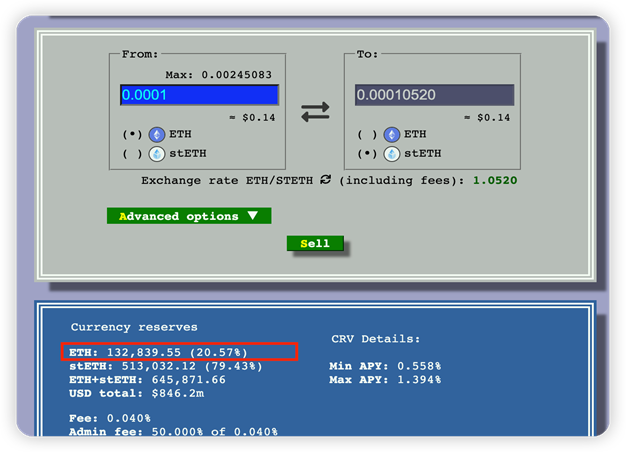
Figure 5: Curve

Source: curve.finance
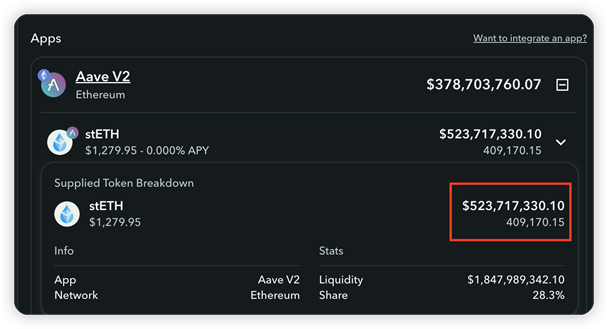
Figure 6: Celsius wallet portfolio at AAVE

Source: https://zapper.fi

Upon checking Celsius's account (0x8aceab8167c80cb8b3de7fa6228b889bb1130ee8), the stETH in Celsius's account is only about 409,00, compared to the 445,000 two days ago. Celsius, under financial pressure, has already started selling stETH on Curve to meet customer redemption demands.

2.3 Alamenda Research selling stETH

A report showed that Alamenda Research, one of the biggest crypto investment firms, sold around 50,000 stETH on 8 June. The following is a screenshot from Etherscan recording the selling activities.

Figure 7: Alamenda Research selling stETH transactions

Source: https://etherscan.io/

The selling from Alamenda Research posed further supply pressure on stETH second-hand markets, pushing down the price of stETH. This might trigger further selling from other big holders. Yet, the selling pressure does not end here. Let's us look into the problems we discovered on AAVE with stETH.

2.4 stETH in AAVE lending protocol

As we can see from the chart below, the staking pool of AAVE got the largest stETH percentage with a total of 1.4 million ETH, worth about US$1.7 billion.

Users stake their stETH into AAVE to take out ETH loans, then stake ETH on Lido to take out stETH again to achieve a leveraged staking position. This is also called a revolving loan. The following are the steps for taking out a revolving loan:

‒ get back stETH by staking ETH at LIDO;

‒ deposit stETH in Aave and borrow ETH;

‒ repeat steps above;
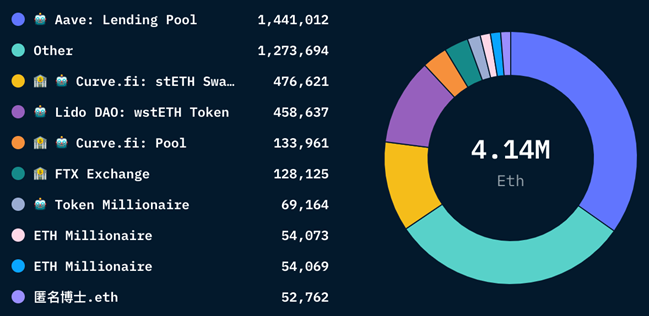
Figure 7: Top stETH holders balance

Source: nansen.ai

However, unlike other st-Tokens at Lido, stETH cannot be unstaked before the completion of ETH 2.0. We don't know how big the leverage is with stETH/ETH, and how many times the revolving loans repeated. This is a big risk to both stETH and ETH. A further decrease in stETH price will cause a chain of liquidations on their leveraged position.

The following figure shows the liquidation price of stETH.

‒ stETH/ETH = 0.925, 17M will be liquidated;

‒ stETH/ETH =0.860, 41M will be liquidated;

‒ stETH/ETH =0.680, 81.3M will be liquidated;

‒ stETH/ETH =0.450, 149M will be liquidated;

‒ stETH/ETH =0.410, 180M will be liquidated.
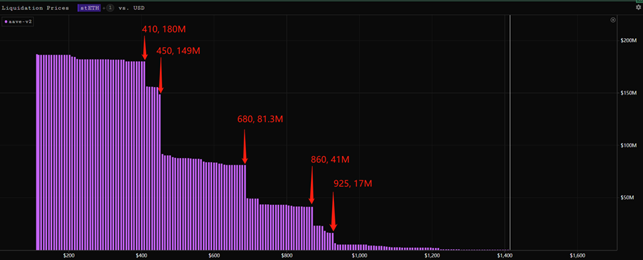
Figure 8: stETH liquidation prices

Source: Twitter

There is 1.44 million of ETH locked on AAVE. Users use stETH as collateral and take out loans of ETH on AAVE to stake on Lido and get stETH again. This process can be repeated multiple times to achieve a leveraged staking position. It can get very dangerous when the price of stETH decreases (caused by Celsius selling their huge position and subsequent selling pressure from other big holders and retailers) and stETH (collateral) is being liquidated and resold on the second-hand market, further pushing the price of stETH down.

2.5 The rising concerns around Etherum2.0

The prospect of ETH 2.0 lingers and recent reports have shown that Ethereum developers will likely delay what’s called the “difficulty bomb”, where a sudden increase in mining difficulty is foreseen, in order to discourage miners from opting to stay with the proof-of-work mechanism after Ethereum’s transition to proof-of-stake. Difficulty refers to the time and computational power needed to verify a cryptocurrency's transactions within a blockchain. This will trigger market concern about the transition. As such, the price of the backed asset (ETH) will go down due to this delay and also cause the price of stETH to drop and worsen the degree of depeg for stETH. Although the team has said “It does not impact the merge at all”, some have been a bit skeptical on the merge of ETH 2.0. Afterall, a delay would certainly lead to a detrimental effect on investor confidence.

3.Conclusion

3.1 In the short-term, stETH will face tremendous selling pressure, turbulence is expected in the near future

Supply of stETH is dominant in the short term as Celsius is forced to sell their stETH position, triggering a subsequent chain of selling events. Second-hand stETH markets have become the exit channel for stakers, because there is no way for ETH 2.0 staking participants to redeem their ETH except through the second-hand markets. The stETH/ETH second-hand market structure is inclined toward the stETH supply side.

3.2 New demand will step into stETH second-hand markets and drive up its price

It is reasonable to think that this price discount will introduce new demand into the second-market which will eventually drive up the price of stETH price so it creeps closer to the price ETH. We should consider that the lower price of stETH will also induce new demand (the cheaper the stETH price, the more profit can one take from redeeming ETH upon ETH 2.0 merging).

3.3 Long-term prospects, risks and opportunities

Risks represent potential returns in the future, and as we get closer to ETH 2.0 merging, risks become lower and the price is likely to recover. In short term, the price of stETH is like to decrease further due to 1) Celsius selling their stETH for ETH to get liquidity for their users; and 2) subsequent selling from whales to mitigate risk from Celsius' selling, but as price is driven down to certain level, arbitragers will step in and seize the attractive opportunity and provide support to the price. The Celsius Incident and stETH whales dumping their stETH would cause short-term turbulence, but stETH will show resilience against the short-term supply when ETH 2.0 merging draws closer.

Nevertheless, we should always consider the risks associated with ETH 2.0 merging, and some risks are not negligible. For example, if the Ethereum transition encounters technical problems that might cause another long delay, such that investors get impatient and lose their conviction, or that the liquid staking protocols could have critical protocol bugs or face slashing risks where its validators for some reason fail to operate properly. All these risks have been factored into stETH price. In addition, the price of ETH also affects the stETH price. If ETH price declines, stETH will also decline. The biggest problem lies with stETH leveraged and collateralised on AAVE. Declining stETH price will cause a chain of liquidations across the lending platform, and the consequences will be severe.

About Huobi Research Institute

Huobi Blockchain Application Research Institute (referred to as "Huobi Research Institute") was established in April 2016. Since March 2018, it has been committed to comprehensively expanding the research and exploration of various fields of blockchain. As the research object, the research goal is to accelerate the research and development of blockchain technology, promote the application of blockchain industry, and promote the ecological optimization of the blockchain industry. The main research content includes industry trends, technology paths, application innovations in the blockchain field, Model exploration, etc. Based on the principles of public welfare, rigor and innovation, Huobi Research Institute will carry out extensive and in-depth cooperation with governments, enterprises, universities and other institutions through various forms to build a research platform covering the complete industrial chain of the blockchain. Industry professionals provide a solid theoretical basis and trend judgments to promote the healthy and sustainable development of the entire blockchain industry.

Official website:

https://research.huobi.com/

Consulting email:

research@huobi.com

Twitter: @Huobi_Research

https://twitter.com/Huobi_Research

Medium: Huobi Research

https://medium.com/huobi-research

Disclaimer

1. The author of this report and his organization do not have any relationship that affects the objectivity, independence, and fairness of the report with other third parties involved in this report.

2. The information and data cited in this report are from compliance channels. The sources of the information and data are considered reliable by the author, and necessary verifications have been made for their authenticity, accuracy and completeness, but the author makes no guarantee for their authenticity, accuracy or completeness.

3. The content of the report is for reference only, and the facts and opinions in the report do not constitute business, investment and other related recommendations. The author does not assume any responsibility for the losses caused by the use of the contents of this report, unless clearly stipulated by laws and regulations. Readers should not only make business and investment decisions based on this report, nor should they lose their ability to make independent judgments based on this report.

4. The information, opinions and inferences contained in this report only reflect the judgments of the researchers on the date of finalizing this report. In the future, based on industry changes and data and information updates, there is the possibility of updates of opinions and judgments.

5. The copyright of this report is only owned by Huobi Blockchain Research Institute. If you need to quote the content of this report, please indicate the source. If you need a large amount of reference, please inform in advance (see "About Huobi Blockchain Research Institute" for contact information) and use it within the allowed scope. Under no circumstances shall this report be quoted, deleted or modified contrary to the original intent.


Leituras Relacionadas

$9.4 Billion: The Largest Robotics Funding This Year Has Emerged

Munich-based humanoid robotics company Neura has completed a $1.4 billion (approximately RMB 94.9 billion) Series C funding round, valuing the company at around $7 billion and positioning it among the global leaders in the sector. The investment round is notable not just for its size—reportedly the largest in robotics this year—but also for its strategic backers, which include tech giants like NVIDIA and Amazon, alongside established industrial players such as German engineering firms Bosch and Schaeffler. This mix of investors signals a significant shift in the industry's focus from technological demonstrations and general-purpose narratives toward practical, industrial deployment and commercialization. Neura's approach centers on developing humanoid robots for defined, high-value industrial tasks rather than pursuing a general-purpose model. Its early validation comes from a partnership with BMW, where its robots are being tested on actual production lines. The involvement of Bosch and Schaeffler, companies deeply embedded in global manufacturing, underscores a growing belief that humanoid robots are transitioning from labs to viable factory-floor solutions. The article highlights two converging trends driving investment: advancements in AI and large language models, which enhance robots' perception and decision-making in unstructured environments, and mounting pressure from labor shortages and rising costs in major manufacturing regions. The funding landscape is now bifurcating between companies like Figure AI, focusing on versatile general-purpose robots, and firms like Neura, targeting specific vertical industrial applications with clearer, shorter paths to ROI. While technical hurdles remain, the core challenges for widespread adoption are increasingly seen as engineering and commercial in nature: managing the high integration and customization costs for different factory environments and establishing robust, localized maintenance and service networks. The record investment in Neura, particularly from industrial capital, indicates the industry's growing confidence in moving from proving feasibility to solving the practical problems of scalability, reliability, and building sustainable business models around humanoid robots in real-world settings like automotive manufacturing and hazardous labor environments.

marsbitHá 7h

$9.4 Billion: The Largest Robotics Funding This Year Has Emerged

marsbitHá 7h

Trading

Spot
Futuros

Artigos em Destaque

O que é ETH 2.0

ETH 2.0: Uma Nova Era para o Ethereum Introdução ETH 2.0, amplamente conhecido como Ethereum 2.0, marca uma atualização monumental à blockchain do Ethereum. Esta transição não é meramente uma mudança estética; visa melhorar fundamentalmente a escalabilidade, segurança e sustentabilidade da rede. Com uma mudança do mecanismo de consenso em Proof of Work (PoW), intensivo em energia, para um Proof of Stake (PoS) mais eficiente, o ETH 2.0 promete uma abordagem transformadora ao ecossistema blockchain. O que é ETH 2.0? ETH 2.0 é um conjunto de atualizações distintas e interconectadas focadas na otimização das capacidades e desempenho do Ethereum. Esta reformulação foi projetada para abordar desafios críticos que o mecanismo atual do Ethereum enfrentou, particularmente em relação à velocidade das transações e à congestão da rede. Objetivos do ETH 2.0 Os principais objetivos do ETH 2.0 giram em torno da melhoria de três aspectos centrais: Escalabilidade: Com o objetivo de melhorar significativamente o número de transações que a rede pode manejar por segundo, o ETH 2.0 procura ultrapassar a limitação atual de aproximadamente 15 transações por segundo, alcançando potencialmente milhares. Segurança: Medidas de segurança melhoradas são integrais ao ETH 2.0, especialmente através da resistência aprimorada contra ciberataques e da preservação do ethos descentralizado do Ethereum. Sustentabilidade: O novo mecanismo PoS foi projetado não apenas para melhorar a eficiência, mas também para reduzir drasticamente o consumo de energia, alinhando a estrutura operacional do Ethereum com considerações ambientais. Quem é o Criador do ETH 2.0? A criação do ETH 2.0 pode ser atribuída à Ethereum Foundation. Esta organização sem fins lucrativos, que desempenha um papel crucial no apoio ao desenvolvimento do Ethereum, é liderada pelo co-fundador notável Vitalik Buterin. A sua visão de um Ethereum mais escalável e sustentável tem sido a força motriz por trás desta atualização, envolvendo contribuições de uma comunidade global de desenvolvedores e entusiastas dedicados a melhorar o protocolo. Quem são os Investidores do ETH 2.0? Embora os detalhes sobre os investidores do ETH 2.0 não tenham sido tornados públicos, é sabido que a Ethereum Foundation recebe apoio de várias organizações e indivíduos no espaço da blockchain e tecnologia. Esses parceiros incluem firmas de capital de risco, empresas de tecnologia e organizações filantrópicas que compartilham um interesse mútuo em apoiar o desenvolvimento de tecnologias descentralizadas e infraestrutura de blockchain. Como Funciona o ETH 2.0? ETH 2.0 é notável por introduzir uma série de características chave que o diferenciam do seu predecessor. Proof of Stake (PoS) A transição para um mecanismo de consenso PoS é uma das mudanças de destaque do ETH 2.0. Ao contrário do PoW, que depende da mineração intensiva em energia para a verificação de transações, o PoS permite que os utilizadores validem transações e criem novos blocos de acordo com a quantidade de ETH que apostam na rede. Isso leva a uma maior eficiência energética, reduzindo o consumo em aproximadamente 99,95%, tornando o Ethereum 2.0 uma alternativa consideravelmente mais ecológica. Shard Chains As shard chains são outra inovação crítica do ETH 2.0. Estas cadeias menores operam em paralelo com a cadeia principal do Ethereum, permitindo que várias transações sejam processadas simultaneamente. Esta abordagem melhora a capacidade geral da rede, abordando preocupações de escalabilidade que têm atormentado o Ethereum. Beacon Chain No coração do ETH 2.0 está a Beacon Chain, que coordena a rede e gere o protocolo PoS. Ela atua como uma espécie de organizador: supervisiona os validadores, garante que as shards permaneçam conectadas à rede e monitora a saúde geral do ecossistema blockchain. Linha do Tempo do ETH 2.0 A jornada do ETH 2.0 tem sido marcada por vários marcos chave que traçam a evolução desta atualização significativa: Dezembro de 2020: O lançamento da Beacon Chain marcou a introdução do PoS, preparando o caminho para a migração para o ETH 2.0. Setembro de 2022: A conclusão de “The Merge” representa um momento crucial em que a rede Ethereum fez a transição com sucesso de um quadro PoW para um PoS, anunciando uma nova era para o Ethereum. 2023: O lançamento esperado das shard chains visa melhorar ainda mais a escalabilidade da rede Ethereum, solidificando o ETH 2.0 como uma plataforma robusta para aplicações e serviços descentralizados. Características Chave e Benefícios Escalabilidade Melhorada Uma das vantagens mais significativas do ETH 2.0 é a sua escalabilidade melhorada. A combinação de PoS e shard chains permite que a rede expanda a sua capacidade, permitindo que acomode um volume de transações muito maior em comparação com o sistema legado. Eficiência Energética A implementação do PoS representa um enorme passo em direção à eficiência energética na tecnologia blockchain. Ao reduzir drasticamente o consumo de energia, o ETH 2.0 não só reduz os custos operacionais, mas também se alinha mais estreitamente com os objetivos globais de sustentabilidade. Segurança Aprimorada Os mecanismos atualizados do ETH 2.0 contribuem para uma segurança melhorada em toda a rede. O uso do PoS, juntamente com medidas de controle inovadoras estabelecidas através das shard chains e da Beacon Chain, assegura um maior grau de proteção contra potenciais ameaças. Custos Mais Baixos para os Utilizadores À medida que a escalabilidade melhora, os efeitos sobre os custos de transação também serão evidentes. Aumentada a capacidade e reduzida a congestão, espera-se que isso se traduza em taxas mais baixas para os utilizadores, tornando o Ethereum mais acessível para transações do dia a dia. Conclusão ETH 2.0 marca uma evolução significativa no ecossistema da blockchain do Ethereum. Ao abordar questões fundamentais como a escalabilidade, o consumo de energia, a eficiência das transações e a segurança geral, a importância desta atualização não pode ser subestimada. A transição para o Proof of Stake, a introdução das shard chains e o trabalho fundamental da Beacon Chain são indicativos de um futuro em que o Ethereum pode atender à crescente demanda do mercado descentralizado. Em uma indústria movida pela inovação e progresso, o ETH 2.0 representa um testemunho das capacidades da tecnologia blockchain em pavimentar o caminho para uma economia digital mais sustentável e eficiente.

100 Visualizações TotaisPublicado em {updateTime}Atualizado em 2024.12.03

O que é ETH 2.0

O que é ETH 3.0

ETH3.0 e $eth 3.0: Uma Análise Profunda do Futuro do Ethereum Introdução No ambiente em rápida evolução da criptomoeda e da tecnologia blockchain, o ETH3.0, frequentemente denotado como $eth 3.0, emergiu como um tema de considerável interesse e especulação. O termo abrange dois conceitos principais que merecem esclarecimento: Ethereum 3.0: Esta representa uma potencial atualização futura destinada a aumentar as capacidades da atual blockchain do Ethereum, focando especialmente na melhoria da escalabilidade e desempenho. ETH3.0 Meme Token: Este distinto projeto de criptomoeda procura aproveitar a blockchain do Ethereum na criação de um ecossistema centrado em memes, promovendo o envolvimento na comunidade de criptomoedas. Compreender esses aspectos do ETH3.0 é essencial não apenas para entusiastas de criptomoedas, mas também para aqueles que observam as tendências tecnológicas mais amplas no espaço digital. O que é ETH3.0? Ethereum 3.0 Ethereum 3.0 é promovido como uma atualização proposta para a rede Ethereum já estabelecida, que tem sido a espinha dorsal de muitas aplicações descentralizadas (dApps) e contratos inteligentes desde a sua criação. As melhorias vislumbradas concentram-se principalmente na escalabilidade—integrando tecnologias avançadas como sharding e provas de conhecimento zero (zk-proofs). Essas inovações tecnológicas visam facilitar um número sem precedentes de transações por segundo (TPS), potencialmente alcançando milhões, abordando assim uma das limitações mais significativas enfrentadas pela tecnologia blockchain atual. A melhoria não é meramente técnica, mas também estratégica; visa preparar a rede Ethereum para uma adoção generalizada e utilidade em um futuro marcado por uma maior demanda por soluções descentralizadas. ETH3.0 Meme Token Em contraste com o Ethereum 3.0, o ETH3.0 Meme Token aventura-se por um domínio mais leve e divertido, combinando a cultura dos memes da internet com a dinâmica das criptomoedas. Este projeto permite que os usuários comprem, vendam e negociem memes na blockchain do Ethereum, proporcionando uma plataforma que fomenta o envolvimento da comunidade através da criatividade e interesses compartilhados. O ETH3.0 Meme Token visa demonstrar como a tecnologia blockchain pode interseccionar com a cultura digital, criando casos de uso que são tanto divertidos quanto financeiramente viáveis. Quem é o Criador do ETH3.0? Ethereum 3.0 A iniciativa em direção ao Ethereum 3.0 é impulsionada principalmente por um consórcio de desenvolvedores e pesquisadores dentro da comunidade Ethereum, notavelmente incluindo Justin Drake. Conhecido por suas percepções e contribuições para a evolução do Ethereum, Drake tem sido uma figura proeminente nas discussões sobre a transição do Ethereum para uma nova camada de consenso, referida como “Beam Chain”. Esta abordagem colaborativa ao desenvolvimento significa que o Ethereum 3.0 não é fruto de um único criador, mas sim uma manifestação da engenhosidade coletiva focada no avanço da tecnologia blockchain. ETH3.0 Meme Token Os detalhes sobre o criador do ETH3.0 Meme Token são atualmente indetectáveis. A natureza dos tokens de meme frequentemente leva a uma estrutura mais descentralizada e impulsionada pela comunidade, o que poderia explicar a falta de atribuição específica. Isso alinha-se com a ethos da comunidade de criptomoedas mais ampla, onde a inovação geralmente surge de esforços colaborativos em vez de esforços individuais. Quem são os Investidores do ETH3.0? Ethereum 3.0 O apoio ao Ethereum 3.0 provém principalmente da Fundação Ethereum, juntamente com uma comunidade entusiástica de desenvolvedores e investidores. Esta associação fundacional proporciona um grau significativo de legitimidade e melhora as perspectivas de uma implementação bem-sucedida, uma vez que aproveita a confiança e credibilidade construída ao longo de anos de operações de rede. Em um clima em rápida mudança no mundo das criptomoedas, o apoio da comunidade desempenha um papel crucial no impulso ao desenvolvimento e adoção, posicionando o Ethereum 3.0 como um sério candidato a futuros avanços na blockchain. ETH3.0 Meme Token Embora as fontes atualmente disponíveis não forneçam informações explícitas sobre as fundações ou organizações de investimento que apoiam o ETH3.0 Meme Token, é indicativo do modelo típico de financiamento para tokens de meme, que frequentemente depende de apoio base e engajamento da comunidade. Os investidores em tais projetos costumam consistir em indivíduos motivados pelo potencial de inovação impulsionada pela comunidade e pelo espírito de cooperação encontrado dentro da comunidade cripto. Como Funciona o ETH3.0? Ethereum 3.0 As características distintivas do Ethereum 3.0 residem em sua proposta de implementação de sharding e tecnologia zk-proof. Sharding é um método de partição da blockchain em partes menores e gerenciáveis ou “shards”, que podem processar transações simultaneamente em vez de sequencialmente. Esta descentralização do processamento ajuda a prevenir congestionamentos e garante que a rede permaneça responsiva mesmo sob carga pesada. A tecnologia de prova de conhecimento zero (zk-proof) contribui com outra camada de sofisticação ao permitir a validação de transações sem revelar os dados subjacentes envolvidos. Este aspecto não apenas melhora a privacidade, mas também aumenta a eficiência geral da rede. Há também conversas sobre a incorporação de uma Máquina Virtual Ethereum de conhecimento zero (zkEVM) nesta atualização, amplificando ainda mais as capacidades e utilidade da rede. ETH3.0 Meme Token O ETH3.0 Meme Token distingue-se ao capitalizar sobre a popularidade da cultura dos memes. Estabelece um mercado para que os usuários participem da negociação de memes, não apenas para entretenimento, mas também para potencial ganho econômico. Ao integrar recursos como staking, provisão de liquidez e mecanismos de governança, o projeto fomenta um ambiente que incentiva a interação e participação da comunidade. Ao oferecer uma mistura única de entretenimento e oportunidade econômica, o ETH3.0 Meme Token visa atrair um público diversificado, variando de entusiastas de criptomoedas a conhecedores casuais de memes. Cronologia do ETH3.0 Ethereum 3.0 11 de novembro de 2024: Justin Drake sugere a próxima atualização do ETH 3.0, centrada nas melhorias de escalabilidade. Este anúncio sinaliza o início de discussões formais sobre a futura arquitetura do Ethereum. 12 de novembro de 2024: A proposta antecipada para Ethereum 3.0 deve ser revelada no Devcon em Bangkok, preparando o cenário para um feedback mais amplo da comunidade e potenciais próximos passos no desenvolvimento. ETH3.0 Meme Token 21 de março de 2024: O ETH3.0 Meme Token é oficialmente listado no CoinMarketCap, marcando sua entrada no domínio público das criptomoedas e aumentando a visibilidade de seu ecossistema baseado em memes. Pontos Chave Em conclusão, Ethereum 3.0 representa uma evolução significativa dentro da rede Ethereum, focando em superar limitações quanto à escalabilidade e desempenho através de tecnologias avançadas. As atualizações propostas refletem uma abordagem proativa às futuras demandas e usabilidade. Por outro lado, o ETH3.0 Meme Token encapsula a essência da cultura impulsionada pela comunidade no espaço das criptomoedas, aproveitando a cultura dos memes para criar plataformas envolventes que incentivam a criatividade e participação dos usuários. Compreender os distintos propósitos e funcionalidades do ETH3.0 e $eth 3.0 é fundamental para qualquer pessoa interessada nos desenvolvimentos contínuos dentro do espaço cripto. Com ambas as iniciativas a pavimentar caminhos únicos, elas sublinham coletivamente a natureza dinâmica e multifacetada da inovação em blockchain.

105 Visualizações TotaisPublicado em {updateTime}Atualizado em 2024.12.03

O que é ETH 3.0

Como comprar ETH

Bem-vindo à HTX.com!Tornámos a compra de Ethereum (ETH) simples e conveniente.Segue o nosso guia passo a passo para iniciar a tua jornada no mundo das criptos.Passo 1: cria a tua conta HTXUtiliza o teu e-mail ou número de telefone para te inscreveres numa conta gratuita na HTX.Desfruta de um processo de inscrição sem complicações e desbloqueia todas as funcionalidades.Obter a minha contaPasso 2: vai para Comprar Cripto e escolhe o teu método de pagamentoCartão de crédito/débito: usa o teu visa ou mastercard para comprar Ethereum (ETH) instantaneamente.Saldo: usa os fundos da tua conta HTX para transacionar sem problemas.Terceiros: adicionamos métodos de pagamento populares, como Google Pay e Apple Pay, para aumentar a conveniência.P2P: transaciona diretamente com outros utilizadores na HTX.Mercado de balcão (OTC): oferecemos serviços personalizados e taxas de câmbio competitivas para os traders.Passo 3: armazena teu Ethereum (ETH)Depois de comprar o teu Ethereum (ETH), armazena-o na tua conta HTX.Alternativamente, podes enviá-lo para outro lugar através de transferência blockchain ou usá-lo para transacionar outras criptomoedas.Passo 4: transaciona Ethereum (ETH)Transaciona facilmente Ethereum (ETH) no mercado à vista da HTX.Acede simplesmente à tua conta, seleciona o teu par de trading, executa as tuas transações e monitoriza em tempo real.Oferecemos uma experiência de fácil utilização tanto para principiantes como para traders experientes.

3.2k Visualizações TotaisPublicado em {updateTime}Atualizado em 2026.06.02

Como comprar ETH

Discussões

Bem-vindo à Comunidade HTX. Aqui, pode manter-se informado sobre os mais recentes desenvolvimentos da plataforma e obter acesso a análises profissionais de mercado. As opiniões dos utilizadores sobre o preço de ETH (ETH) são apresentadas abaixo.

活动图片