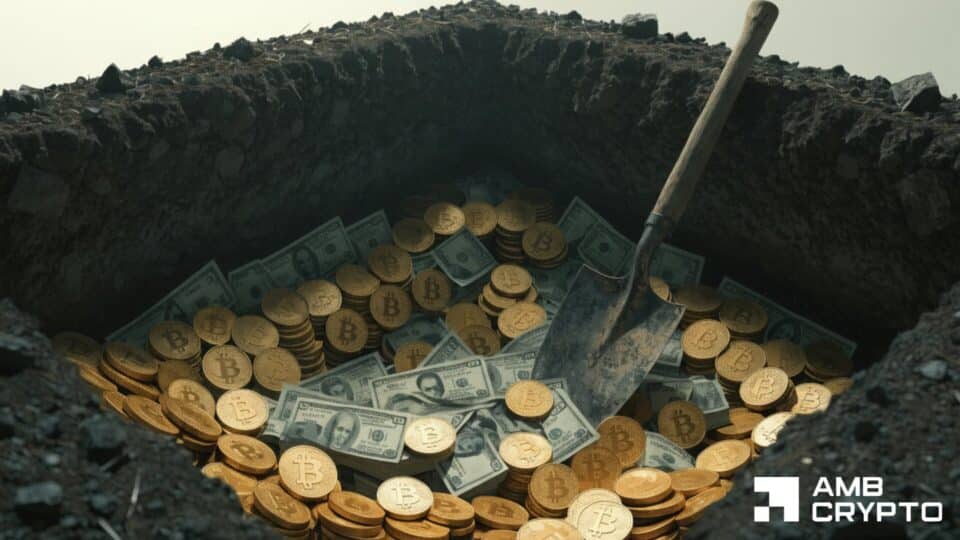
Cyvers: «Проверка транзакций вне сети может предотвратить 99% взломов и мошенничеств с криптовалютой»

cryptonews.ruPublicado em 2024-01-11Última atualização em 2025-01-11

По данным компании по безопасности блокчейна Cyvers, новое решение по безопасности блокчейна может предотвратить более 99% взломов и мошенничества криптовалют, которые обойдутся отрасли в более чем 2,3 млрд долларов в 2024 году.

Взломы остаются одним из самых больших препятствий для принятия криптовалюты в массовом порядке, при этом украденные цифровые активы превысили общее количество в 2023 году на 40%, заявила Cyvers.


Общая годовая потеря средств. Источник: Cyvers

По словам Майкла Перла, вице-президента по стратегии GTM в компании по безопасности блокчейнов Cyvers, новое решение для обеспечения безопасности блокчейна может предотвратить почти все мошенничества с криптовалютой, заранее моделируя и проверяя транзакции блокчейна в офчейн-среде.

«Если у вас есть мониторинг и упреждающий перехватчик, это комплексное решение может предотвратить 99,9% всех взломов, даже взломов, о которых мы не знаем, например, взломы нулевого дня», — сказал Перл.

Все больше поставщиков кошельков и централизованных бирж (CEX) интересуются решением Cyvers для проверки транзакций, которое можно применять к небольшим розничным транзакциям и более сложным переводам блокчейнов, таким как мгновенные кредиты, сказал Перл.

Криптовалютные фишинговые мошенничества, ответственные за кражу средств на сумму 1 млрд долларов в 296 инцидентах в 2024 году, остаются одним из самых разрушительных векторов атак. По меньшей мере три фишинговых инцидента превысили убытки в размере 100 млн долларов.

Проверка офчейн-транзакций могла бы предотвратить взлом WazirX на сумму 230 млн долларов

По словам Перла, решение Cyvers могло бы обнаружить вредоносный смарт-контракт, который привел к взлому WazirX на сумму 230 млн долларов за восемь дней до потери средств.

Перл сказал, что решение может быть использовано для защиты CEX, которые представляют собой единую точку уязвимости для злоумышленников:

«Причина того, что CEX являются слабыми звеньями, заключается в том, что в конечном итоге у вас есть один, два или три горячих кошелька, которые хранят миллиарды долларов, и биржи имеют эту концепцию, что средства защищены с помощью мультиподписных или многосторонних вычислений».

Согласно отчету Cyvers за 2024 год, эти атаки, известные как уязвимости контроля доступа, привели к краже 1,9 млрд долларов США или более 81% от общей суммы, потерянной из-за взломов криптовалют в 67 инцидентах кибербезопасности.

Хакеры, криптовалютная биржа, мошенничество, взломы, Web3, инвестиции в криптовалюту, принятие биткоина


Потеря средств на векторы атаки. Источник: Cyvers

Эксплоиты смарт-контрактов заняли второе место по величине вектора атак, что привело к потерям в размере 456 млн долларов США в 98 инцидентах, что составляет 19% от общей украденной стоимости.

Leituras Relacionadas

The Largest Upgrade Since The Merge? How Glamsterdam Will Affect Ethereum and Regular Users?

The upcoming Glamsterdam upgrade, scheduled for late 2026, is considered Ethereum's most significant change since The Merge. It focuses on fundamentally restructuring Ethereum's block production, transaction execution, and gas pricing to enable major scalability improvements while preserving decentralization. The upgrade centers on three key innovations: * **Enshrined PBS (ePBS)**: Moves the Proposer-Builder Separation mechanism into the protocol's core, eliminating reliance on external relays. This reorganizes the block pipeline, extending the time window for processing execution payloads, which is crucial for safely increasing block capacity. * **Block-Level Access Lists (BALs)**: Attaches a "map" to each block, declaring in advance which state data its transactions will access. This enables potential parallel transaction processing and faster node synchronization, breaking a key performance bottleneck. * **Gas Repricing**: Introduces a more accurate resource pricing model by separating computation costs from state storage costs. This discourages uncontrolled state growth by making operations that create permanent data (like new accounts) more accurately reflect their long-term network burden. Together, these changes aim to solve the core challenges of increasing Ethereum's throughput (e.g., raising the Gas Limit) without overburdening node hardware or increasing centralization risks. They prepare the infrastructure for higher capacity, targeting a credible post-upgrade capacity of up to 200 million Gas. For users, the impact will be nuanced: * General transaction fees may become lower and more stable as block space increases. * Simple transfers could see cost reductions, while state-intensive operations (like contract deployment) may become relatively more expensive due to the new gas model. * Gas fee estimations by wallets will become more accurate. * L2 networks could benefit long-term from increased data blob capacity. * Standardized logs for all ETH transfers (EIP-7708) will improve tracking for wallets and exchanges. Ultimately, Glamsterdam represents a foundational shift, not a simple block size increase. It seeks to expand Ethereum's capacity by re-engineering its underlying mechanics, maintaining its commitment to decentralization while enabling significant performance gains.

marsbitHá 2h

The Largest Upgrade Since The Merge? How Glamsterdam Will Affect Ethereum and Regular Users?

marsbitHá 2h

Circle CEO Responds to the OUSD Challenge: Stablecoin is a Winner-Takes-All Business, and We Won't Slow Down

In response to questions about the OUSD stablecoin initiative, Circle CEO Jeremy Allaire argues that the stablecoin market is a "winner-take-most" platform business driven by powerful network effects, and Circle has no plans to slow down. He outlines three key drivers behind USDC's dominant position: 1. **Protocol/Software Layer Network Effects**: The value of a stablecoin network grows as more developers and services integrate it, creating compounding utility and user preference. Circle has spent nearly a decade building this ecosystem with USDC, now accelerated by mainstream adoption and enhanced by software stacks like CCTP and Gateway for interoperability. 2. **Liquidity Network Effects**: Liquidity begets more liquidity. USDC has achieved top-tier global liquidity—ranking among the top three digital assets alongside BTC and USDT—through nearly a decade of building deep primary and secondary market access across regions and venues. 3. **Regulatory and Policy Integration**: Establishing a global stablecoin requires deep regulatory engagement, licensing, and compliance across key markets—a significant, long-term investment where Circle is a leader. Allaire cites Artemis data showing USDC facilitated 80% of all dollar stablecoin on-chain transaction volume in Q1 2026, with USDT at 20% and all others negligible. He addresses OUSD's purported advantages: "free" minting/burning is often not sustainable in practice; redistributing all revenue can starve essential infrastructure investment; and large consortium models historically struggle with inefficiency and slow execution, unlike focused strategic partnerships. He reaffirms Circle's strong ongoing partnership with Coinbase on USDC and notes Circle collaborates with dozens of other stablecoin issuers through its expanding platform (Arc, CCTP, CPN, etc.). While welcoming OUSD to the ecosystem, Allaire asserts that Circle's vast, trusted network and continued investment make USDC the foundational digital dollar infrastructure for the world.

链捕手Há 2h

Circle CEO Responds to the OUSD Challenge: Stablecoin is a Winner-Takes-All Business, and We Won't Slow Down

链捕手Há 2h

Trading

Spot
活动图片