ИИ-токены, которые отличились на этой неделе

cryptonews.ruPublicado em 2023-06-11Última atualização em 2025-01-11

Токены, связанные с искусственным интеллектом, продолжает привлекать внимание: несколько ИИ-монет продемонстрировали отличную динамику на второй неделе января 2025 года.

Нативный токен платформы ChainBounty BOUNTY вырос на 37%, AIC от AI Companions прибавил в цене 34%. Курс IQ также поднялся на 34% после запуска ИИ-агента IQ GPT.

ChainBounty (BOUNTY)

ChainBounty — децентрализованная платформа, которая использует искусственный интеллект для обнаружения и устранения уязвимостей безопасности в криптопроектах. За последние 7 дней цена ее нативного токена BOUNTY выросла на 37%, а рыночная капитализация достигла $43 млн.
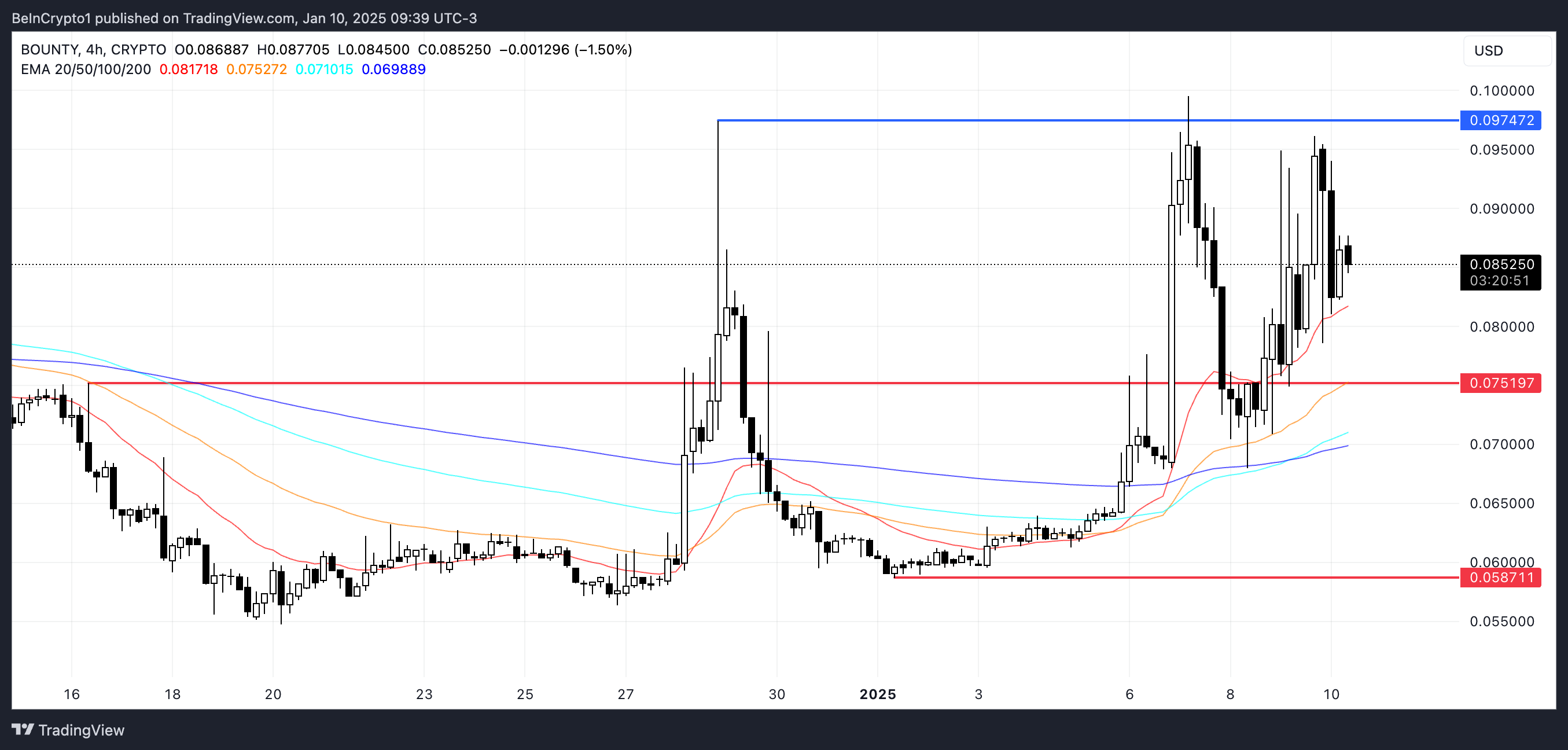
Анализ цены BOUNTY. Источник: TradingView

Следующий важный уровень сопротивления находится в районе $0,097. Прорыв и закрепление выше этой отметки поднимет BOUNTY выше $0,10. Однако если тренд изменит направление, ИИ-токен может найти поддержку на уровне $0,075 или $0,0587.

AI Companions (AIC)

AI Companions использует искусственный интеллект для разработки технологии виртуального взаимодействия, сосредоточенной на создании персонализированных цифровых компаньонов, которые адаптируются к индивидуальным предпочтениям и стилю общения пользователей.

Анализ цены AIC. Источник: TradingView

За последнюю неделю нативный токен проекта AIC вырос на 34%, а его рыночная капитализация приблизилась к $100 млн. Растущий интерес к технологии ИИ-компаньонов может повлиять на ценовую динамику AIC, с возможными движениями к уровням сопротивления на $0,16 и $0,17. Однако при откате рынка AIC может протестировать поддержку на $0,12, с дальнейшим риском снижения до $0,096.

IQ

На этой неделе проект IQ запустил собственного ИИ-агента IQ GPT. Эта специализированная модель анализирует рыночные тренды, интерпретирует сложную криптовалютную терминологию и отслеживает новости индустрии, в то время как токен IQ поддерживает управление платформой и премиум-функции.

За последнюю неделю IQ вырос в цене на 34%, достигнув рыночной капитализации в $198 млн. 24-часовой объем торгов токенов, тем временем, взлетел на 1 500%.
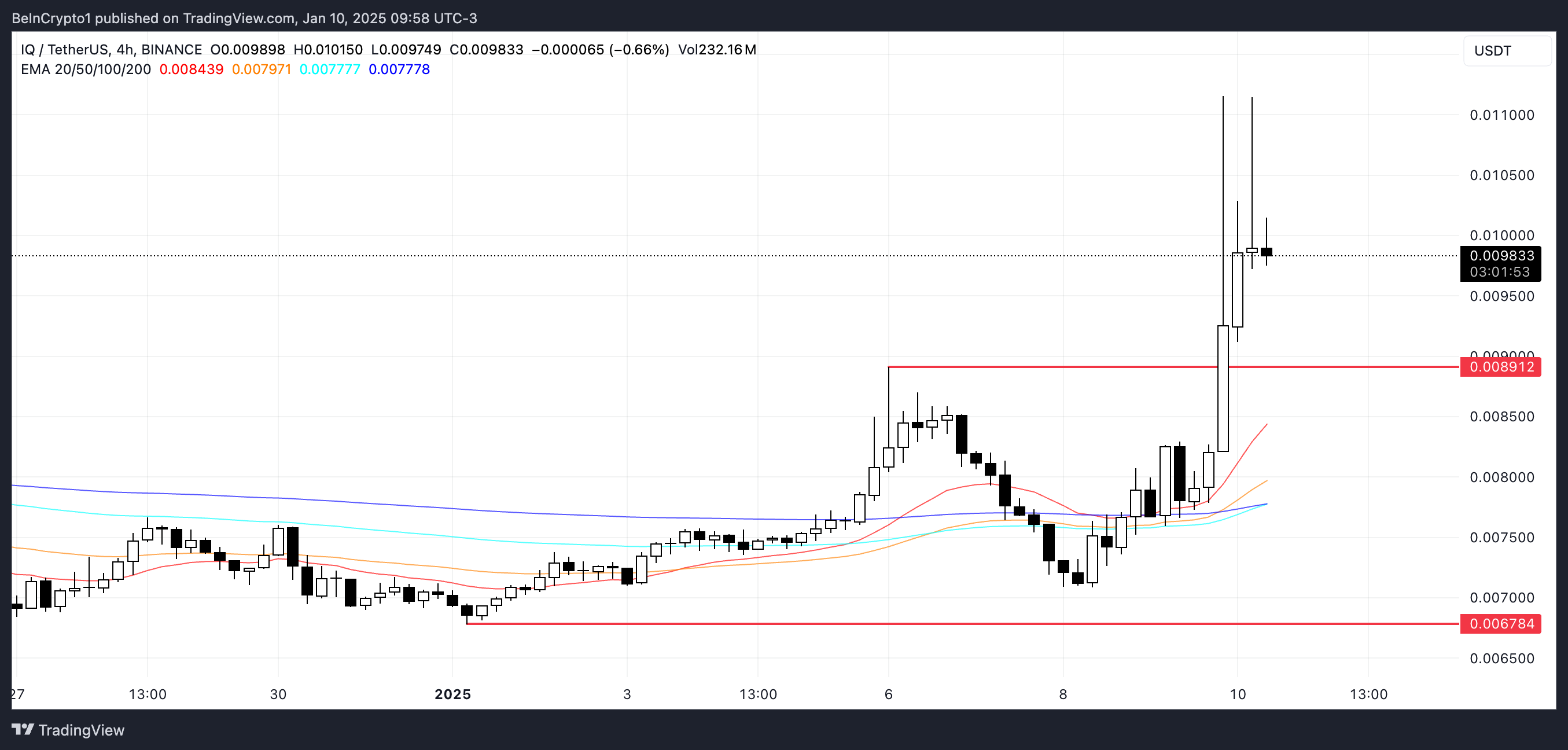
Анализ цены IQ. Источник: TradingView

Технический анализ указывает на возможное движение токена к уровню $0,011. Однако разворот тренда может привести к тому, что цена IQ упадет до $0,0089 или даже протестирует $0,0067.

Leituras Relacionadas

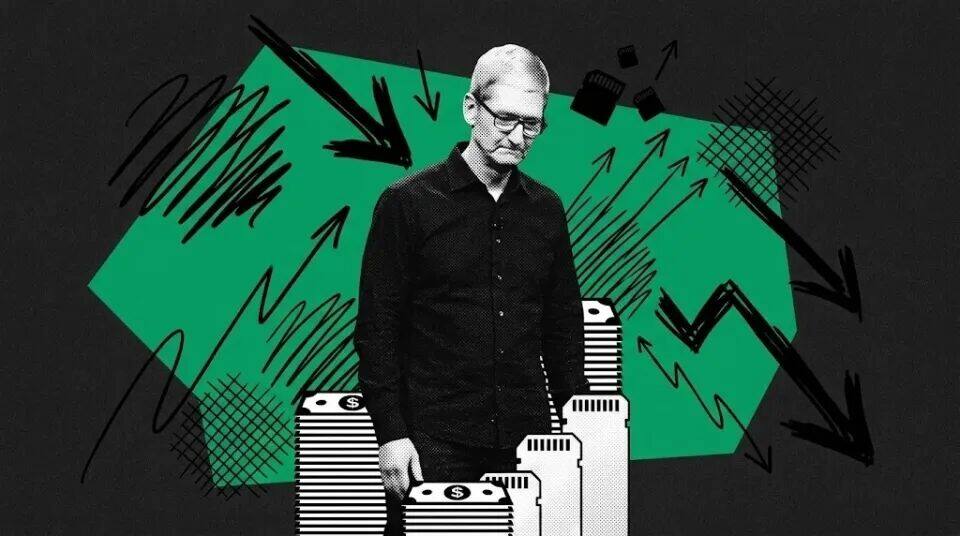
Apple and the Power Rebalancing with 'The Microns': Dissecting the Profit Ledger Behind the iPhone

The article analyzes the shifting profit dynamics and power balance between Apple and memory suppliers like Micron within the iPhone supply chain. It highlights a social media post criticizing Apple for raising iPhone prices while blaming memory chip cost increases, despite historically paying suppliers like Micron very little. An estimated iPhone 18 cost breakdown is referenced. Historically, memory was a minor cost component. In 2017's iPhone X, memory accounted for only about 1.6-2.3% of the price, with Apple capturing nearly 50% net profit. Over time, memory's share of the Bill-of-Materials (BOM) cost has grown significantly, reaching an estimated 12-15% for the iPhone 17 series. The core driver of this change is soaring demand for memory from the AI industry, particularly for High Bandwidth Memory (HBM) and AI servers, which is diverting production capacity and squeezing supply for consumer electronics. Memory manufacturers, after enduring periods of low profits, now hold greater pricing power. This is reflected in their recent strong financials, like Micron's 84.6% gross margin. Apple CEO Tim Cook initially described the memory price pressure as unprecedented in his 40-year career, later calling it a "once-in-a-century flood," before Apple announced price hikes across several product lines, causing a significant stock drop. Elon Musk echoed Cook's sentiment about the dramatic cost surge. The article concludes that the era of memory suppliers being at the mercy of Apple's pricing power has temporarily reversed, thanks to AI-driven demand. It notes Apple is reportedly seeking to diversify its supply chain, including exploring chips from China's CXMT.

Odaily星球日报Há 1h

Apple and the Power Rebalancing with 'The Microns': Dissecting the Profit Ledger Behind the iPhone

Odaily星球日报Há 1h

Conversation with the Founder of 42 Macro: The Fed's 'Boiling the Frog Slowly' and the K-Shaped Economy

In a conversation with Anthony Pompliano, Darius Dale, founder of 42 Macro, discusses the Federal Reserve's monetary policy and the K-shaped U.S. economy. Dale characterizes new Fed Chair Kevin Warsh as a "dove in hawk's clothing," expecting the Fed to signal or enact policy tightening in the coming quarters to create room for later easing. He argues current economic signals, including high deficit spending, debt monetization, and credit growth, strongly indicate inflation is not on a credible path back to 2%, forcing the Fed to act. The discussion highlights the stark "K-shaped" economic reality. While top earners, buoyed by massive cash savings (up ~$8 trillion since pre-pandemic), continue robust spending, those at the bottom face severe financial strain, with delinquency rates on consumer loans reaching crisis-era highs. Dale attributes much of the current social and political anxiety to this divergence, driven by the "Cantillon effects" of monetary expansion, which disproportionately benefits asset owners. He emphasizes that in this environment of "financial repression," individuals must participate in asset markets to avoid being left behind. On equities, Dale notes a rotation from the "Magnificent Seven" tech giants into broader AI-exposed companies, while warning that the tech giants' massive capital expenditure cycles could eventually puncture over-optimistic cash flow projections. Dale concludes by stressing that the core desire across all economic strata is simply the dignity to provide for one's family, a goal currently undermined by systemic policies that act as a "wealth siphon" from the bottom to the top.

marsbitHá 1h

Conversation with the Founder of 42 Macro: The Fed's 'Boiling the Frog Slowly' and the K-Shaped Economy

marsbitHá 1h

The Domestic Answer to Space Computing Power: Photonics Are More Efficient, Musk and Huang's Approaches Are Too Roundabout

The Space Computing Race: A Photonic Advantage The competition for space-based computing has intensified, with figures like Elon Musk and NVIDIA's Jensen Huang highlighting its potential. Musk predicts solar-powered AI satellites could offer the most cost-effective computing by 2032. However, space presents extreme challenges for traditional electronic chips: radiation from cosmic particles can cause errors, the vacuum environment hinders heat dissipation, and limited solar power constrains energy-hungry systems. Photonic computing, using light instead of electrons, offers a promising solution. Its core advantages for space are threefold: 1) **Radiation Resistance**: Photons are charge-neutral, making them inherently immune to particle interference. 2) **Low Heat Generation**: Light propagation in waveguides generates minimal heat, bypassing critical thermal management issues. 3) **Low Power Consumption**: Photonic chips have near-zero static power draw, aligning perfectly with the energy constraints of satellites. Furthermore, for a given payload weight and volume, photonic systems can potentially deliver higher total compute density. Since they require less bulky cooling and power infrastructure, more space can be allocated to the compute units themselves. While photonic computing holds great promise, current industry approaches face hurdles like the memory-compute bottleneck (separate storage and processing) and challenges in large-scale integration. Engineering for space—withstanding launch vibrations and validating full system operation in orbit—remains a critical step. The path forward resembles the evolution from single GPUs to computing clusters, but via a photonic route. As electronic chips approach physical limits in miniaturization, photonic computing and optical interconnects (光算光联) may provide a key alternative to bypass these constraints and define the next generation of space-based computing capabilities.

marsbitHá 2h

The Domestic Answer to Space Computing Power: Photonics Are More Efficient, Musk and Huang's Approaches Are Too Roundabout

marsbitHá 2h

Trading

Spot
活动图片