Биткоин на $110K? Чему учит нас 2024 год

cryptonews.ruPublicado em 2024-07-06Última atualização em 2025-01-06

В конце 2024 года Биткоин проходит через яркую фазу, привлекая внимание как небольших трейдеров, так и крупных инвесторов. Комьюнити на платформах X, Reddit, Telegram, 4Chan, BitcoinTalk и FarCaster бурно обсуждает, преодолеет ли BTC планку в $90K, $100K и даже $110K. Ниже разберём, каким образом толпа и крупные кошельки («киты» и «акулы») определяют динамику рынка.


Как толпа влияет на рынок

В большинстве случаев рыночная психология такова, что массовые ожидания розничных трейдеров (retail) идут вразрез с реальными движениями цен. Почему так происходит?

  1. Zero-sum игра: криптовалюты, как и другие рынки, — это соревнование за ограниченные активы. Когда мелкие игроки покупают на вершинах или продают на минимуме, именно «киты» получают выгоду.
  2. Страх и жадность: на подъёме многие на фомо покупают (FOMO), а при первых признаках отката сбрасывают активы, боясь больших потерь.
  3. Массовое заблуждение: когда все ждут конкретной цены (например, «Я куплю по $90K»), рынок зачастую идёт другим путём.

Классические примеры 2024 года
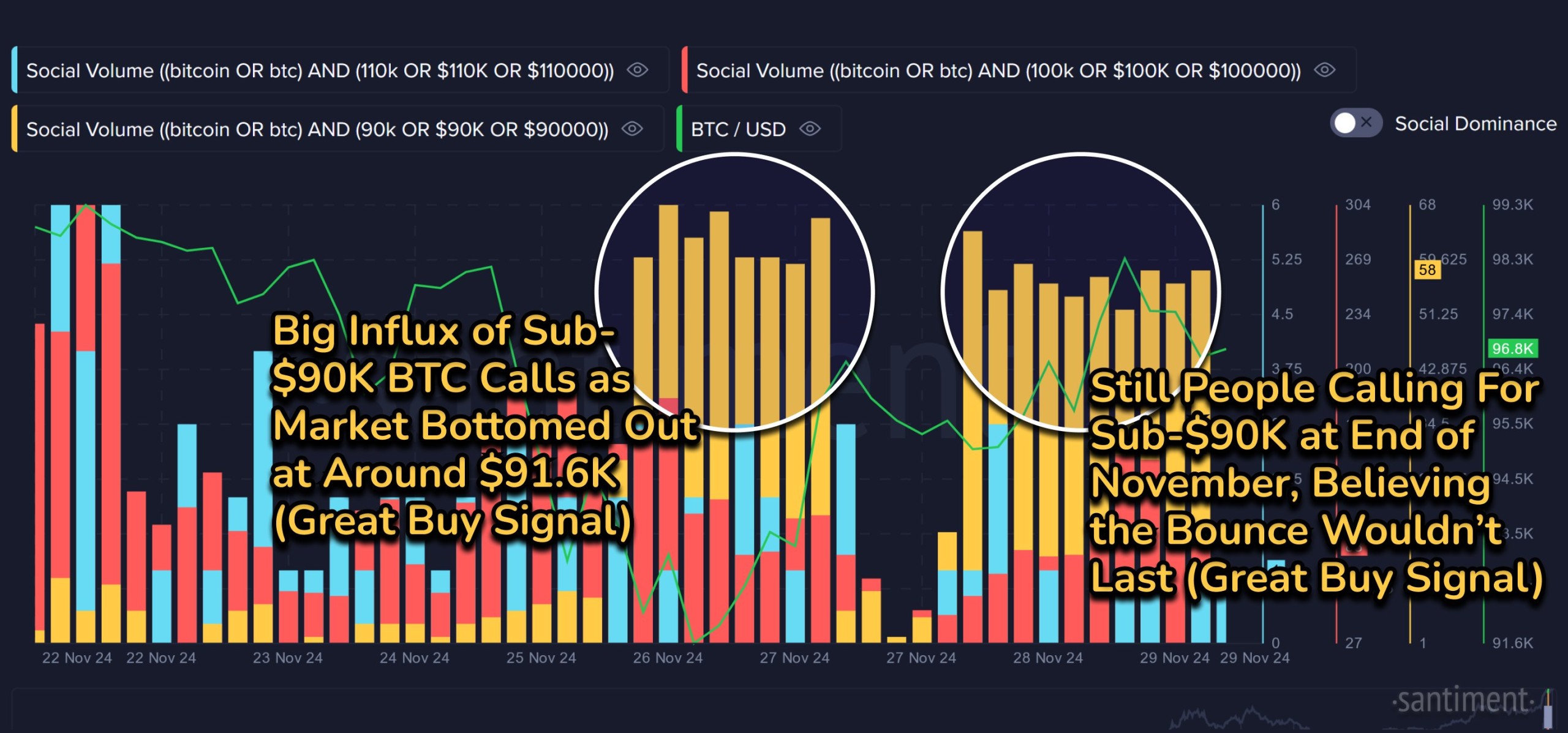
Ноябрь: толпа паниковала и надеялась на откат к $90K, чтобы купить «по дешевле» после «Trump Pump».
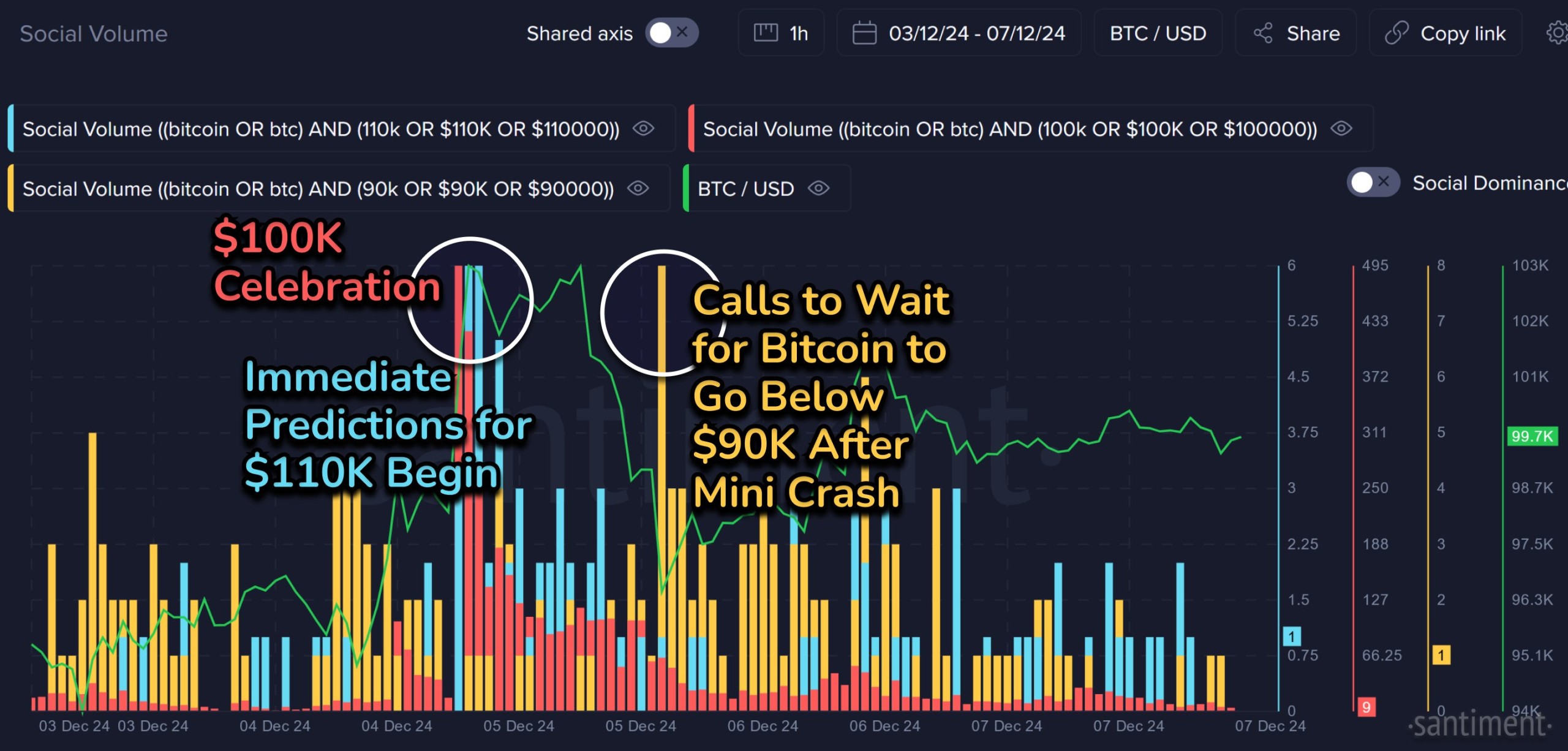
Декабрь: вместо коррекции цена BTC дошла до $103K, вызвав FOMO.
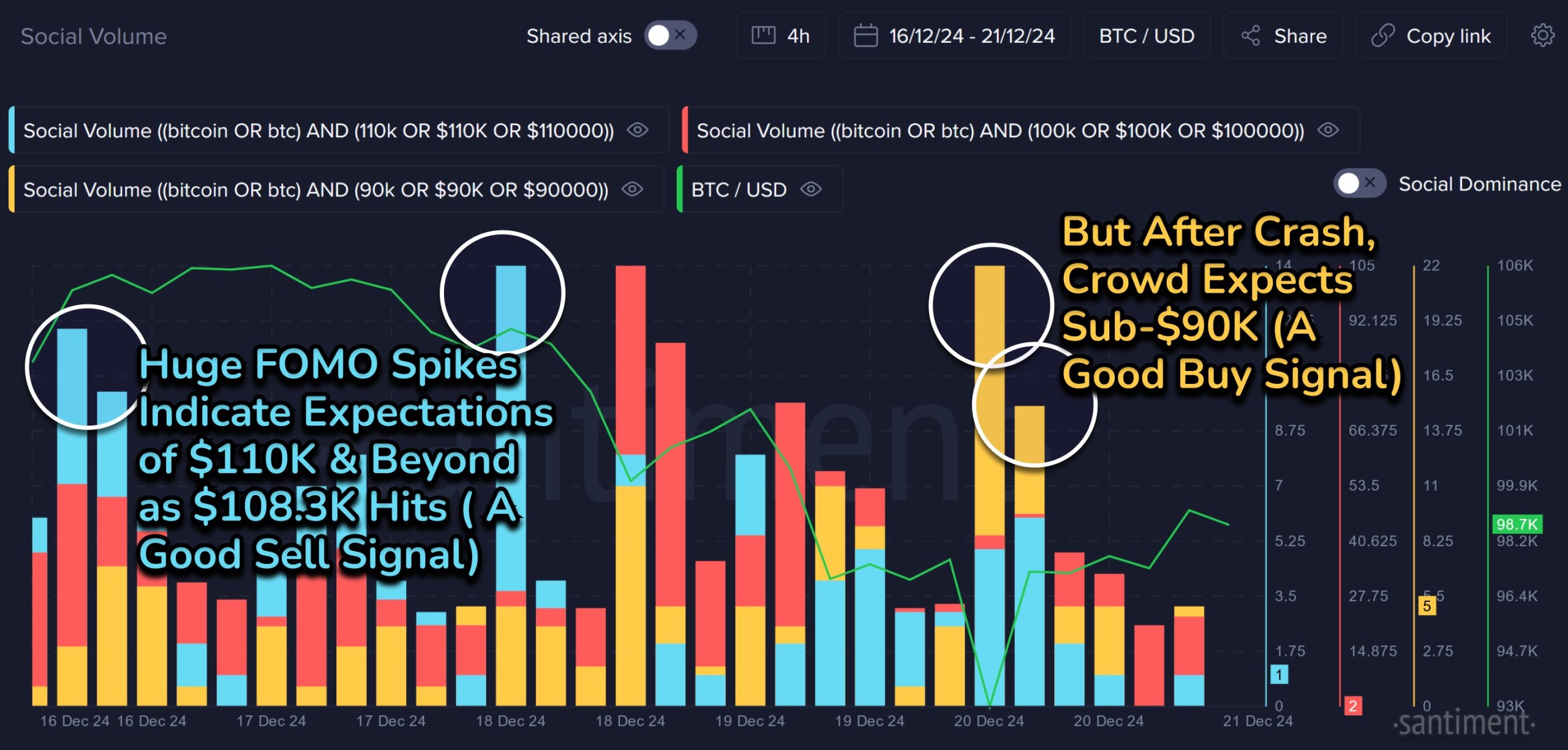
16 декабря: исторический максимум $108.3K; соцсети заполнились прогнозами о «скором $110K». Многие назвали это точкой для фиксации прибыли.

Результат: «малые трейдеры» часто ошибаются с таймингом. Они боятся покупать при $90K, но бегут за курсом на $100K+, хотя это уже позднее движение.


Киты и акулы стоит ли прислушаться

Движение цены на Биткоин в долгосрочной перспективе диктуют два типа кошельков:

  1. Киты (whales) и акулы (sharks):** держатели 10+ BTC, которые могут влиять на предложение на рынке.
  2. Публичные розничные трейдеры: генерируют шумиху и общий фон новостей, но обычно стоит «по другую сторону» от сделок китов.

Почему лучше следовать крупным держателям

  • Киты аккумулируют: Когда они накапливают монеты, это часто знак будущего роста.
  • Толпа ошибается: Массовые прогнозы и страхи насчёт скорого падения нередко оказываются неверными.

Три правила для эффективной стратегии

  1. Покупать, когда все считают, что криптовалюты «умерли»: например, после краха FTX или панических новостей о регуляторах.
  2. Удерживать, когда «киты» и «акулы» продолжают аккумулировать: пусть краткосрочные движения не сбивают с толку.
  3. Продавать, когда любой «мем-коин» считается «бесплатными деньгами» без логического обоснования: именно в такие моменты рынок ближе к перегретому состоянию.

Упор на аналитические платформы

Чтобы отслеживать активность крупных кошельков и понимать поведение толпы, необходимы комплексные ончейн и социальные метрики. Например:

  • Ончейн-данные (балансы, транзакции): показывают реальные передвижения средств.
  • Социальные метрики (упоминания в соцсетях): помогают увидеть настроения розничных трейдеров.

Платформа Santiment со своим сервисом Sanbase предлагает полноту аналитики, позволяя одновременно смотреть на ончейн-активность и соцсетевые тренды. Это облегчает понимание, когда рынок близок к перегреву или, напротив, слишком «тишина».


Итог: нужно быть контрагентом толпы

  1. Высокие цены и все ждут $110K? Возможно, рынок перегрет.
  2. Все надеются «купить по $90K»? Скорее всего, рынок ускользнёт дальше вверх.
  3. Крупные игроки продолжают покупать: долгосрочно это сигнал к удержанию.

Если вы хотите стабильного роста капитала, учитесь мыслить контр-интуитивно: покупать на страхе, удерживать на спокойных фазах, продавать на массовой эйфории. Исходя из опыта 2024 года, именно так ведут себя те, кто в итоге остается в плюсе.
Leituras Relacionadas

Examining the Open USD Partner Lineup: Follow Who's Joining to See Where the Money Flows

**Title: Deciphering the Open USD Partner Roster: Following the Money** The launch of Open USD is notable less for the stablecoin itself and more for its expansive list of over 140 founding partners, which reads like a "who's who" of global finance and tech. This coalition, including asset managers like BlackRock, card networks Visa and Mastercard, banks (BNY Mellon, Standard Chartered, etc.), tech giants (Google, IBM), merchants (Shopify), and crypto firms (Coinbase, Ripple, Aave, MetaMask), signals a strategic shift. The diverse membership reveals that stablecoins are increasingly viewed not as products to compete over, but as shared infrastructure too critical to be left to any single entity. Each partner category has distinct motives. Asset managers like BlackRock seek to manage the large, sticky cash reserves, a lucrative fee-generating opportunity. Merchants like Shopify aim for lower-cost settlement and potential yield on balances. Banks join defensively to retain custody and settlement roles, fearing deposit outflows to stablecoins. Tech companies bet on programmable money for future machine-to-machine commerce. Crypto firms gain mainstream legitimacy and distribution channels. Remarkably, the consortium includes direct competitors (Visa vs. Mastercard, Coinbase vs. Ripple), indicating that the fear of exclusion from this emerging financial layer outweighs competitive rivalries. However, this shared governance could also lead to slow decision-making. The roster's composition is the real message: it represents a collective bet that a widely accepted, consortium-owned stablecoin is preferable to proprietary versions or having none at all. For incumbents like Circle and Tether, this alliance poses a significant threat, as potential clients have collectively chosen to build their own alternative. The absence of major U.S. retail banks (busy with their own tokenized deposit networks) is equally telling. In essence, the partner list maps where the industry believes value and risk will flow in a tokenized dollar future, marking stablecoin's evolution from a product to a utility.

Foresight NewsHá 9m

Examining the Open USD Partner Lineup: Follow Who's Joining to See Where the Money Flows

Foresight NewsHá 9m

IOSG: Q-Day Countdown, Will Quantum Computing End Cryptocurrency?

IOSG: The Q-Day Countdown – Will Quantum Computing End Cryptocurrency? This analysis explores the looming threat quantum computing poses to blockchain technology. Quantum computers, leveraging Shor's algorithm, could theoretically break the elliptic curve cryptography (ECC) underpinning cryptocurrencies like Bitcoin and Ethereum. The article outlines a hypothetical "Q-Day" scenario where exposed public keys from dormant assets are compromised, leading to fund theft and a deep governance crisis. The core risk is not the complete erasure of blockchains but a systemic reset of public-key cryptography. Bitcoin faces significant challenges due to its "code-is-law" ethos and the immense social consensus required for migration. Its primary vulnerability lies in legacy UTXOs with publicly exposed keys. Ethereum's path involves a more complex, full-stack cryptographic agility upgrade across execution, consensus, and data layers. The industry has a limited "engineering comfort window" of 5-8 years to coordinate a migration to post-quantum cryptography (PQC), such as lattice-based or hash-based signatures. While the existential threat is often overstated, the real bottleneck is the immense coordination required across protocol developers, node operators, wallet providers, exchanges, and custodians. Market repricing of crypto assets may occur well before an actual Q-Day if quantum hardware roadmaps accelerate or regulatory pressure mounts. The article concludes that quantum computing is not a doomsday weapon but a severe stress test for blockchain's foundational security model and governance structures.

marsbitHá 39m

IOSG: Q-Day Countdown, Will Quantum Computing End Cryptocurrency?

marsbitHá 39m

Why 2026 could redefine Ethereum, Solana, Base and Avalanche

Blockchain infrastructure is undergoing a major coordinated transformation, driven by institutional demand for reliability, compliance, and predictable settlement. Over $30 billion in Real-World Assets (RWA) on-chain has exposed network weaknesses. Major blockchains are responding with foundational upgrades, moving beyond incremental speed improvements. Ethereum's "Glamsterdam" upgrade, planned for H1 2026, will significantly increase gas limits and introduce features like PBS (pre-blocked state) for enhanced settlement and parallel execution. Solana's "Alpenglow," targeting a mainnet launch in H2 2026, focuses on reducing finality time dramatically and freeing network resources to improve reliability. Beyond speed, compliance is critical. Base's "Beryl" upgrade in Q3 2026 will introduce a standardized, regulatory-compliant token framework (B20). Avalanche's "Octane" upgrade aims to boost transaction processing and reduce costs for enterprise applications. Even Bitcoin is evolving with the potential activation of OP_CAT by late 2026/early 2027. The competition is shifting. While technical upgrades are widespread, institutions will ultimately allocate capital based on proven execution, operational resilience, and regulatory compatibility during market stress. Ethereum currently leads in tokenized assets, while networks like Base and Solana are strengthening their institutional offerings. The blockchain that best delivers reliable, compliant, and uninterrupted service is poised to attract the greatest share of future institutional capital.

ambcryptoHá 1h

Why 2026 could redefine Ethereum, Solana, Base and Avalanche

ambcryptoHá 1h

Trading

Spot
活动图片