SpacePay Makes Crypto Payments Easy: What Close To $1M in Presale Funding Shows About Its Future

bitcoinistPublicado em 2024-12-30Última atualização em 2024-12-30

Resumo

SpacePay changes how we use crypto for everyday shopping by making digital payments as simple as using a credit card....

SpacePay changes how we use crypto for everyday shopping by making digital payments as simple as using a credit card. The platform connects over 325 crypto wallets to standard payment terminals, letting customers pay with their preferred digital currency while merchants receive instant local currency.  

The platform’s success stems from solving real payment problems that both stores and customers face. 

Why SpacePay Works for Everyone

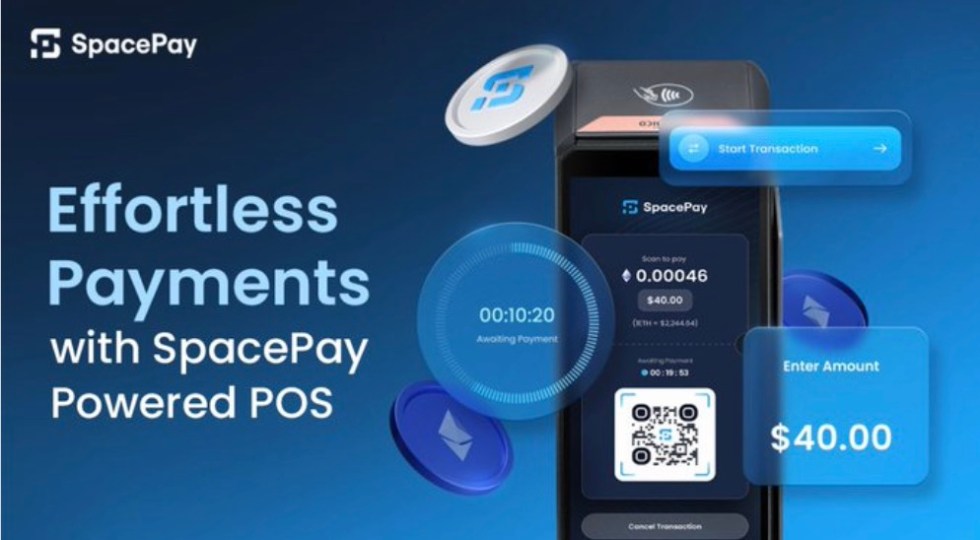
SpacePay’s appeal lies in its approach to making crypto payments practical. When customers want to pay, they simply scan a QR code with any of their preferred wallets among the 325+ supported options.

This works just like scanning a QR code menu at a restaurant – quick, familiar, and effortless. Merchants see payment confirmation on their existing terminals instantly, making crypto transactions as natural as accepting credit cards.

The platform’s 0.5% fee structure changes the game for businesses used to paying 2.5-3.5% on card transactions. For a store processing $10,000 monthly, this means keeping an extra $200-300 in their pocket each month.

The instant settlement system delivers money to merchant accounts right away, unlike traditional payments that can take days to clear. This immediate access helps businesses manage their cash flow better and take advantage of time-sensitive opportunities.

Price protection removes the last major barrier to crypto acceptance. When a customer pays for a $50 item, the merchant receives exactly $50 in their local currency, regardless of crypto market movements.  

SpacePay’s Growing Success Story

The platform’s journey shows impressive momentum in several key areas. Private investors demonstrated early confidence by backing SpacePay with $750,000 in funding

The completion of SpacePay’s Minimum Viable Product (MVP) proves the technology delivers on its promises, separating it from projects still in planning stages.

Industry recognition came through the prestigious “New Payment Platform of the Year” award at the CorporateLiveWire Global Awards 2022/23. This acknowledgment validates SpacePay’s approach to solving payment challenges.  

Strategic achievements include successful completion of Smart Contract Audits, development of merchant protection features, and establishment of regulatory compliance across unsanctioned nations.

This careful preparation ensures SpacePay can operate legally in major markets while maintaining high security standards. Each milestone builds confidence in the platform’s ability to deliver practical payment solutions globally.
SpacePay

What’s Next for SpacePay

SpacePay plans to introduce staking rewards that will let token holders earn passive income from platform activity. Think of staking like placing your tokens in a special savings account – the longer you keep them there, the more rewards you can earn. This program rewards loyal supporters who believe in SpacePay’s long-term vision for simpler crypto payments.

The referral system will create another earning opportunity for community members. Users who help bring new merchants or participants to the platform will receive bonuses for their efforts.

This approach helps SpacePay grow naturally through word-of-mouth while rewarding those who contribute to its expansion. Just as a satisfied customer might recommend their favorite restaurant to friends, SpacePay users can earn by sharing a payment solution they trust.

Exchange listings represent the next major milestone. These listings will make it easier for more people to buy and trade SPY tokens. As SpacePay adds new payment features and expands its merchant network, the platform aims to make crypto payments common in everyday shopping.

Regular platform upgrades will add more wallet options and improve the payment experience based on user feedback and merchant needs.

How to Join SpacePay

The presale offers an opportunity to join SpacePay’s growth as it approaches $1 million in funding, with tokens priced at $0.002507. The investment process works through SpacePay’s official website, designed to be as easy as the platform’s payment system. When you visit the site, you’ll find a clear presale button that guides you through each step of participation.

The platform makes investing accessible by accepting multiple payment methods. You can use popular cryptocurrencies, including USDT, AVAX, BASE, MATIC, ETH, and BNB.

For those more comfortable with traditional banking, the platform also accepts bank card payments. Think of it like shopping online – you choose your payment method, enter the amount you want to invest, and complete your transaction.

Token holders will be able to participate in the upcoming staking program, earning rewards from platform activity.

The revenue-sharing program means you’ll receive portions of transaction fees as the network grows. Community members also join quarterly webinars with the SpacePay team, getting direct updates about development progress and upcoming features.

The combination of working technology, clear growth plans, and multiple earning opportunities shows why nearly $1 million in presale funding supports SpacePay’s vision for simpler crypto payments.

JOIN THE SPACEPAY (SPY) PRESALE NOW

Website    |    (X) Twitter    |  Telegram 

Leituras Relacionadas

Is MicroStrategy Selling Bitcoin Not a Bearish Signal? Deconstructing the 5 Financial Logics Behind Corporate Bitcoin Divestment

The article "Is Strategy Selling Bitcoin Not a Bearish Signal? Decoding 5 Financial Logics Behind Corporate Bitcoin Divestment" analyzes why companies might sell their bitcoin holdings, arguing it's not necessarily negative. It begins by noting the market's surprise at Strategy's potential sale, contrasting its previous "never sell" stance. The core argument is that corporate decisions prioritize shareholder value, and selling bitcoin can be a rational strategic choice. The article outlines five key financial reasons for such sales: 1. **Increase Bitcoin Holdings Per Share:** Companies can use proceeds from bitcoin sales to repurchase shares when the stock price is undervalued relative to its bitcoin assets. This reduces the outstanding share count, potentially increasing the bitcoin amount backing each remaining share. 2. **Optimize Capital Structure & Reduce Financing Costs:** Building cash reserves through bitcoin sales can improve credit ratings (as favored by agencies like S&P), leading to lower future borrowing costs. Repaying debt with sale proceeds also reduces financial leverage. 3. **Legitimate Tax Planning:** In the absence of wash-sale rules for bitcoin in the US, companies can sell to realize capital losses, then repurchase, lowering the tax basis of their holdings and creating tax offsets. 4. **Counter Negative Market Narratives:** A controlled, non-disruptive sale could demonstrate market resilience and disprove fears that corporate selling would crash the market, thereby normalizing bitcoin as a corporate treasury asset. 5. **Repurchase Preferred Stock at a Discount:** If a company's preferred stock trades significantly below its face value, using bitcoin sale proceeds to repurchase it can retire expensive liabilities at a profit, saving on future dividend payments. The conclusion emphasizes that bitcoin's monetary properties offer flexibility. Strategic sales can protect corporate and shareholder interests, making asset utilization more important than rigid "hold" mandates.

marsbitHá 6m

Is MicroStrategy Selling Bitcoin Not a Bearish Signal? Deconstructing the 5 Financial Logics Behind Corporate Bitcoin Divestment

marsbitHá 6m

Why Did Zhipu Surge Nearly 30% in a Single Day?

"Global AI Model Unicorn" Zhipu's stock surged nearly 30% in a single day, reaching a new market cap high. The catalyst was the launch of its GLM-5.1-highspeed API, boasting a generation speed of **400 tokens per second**, setting a new global benchmark. This speed, roughly 3-5 times faster than industry leaders like OpenAI's GPT-4o and Anthropic's Claude, is achieved **without compromising the full-scale model's capabilities**. In the era of AI Agents requiring dozens of self-calls, such latency reduction is critical, transforming speed from a system metric into a determinant of intelligence limits. The breakthrough stems from a three-layer technical overhaul: 1. **TileRT Inference Engine**: Compiles the entire model into a continuous, always-on computation pipeline using "Warp Specialization," minimizing GPU idle time by having different processor groups handle data loading, computation, and communication in parallel. 2. **Heterogeneous Parallelism for MLA**: To efficiently run the GLM-5.1 model using the MLA attention mechanism, TileRT employs a heterogeneous strategy. One GPU handles sparse indexing/routing, while the others perform dense computation, optimizing for MLA's unique workflow. 3. **ZCube Network Architecture**: Replaces the standard Spine-Leaf (ROFT) network topology with a flat, dual-group interconnect. This design creates a single optimal path between any two GPUs, eliminating network congestion at scale and reducing latency. The business impact is significant: a 15% increase in cluster throughput (free extra capacity), a 40.6% reduction in tail latency (improved stability), and a one-third cut in networking hardware costs. Long-term, this innovation challenges the dominance of NVIDIA's integrated hardware-software stack (GPU+NVLink+InfiniBand), potentially benefiting manufacturers of high-density Leaf switches and optical modules while lowering the software barrier for domestic AI chips like Huawei's Ascend. The innovation proves that more can be achieved with the same compute, reshaping the infrastructure beyond just GPUs.

marsbitHá 1h

Why Did Zhipu Surge Nearly 30% in a Single Day?

marsbitHá 1h

Bidding Farewell to the 'Gray Gambling Game'! Polymarket Charges into the Compliance Track—How Will This Impact the Entire Crypto Industry?

From Gray to Regulated: How Polymarket’s Compliance Journey Reshapes Crypto The evolution of Polymarket, a decentralized prediction market platform, illustrates a critical trend in crypto: innovative, high-value sectors ultimately integrate into regulatory frameworks. Founded in 2020, Polymarket quickly gained traction by leveraging low-cost Layer 2 blockchain technology for event-based trading, notably during the 2024 US presidential election where its markets outperformed traditional polls. However, its "build first, comply later" approach led to a 2022 CFTC enforcement action, resulting in a $1.4 million fine and a ban from the US market. A pivotal shift occurred in 2025 under a new US administration. Polymarket strategically acquired CFTC-licensed derivatives exchange QCX for $112 million, securing a regulated pathway back into the US. This move coincided with a regulatory reversal, as the CFTC withdrew a prior proposal to ban political event contracts. The platform’s successful "regulatory acquisition" strategy, avoiding a lengthy independent licensing process, highlights a viable compliance path for crypto-native projects. Its journey from regulatory target to a CFTC-recognized entity—bolstered by a major data partnership and investment from Intercontinental Exchange (ICE)—signals the maturation of prediction markets from a "crypto novelty" into acknowledged financial infrastructure. The story underscores that genuine utility provides negotiating power with regulators and that embracing compliance does not necessarily mean sacrificing core technological advantages.

marsbitHá 1h

Bidding Farewell to the 'Gray Gambling Game'! Polymarket Charges into the Compliance Track—How Will This Impact the Entire Crypto Industry?

marsbitHá 1h

Trading

Spot
Futuros
活动图片