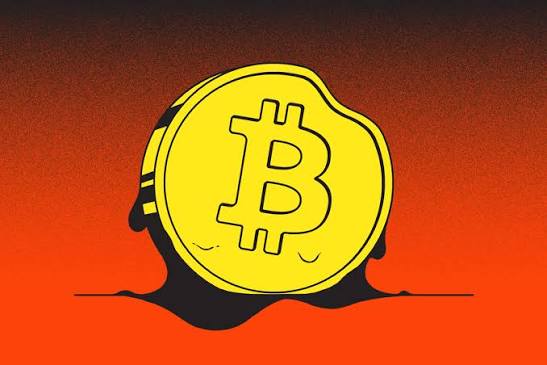
Мнение: биткоин-резерв станет геополитическим инструментом США

cryptonews.ruPublicado em 2024-01-09Última atualização em 2024-12-09

Статус первопроходца в создании стратегического биткоин-резерва принесет США значительную выгоду. Об этом написал директор по связям с правительством Riot Platforms Сэм Лайман в авторской колонке издания Forbes.

«Соединенные Штаты многое выиграют, став первопроходцем. Как с любой новой технологией наибольшие выгоды получают ранние последователи», — подчеркнул он.

Лайман считает, что стратегический резерв цифрового золота не только поможет снизить внешнеэкономический долг, но и укрепит доллар, став одним из рычагов влияния на геополитических соперников, в частности на Китай и РФ.

Он указал, что страны БРИКС нарастили темпы дедолларизации и ускорили разработку собственной валюты. Лидеры инициативы — КНР и Россия — «сбрасывают тысячи казначейских облигаций США в обмен на золото». По мнению эксперта, так они снижают свою зависимость от долларовой системы, а другие страны могут последовать их примеру:

«Но что, если бы у США был козырь против превращения золота в оружие?».

Лайман напомнил о недавнем заявлении председателя ФРС Джерома Пауэлла, который назвал первую криптовалюту конкурентом золота, а не доллара. По мнению специалиста, биткоин превосходит драгоценный металл как актив сбережения, что обусловило его рост.

«Как и золото, биткоин долговечен, редок и его трудно добывать. Но в отличие от золота его легко верифицировать, он бесконечно делим и может быть отправлен в любую точку мира со скоростью света», — отметил эксперт.

Однако он подчеркнул, что здесь важна роль первопроходца. Став первой страной G20, создавшей стратегический биткоин-резерв, США «практически вынудят другие государства пойти тем же путем».

«Принятие такого резерва государством спровоцирует лихорадку вокруг цифрового золота. Это замедлит бегство к физическому золоту, возможно, даже развернет обратно. Американские политики могли бы использовать биткоин как инструмент экономического государственного управления, уравновешивая попытки Китая и России отойти от доллара в сторону драгоценных металлов», — объяснил Лайман.

Кроме того, отметил эксперт, диверсификация государственных активов полезна для экономики США и, как следствие, для доллара. Еще сильнее поднять уверенность в американской валюте он предложил за счет продвижения долларовых стейблкоинов за рубежом.

«Эта комбинация устранит любую видимость того, что создание биткоин-резерва в США означает недоверие к доллару», — подчеркнул специалист.

Он добавил, что эмитенты стейблкоинов держат около $120 млрд в казначейских облигациях США. С такой суммой они занимают 18 место среди держателей инструмента в мире, выше Германии и Южной Кореи.

«Пропаганда стейблкоинов за рубежом и одновременное накопление биткоинов дома — тот самый двойной удар, который нужен нашей стране для ответа на экономическую агрессию Китая и России», — заключил Лайман.

Напомним, в декабре бывший министр финансов США Лоуренс Саммерс назвал план по созданию стратегического резерва в биткоинах «безумием».

Leituras Relacionadas

The Largest Upgrade Since The Merge? How Glamsterdam Will Affect Ethereum and Regular Users?

The upcoming Glamsterdam upgrade, scheduled for late 2026, is considered Ethereum's most significant change since The Merge. It focuses on fundamentally restructuring Ethereum's block production, transaction execution, and gas pricing to enable major scalability improvements while preserving decentralization. The upgrade centers on three key innovations: * **Enshrined PBS (ePBS)**: Moves the Proposer-Builder Separation mechanism into the protocol's core, eliminating reliance on external relays. This reorganizes the block pipeline, extending the time window for processing execution payloads, which is crucial for safely increasing block capacity. * **Block-Level Access Lists (BALs)**: Attaches a "map" to each block, declaring in advance which state data its transactions will access. This enables potential parallel transaction processing and faster node synchronization, breaking a key performance bottleneck. * **Gas Repricing**: Introduces a more accurate resource pricing model by separating computation costs from state storage costs. This discourages uncontrolled state growth by making operations that create permanent data (like new accounts) more accurately reflect their long-term network burden. Together, these changes aim to solve the core challenges of increasing Ethereum's throughput (e.g., raising the Gas Limit) without overburdening node hardware or increasing centralization risks. They prepare the infrastructure for higher capacity, targeting a credible post-upgrade capacity of up to 200 million Gas. For users, the impact will be nuanced: * General transaction fees may become lower and more stable as block space increases. * Simple transfers could see cost reductions, while state-intensive operations (like contract deployment) may become relatively more expensive due to the new gas model. * Gas fee estimations by wallets will become more accurate. * L2 networks could benefit long-term from increased data blob capacity. * Standardized logs for all ETH transfers (EIP-7708) will improve tracking for wallets and exchanges. Ultimately, Glamsterdam represents a foundational shift, not a simple block size increase. It seeks to expand Ethereum's capacity by re-engineering its underlying mechanics, maintaining its commitment to decentralization while enabling significant performance gains.

marsbitHá 1h

The Largest Upgrade Since The Merge? How Glamsterdam Will Affect Ethereum and Regular Users?

marsbitHá 1h

Circle CEO Responds to the OUSD Challenge: Stablecoin is a Winner-Takes-All Business, and We Won't Slow Down

In response to questions about the OUSD stablecoin initiative, Circle CEO Jeremy Allaire argues that the stablecoin market is a "winner-take-most" platform business driven by powerful network effects, and Circle has no plans to slow down. He outlines three key drivers behind USDC's dominant position: 1. **Protocol/Software Layer Network Effects**: The value of a stablecoin network grows as more developers and services integrate it, creating compounding utility and user preference. Circle has spent nearly a decade building this ecosystem with USDC, now accelerated by mainstream adoption and enhanced by software stacks like CCTP and Gateway for interoperability. 2. **Liquidity Network Effects**: Liquidity begets more liquidity. USDC has achieved top-tier global liquidity—ranking among the top three digital assets alongside BTC and USDT—through nearly a decade of building deep primary and secondary market access across regions and venues. 3. **Regulatory and Policy Integration**: Establishing a global stablecoin requires deep regulatory engagement, licensing, and compliance across key markets—a significant, long-term investment where Circle is a leader. Allaire cites Artemis data showing USDC facilitated 80% of all dollar stablecoin on-chain transaction volume in Q1 2026, with USDT at 20% and all others negligible. He addresses OUSD's purported advantages: "free" minting/burning is often not sustainable in practice; redistributing all revenue can starve essential infrastructure investment; and large consortium models historically struggle with inefficiency and slow execution, unlike focused strategic partnerships. He reaffirms Circle's strong ongoing partnership with Coinbase on USDC and notes Circle collaborates with dozens of other stablecoin issuers through its expanding platform (Arc, CCTP, CPN, etc.). While welcoming OUSD to the ecosystem, Allaire asserts that Circle's vast, trusted network and continued investment make USDC the foundational digital dollar infrastructure for the world.

链捕手Há 1h

Circle CEO Responds to the OUSD Challenge: Stablecoin is a Winner-Takes-All Business, and We Won't Slow Down

链捕手Há 1h

Q2 Crypto Market Review: Did Bitcoin Rise for 'Nothing'? Did Money Flow to AI and On-Chain?

Q2 2026 Crypto Market Recap: Bitcoin's Gains Erased Amid Shift to AI and On-Chain Activity The second quarter of 2026 saw a significant reversal for the cryptocurrency market. Bitcoin gave back all its April gains, ending Q2 down approximately 11%, while major stock indices posted strong gains. This divergence was driven by a hawkish shift in Fed rate expectations, capital rotation into AI stocks, and weakening liquidity channels into crypto. Key demand pillars deteriorated simultaneously. Spot Bitcoin ETFs recorded net outflows of $4.08 billion for the quarter, with outflows dominating June. Crypto treasury entity Strategy's bitcoin accumulation slowed markedly, and the total stablecoin market cap contracted by ~$4.2 billion. This created a tighter liquidity environment. Exchange data reflected the downturn. Spot trading volumes fell 28% quarter-over-quarter. The market underwent significant deleveraging, with $8.35 billion in long liquidations for BTC and ETH, primarily in late May/early June. Open interest and order book liquidity also declined. Despite the bearish price action, structural developments point to an expanding on-chain ecosystem. These include the rise of tokenized stocks with full legal rights, the growth of RWA (real-world asset) perpetual contracts for trading stocks and commodities 24/7, and the use of crypto markets for price discovery ahead of major events like the SpaceX IPO. On-chain vaults are also emerging as a core layer for institutional capital allocation.

Foresight NewsHá 2h

Q2 Crypto Market Review: Did Bitcoin Rise for 'Nothing'? Did Money Flow to AI and On-Chain?

Foresight NewsHá 2h

Trading

Spot
活动图片