Биткоин должен подорожать до $240 000 к концу весны 2025 года

cryptonews.ruPublicado em 2024-06-21Última atualização em 2024-10-21

Аналитики назвали три признака наступления фазы параболического роста курса биткоина, в ходе которой криптовалюта должна подорожать до $240 000.

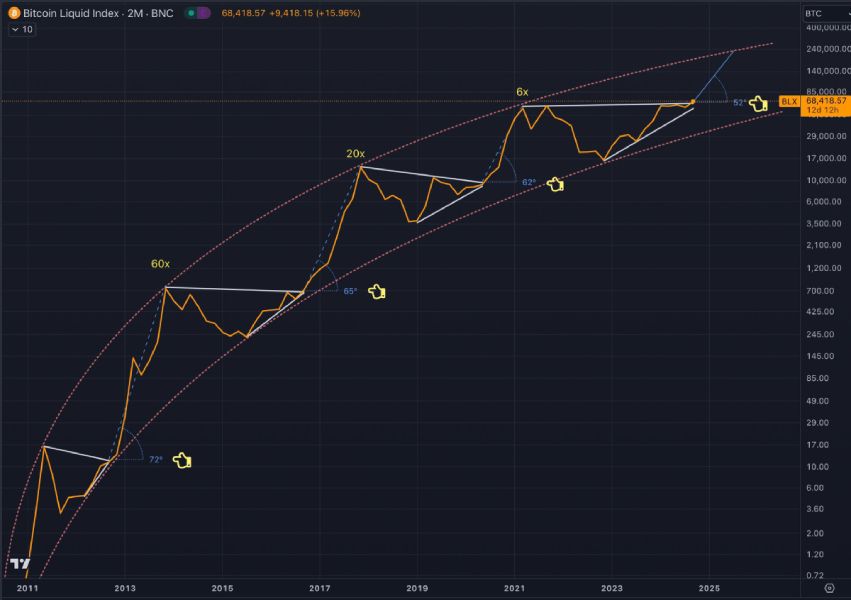
Куш Алемзаде опубликовал логарифмический график, на котором видно, что 21 октября цена биткоина преодолела ключевой барьер сопротивления на отметке $68 419. Закрепление над этой преградой будет означать окончание периода консолидации, возникшего в конце 2022 года.
btc-logarithmic-chart

Логарифмический график изменения курса биткоина

Во-вторых, эксперты аналитической компании CryptoQuant заметили, что криптокиты стали вести себя точно так же, как и в 2020-м после резкого падения стоимости BTC на фоне начала пандемии коронавируса. Как и четыре года назад, толстосумы активно скупают монеты, ожидая старта бычьего ралли.

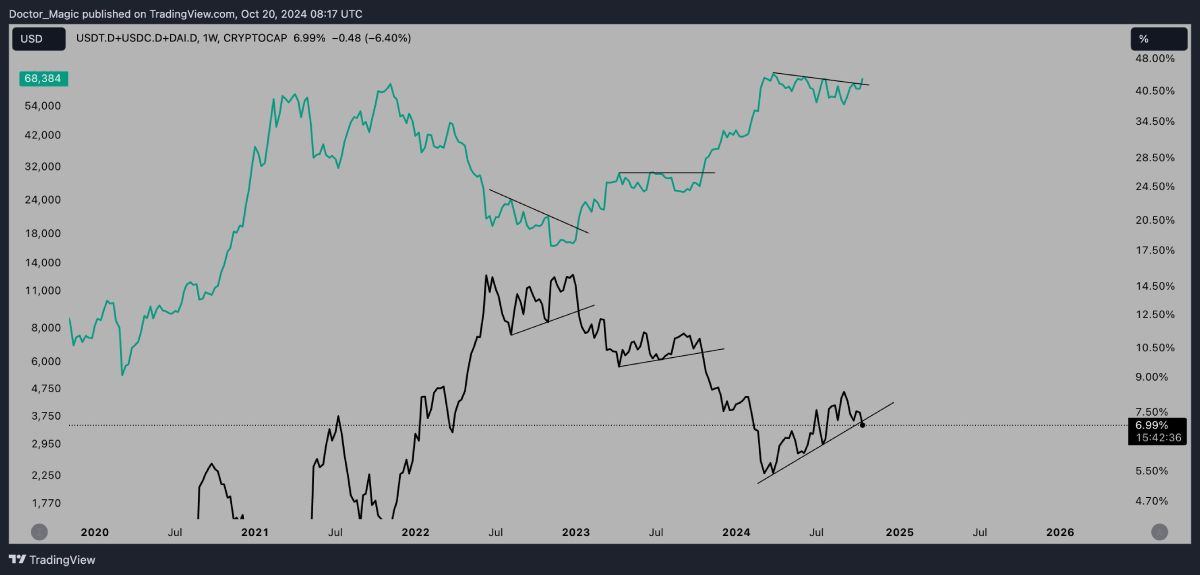
И, наконец, в-третьих, запасы стейблкоинов иссякают. Аналитик, известный под псевдонимом Doctor Magic, зафиксировал падение уровня капитализации ведущих криптовалют со стабильным курсом Tether (USDT), USD Coin (USDC) и Dai (DAI), начавшееся в сентябре 2024-го. Этот факт свидетельствует о том, что трейдеры обменивают стейблкоины на фиатную валюту и тратят вырученные деньги на покупку биткоинов и других цифровых активов.
stablecoins-market-cap-drop

Колебания уровня капитализации стейблкоинов USDT, USDC и DAI (чёрная линия)

Если сработает сценарий фазы параболического роста цены биткоина, составленный с учётом исторических данных, то к концу весны 2025-го BTC подорожает до $240 000. В этом случае покупка монет по текущей стоимости позволит приумножить капитал почти в три с половиной раза.


Leituras Relacionadas

MSTR Discloses Sale of 3,588 Bitcoins, Stock Price Drops Over 5% at One Point During Trading

MicroStrategy, the world's largest corporate holder of Bitcoin, has significantly shifted its business model. Between June 29 and July 5, the company sold 3,588 bitcoins for approximately $216 million to fund quarterly dividends for its preferred stock. This marks its largest-ever Bitcoin sale and signals a strategic pivot: Bitcoin is transitioning from a "buy-and-hold" reserve asset to a liquidity management tool for the company. This move follows a recent authorization allowing Bitcoin sales when equity fundraising is less attractive. The announcement contributed to a more than 5% intraday drop in MicroStrategy's stock price, while Bitcoin fell to around $61,800—below the company's average holding cost of roughly $75,700. The sale represents a major departure from MicroStrategy's long-standing "never sell" commitment, which saw its first minor breach in May with a $2.5 million sale. The latest, hundred-times-larger transaction underscores growing financial pressures. Analysts note the company faces about $1.5 billion in annual preferred dividend obligations, far exceeding cash flow from its software business. As of July 5, MicroStrategy holds 843,775 bitcoins. Its current operational logic involves buying Bitcoin during favorable financing conditions and selling portions to cover dividends when needed, creating a flexible capital management cycle amidst a challenging market environment.

华尔街日报Há 7h

MSTR Discloses Sale of 3,588 Bitcoins, Stock Price Drops Over 5% at One Point During Trading

华尔街日报Há 7h

Q-Day Countdown: Will Quantum Computing End Cryptocurrencies?

Quantum Computing's Threat to Cryptocurrency: A Countdown to Q-Day Quantum computing, specifically Shor's algorithm, poses a fundamental threat to the public-key cryptography (e.g., ECDSA, RSA) that secures blockchain networks like Bitcoin and Ethereum. This critical juncture, known as Q-Day, is estimated to occur potentially within the next 5-15 years. The core vulnerability stems from the public and immutable nature of blockchains. Assets in addresses where the public key is already exposed on-chain (e.g., spent outputs) are at direct risk, as a sufficiently powerful quantum computer could derive the private key. This threatens the very trust model of cryptocurrencies. The response lies in Post-Quantum Cryptography (PQC)—algorithms like lattice-based ML-DSA and hash-based SLH-DSA, which are resistant to quantum attacks. NIST has standardized key PQC algorithms (FIPS 203, 204, 205), providing a migration path. However, the primary challenge is not technical but socio-economic and involves complex governance: * **Bitcoin's** path is constrained by its conservative ethos. Migrating requires a soft-fork to new address types, facing hurdles like significantly larger signature sizes and, most critically, the divisive governance question of how to handle at-risk legacy UTXOs without violating core principles. * **Ethereum** is pursuing a "cryptographic agility" strategy, with a multi-layered roadmap. It leverages account abstraction for user accounts and is developing compressed hash-based signatures (e.g., leanXMSS) for its consensus layer, aiming for a full-stack upgrade over time. In conclusion, quantum computing does not spell an instant end for cryptocurrency but initiates a critical countdown. The industry has a limited "engineering comfort window" to orchestrate a coordinated, ecosystem-wide migration to PQC. The ultimate bottlenecks are the immense coordination efforts and governance decisions required for this foundational transition.

marsbitHá 8h

Q-Day Countdown: Will Quantum Computing End Cryptocurrencies?

marsbitHá 8h

Trading

Spot
活动图片