Bonk & Mpeppe Two Cryptocurrencies That Will Provide Massive Gains in October

bitcoinistPublicado em 2024-10-18Última atualização em 2024-10-18

Resumo

October has proven to be a volatile month for the cryptocurrency market, but it’s also one of opportunity. Two tokens...

October has proven to be a volatile month for the cryptocurrency market, but it’s also one of opportunity. Two tokens that stand out in the meme coin space are Bonk (BONK) and Mpeppe (MPEPE), both of which have the potential to deliver massive gains by the end of the month. While Bonk (BONK) has already made headlines for its viral appeal, Mpeppe (MPEPE) is quickly catching up due to its unique features in the GambleFi and GameFi spaces. In this article, we’ll explore how both tokens are set to provide impressive returns for investors in October.

Mpeppe (MPEPE) vs. Bonk (BONK): The Utility War

One of the key differences between Mpeppe (MPEPE) and Bonk (BONK) is their utility. While Bonk (BONK) has made waves as a viral meme coin, it doesn’t offer the same real-world applications as Mpeppe (MPEPE). Mpeppe (MPEPE) is designed to power a decentralized gambling platform, where users can engage in gaming activities, wager tokens, and earn instant rewards.

In contrast, Bonk (BONK) offers little more than speculation. While it can generate short-term gains through its meme status, it doesn’t have the long-term potential that Mpeppe (MPEPE) offers through its practical use cases. Investors are taking notice of this distinction, with many shifting their focus toward Mpeppe (MPEPE) for its De-Fi integration and earning potential.

De-Fi Features: Mpeppe (MPEPE)’s Secret Weapon

Mpeppe (MPEPE) integrates decentralized finance (De-Fi) features into its tokenomics, giving it a significant edge over Bonk (BONK). These De-Fi elements allow users to stake their tokens, participate in liquidity pools, and earn passive income, making Mpeppe (MPEPE) much more than just a meme token. Investors are able to earn rewards simply by holding their tokens, adding an extra layer of value to their investment.

With yield farming, liquidity mining, and decentralized governance mechanisms in place, Mpeppe (MPEPE) has set itself up as a utility-driven token that can provide returns well beyond the short-term excitement generated by Bonk (BONK). The ability to earn passive income has made Mpeppe (MPEPE) an attractive option for long-term holders.

Instant Rewards and Low Transaction Costs

One of the standout features of Mpeppe (MPEPE) is its instant rewards system. Users who participate in the Mpeppe Casino are able to receive their winnings almost instantly, thanks to the efficiency of blockchain technology. With low transaction costs, Mpeppe (MPEPE) provides a seamless experience for users who want to avoid the high fees and slow payout times associated with traditional payment methods.

While Bonk (BONK) has gained popularity for its viral appeal, it lacks the practical features that make Mpeppe (MPEPE) a more attractive option for both casual players and serious investors. The combination of instant rewards, low transaction costs, and De-Fi elements makes Mpeppe (MPEPE) a well-rounded token that offers far more than just hype.

Conclusion: Why Mpeppe (MPEPE) Stands Out in October

Investors are looking for tokens that offer more than just hype. Mpeppe (MPEPE), with its real-world applications in the gambling and De-Fi sectors, is well-positioned to deliver significant returns in October. While Bonk (BONK) may still generate short-term excitement, it’s clear that Mpeppe (MPEPE) is the more promising option for those seeking both short-term gains and long-term value.

For more information on the Mpeppe (MPEPE) Presale: 

Visit Mpeppe (MPEPE)

Join and become a community member: 

https://t.me/mpeppecoin

https://x.com/mpeppecommunity?s=11&t=hQv3guBuxfglZI-0YOTGuQ

Bitcoinist

Bitcoinist

Bitcoinist is the ultimate news and review site for the crypto currency community!

Criptomoedas em alta

Leituras Relacionadas

Crypto Payment Cards with $1.5 Billion Monthly Transaction Volume, Stuck in the 1990s

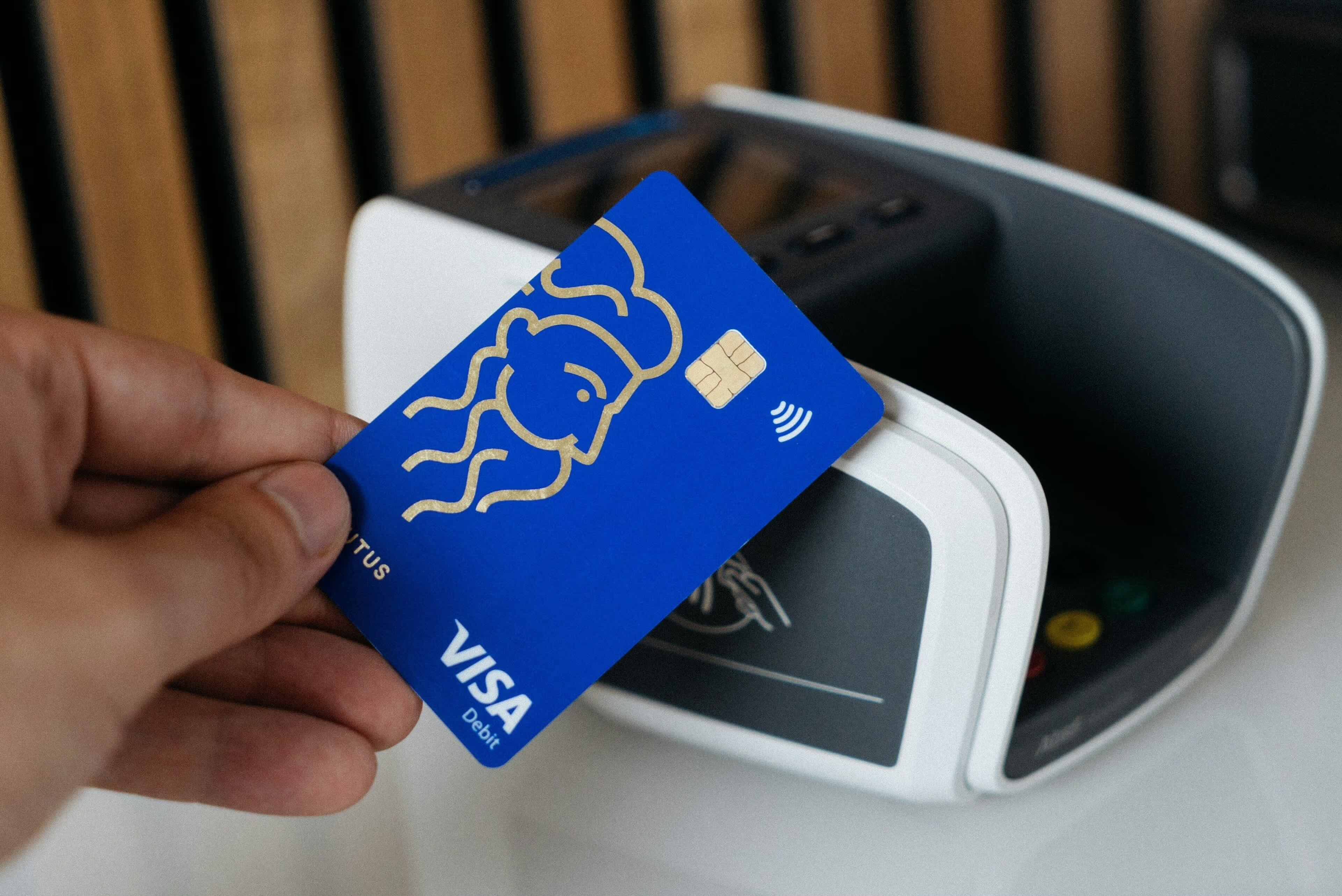
Monthly crypto payment card transaction volume has reached $15 billion, but the industry's development stage is comparable to debit cards in the 1990s, before they became a mainstream financial staple. A key limitation is the lack of established daily financial relationships, such as direct salary deposits and recurring bill payments, with crypto wallets. Despite annualized transaction volumes of approximately $18 billion, the market is concentrated and immature. The leading provider, RedotPay, commands over half the market share. User adoption is heavily skewed towards emerging markets like Bangladesh, India, and Nigeria, where access to USD and stable financial services is limited, rather than developed economies. The sector features four primary business models: 1) Card-issuing infrastructure providers, 2) Exchange-affiliated cards for user retention, 3) Decentralized wallet/DeFi cards with self-custody but high complexity, and 4) Stablecoin-focused digital banks, which dominate transaction volume by offering integrated financial services. The article argues that a pure payment functionality is insufficient for long-term success, mirroring the historical trajectory of traditional debit cards. Future winners will need to: 1) Control the upstream flow of funds, 2) Secure defensible niches in underserved markets, and 3) Most crucially, build core account relationships that integrate into users' daily financial lives. Without this evolution, crypto cards risk remaining niche prepaid tools rather than becoming universal financial infrastructure.

Foresight NewsHá 22m

Crypto Payment Cards with $1.5 Billion Monthly Transaction Volume, Stuck in the 1990s

Foresight NewsHá 22m

$7.8 Billion in Theft and Losses Reveals the Truth: Security Costs Have Become an Unavoidable Liquidity Tax for DeFi

"7.8 Billion in Thefts Reveals the Truth: Security Costs Have Become DeFi's Unavoidable 'Liquidity Tax'" A summary of Q2 2026 data reveals that security risks are now a fundamental capital cost in DeFi, directly impacting user returns and liquidity decisions. DeFiLlama recorded 88 hacking incidents with quantified losses totaling $780.3 million in Q2. April was the worst month with $644.8 million lost. DeFi protocol attacks accounted for $735.8 million, while cross-chain bridge exploits resulted in $354.4 million in losses (note: some event categorizations overlap). Cumulatively, DeFi hacks have reached $7.85 billion, with bridge losses at $3.26 billion. The quarter highlighted two primary risk categories: high-value infrastructure vulnerabilities (e.g., bridges, oracles, admin keys) causing massive single losses, and more frequent contract logic bugs. This signals a critical market shift: from post-incident analysis to preemptive pricing of risk. Users and liquidity providers now implicitly factor in the security of the entire asset pathway—not just pool APY—into their decisions. This hidden "risk premium" manifests through wider spreads, higher liquidity incentives, and capital migration towards perceived safer routes. Cross-chain bridge risks, responsible for over $353 million in Q2 losses, exemplify this change. Asset routing credibility is now part of the transaction. Following incidents like KelpDAO and THORChain, markets are demanding safer bridges, asset insurance, and clearer risk disclosure, increasing the cost of capital for riskier pathways. Consequently, security spending is transforming from a defensive cost into a core distribution cost for attracting liquidity. Protocols must invest more in audits, bug bounties, real-time monitoring, and insurance to remain competitive. Users are increasingly demanding transparency about fund flow paths, associated risks, and contingency plans. The key indicators for the industry's direction will be whether capital continues consolidating in trusted channels, if projects delay launches for enhanced audits, if insurance premiums rise, and if aggregators start displaying security risk metrics. Q2 2026 may be remembered not just as a bad period, but as the point when DeFi underwent a fundamental asset risk repricing, where security became a persistent,隐性 tax on all on-chain activity.

Foresight NewsHá 51m

$7.8 Billion in Theft and Losses Reveals the Truth: Security Costs Have Become an Unavoidable Liquidity Tax for DeFi

Foresight NewsHá 51m

Trading

Spot

Artigos em Destaque

Como comprar BONK

Bem-vindo à HTX.com!Tornámos a compra de Bonk (BONK) simples e conveniente.Segue o nosso guia passo a passo para iniciar a tua jornada no mundo das criptos.Passo 1: cria a tua conta HTXUtiliza o teu e-mail ou número de telefone para te inscreveres numa conta gratuita na HTX.Desfruta de um processo de inscrição sem complicações e desbloqueia todas as funcionalidades.Obter a minha contaPasso 2: vai para Comprar Cripto e escolhe o teu método de pagamentoCartão de crédito/débito: usa o teu visa ou mastercard para comprar Bonk (BONK) instantaneamente.Saldo: usa os fundos da tua conta HTX para transacionar sem problemas.Terceiros: adicionamos métodos de pagamento populares, como Google Pay e Apple Pay, para aumentar a conveniência.P2P: transaciona diretamente com outros utilizadores na HTX.Mercado de balcão (OTC): oferecemos serviços personalizados e taxas de câmbio competitivas para os traders.Passo 3: armazena teu Bonk (BONK)Depois de comprar o teu Bonk (BONK), armazena-o na tua conta HTX.Alternativamente, podes enviá-lo para outro lugar através de transferência blockchain ou usá-lo para transacionar outras criptomoedas.Passo 4: transaciona Bonk (BONK)Transaciona facilmente Bonk (BONK) no mercado à vista da HTX.Acede simplesmente à tua conta, seleciona o teu par de trading, executa as tuas transações e monitoriza em tempo real.Oferecemos uma experiência de fácil utilização tanto para principiantes como para traders experientes.

386 Visualizações TotaisPublicado em {updateTime}Atualizado em 2026.06.02

Como comprar BONK

Discussões

Bem-vindo à Comunidade HTX. Aqui, pode manter-se informado sobre os mais recentes desenvolvimentos da plataforma e obter acesso a análises profissionais de mercado. As opiniões dos utilizadores sobre o preço de BONK (BONK) são apresentadas abaixo.

活动图片