На сайте LEGO рекламировали мошеннический криптовалютный проект

cryptonews.ruPublicado em 2024-10-06Última atualização em 2024-10-06

Посвящённый популярным конструкторам LEGO токен-мем LEGO Coin (LEGO) был выпущен мошенниками для хищения криптовалют.

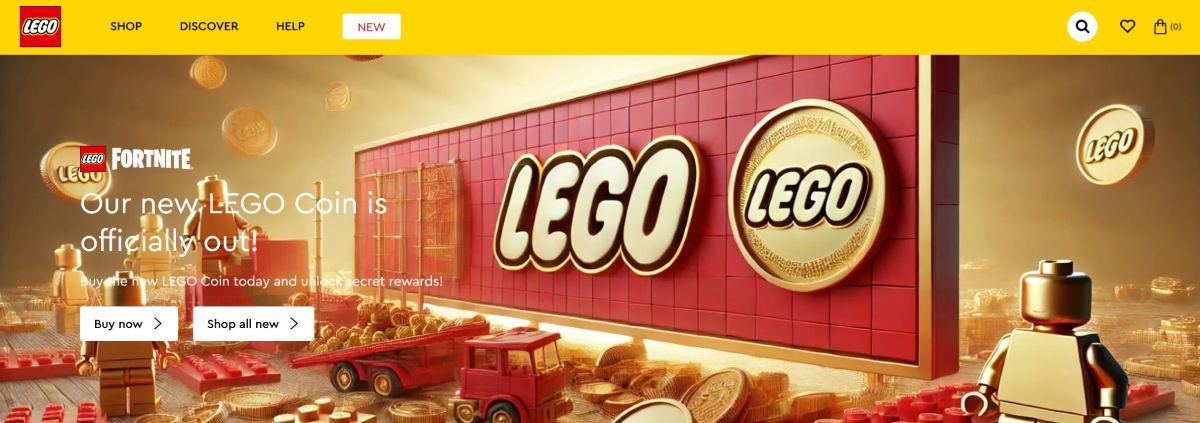
5 октября на сайте LEGO появилась реклама LEGO Coin, в которой было указано, что покупатели монет получат некие награды. Однако к объявлению была прикреплена ссылка на фишинговый портал, и аферу быстро раскрыли.

Ребята из LEGO, кто-то взломал ваш сайт и изменил главную страницу! Ссылка ведёт на криптовалютный портал, который точно вам не принадлежит! — написал любитель LEGO, известный под псевдонимом ZTBricks.
lego-scam-ad

Реклама скам-проекта LEGO Coin

Спустя примерно 75 минут сотрудники LEGO удалили рекламу цифрового актива и сообщили, что проблему устранили. От рук злоумышленников якобы никто не пострадал, и люди могут продолжать пользоваться сайтом, не опасаясь за свои криптовалютные сбережения.

После начала специальной военной операции на Украине компания LEGO приостановила работу в России и перестала обновлять русскоязычную версию портала. В связи с этим мошенничество с LEGO Coin не затронуло жителей РФ, которые не пользовались VPN при посещении ресурса.

LEGO Coin предположительно создали на блокчейне BNB Smart Chain. Запас токенов ограничен 100 трлн, однако команда проекта не подтвердила данные о циркулирующем предложении цифровых активов, и они не были добавлены на криптовалютные биржи, поэтому их курс неизвестен.


Leituras Relacionadas

Founder of Baixing.com: The Notion That Large Language Models Will Devour Everything, I Believe Half of It

Founder of Baixing.com: I Only Half-Believe the Saying “Large Language Models Will Devour Everything” Author: Wang Jianshuo, Founder of Baixing.com Many proclaim that large models are everything, but the author is skeptical. He argues that such sweeping claims often stem from a limited understanding of the future. Drawing parallels to past technologies like electricity and the internet—which were predicted to “devour everything” but didn’t—he suggests that large language models (LLMs) are better seen as a foundational base. Like electricity, this base is essential for modern development, but its real value emerges only when applied to specific scenarios through various “machines” or “tools” (e.g., Claude Code for programming, Claude Design for design). The author acknowledges that LLMs may indeed replace many existing software systems built on rigid rules, workflows, and forms (e.g., CRMs, SaaS tools), as these are precisely what LLMs excel at processing. However, he emphasizes that beyond software, elements like customer data, execution capabilities (e.g., booking a flight), trust, and physical-world interactions will not be “devoured.” Instead, he foresees that after streamlining existing software, LLMs will open up a larger space for innovative, next-generation applications. These new tools will likely feature fluid interfaces and rely less on fixed rules, unleashing greater creativity. The author cautions against short-sightedness, recalling how in 2004 many believed internet giants like Sina, Sohu, and NetEase would monopolize the market—only to be proven wrong by subsequent disruptions. In conclusion, while LLMs are a crucial foundation and a current focal point, the true mainstream of this wave lies in the diverse applications built atop them to solve concrete problems. The phrase “devour everything” is imprecise; the real opportunity lies in identifying and leveraging the areas where LLMs do bring transformative change.

marsbitHá 2h

Founder of Baixing.com: The Notion That Large Language Models Will Devour Everything, I Believe Half of It

marsbitHá 2h

Founder of Baixing.com: I Only Half Believe in the Notion that Large Language Models Devour Everything

The founder of Baixing Wang states that while large language models (LLMs) are an extremely important foundational technology—akin to electricity or the internet—he only "half believes" the notion that they will "consume everything." He argues that LLMs provide a base layer of intelligence, but real-world value and transformation come from integrating this intelligence into specific applications and devices designed for particular scenarios—like how electricity powers various appliances from washing machines to TVs. He agrees LLMs will likely consume or replace a significant portion of existing rule-based, workflow-driven software (e.g., many SaaS systems, CRMs), as these are precisely what LLMs excel at handling. However, numerous other elements—such as customer data, execution capabilities (e.g., booking a flight), trust, and physical-world interactions—will not be consumed. Wang emphasizes that after LLMs absorb certain software layers, they will open up a much larger space for innovation: new types of "streaming" software with less rigid interfaces, where fixed rules are managed by AI. This next wave of applications built on top of the stable LLM foundation is where the true mainstream opportunity lies. He cautions against the short-sightedness of declaring any technology as all-consuming, drawing parallels to past premature predictions about internet giants monopolizing the web. The key is to find opportunities within the areas LLMs do transform.

链捕手Há 2h

Founder of Baixing.com: I Only Half Believe in the Notion that Large Language Models Devour Everything

链捕手Há 2h

Trading

Spot
活动图片