The US is entering the fray as it backs a class-action lawsuit against tech giant and graphics processing units manufacturer, Nvidia Corp. The Department of Justice and Securities and Exchange Commission are appealing to the Supreme Court to revive a case that accuses Nvidia Corp. of misleading investors about its revenue from cryptocurrency mining. This litigation has been on a rollercoaster ride since it was filed in 2018 and is back on the agenda.
Government Support For Investors
In an amicus brief that was filed October 2, Solicitor General Elizabeth Prelogar and SEC senior lawyer Theodore Weiman argued that the case has sufficient facts to resurrect the course of action. They said Nvidia’s executives, particularly Chief Executive Jensen Huang, had understated the dependence on crypto mining revenue during a period when such sales were through the roof.
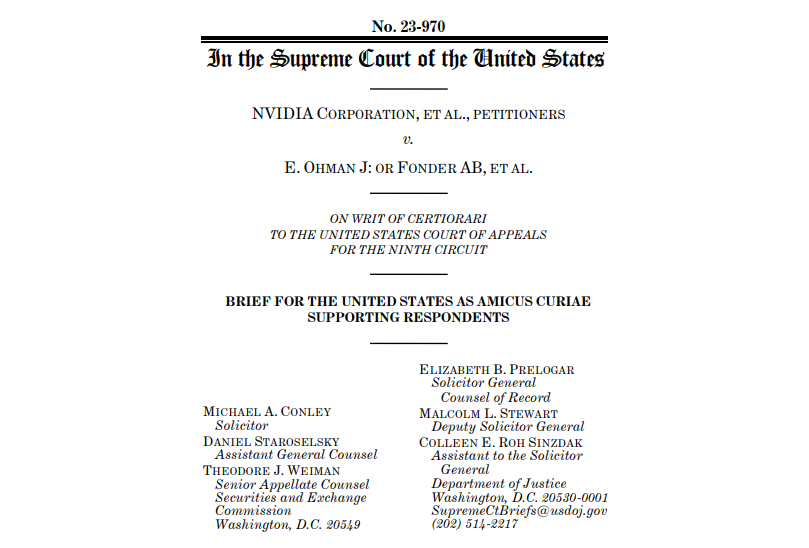
The brief underlines how private actions are an essential piece of the securities enforcement puzzle, making the government have a concrete interest in this case. Oral arguments before the Supreme Court are scheduled for November.
The Ninth Circuit Court of Appeals dismissed the case in 2021 as it had no evidence. But in a split panel decision last August, it reinstated it upon further review. Investor plaintiffs claim that before the 2018 crash, Nvidia had misrepresented how much it relied on the revenue generated from crypto mining. Huang’s statements were misleading, thus causing liability for securities fraud, they added.
Allegations Against Nvidia
In essence, it claims that the company misled the investors regarding its financial health and failed to make them aware of how many revenues came from the sale of crypto-related revenue in the open market.
According to the claim made by the investors, this lack of transparency became glaringly obvious after the company’s revenue went downhill following the cryptocurrency crash in 2018. Instead, it gives a suggestion that Huang knew well how his company was reliant on its crypto sales but chose to downplay the same thing publicly.
In their defense, Nvidia said that the investors’ claims were based on incorrect information about how the company made money. But the investors have shown proof from former workers who say Huang was part of conversations about how crypto mining affected sales. The Third Circuit accepted this testimony, and thus, Huang had a guilty state of mind regarding fraud against the investors.
Legal Implications And Future Steps
The participation of the DOJ and SEC gives the investors’ arguments more weight. Treating an expert’s view as adequate evidence for inferring dishonesty or intent would, they contend, compromise investor safeguards set forth under the Private Securities Litigation Reform Act (PSLRA). In order to show their dedication to guarantee the application of securities rules, the agencies have asked 10 minutes of oral argument time when the matter is heard.
Featured image from Vox, chart from TradingView

Related Posts