China Urged To Reevaluate Crypto Ban By Former Finance Official Amid US Policy Changes

bitcoinistPublicado em 2024-10-01Última atualização em 2024-10-01

Resumo

Amid increasing discussions surrounding the crypto regulation landscape, a former senior official from China's Ministry of Finance has urged the...

Amid increasing discussions surrounding the crypto regulation landscape, a former senior official from China’s Ministry of Finance has urged the government to reconsider its stringent ban on virtual assets.

According to a South China Morning Post report, Zhu Guangyao, vice minister from 2010 to 2018, highlighted the importance of cryptocurrencies to the Asian country’s digital economy at a recent economic forum in Beijing.

Calls For Reconsideration Of Crypto Ban

Zhu’s remarks come at a time when the United States has significantly altered its cryptocurrency policy, prompting experts in China to advocate for a similar reevaluation.

The former minister highlighted that while cryptocurrencies pose certain risks—such as capital market volatility and potential misuse for illegal activities—they are also essential for advancing the digital economy.

In 2017, the Chinese government banned initial coin offerings (ICOs) and ordered the closure of crypto exchanges. This crackdown intensified in 2021 when authorities prohibited Bitcoin (BTC) mining activities and declared crypto-related businesses illegal. 

The overarching rationale behind these measures concerns financial stability and the potential for cryptocurrencies to facilitate criminal activities, including money laundering and terrorist financing.

However, Zhu pointed out that the concerns associated with cryptocurrencies could be effectively managed through regulation rather than outright bans. He noted, “Our current gap [with the US] is that we don’t participate,” suggesting that underground trading channels continue to operate without governmental oversight despite existing restrictions. 

Trump Urges Adoption, Harris Supports Innovation

As China maintains its strict regulatory stance, Hong Kong has been moving in a different direction. The region is actively developing its cryptocurrency market to become a global hub for digital assets, operating under a separate legal framework that enjoys tacit approval from Beijing. 

This divergence between Hong Kong and Beijing is further showcased by the recent approval of the crypto exchange-traded funds (ETFs) market earlier this year, which directly invested in the two largest cryptocurrencies on the market Bitcoin and Ethereum (ETH). 

The changing dynamics of the global market have not gone unnoticed by political figures in the US, led by Republican candidate and former President Donald Trump, who has stressed the need for the US to embrace digital assets to avoid allowing China to dominate the space. 

Similarly, after months of silence on the virtual asset industry, Democratic presidential candidate Kamala Harris has expressed support for innovative technologies, including digital assets, to regulate this sector for its growth.

Wang Yang, a prominent academic, also criticized China’s ban on cryptocurrency mining, referring to it as “very unwise,” as it inadvertently shifted business opportunities to the US. 

Yang warned that if former president Trump were to regain his seat in the Oval Office, China might face increased “financial isolation,” potentially being removed from the SWIFT financial messaging system.

Echoing these sentiments, economist Huang Yiping, a former monetary policy committee member at the People’s Bank of China, has questioned the long-term sustainability of the cryptocurrency ban, suggesting that it could hinder China’s ability to capitalize on blockchain technology and other innovations.

Ultimately, it remains to be seen whether the government will implement a new regulatory framework to be at the forefront of digital asset adoption or maintain its current stance, with the knowledge that the nascent sector has become increasingly important to the global economy. 

Crypto
The 1D chart shows the total digital asset market cap valuation at $2.199 trillion. Source: TOTAL on TradingView.com

Featured image from DALL-E, chart from TradingView.com

Ronaldo Marquez

Ronaldo Marquez

Ronaldo is a seasoned crypto enthusiast with over four years of experience in the field. He is passionate about exploring the vast and dynamic world of decentralized finance (DeFi) and its practical applications for achieving economic sovereignty. Ronaldo is constantly seeking to expand his knowledge and expertise in the DeFi space, as he believes it holds tremendous potential for transforming the traditional financial landscape.

Leituras Relacionadas

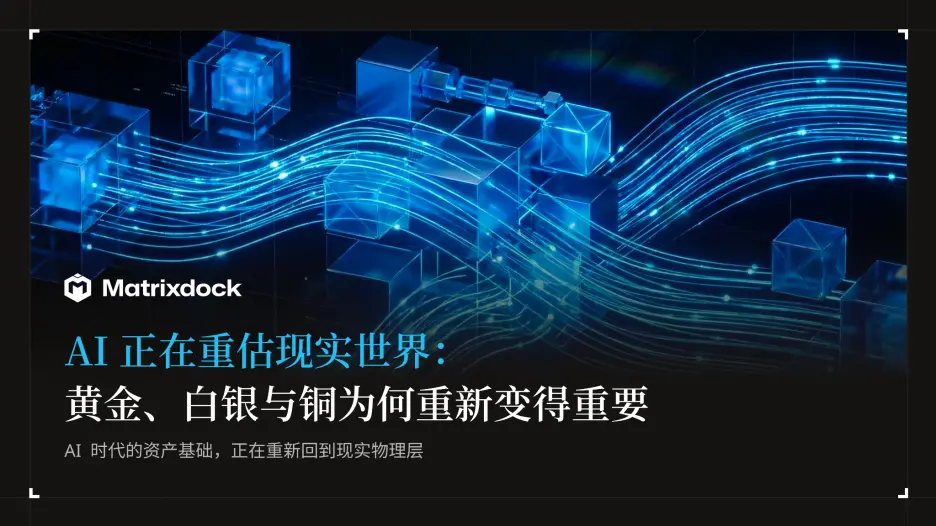
AI is Revaluing the Real World: Why Gold, Silver, and Copper are Becoming Important Again

AI is reassessing the value of the real world: why gold, silver, and copper are regaining importance. For over a decade, financial innovation centered on digitalization, from internet platforms to RWA tokenization. However, AI's rapid development highlights a deeper dependency: the physical infrastructure underpinning the AI era, not just code. Contrary to being "dematerialized," AI strengthens reliance on the real world. Every model training and deployment requires vast resources—data centers, energy grids, cooling systems, and critical industrial materials like copper, silver, and gold, which provide irreplaceable conductivity and durability. This shift is redefining the asset layer structure. A new "Asset Stack" is emerging: - Physical Layer: Metals, energy, and raw materials. - Financial Layer: Government bonds, ETFs, structured products. - Digital Layer: Tokenization infrastructure and programmable assets. The digital layer relies on the financial layer, which ultimately depends on the physical layer. While markets previously rewarded upper-layer assets like stocks and digital platforms, AI is redirecting attention to foundational real-world resources. S&P Global forecasts data center copper demand will surge from 1.1 million tons in 2025 to 2.5 million tons by 2040, amid a growing global supply deficit. This signals a long-term structural shift where energy, metals, and infrastructure form a critical "Physical Layer" that could limit AI's expansion. Tokenization alone doesn't create value; it connects markets to already-trusted assets. Successful tokenization requires mature demand, deep liquidity, and institutional consensus. Thus, the logical progression begins with sovereign debt (highest liquidity and trust), followed by gold (centuries of global consensus), then silver (blending reserve and industrial utility). Future expansion may include industrially critical materials like copper. Within gold, a key divergence is appearing. Gold ETFs solved "investability" but keep gold within traditional financial systems. Gold tokens, like Matrixdock's XAUm, explore making gold a functional part of the digital financial system—enabling instant settlement, cross-border collateral, and programmable utility without intermediaries. Looking ahead, industrial metals are evolving from commodities to strategic "functional assets." Silver faces a structural supply deficit, driven by demand from solar, EVs, and AI infrastructure. While gold represents a "Store of Value," metals like silver and copper are becoming "Stores of Function." Tokenizing them, as with Matrixdock's XAGm for silver, focuses not just on reserve value but on bridging physical commodity systems with digital infrastructure for efficient circulation. Ultimately, the asset layer is evolving to be more grounded in the strategic, physical realities of the economy. The most valuable assets for tokenization may not be the easiest to digitize, but those most essential for long-term economic and technological foundations.

链捕手Há 9m

AI is Revaluing the Real World: Why Gold, Silver, and Copper are Becoming Important Again

链捕手Há 9m

TurboFlow Announces Strategic Partnership with Global Giant Susquehanna Crypto, Introducing Wall Street Institutional-Grade Liquidity and Dynamic Odds Market Structure Support

TurboFlow announces a strategic partnership with Susquehanna Crypto, a leading global proprietary digital asset trading firm. As part of this collaboration, Susquehanna Crypto will act as an on-chain liquidity provider and market maker for all TurboFlow products. This partnership brings institutional-grade liquidity, market-making support, and expertise in professional trading, market structure, price discovery, and risk management to the TurboFlow ecosystem. This marks a significant milestone for TurboFlow as it expands its product suite, which includes perpetual contracts and newly launched Event Contracts with durations as short as 30 seconds. Enhanced liquidity depth, efficient price discovery, and market stability are becoming increasingly critical for user experience. Notably, TurboFlow is transitioning its Event Contracts from a traditional fixed-odds model to a more dynamic, market-driven odds structure. Susquehanna Crypto will inject deep liquidity through TurboFlow's proprietary PFOF (Payment for Order Flow) architecture. This aims to ensure minimal slippage and millisecond-level execution for users, even during extreme market volatility, whether trading 1000x leveraged perpetuals or short-duration event contracts. Looking ahead, TurboFlow plans to onboard more top-tier institutional market makers to build a diversified liquidity network. The platform will continue expanding its product ecosystem across several verticals: Event Contracts (extending to assets like crude oil and gold), prediction markets and Telegram Mini Apps, and perpetual contracts. TurboFlow's mission is to democratize trading by making professional-grade infrastructure and a simplified, engaging experience accessible to all users.

链捕手Há 46m

TurboFlow Announces Strategic Partnership with Global Giant Susquehanna Crypto, Introducing Wall Street Institutional-Grade Liquidity and Dynamic Odds Market Structure Support

链捕手Há 46m

Trading

Spot
Futuros
活动图片