3 种可能成为下一个 Neiro 或 Popcat 的加密货币

cryptonewsPublicado em 2024-10-01Última atualização em 2024-10-01

Last updated:
十月 1, 2024 13:00 GMT+8

Criptomoedas em alta

Leituras Relacionadas

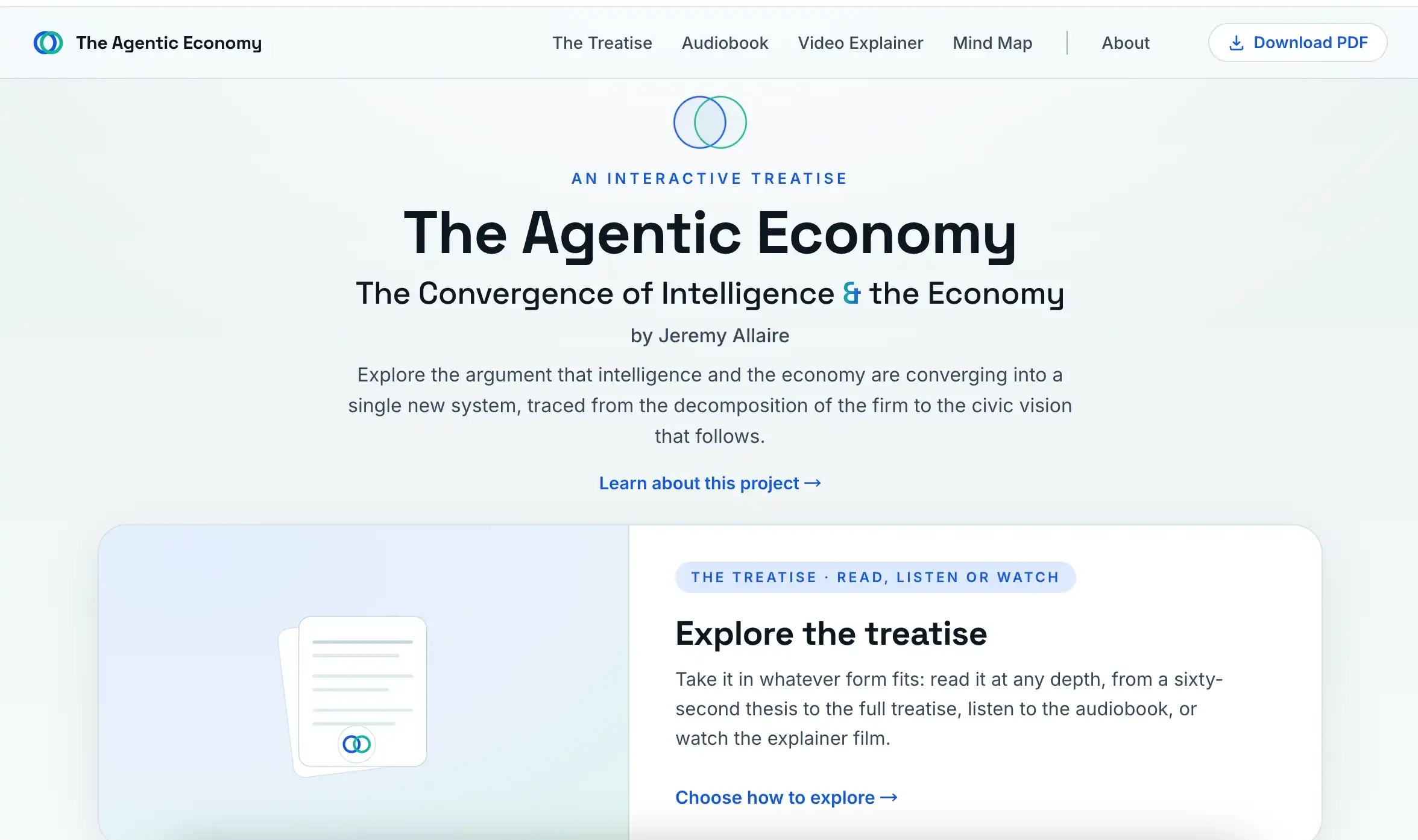
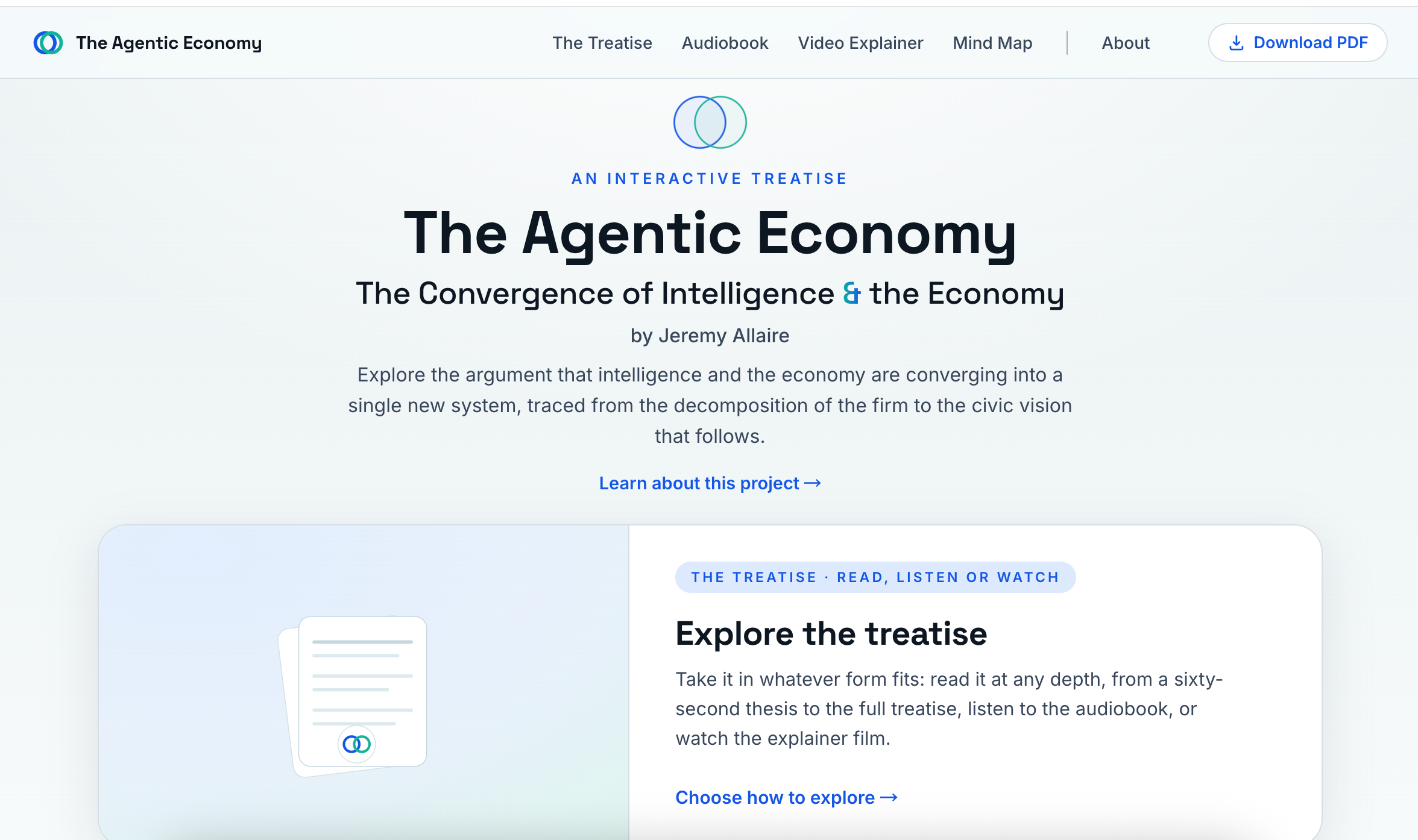
Understanding Circle Founder's "Agentic Economy" Treatise: Deciphering How the Economic Landscape Will Be Reshaped in the Next Decade

This text summarizes the key points from Jeremy Allaire's treatise "The Agentic Economy." It argues that the convergence of AI agents (driving the cost of thought and work toward zero) and blockchain-based onchain economies (driving transaction costs toward zero) are not separate trends but two facets of a single, emerging economic system. The core premise is that AI agents will decompose traditional corporate functions into automatable skills, managed by an "orchestration layer." This demands a new economic infrastructure built on fully-backed, programmatic stablecoins for fast, final settlement and machine-speed payments. Trust is enabled through an "accountability chain" linking agents to verified real-world identities on public blockchains. The treatise explores how this native global system reshapes credit (through machine underwriting and agent working capital), software pricing (shifting from subscriptions to consumption/pay-per-work), and corporate structure (leading to hybrid "onchain companies"). It frankly addresses significant risks: a potential decline in labor's share of income and dangerous concentration of power at control points like identity layers and dominant currency issuers. The concluding "Civic Vision" argues the solution is not to defend old jobs but to deliberately design for broad ownership of productive capital (agents, models, infrastructure) to distribute prosperity. It acknowledges that achieving this equitable outcome is a political and design challenge, not a technological inevitability.

Odaily星球日报Há 14m

Understanding Circle Founder's "Agentic Economy" Treatise: Deciphering How the Economic Landscape Will Be Reshaped in the Next Decade

Odaily星球日报Há 14m

Why is Step Fun So Perfect?

The article analyzes StepFun's recent, meticulously orchestrated product launch on July 13th, framing it as a strategic maneuver rather than a conventional unveiling. Facing intense pressure in China's AI landscape, the startup preemptively announced its AI terminal brand STEPX, Step AOS operating system, Amoo personal agent, and the "world's first" Agent Phone, STEPX Neo—just days before a major competitor's launch at WAIC. The author argues this "perfect" presentation, addressing prior industry critiques around agent security, permissions, and ecosystem partnerships upfront, serves as a "perfect defense" aimed at regulators, investors, and the market. Its core purpose is to seize the narrative and define standards for the emerging "Agent Phone" category before giants like ByteDance (with its Doubao phone), Apple, or Huawei solidify control. Behind this move lies StepFun's precarious position. Despite a high valuation and revenue from supplying AI models to phone makers, its business is seen as vulnerable—akin to a "MediaTek of AI," with little pricing power as capabilities commoditize. CEO Yin Qi, drawing from his experience at Megvii, is betting that transitioning from a pure AI model supplier to an integrated "terminal platform" with its own hardware, OS, and ecosystem is essential for survival and sustaining its valuation narrative ahead of a potential IPO. The article concludes that StepFun's launch is a symptom of a broader trend: AI startups are forced to "release the future" and sell ambitious platform visions, often with products still in development, because "today" (current metrics, API revenue) has diminishing value in a market racing toward oligopoly. The very perfection of the presentation underscores the urgency of their fight for a seat at the table.

marsbitHá 17m

Why is Step Fun So Perfect?

marsbitHá 17m

Trillion-Dollar Stablecoin Surge Challenges Traditional Payments, US Banking Sector Launches Largest Coordinated Counterattack in History

U.S. banks are launching their largest coordinated effort yet to counter the rise of stablecoins, which now facilitate trillions in annual payments. Major institutions including JPMorgan Chase, Bank of America, and Citigroup, coordinated by The Clearing House (TCH), plan to build an interoperable network for tokenized bank deposits. This move, inspired by the successful collaboration that created Zelle, aims to leverage blockchain for faster, cheaper transfers while keeping funds within the regulated banking system. The initiative responds to the rapid growth of stablecoins like USDT and USDC, whose transaction volume surged 72% to approximately $33 trillion last year. Banks see a direct threat as these digital dollars, usable 24/7 across borders, are increasingly adopted by payment firms and financial institutions. The TCH-led network seeks to connect various bank-led blockchain systems, offering scale, deposit insurance, and interoperability that individual bank platforms lack. The goal is to launch next year, initially targeting wholesale payments and tokenized securities settlement. However, the banking consortium faces significant challenges. The sector is fragmented with multiple competing digital currency projects (e.g., from SWIFT and other bank alliances), and historical collaborations like Zelle took years to materialize. While banks hold advantages in trust and regulatory compliance, their slow decision-making contrasts with the crypto industry's pace. Analysts note that although stablecoin issuers currently dominate, if banks successfully unite and execute, their vast resources and existing customer base could pose a formidable challenge in the digital payments race.

marsbitHá 21m

Trillion-Dollar Stablecoin Surge Challenges Traditional Payments, US Banking Sector Launches Largest Coordinated Counterattack in History

marsbitHá 21m

Trading

Spot

Artigos em Destaque

Como comprar POPCAT

Bem-vindo à HTX.com!Tornámos a compra de Popcat (POPCAT) simples e conveniente.Segue o nosso guia passo a passo para iniciar a tua jornada no mundo das criptos.Passo 1: cria a tua conta HTXUtiliza o teu e-mail ou número de telefone para te inscreveres numa conta gratuita na HTX.Desfruta de um processo de inscrição sem complicações e desbloqueia todas as funcionalidades.Obter a minha contaPasso 2: vai para Comprar Cripto e escolhe o teu método de pagamentoCartão de crédito/débito: usa o teu visa ou mastercard para comprar Popcat (POPCAT) instantaneamente.Saldo: usa os fundos da tua conta HTX para transacionar sem problemas.Terceiros: adicionamos métodos de pagamento populares, como Google Pay e Apple Pay, para aumentar a conveniência.P2P: transaciona diretamente com outros utilizadores na HTX.Mercado de balcão (OTC): oferecemos serviços personalizados e taxas de câmbio competitivas para os traders.Passo 3: armazena teu Popcat (POPCAT)Depois de comprar o teu Popcat (POPCAT), armazena-o na tua conta HTX.Alternativamente, podes enviá-lo para outro lugar através de transferência blockchain ou usá-lo para transacionar outras criptomoedas.Passo 4: transaciona Popcat (POPCAT)Transaciona facilmente Popcat (POPCAT) no mercado à vista da HTX.Acede simplesmente à tua conta, seleciona o teu par de trading, executa as tuas transações e monitoriza em tempo real.Oferecemos uma experiência de fácil utilização tanto para principiantes como para traders experientes.

168 Visualizações TotaisPublicado em {updateTime}Atualizado em 2026.06.02

Como comprar POPCAT

Discussões

Bem-vindo à Comunidade HTX. Aqui, pode manter-se informado sobre os mais recentes desenvolvimentos da plataforma e obter acesso a análises profissionais de mercado. As opiniões dos utilizadores sobre o preço de POPCAT (POPCAT) são apresentadas abaixo.

活动图片