Weekly Crypto Standouts: CEL’s 339% Surge, BNX’s 15% Decline

News.bitcoin.comPublicado em 2024-09-23Última atualização em 2024-09-23

On Monday, Sept. 23, 2024, the crypto market reached a total value of $2.22 trillion, marking a 1.3% increase in just 24 hours. Over the past week, bitcoin (BTC) climbed 8.7% against the U.S. dollar, while ether (ETH) enjoyed an impressive 15.8% rise. However, other digital currencies outshined both top coins, posting even larger gains.

Biggest Crypto Movers of the Week: CEL Surges, BNX Slides

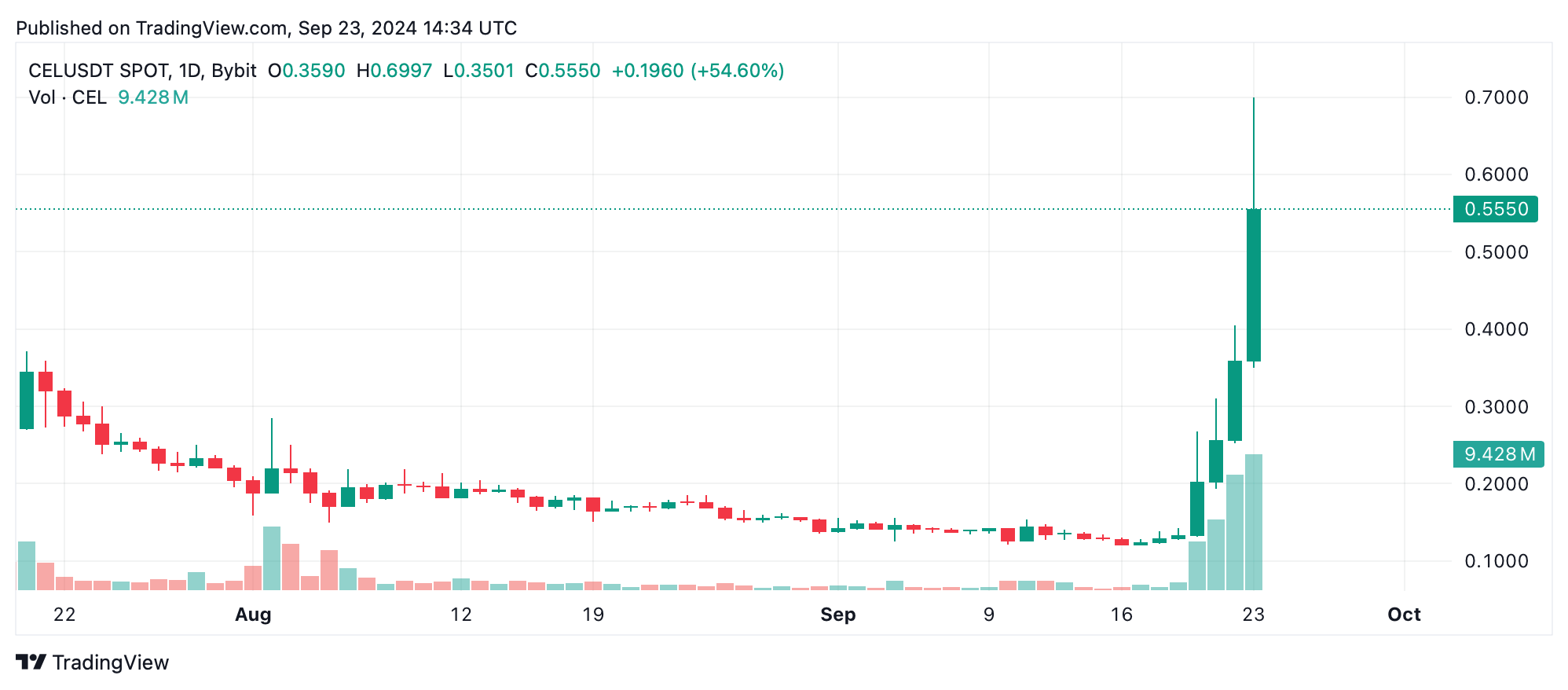
Celsius network’s token (CEL), tied to the now-defunct Celsius firm, skyrocketed 339% against the dollar, making it the only three-digit performer over the last seven days. Trailing CEL was paal ai (PAAL) with a 73% increase.
Weekly Crypto Standouts: CEL’s 339% Surge, BNX’s 15% Decline
CEL/USDT on Sept. 23, 2024.

Immutable X (IMX) saw its value jump 48%, while sui crypto (SUI) moved up by 42%. Other notable gainers included ARKM (+41.25%), AERO (+38.95%), APT (+37.09%), and MOG (+29.06%).
Weekly Crypto Standouts: CEL’s 339% Surge, BNX’s 15% Decline
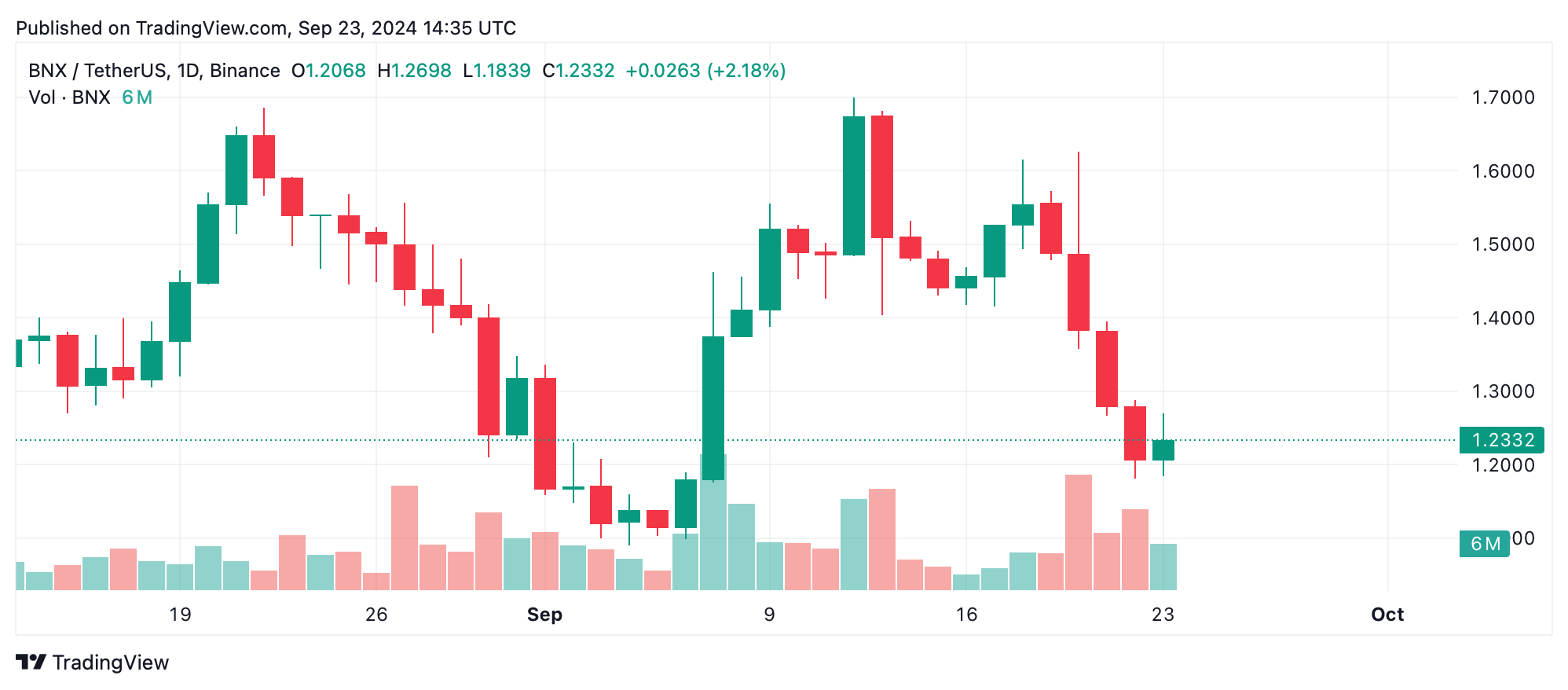
BNX/USDT on Sept. 23, 2024.

Beyond BTC, ETH, and stablecoins, SOL was the leader in trading volume this week, followed closely by BNB, XRP, SUI, DOGE, NEAR, PEPE, and ONDO. Despite the general market upswing, a few tokens—around six—took a hit, losing between 5% and 15%.

Binaryx (BNX) was the biggest loser, dropping 15.04% against the U.S. dollar. Catizen (CATI) followed with a 14.10% loss, while trust wallet token (TWT) fell by 11.51%.

Dogs (DOGS) shed 10.43%, fasttoken (FTN) slipped by 7.71%, and rollbit coin (RLB) dipped 5.55% in the past week. Despite this week’s rally, it’s surprising to see a token like CEL, with no active use case, surge so dramatically—momentum that likely won’t stick around.

What do you think about the crypto market action this past week? Share your thoughts and opinions about this subject in the comments section below.

Leituras Relacionadas

The Strategy That Would Never Sell Bitcoin Opened a Permanent Sales Channel

MicroStrategy, a company long known for its "never sell Bitcoin" mantra, announced a "Digital Credit Capital Framework" allowing it to sell up to $1.25 billion worth of Bitcoin. Surprisingly, its stock (MSTR) rose nearly 7% pre-market. This shift, coming just a month after a small, "ad-hoc" sale of 32 BTC for dividends, transitions from a temporary action to a formal, institutional tool. The framework outlines four clear purposes for potential sales: bolstering USD reserves, paying preferred stock dividends/interest, and repurchasing its own preferred and common stock. The key driver for this change is the immense financial pressure from MicroStrategy's complex capital structure, specifically its massive $8.5 billion perpetual preferred stock (STRC). STRC features a variable interest rate that has been reset upward eight times in a year to 12% in an attempt to stabilize its price. However, the stock has fallen over 25% below its face value. Combined with other preferred stocks and convertible notes, MicroStrategy's total annual fixed obligations now stand at $1.76 billion, equating to a daily burn of roughly $4.8 million. While its $2.55 billion in USD reserves and the new $1.25 billion BTC sales framework provide a two-year+ runway, a dangerous feedback loop exists. Falling Bitcoin prices would force the sale of more BTC to meet fixed obligations, potentially creating further sell-side pressure and lowering MSTR's asset valuation multiple. This, in turn, limits its ability to raise cash through stock issuance. The market's positive reaction likely stems from relief; the framework replaces fears of a forced, disorderly sell-off with a structured plan. However, it does not resolve the underlying high-cost capital structure, leaving the company's long-term health heavily dependent on Bitcoin's price performance.

marsbitHá 16m

The Strategy That Would Never Sell Bitcoin Opened a Permanent Sales Channel

marsbitHá 16m

OpenClaw and Cursor Just Invaded Phones! Agents Are Now in Your Pocket

AI Agents have officially arrived on mobile. In a landmark move, both OpenClaw and Cursor launched native mobile apps on the same day, fundamentally shifting how AI assistants are accessed and controlled. OpenClaw has released full-featured native apps for iOS and Android. Its "local-first" architecture, developed by the OpenClaw Foundation, keeps user data private by running the agent on a user's private Gateway. The mobile app now allows seamless remote control and approval of the agent's actions directly from a smartphone, with access to device capabilities like the camera, GPS, and contacts. Simultaneously, Cursor, the AI-powered coding tool, launched a public beta of its native iOS app. It enables developers to start and manage cloud-based AI coding agents from their phones. These agents can work asynchronously for extended periods—debugging, writing code, and creating pull requests—while developers are away from their computers. The app sends notifications for key decisions, allowing users to review and merge PRs from anywhere. Together, these releases signal a major shift: AI agents are no longer confined to desktop browsers or terminals. They are becoming persistent, autonomous assistants that work independently in the cloud, with humans transitioning from constant operators to mobile supervisors who approve key steps. The era of pocket-sized, on-demand AI is now here.

marsbitHá 28m

OpenClaw and Cursor Just Invaded Phones! Agents Are Now in Your Pocket

marsbitHá 28m

Trading

Spot
活动图片