今日表现最佳且具有巨大潜力的四种加密货币——BEAM、WLD、FET和ADA

金色财经Publicado em 2024-09-19Última atualização em 2024-09-19

目前最值得投资的加密货币

1.BEAM

Beam 是一个基于区块链的平台,旨在连接游戏玩家和开发者,推动游戏行业的创新。其核心是 Beam SDK,这是一个软件工具包,为游戏开发者提供了各种选项,将区块链功能融入到他们的游戏中。这种灵活性使开发人员能够自定义区块链技术在游戏中的使用方式,以满足他们的需求。Beam 代币目前价值 0.0161 美元,在过去一天内上涨了 6.4 %,令人欣喜。在过去 30 天里,该代币有 17 个上涨日,即价格上涨期,占 57% 的时间。wmwh4yfD5W9UUwlFVO3Yhx2RVd5PeCXwIl0soFcf.jpeg
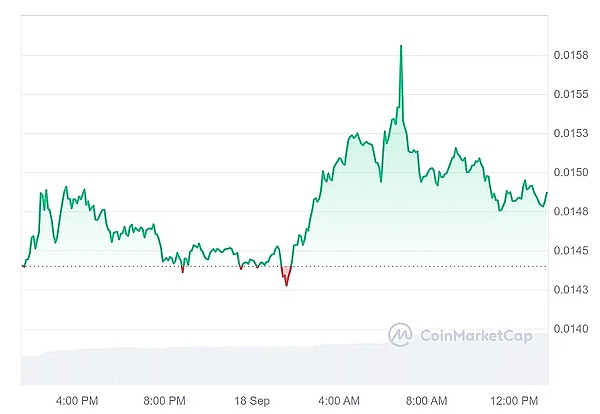
此外,这种持续的上升趋势表明该代币具有强劲而积极的市场表现。此外,该代币的流动性强劲,超过了其市值,并且在包括币安在内的主要交易所交易活跃。值得注意的是,交易量激增了 81.30%,达到 2200 万美元,进一步增强了该代币的市场实力。 

Beam 在 Upbit 交易所的交易量也出现了显著变化,交易量在四小时内飙升了 242.54%,从 3500 万美元跃升至 1.22 亿美元。然而,在币安,BEAM 的交易量在同一时间内下降了 39.80%,从 600 万美元降至 400 万美元。这一转变凸显了不同市场对 Beam 的兴趣程度不同,但表明人们对该代币的参与度有所提高。

2.WLD

Worldcoin 以其身份验证方法而闻名。它使用先进的生物识别技术来创建独特的数字身份,称为 World ID。这些 World ID 被设计为“全球数字护照”,以应对日益受到人工智能和数字互动影响的未来。

最近,Worldcoin 通过与 Solana 区块链集成扩大了其覆盖范围,重点是增强用户验证。这一举措由 Wormhole 促成,Wormhole 是一种互操作性协议,将 World ID 的状态根(基本数据的快照)从以太坊连接到 Solana。 
3Q0vMMMfxTUIBI0ENbSfgncsmlsQ6aGurDxGeCS9.jpeg

此次整合旨在为基于 Solana 的项目提供一种工具来缓解垃圾邮件和机器人相关问题,这些问题由于 Solana 的低交易费而普遍存在。World ID 可以作为垃圾邮件和 Sybil 攻击的威慑,为网络提供一层验证。尽管围绕生物识别身份验证存在法律和隐私方面的担忧,但此次整合凸显了 Worldcoin 的技术如何应对现实世界的挑战。对于经常处理大量机器人活动的 Solana 来说,World ID 提供了一种减少这些问题的潜在解决方案。

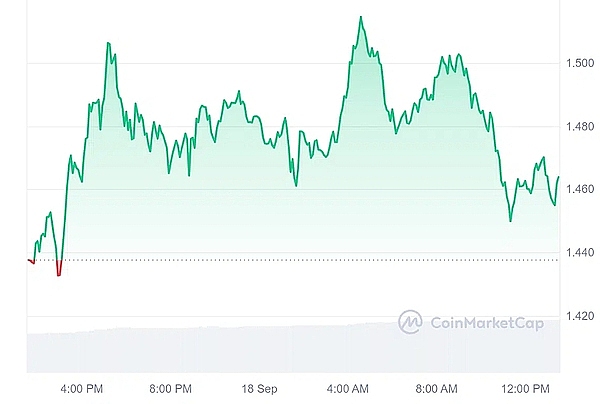
与此同时,Worldcoin 的原生代币 (WLD) 在公告发布后价格上涨超过 7%。目前,WLD 交易价格为 1.59 美元,过去 30 天中有 16 天呈上涨趋势,该代币的流动性相对较高。此次整合也可能强化 Worldcoin 的更广泛目标,即提供数字经济的普遍访问权限。该系统还旨在适应未来的升级,进一步增强了人们对该项目的潜在信心。 

3.FET

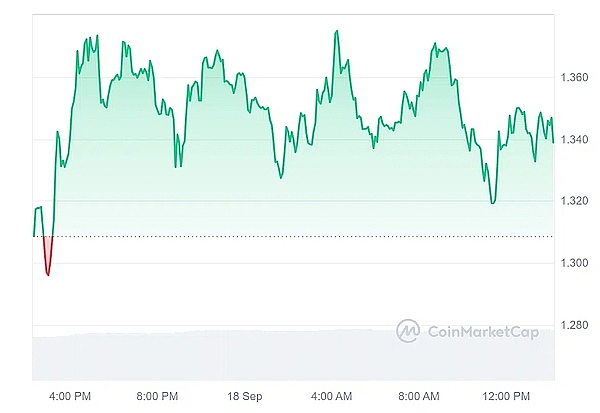
人工智能加密货币领域发展迅猛,人工智能超级智能联盟 (FET) 等代币引领了这一潮流。过去一周,FET 的价格飙升 2.09%,达到 1.3 美元。这一增长促进了以人工智能为重点的加密货币市场活动增加。

FET 近期的上涨归因于其突破了长期趋势线阻力位,表明看涨势头强劲。大额交易和鲸鱼活动支撑了这一上涨趋势,9 月 10 日,5614 万美元的交易量显著推动了 11% 的涨幅。
MOC8uHiyUGBNBVmp0GPHnG7NG4R0mI3Ab6xmTQ8F.jpeg

尽管 FET 交易价格低于 1.5 美元,但技术分析表明仍有进一步增长的潜力。该代币可能在短期内突破 200 天指数移动平均线 (EMA),标志着新一轮牛市的开始。

除了性价比,人工智能超级联盟还提议将分布式人工智能计算领导者 CUDOS 纳入其生态系统。该提案将于 2024 年 9 月 19 日至 9 月 24 日进行社区投票。

如果此次整合获得批准,CUDOS 代币 (CUDOS) 将与 FET 合并,在一个生态系统下创建一个统一的网络。此次合并旨在通过整合资源和技术来增强联盟的能力,促进大规模人工智能和机器学习应用的开发。

4. ADA

Cardano 是一个著名的区块链,以使用权益证明 (PoS) 共识机制而闻名,这与比特币的能源密集型工作量证明 (PoW) 系统形成鲜明对比。Cardano 因其在技术开发中采用同行评审的研究流程而脱颖而出。这种方法允许对想法进行外部验证,据该团队称,通过在潜在问题出现之前解决它们,可确保区块链的耐用性和稳定性。

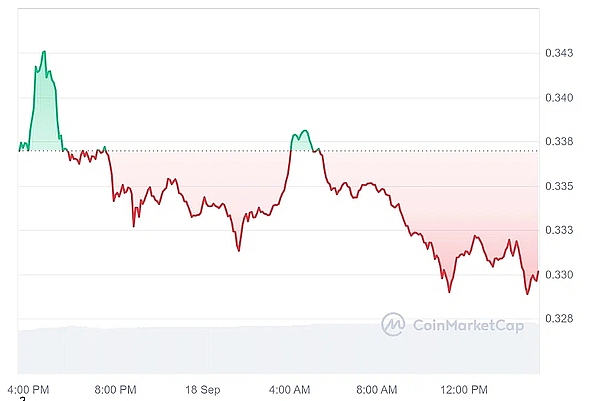
近期有消息称,致力于推动 Cardano 商业应用的区块链公司 EMURGO 与 Zilliqa Group 合作,后者专注于奢侈品和娱乐领域的 Web3 和元宇宙项目。此次合作旨在增强 Cardano 和 Zilliqa 生态系统之间的互操作性,从而实现两个平台之间更加集成和安全的交易。此次合作还将涉及创建可互操作的流动性渠道,从而促进两个网络之间更顺畅的用户体验。
sJHZphzC64MfsSyqS1BOeZuOXuMSYjLIlb5WUd9F.jpeg

EMURGO 将贡献其在 Web3 技术(包括稳定币和钱包基础设施)方面的专业知识,以帮助在 Zilliqa 平台上实现奢侈品资产代币化。此举符合 Cardano 扩大其在不同领域影响力的更广泛目标。

此外,Cardano 团队还计划进行一项名为 Leios 的重要升级,预计将于 2024 年第四季度发布。此次升级预计将提高交易速度,有可能超越 Solana 等竞争对手,同时保持网络的去中心化性质。 

此外,Leios 是更大路线图的一部分,该路线图包括 Hydra 和侧链等其他解决方案,旨在提高 Cardano 的可扩展性和效率。Cardano 对学术严谨性、可持续性和战略伙伴关系的关注反映了其创建长期、可靠的区块链基础设施的努力。

Leituras Relacionadas

Kelp DAO's $400 Million Bad Debt Was Covered, But at a $12 Billion Cost to Aave

On May 26th, Kelp DAO successfully transferred its final batch of rsETH, completing the 37-day process of fully backing rsETH 1:1 after a security incident. However, the resolution came at a significant cost to Aave. The protocol's TVL plummeted by over $12 billion in the following month. Furthermore, a separate legal battle over 30,766 frozen ETH continues in court, posing ongoing reputational risk. The recovery was enabled by an unprecedented, one-time coalition dubbed "DeFi United," involving major contributions from Aave's founder, treasury, Consensys, Mantle, and others. Despite this, the event triggered a major outflow of funds, with whales like Justin Sun moving capital to competitors like Spark. Aave's path to regaining its position relies heavily on the successful execution of its multi-pronged strategy. Its new V4 protocol, designed for open, heterogeneous asset markets, faces delays due to internal governance disputes. Meanwhile, the V3 version remains the core revenue generator, and the permissioned Horizon fork is targeting institutional RWA (Real-World Assets) growth—a segment less impacted by the rsETH incident but dependent on traditional finance adoption timelines. The key takeaway is that while the immediate bad debt was covered, Aave paid a steep price in lost trust and capital. Recovering market share depends on accelerating V4's rollout and advancing its institutional RWA offerings, both of which face external and internal hurdles. The "DeFi United" safety net is unlikely to be replicable for future crises.

marsbitHá 6m

Kelp DAO's $400 Million Bad Debt Was Covered, But at a $12 Billion Cost to Aave

marsbitHá 6m

TechFlow Intelligence Report: Xiaomi Announces 200 Billion HKD Stock Buyback Plan, Spot Gold Falls Nearly 1%

TechFlow Report: Xiaomi announced a HK$200 billion stock buyback plan, while spot gold fell nearly 1%. A wider range of tech headlines includes Google unveiling its powerful video editing model Gemini Omni and the original "Attention is All You Need" authors advocating for a move beyond Transformer architecture. In other AI news, IBM reported its first successful use of a quantum computer to train an AI model, and Qwen3.5 released uncensored local model versions. The crypto/Web3 sector saw discussions on opaque stablecoin products and DEX fee changes. Major tech companies are under scrutiny: Uber's COO publicly questioned the ROI of AI investments, Motorola was accused of hijacking Amazon app links for affiliate codes, and Google faced criticism for using web data to fuel its AI. U.S. markets are focused on high S&P 500 valuations (31.8x P/E) and an intense concentration of capital in semiconductor stocks, with warnings about the sustainability of the AI data center boom. Geopolitical tensions, featuring simultaneous U.S. airstrikes on Iran and peace talks, caused significant oil price volatility. Other notable developments include Ferrari's first pure EV priced at 4.35 million yuan and Boston Dynamics' Atlas robot learning soccer from videos. The underlying theme suggests the AI narrative is shifting from boundless potential to requiring tangible results, while traditional geopolitical risks remain a powerful force in markets.

marsbitHá 9m

TechFlow Intelligence Report: Xiaomi Announces 200 Billion HKD Stock Buyback Plan, Spot Gold Falls Nearly 1%

marsbitHá 9m

Coin & Stock Barometer: Bitcoin Miner MARA Holdings Spends Over $860,000 on Bulletproof Vehicle Services for Executives; Bitmine Included in Preliminary List for FTSE Russell 1000 Index (May 19)

Crypto Market Wrap & Key Corporate Updates (May 19) The crypto market saw a decline followed by a minor rebound, while U.S. crypto-related stocks fell broadly. In corporate news: **MARA Holdings**, a Bitcoin miner, disclosed spending over $869,000 on vehicle ballistic armor services for its CEO and CFO under its security program. The board cited higher risks associated with the company's public disclosure of holding substantial Bitcoin assets. According to BitcoinTreasuries.NET, Elon Musk's **SpaceX and Tesla** collectively hold 30,221 BTC ($2.3B), which would rank them as the fifth-largest public company holder if combined. **DDC Enterprise Limited** increased its Bitcoin holdings by 200 BTC, bringing its total to 2,583 BTC. The firm stated it plans to continue accumulating BTC based on liquidity, not short-term price movements. Bitcoin treasury company **Nakamoto** announced a 1-for-40 reverse stock split to regain compliance with Nasdaq's minimum bid price requirement. The company reported a Q1 2026 net loss of $238.8M, partly due to a $102.5M unrealized loss on its Bitcoin holdings. **Tether** acquired SoftBank's stake in **Twenty One Capital (XXI)**, increasing its control. Tether's CEO expressed strengthened confidence in XXI's long-term Bitcoin strategy. Fundstrat's **Tom Lee** stated that **Bitmine (BMNR)** has been included in the preliminary list for the FTSE Russell 1000 Index. Concurrently, two new wallets suspected to be linked to Bitmine withdrew 60,000 ETH ($126M) from Bitgo and Kraken. Solana treasury company **Solmate Infrastructure** announced a registered direct offering of shares to raise approximately $11.4 million. **AI Financial**, a WLFI treasury company, reported a Q1 2026 net loss of $271.5M and raised substantial doubt about its ability to continue as a going concern, partly due to unrealized losses on its WLFI token holdings. **SUI Group** disclosed it holds over 108.7 million SUI tokens (~$115M), with its market cap to net asset value ratio at 0.91x. *Disclaimer: This summary is for informational purposes only and does not constitute investment advice.*

marsbitHá 24m

Coin & Stock Barometer: Bitcoin Miner MARA Holdings Spends Over $860,000 on Bulletproof Vehicle Services for Executives; Bitmine Included in Preliminary List for FTSE Russell 1000 Index (May 19)

marsbitHá 24m

China's AI Fronts: From Yan'an to Midway

This article analyzes the competitive landscape of China's AI industry through a dual-front war analogy: the "Eastern Front" of business model competition and the "Western Front" of global strategic positioning. **The Eastern Front: The Scramble for Supply Lines and Monetization** The "Eastern Front" examines the contrasting strategies of three Chinese tech giants—Tencent, Alibaba, and ByteDance—in the face of AI's high marginal costs. Tencent integrates AI as a catalyst within its existing ecosystems (advertising, gaming, cloud) for monetization, prioritizing high-value scenarios over user growth. Alibaba bets on a full-stack, self-developed approach from chips to applications, aiming to control costs and ecosystem, though this requires immense patience and resources. ByteDance, with Doubao as its flagship, pursues a traditional traffic-driven, "super app" strategy but faces severe monetization challenges as its massive user base incurs unsustainable operational costs. The central challenge for all is building a reliable "supply line" (sustainable funding/profit) and achieving efficient monetization, moving beyond being mere "token factories." **The Western Front: "Preserving Land" vs. "Preserving People"** The "Western Front" frames a global strategic divergence. The U.S. model ("preserving land") focuses on closed-source, high-premium models (e.g., Anthropic) targeting lucrative enterprise markets. China's strategy ("preserving people") leverages open-source models (e.g., Alibaba's Qwen, DeepSeek) and extremely low pricing to attract global developers and capture long-tail markets, akin to a "surround the cities from the countryside" approach. The goal is to make Chinese models the default infrastructure, locking in future ecosystem value. However, the critical test is whether this open-source ecosystem can achieve a commercial闭环, converting developer adoption into tangible revenue (e.g., via cloud services), and bridging the monetization gap with Western models that charge for value, not just tokens. **Conclusion: The Long March from Factory to Brand** The article concludes that China's AI industry possesses technology, users, and scenarios but must integrate them to create and capture value. Its ultimate success depends on navigating both fronts: companies must establish sustainable monetization on the Eastern Front, while the industry's Western strategy must evolve from simply "preserving people" (developer adoption) to truly "preserving both people and land" — transforming open-source ecosystem dominance into commercial success and premium brand value. This journey from being a "token factory" to a "value highland" will require strategic patience and the ability to outlast competitors in a prolonged contest.

marsbitHá 56m

China's AI Fronts: From Yan'an to Midway

marsbitHá 56m

A History of Technological Evolution Powered by Electricity: Aluminum, Bitcoin, and AI

The journey from the Rockdale aluminum smelter in Texas to space-based data centers illustrates a core economic principle: whoever controls the cheapest electricity dictates the use of computing power. The evolution is clear. Old industrial sites with pre-existing, high-capacity power grids are being repurposed. In Rockdale, a former Alcoa plant now houses vast Bitcoin mining rigs, which are increasingly being replaced by AMD chips for AI training. The logic is purely financial: while smelting aluminum yields $0.17–0.27 per kWh and Bitcoin mining $0.05–0.11, AI inference on H100 GPUs generates $1.27–3.67 per kWh. Recent deals confirm the rush for power infrastructure. Riot Platforms leases space to AMD; TeraWulf bought an old Kentucky aluminum plant for its grid; NYDIG secured a New York site for its cheap hydropower to mine Bitcoin. As AI giants like Anthropic, Microsoft, Google, and Amazon aggressively expand, they now directly compete with crypto miners for the same industrial power resources, often outbidding them. This has led to a decline in Bitcoin's global hash rate and a wave of miner conversions to AI data centers. This "digital resource curse" extends globally. Gulf nations, long offering subsidized power to attract heavy industry like aluminum, are now pivoting to become AI and cloud computing hubs—exporting computational power instead of physical commodities. Similarly, Bhutan halted its sovereign Bitcoin mining to sell hydropower directly to India for a steadier return. The frontier is space. Projects like Starcloud plan orbital solar-powered data centers, leveraging constant sunlight and natural cooling, with Bitcoin mining as a secondary use for surplus power. Even consumer brands are transforming; Allbirds shifted from footwear to AI infrastructure, causing its stock to surge. Meanwhile, crypto projects like Bittensor, Render, and Akash propose a decentralized alternative, creating markets to aggregate distributed, idle computing resources from individual hardware. The underlying infrastructure—the power grid—remains constant. As profit margins shift, the facilities built upon it will continue to evolve, from aluminum to Bitcoin to AI and beyond, always chasing the highest yield per kilowatt-hour, whether in Texas, Abu Dhabi, or low Earth orbit.

marsbitHá 1h

A History of Technological Evolution Powered by Electricity: Aluminum, Bitcoin, and AI

marsbitHá 1h

Trading

Spot
Futuros

Artigos em Destaque

Como comprar WLD

Bem-vindo à HTX.com!Tornámos a compra de Worldcoin (WLD) simples e conveniente.Segue o nosso guia passo a passo para iniciar a tua jornada no mundo das criptos.Passo 1: cria a tua conta HTXUtiliza o teu e-mail ou número de telefone para te inscreveres numa conta gratuita na HTX.Desfruta de um processo de inscrição sem complicações e desbloqueia todas as funcionalidades.Obter a minha contaPasso 2: vai para Comprar Cripto e escolhe o teu método de pagamentoCartão de crédito/débito: usa o teu visa ou mastercard para comprar Worldcoin (WLD) instantaneamente.Saldo: usa os fundos da tua conta HTX para transacionar sem problemas.Terceiros: adicionamos métodos de pagamento populares, como Google Pay e Apple Pay, para aumentar a conveniência.P2P: transaciona diretamente com outros utilizadores na HTX.Mercado de balcão (OTC): oferecemos serviços personalizados e taxas de câmbio competitivas para os traders.Passo 3: armazena teu Worldcoin (WLD)Depois de comprar o teu Worldcoin (WLD), armazena-o na tua conta HTX.Alternativamente, podes enviá-lo para outro lugar através de transferência blockchain ou usá-lo para transacionar outras criptomoedas.Passo 4: transaciona Worldcoin (WLD)Transaciona facilmente Worldcoin (WLD) no mercado à vista da HTX.Acede simplesmente à tua conta, seleciona o teu par de trading, executa as tuas transações e monitoriza em tempo real.Oferecemos uma experiência de fácil utilização tanto para principiantes como para traders experientes.

191 Visualizações TotaisPublicado em {updateTime}Atualizado em 2025.03.21

Como comprar WLD

Discussões

Bem-vindo à Comunidade HTX. Aqui, pode manter-se informado sobre os mais recentes desenvolvimentos da plataforma e obter acesso a análises profissionais de mercado. As opiniões dos utilizadores sobre o preço de WLD (WLD) são apresentadas abaixo.

活动图片