对冲基金老板表示,如果美联储降息50个基点,加密货币有望迎来提振。

marsbitPublicado em 2024-09-17Última atualização em 2024-09-18

加密货币对冲基金 Asymmetric 的首席执行官乔·麦肯 (Joe McCann) 表示,如果美联储仅将利率下调 25 个基点,“加密货币可能会随之下跌”。

一家加密对冲基金的负责人表示,美联储大幅降息对风险资产和加密市场来说更有利,而不是像有些人认为的那样利空。

Asymmetric 创始人兼首席执行官乔·麦肯 (Joe McCann) 告诉 Cointelegraph,降息 25 个或 50 个基点就像是“抛硬币”,因为美国央行准备在 9 月 18 日星期三将利率从目前的 24 年高点 5.5% 下调,这是自 2020 年 3 月以来的首次。

麦肯表示,当美联储期货市场将某种结果定价为 70% 的可能性时,历史上的成功率是 100%。

芝加哥商品交易所的美联储观察工具目前显示,降息 50 个基点的可能性为 65%,而降息 25 个基点的可能性为 35%。

他补充说,最近的媒体报道和前美联储理事的声明影响了市场对降息 50 个基点的预期。
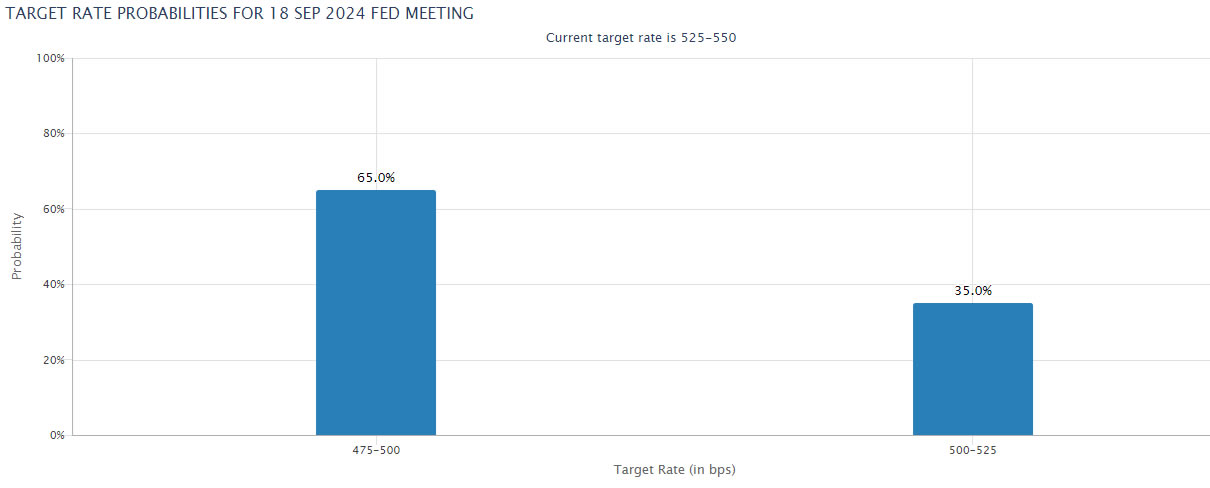
降息

9 月 18 日降息幅度的概率。资料来源:CME 美联储观察工具

然而,麦肯表示,降息 25 个基点可能对加密货币市场不利。

“我认为,如果美联储降息 25 个基点,股市将受到严重打击。加密货币可能会随之下跌。原因是,假设降息 50 个基点,股市将处于历史高位。”

但他补充道,如果美联储降息 50 个基点,这可能会对加密货币等风险资产产生积极影响。

加密货币交易所 Gemini 亚太区负责人 Saad Ahmed 告诉 Cointelegraph,市场可能已经消化了降息的影响,但这可能会影响突破。

“我认为很多因素可能已经反映在价格中,因为人们对此有所预期。不过,有时有一个催化剂让价格突破区间也是件好事。”

如果降息幅度更大,达到 50 个基点,“最终,你知道,风险又回到了桌面上,”他补充道。

麦肯对普遍持有的降息 50 个基点是利空的观点提出质疑,他指出,美联储最近几次降息都是在紧急情况下,比如 2008 年金融危机、20 世纪 90 年代中期的互联网泡沫以及 1987 年的黑色星期一崩盘。

然而,麦肯表示,目前“蓬勃发展”的经济已经不同以往,更加稳定,GDP 增长率达到 3%。

此外,大幅降息的理由包括刺激 2025 年的增长,减少美国财政部的净利息支出——使人们能够出售房屋、再融资抵押贷款,并在总统大选前防范潜在的坏数据点。

9 月 17 日,宏观经济博客《Kobeissi Letter》写道:“至少 15 年来,市场从未对美联储的利率决定如此不确定。”

Criptomoedas em alta

Leituras Relacionadas

Li Fei-Fei's Latest Long-Form Article: When Video Generation, Robotics, and NVIDIA All Call Themselves World Models, We Need a Taxonomy

In a new article, Dr. Fei-Fei Li addresses the widespread and often inconsistent use of the term "world model" in AI. She proposes a clear, functional taxonomy rooted in the classic Partially Observable Markov Decision Process (POMDP) loop (agent → action → state → observation → agent). According to this framework, current systems called "world models" are different projections of this loop, categorized by their primary output: 1. **Renderers**: Output observations (pixels). Their goal is visual fidelity for human consumption (e.g., video generation models like Sora). They are the most commercially mature but are limited by a focus on appearance over physical accuracy. 2. **Simulators**: Output states (geometric, physical, dynamic representations). They provide a structurally accurate world for both human professionals (e.g., architects) and computational agents (e.g., robots for training). Li argues simulators are the crucial, underappreciated bridge, as they can underpin both rendering and planning. 3. **Planners**: Output actions. Given an observation and a goal, they decide what an agent should do next (e.g., robotic action models). This area is highly promising but remains the least mature for real-world deployment. Li highlights a key trend: the boundaries between these three categories are beginning to blur, as they all rely on a shared underlying understanding of geometry, physics, and dynamics. The logical endpoint is a unified world foundation model capable of switching between rendering, simulation, and planning based on downstream needs. This convergence, she concludes, is central to advancing spatial intelligence—enabling machines not just to talk about the world, but to truly understand, imagine, and interact with it.

marsbitHá 2h

Li Fei-Fei's Latest Long-Form Article: When Video Generation, Robotics, and NVIDIA All Call Themselves World Models, We Need a Taxonomy

marsbitHá 2h

Forbes Feature: Stablecoin Cross-Border Payments Are Faster, But Not Yet Cheaper

A Forbes feature delves into the state of stablecoin-based cross-border payments, noting rapid growth but a key shortfall: while faster and more accessible, they are not yet cheaper. At a recent industry conference in Mexico City, optimism about technology, regulation, and volume was tempered by discussions with practitioners. The core issue is liquidity. Traditional FX brokers charge 60-70 basis points, and stablecoins promise to slash this to 2-5 basis points. However, this theoretical cost advantage cannot be realized until deep liquidity pools are established at scale, requiring significant institutional capital inflow. A major adoption barrier is trust. Businesses often rely on long-standing relationships with traditional brokers, valuing reliability over marginal cost savings. This shift will be gradual. Furthermore, successful companies in the space are not positioning themselves as replacements for legacy systems like SWIFT, but as complements. They leverage stablecoins for speed while using traditional rails for their standardization and reliability in ensuring accurate payment details—a critical factor for supplier payments to avoid customs issues. Companies like Caliza, experiencing high monthly growth, exemplify this hybrid approach. The industry anticipates consolidation, as long-term viability will depend on securing the essential trifecta: proper licensing, robust fiat on/off-ramps, and deep liquidity. Without these, firms risk being mere intermediaries rather than building sustainable businesses.

marsbitHá 2h

Forbes Feature: Stablecoin Cross-Border Payments Are Faster, But Not Yet Cheaper

marsbitHá 2h

Li Feifei's Latest Article: When Video Generation, Robotics, and NVIDIA All Claim to Have 'World Models,' We Need a Taxonomy

"World Model" has become a widely used yet ambiguous term in AI. Drawing from the classic POMDP framework (agent → action → state → observation), this article proposes a functional taxonomy to clarify the concept. It identifies three distinct types, categorized by their output in the perception-action loop: 1. **Renderers**: Output visual observations (pixels). These models, like advanced video generators, prioritize visual fidelity but often lack underlying physical accuracy. 2. **Simulators**: Output the state of the world (geometry, physics, dynamics). They provide a structurally accurate representation for professionals (e.g., architects) and serve as training environments for robots and AI agents. 3. **Planners**: Output actions. Given an observation and a goal, they determine what an agent should do next, closing the perception-action loop (e.g., vision-language-action models). While renderers are currently the most commercially mature and planners are the most aspirational, the article argues that **simulators are the crucial, underappreciated hub**. By working at the level of geometry and physics, a simulator can project upwards to create visuals for humans and downwards to predict action consequences for agents. The future lies in the convergence of these three functions. Emerging research and products, like World Labs' Marble model which outputs both visual splats and physical collision meshes, are beginning to blur these boundaries. The logical endpoint is a unified world foundation model capable of rendering, simulating, and planning based on a shared understanding of spatial and temporal structures—ultimately enabling machines to understand, imagine, and interact with the physical world.

链捕手Há 2h

Li Feifei's Latest Article: When Video Generation, Robotics, and NVIDIA All Claim to Have 'World Models,' We Need a Taxonomy

链捕手Há 2h

Trading

Spot

Artigos em Destaque

Como comprar JOE

Bem-vindo à HTX.com!Tornámos a compra de TraderJoe (JOE) simples e conveniente.Segue o nosso guia passo a passo para iniciar a tua jornada no mundo das criptos.Passo 1: cria a tua conta HTXUtiliza o teu e-mail ou número de telefone para te inscreveres numa conta gratuita na HTX.Desfruta de um processo de inscrição sem complicações e desbloqueia todas as funcionalidades.Obter a minha contaPasso 2: vai para Comprar Cripto e escolhe o teu método de pagamentoCartão de crédito/débito: usa o teu visa ou mastercard para comprar TraderJoe (JOE) instantaneamente.Saldo: usa os fundos da tua conta HTX para transacionar sem problemas.Terceiros: adicionamos métodos de pagamento populares, como Google Pay e Apple Pay, para aumentar a conveniência.P2P: transaciona diretamente com outros utilizadores na HTX.Mercado de balcão (OTC): oferecemos serviços personalizados e taxas de câmbio competitivas para os traders.Passo 3: armazena teu TraderJoe (JOE)Depois de comprar o teu TraderJoe (JOE), armazena-o na tua conta HTX.Alternativamente, podes enviá-lo para outro lugar através de transferência blockchain ou usá-lo para transacionar outras criptomoedas.Passo 4: transaciona TraderJoe (JOE)Transaciona facilmente TraderJoe (JOE) no mercado à vista da HTX.Acede simplesmente à tua conta, seleciona o teu par de trading, executa as tuas transações e monitoriza em tempo real.Oferecemos uma experiência de fácil utilização tanto para principiantes como para traders experientes.

167 Visualizações TotaisPublicado em {updateTime}Atualizado em 2026.06.02

Como comprar JOE

Discussões

Bem-vindo à Comunidade HTX. Aqui, pode manter-se informado sobre os mais recentes desenvolvimentos da plataforma e obter acesso a análises profissionais de mercado. As opiniões dos utilizadores sobre o preço de JOE (JOE) são apresentadas abaixo.

活动图片