OpenAI 全新发布 o1 模型,我们正式迈入了下一个时代

深潮Publicado em 2024-09-13Última atualização em 2024-09-13

我们通往AGI的路上,已经没有任何阻碍。

作者:卡兹克

大半夜的,OpenAI抽象了整整快半年的新模型。

在没有任何预告下,正式登场。
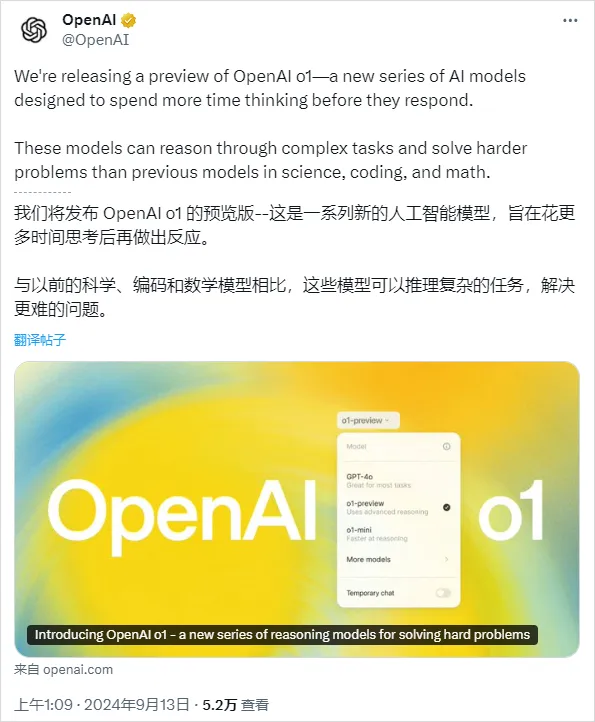
正式版名称不叫草莓,草莓只是内部的一个代号。他们的正式名字,叫:
为什么取名叫o1,OpenAI是这么说的:

For complex reasoning tasks this is a significant advancement and represents a new level of AI capability. Given this, we are resetting the counter back to 1 and naming this series OpenAI o1.

翻译过来是:

对于复杂推理任务来说,这是一个重要的进展,代表了人工智能能力的新水平。鉴于此,我们将计数器重置为 1,并将这一系列命名为 OpenAI o1。

这次模型的强悍,甚至让OpenAI不惜推掉了过去GPT系列的命名,重新起了一个o系列。

炸了,真的炸了。

我现在,头皮发麻,真的,这次OpenAI o1发布,也标志着,AI行业,正式进入了一个全新的纪元。

“我们通往AGI的路上,已经没有任何阻碍。”

在逻辑和推理能力上,我直接先放图,你们就知道,这玩意有多离谱。
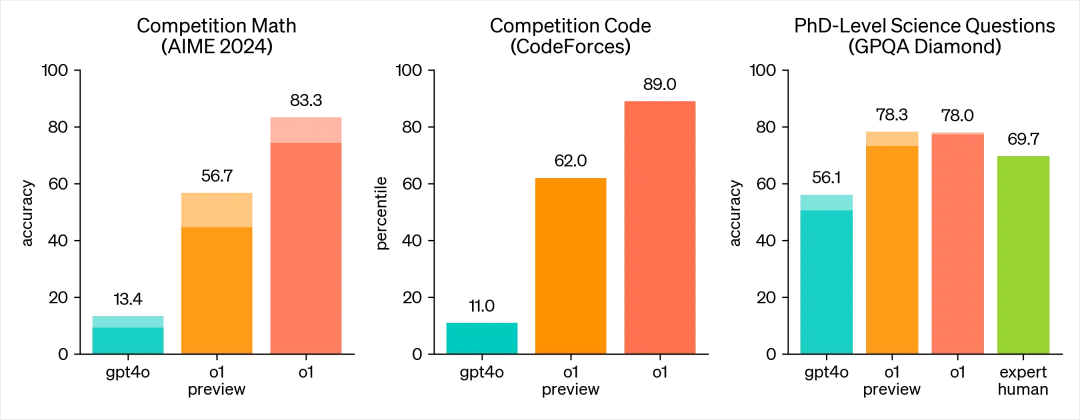
AIME 2024,一个高水平的数学竞赛,GPT4o准确率为13.4%,而这次的o1 预览版,是56.7%,还未发布的o1正式版,是83.3%。

代码竞赛,GPT4o准确率为11.0%,o1 预览版为62%,o1正式版,是89%。

而最牛逼的博士级科学问题 (GPQA Diamond),GPT4o是56.1,人类专家水平是69.7,o1达到了恐怖的78%。
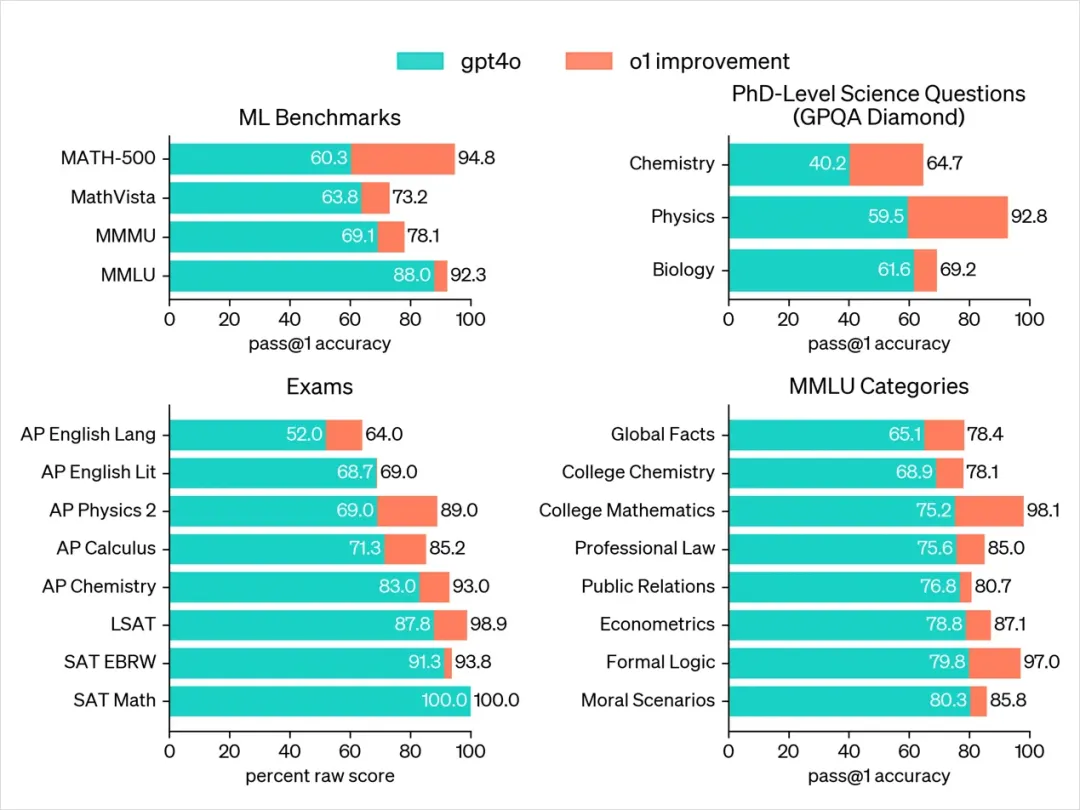
我让Claude翻译了一下o1的图,丑是丑了点,但是能看的懂每项数据意思就行。

什么叫全面碾压,这就是。

特别是在测试测试化学、物理和生物学专业知识的基准GPQA-diamond上,o1 的表现全面超过了人类博士专家,这也是有史以来,第一个获得此成就的模型。

而整个模型之所以达到如此成就,基石就是Self-play RL,不知道这个的可以去看我前两天的预测文章:新模型草莓到底是个啥?

通过Self-play RL,o1学会了磨练其思维链并完善所使用的策略。它学会了识别和纠正自己的错误。

它也学会了将复杂的步骤分解为更简单的步骤。

而且当当前的方法不起作用时,它也学会了尝试不同的方法。

他学会的这些,就是我们人类,最核心的思考方式:慢思考。

诺贝尔经济学奖得主丹尼尔·卡尼曼有一本著作,名叫:《思考,快与慢》。

非常详细的阐述了人类的两种思考方式。

第一种是快思考(系统1),特点是快速、自动、直觉性、无意识,举几个例子:

  • 看到一个笑脸就知道对方心情很好。

  • 1+1=2 这样简单的计算。

  • 开车时遇到危险情况立即踩刹车。

这些就是快思考,也就是传统的大模型,死记硬背后学得的快速反应的能力。

第二种是慢思考(系统2),特点是缓慢、需要努力、逻辑性、有意识,举几个例子:

  • 解决一道复杂的数学题

  • 填写税务申报表

  • 权衡利弊后做出重要决定

这就是慢思考,我们人类之所以强大的核心,也是AI要通往下一步AGI路上的基石。

而现在,o1终于踏出了坚实的一步,拥有了人类慢思考的特质,在回答前,会反复的思考、拆解、理解、推理,然后给出最终答案。

说实话,这些增强的推理能力在处理科学、编码、数学及类似领域的复杂问题时绝对极度有用。

例如o1可以被医疗研究人员用来注释细胞测序数据,被物理学家用来生成量子光学所需的复杂数学公式,以及被各个领域的开发人员用来构建和执行多步骤工作流,等等等等。

o1也绝对是全新一代的数据飞轮,如果答案正确,整个逻辑链就会变成一个包含正负奖励的训练示例的小型数据集。

以OpenAI的用户级别,未来的进化速度,只会更恐怖。

写到这,我忽然叹了口气,我觉得我跟一年以后的o1比起来,可能就是个纯废物了,真的。。。

目前,o1模型已经逐步向所有ChatGPT Plus和 Team用户开放,未来会考虑对免费用户开放。
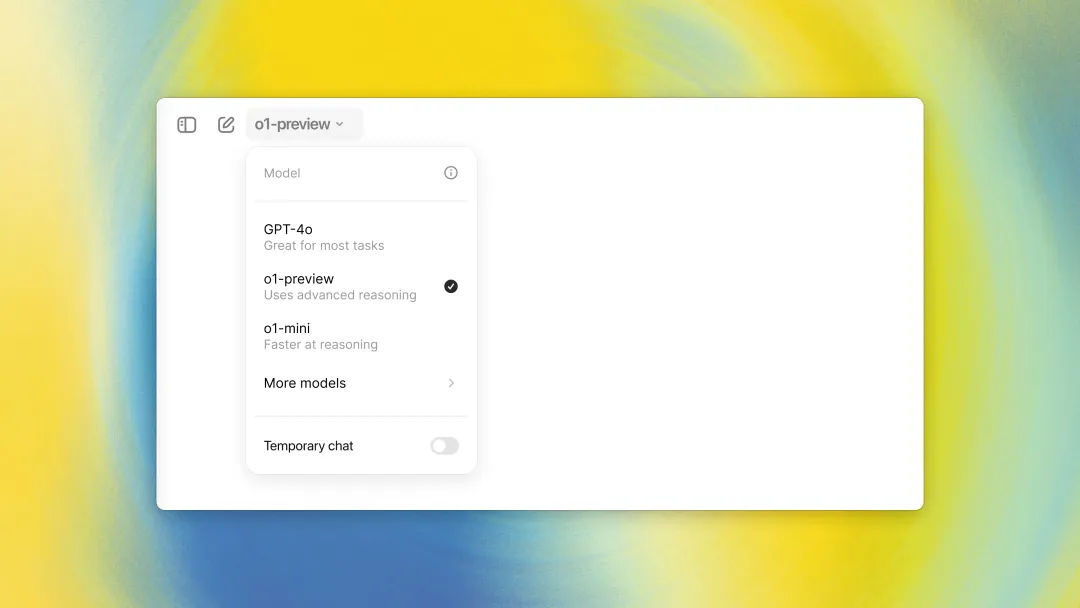
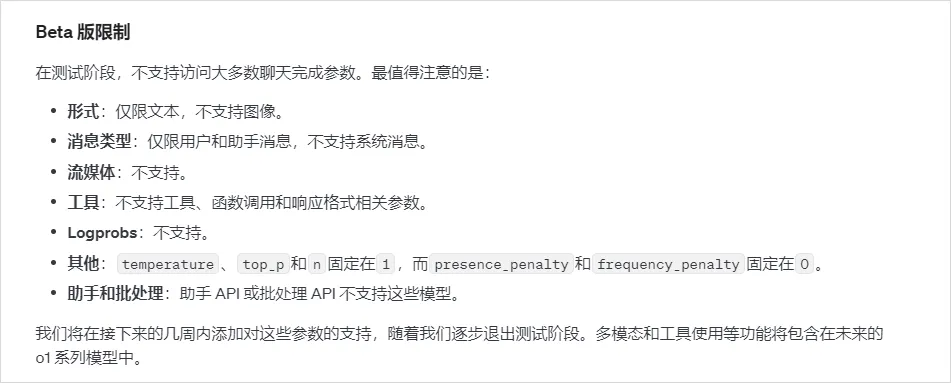
分为两个模型,o1预览版和o1 mini,o1-mini就是更快更小更便宜,推理啥的都不错,极度适合数学和代码,就是世界知识会差很多,适用于需要推理但不需要广泛世界知识的场景。

o1预览版每周30条,o1-mini每周50条。

雪崩,甚至不是按以前的3小时来限制的,是每周30条,也能从侧面看出来,o1这个模型,有多贵了。

对于开发者来说,只对已经付过1000美刀的等级5开发者开放,每分钟限制20次。

都挺少的。

而且在功能上阉割挺大,但是毕竟早期,理解。
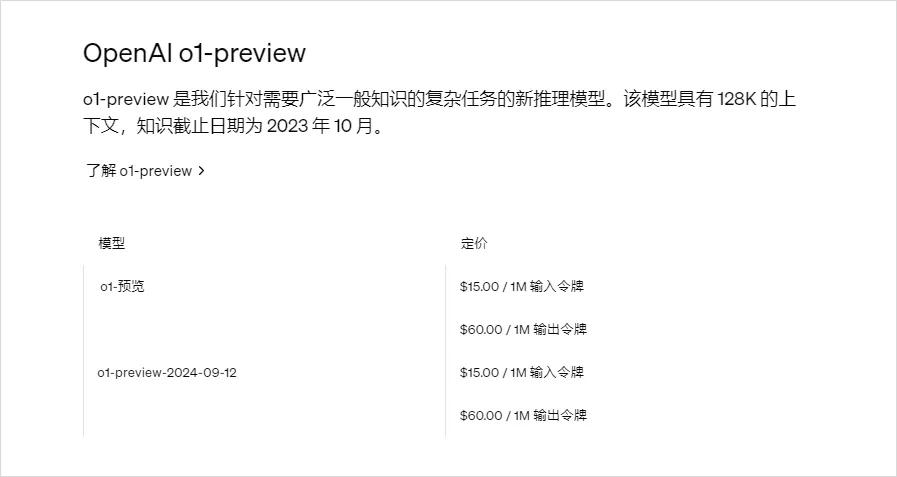
API的价格上,o1预览版每百万输入15美元,每百万输出60美元,这个推理成本...
o1-mini会便宜一些,每百万输入3美元,每百万输出12美元。
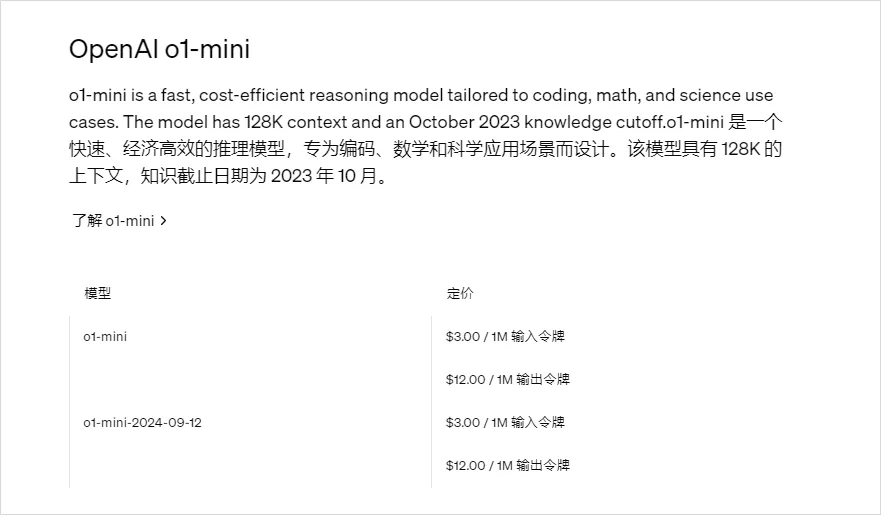
输出成本都是推理成本的4倍,对比一下GPT4o,分别是5美元和15美元。

o1-mini还是勉强有一些经济效应的,不过还是开始,后面等着OpenAI打骨折。

既然说o1已经对Plus用户开放,我就直接去我的号上看了眼,还不错,拿到了。
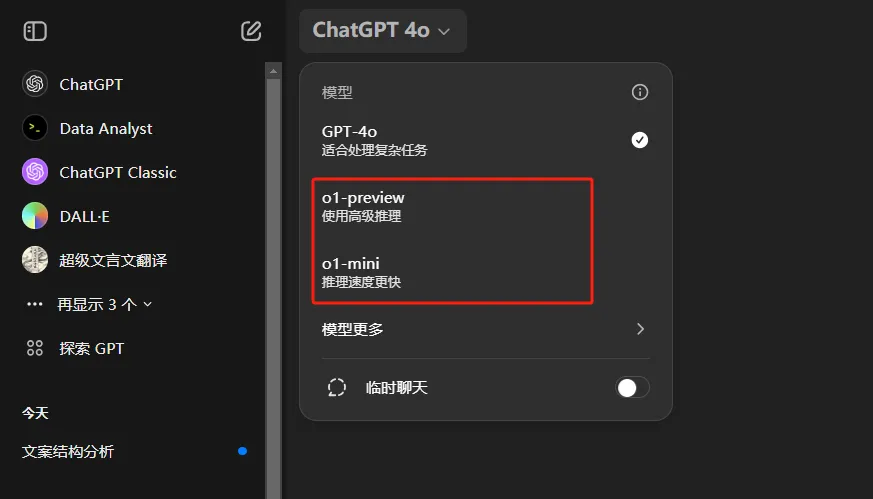
那自然,第一时间试一试。

目前不支持曾经的所有功能,也就是没有图片理解、图片生成、代码解释器、网页搜索等等,只有一个可以对话的裸模型。

我先是一个曾经很致命的问题:

“农夫需要把狼、羊和白菜都带过河,但每次只能带一样物品,而且狼和羊不能单独相处,羊和白菜也不能单独相处,问农夫该如何过河。”
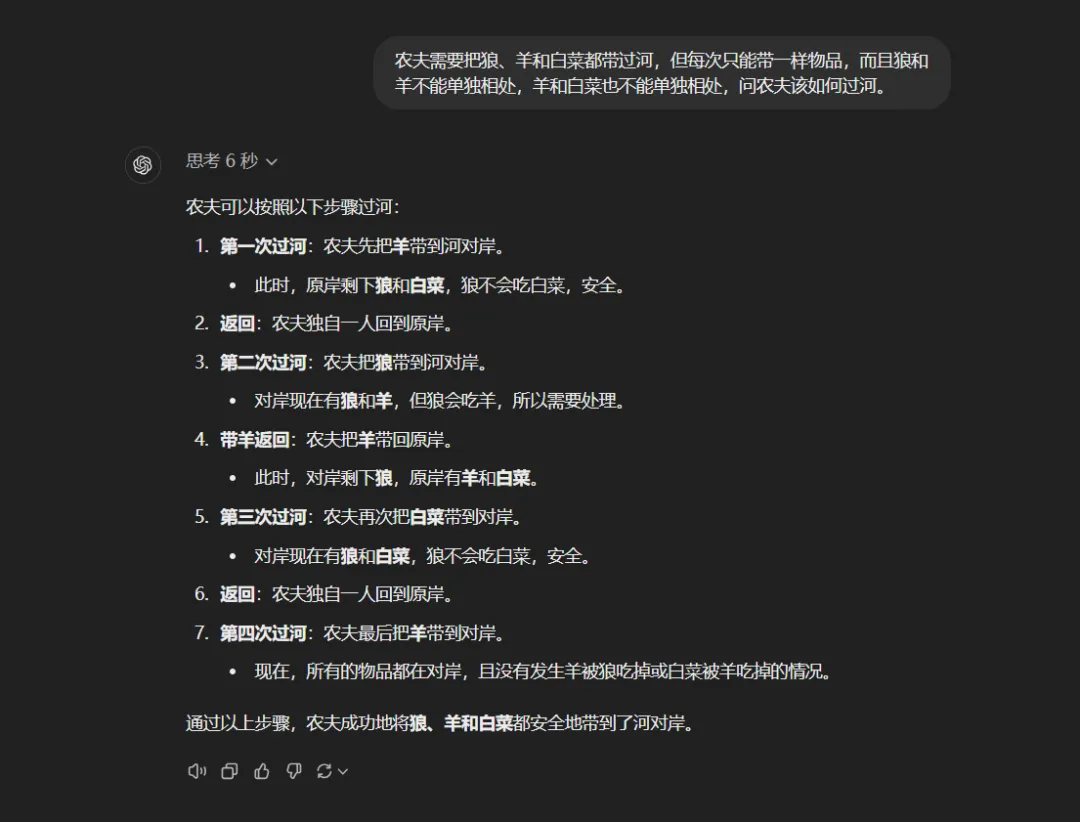
思考了6秒时间,给了我一个很完美的回答。

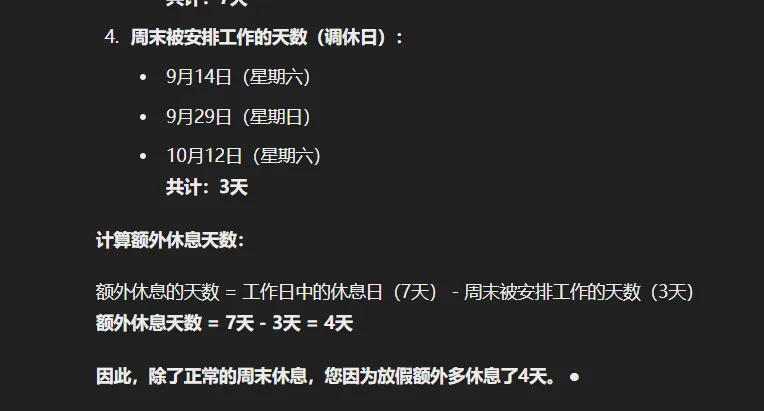
还有之前一个坑遍所有大模型的调休问题:

“这是中国2024年9月9日(星期一)开始到10月13日的放假调休安排:上6休3上3休2上5休1上2休7再上5休1。

请你告诉我除了我本来该休的周末,我因为放假多休息了几天?”

在o1思考了整整30秒以后,给出了一天不差的极度精准的答案。
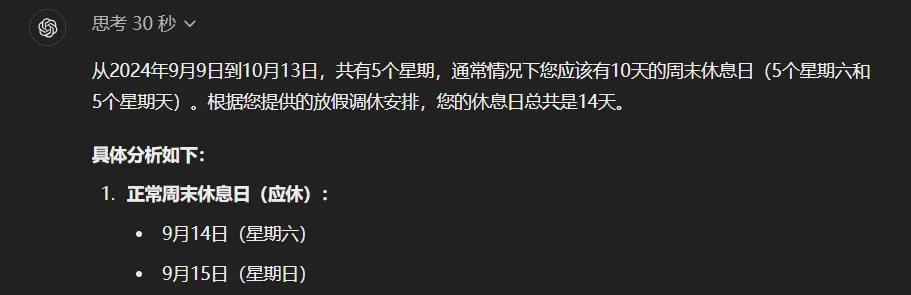
无敌,真的无敌。

再来一个更难的,就是曾经姜萍那个比赛的奥数题:
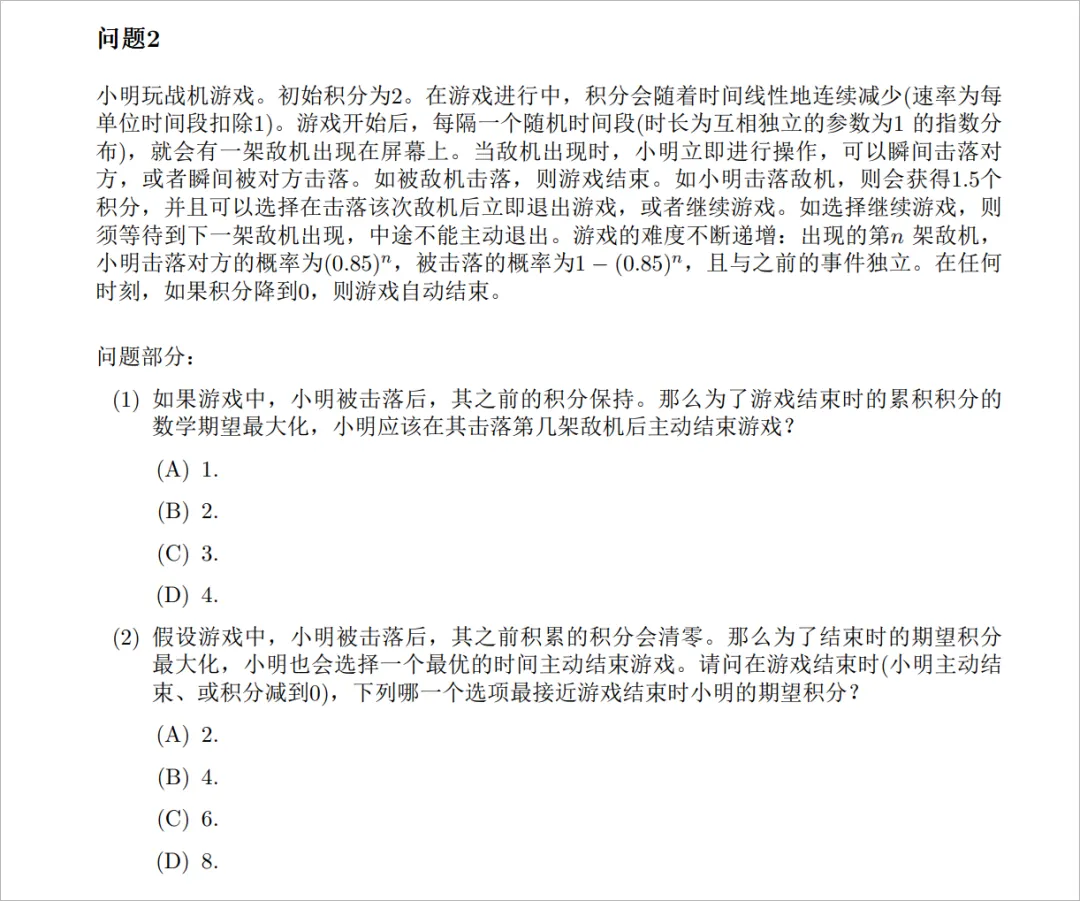
别问我题目什么意思,我看不懂,我是废物,这题曾经屠杀所有的大模型,这次,我们让o1也来试一下看看。
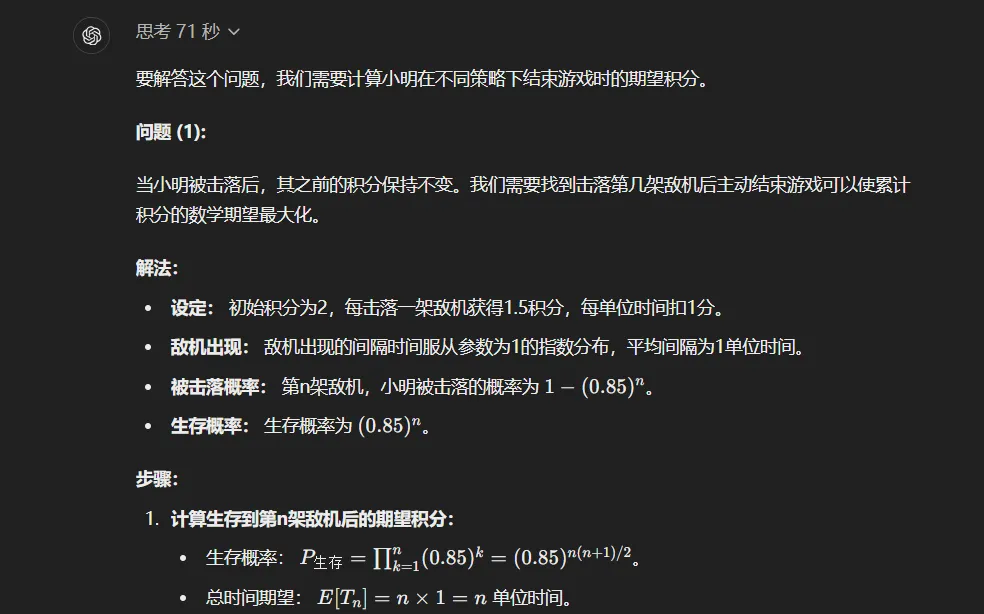
在o1思考了整整1分多钟之后,他给出了答案。

...
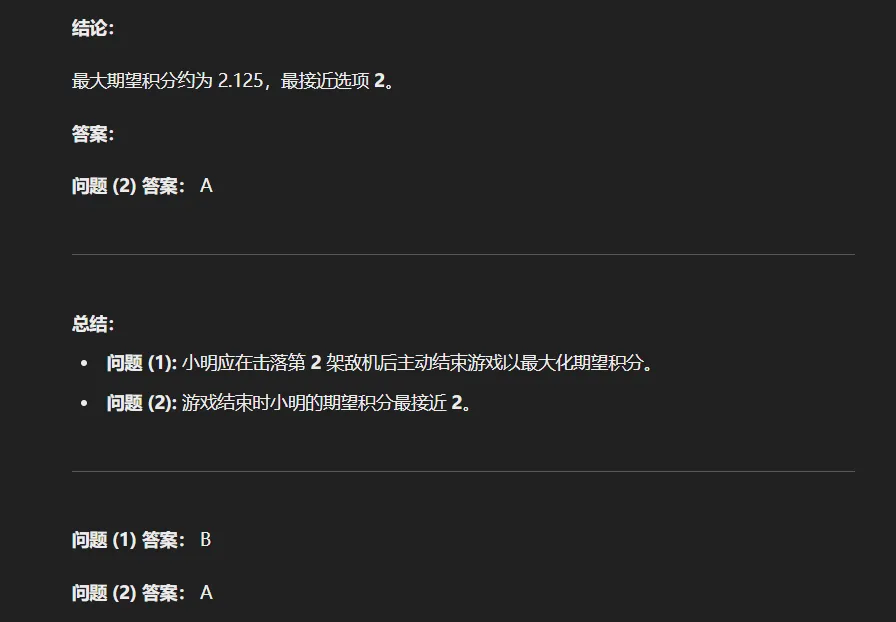
全...对...

我裂开了。

目前我自己试下来,感觉Prompt,未来可能也要重新摸索,在GPT为代表的快思考大模型时代,我们有很多所谓的一步一步思考之类的玩意,现在全都无效了,对o1甚至还有负效果。

OpenAI给出的最佳写法是:

  • 保持提示简单直接:模型擅长理解和响应简短、清晰的指令,而不需要大量的指导。

  • 避免思路链提示:由于这些模型在内部进行推理,因此不需要提示它们“逐步思考”或“解释你的推理”。

  • 使用分隔符来提高清晰度:使用三重引号、XML 标签或章节标题等分隔符来清楚地指示输入的不同部分,帮助模型适当地解释不同的部分。

  • 限制检索增强生成 (RAG) 中的附加上下文:提供附加上下文或文档时,仅包含最相关的信息,以防止模型过度复杂化其响应。

最后,我想说一下这个思考的时长。

现在o1是思考了一分钟,但是,如果是真正的AGI,说实话,思考的越慢可能会越刺激。

当他真的,可以去做证明数学定理,去做癌症药物研发,去做天体研究呢?

每一次的思考,可以达到几小时、几天、甚至几周呢?

最后的结果,可能会让所有人震惊的难以置信。

现在,没有人能想象到,那时候的AI,会是一个什么样的存在。

而o1的未来,在我看到,也绝对不止是一个普普通通的ChatGPT。

而是我们前往下个时代,最伟大的基石。

“我们通往AGI的路上,已经没有任何阻碍。”

现在,我毫不犹豫的坚信着这句话。

星光熠熠的下一个时代。

在今天。

正式到来了。
Leituras Relacionadas

Huawei's "Tao Law": A Comprehensive Overview of Core Companies

Huawei's "Tau Law": Core Companies Overview On May 25, 2026, Huawei's Director and President of the Semiconductor Business Division, He Tingbo, formally introduced the "Tau (τ) Law" at ISCAS 2026, marking a significant principle guiding industry development in the global semiconductor field from China. The Tau Law shifts focus from traditional Moore's Law, which pursues geometric transistor scaling, to "time scaling"—continuously compressing signal propagation delay (time constant τ) without solely relying on extreme feature size reduction. The core implementation path is "logic folding." This technique transforms circuit layouts from two-dimensional planes to multi-layer 3D stacks, using short vertical interconnects to replace long horizontal wiring, thereby drastically reducing τ. Huawei has already designed and mass-produced 381 chips following this principle over the past six years, with plans to launch a Kirin chip utilizing logic folding in Fall 2026. By 2031, high-end chips based on the Tau Law are expected to achieve performance levels equivalent to a 1.4nm process node. This development impacts several key industry segments, with related Chinese companies poised to benefit: 1. **EDA Design Software**: Essential for circuit-level optimization. Key players include: * **Empyrean Technology** (Huada Jiutian): China's largest full-flow EDA provider. * **Primarius Technologies** (Gailun Dianzi): Specializes in device modeling and verification. * **Semitronix** (Guangliwei): Focuses on yield enhancement and test chip EDA. 2. **Chiplet & Advanced Packaging**: Logic folding's 3D stacking necessitates advanced packaging (e.g., TSV, hybrid bonding). Core participants are: * **Tongfu Microelectronics**: A leader in advanced packaging and a key partner for AMD's Chiplet products. * **JCET Group** (Changdian Keji) & **Tianshui Huatian Technology**: Major OSATs with advanced packaging capabilities. * **VeriSilicon** (Xinyuan Gufen): Provides Chiplet-based design platforms and IP. 3. **Foundry Manufacturing**: Optimization must be implemented in transistor structures and process parameters. Potential foundries for Huawei's future chips include: * **SMIC**: China's leading foundry with advanced FinFET capabilities, the most likely candidate for next-gen Kirin chips. * **Hua Hong Semiconductor** (Huahong Gongsi): A leader in specialty processes (power, embedded memory). * **Nexchip Semiconductor** (Jinghe Jicheng): Major foundry for display driver ICs and MCUs. The Tau Law represents a strategic move towards architectural innovation and design-process co-optimization, driving demand across the domestic semiconductor supply chain.

marsbitHá 27m

Huawei's "Tao Law": A Comprehensive Overview of Core Companies

marsbitHá 27m

TechFlow Intelligence Report: Huawei Unveils "Tao" Law, Semiconductor Sector Surges; Meta Cuts 10% of Workforce

"TechFlow Intelligence Brief": Huawei's new "Tau Law" in semiconductors and Meta's 10% layoffs headline today's tech landscape. In AI, breakthroughs include an AI solving 9 high-difficulty pure math problems for just a few hundred dollars each, and DeepSeek's new Reasonix programming agent challenging commercial models. However, research highlights a "constraint decay" issue in LLM-generated backend code. Open-source model Qwen 3.6 27B achieves high speeds on older GPUs, sparking debate on NVIDIA's future dominance. In Crypto/Web3, Ethereum Foundation plans to downsize, possibly reducing ETH selling pressure. Fake news about CZ ignited a meme coin frenzy, showing the market's sensitivity to celebrity narratives. DeFi sees a new trend in HELOC-backed Real World Asset (RWA) pools. The chip sector is stirred by Huawei's proposed "Tau (τ) Law," aiming for 1.4nm-equivalent performance by 2031 through architectural innovation, causing related stocks to surge. A report notes memory now constitutes nearly two-thirds of AI chip cost. Meanwhile, executives at 7 Chinese semiconductor firms sold shares after price peaks. Meta announces 10% layoffs as it pivots to AI. Google's CEO faced student protests over AI ethics during a speech, and the company controversially published a Chromium exploit before patching was complete. Xiaomi permanently banned installers for AC installation fraud. In US stocks, AMD is seen as a potential challenger to NVIDIA, while a survey reveals 99% of CEOs expect AI-driven layoffs within two years. Palantir secured a government contract for employee monitoring, raising privacy concerns. Macro developments include a 6% drop in WTI crude oil on hopes for reopened Hormuz Strait, and silver prices rising over 4%. Global oil inventories are nearing critical lows. New trends highlight a "audio prompt injection" attack targeting AI voice assistants via hidden commands, and CBS pausing takedowns of pirated Stephen Colbert episodes after public pushback. The underlying narrative connects AI's cost-effective problem-solving, widespread planned job displacement, and Huawei's challenge to Western tech hegemony, framing the AI and chip race as a broader contest over employment, geopolitics, and the very definition of intelligence.

marsbitHá 1h

TechFlow Intelligence Report: Huawei Unveils "Tao" Law, Semiconductor Sector Surges; Meta Cuts 10% of Workforce

marsbitHá 1h

Trading

Spot
Futuros
活动图片