Аналитики отметили существенное падение доходности майнинга Биткоина в августе. Что будет с индустрией дальше?

cryptonews.ruPublicado em 2021-01-11Última atualização em 2024-09-11

По итогам августа доходность майнинга Биткоина существенно упала по сравнению с предыдущим месяцем. Всё из-за одновременного снижения стоимости главной криптовалюты и увеличения хешрейта – вычислительной мощности всех устройств майнеров в сети. Информацией о происходящем в сфере добычи BTC в свежем исследовании поделились аналитики банка Jefferies, которые тщательно изучили ситуацию с криптой.

Майнить Биткоин становится всё тяжелее. Это подтверждает показатель сложности добычи первой криптовалюты, который меняется каждые 2016 блоков. Его задача — обеспечить приближение средней продолжительности добычи каждого блока к целевому значению в десять минут.

Если блоки добывали быстрее данной отметки, тогда сложность увеличивается. Если медленнее — сложность уменьшается.

ASIC-майнер для добычи Биткоина

Благодаря данному механизму сеть Биткоина работает по понятным правилам, а темпы эмиссии криптовалюты соответствуют обозначенным заранее уровням.

Сегодня утром сложность майнинга BTC установила очередной исторический максимум. Показатель вырос на 3.58 процента до отметки 92.67 T. Предыдущий рекорд от конца июля составил 90.67 T.
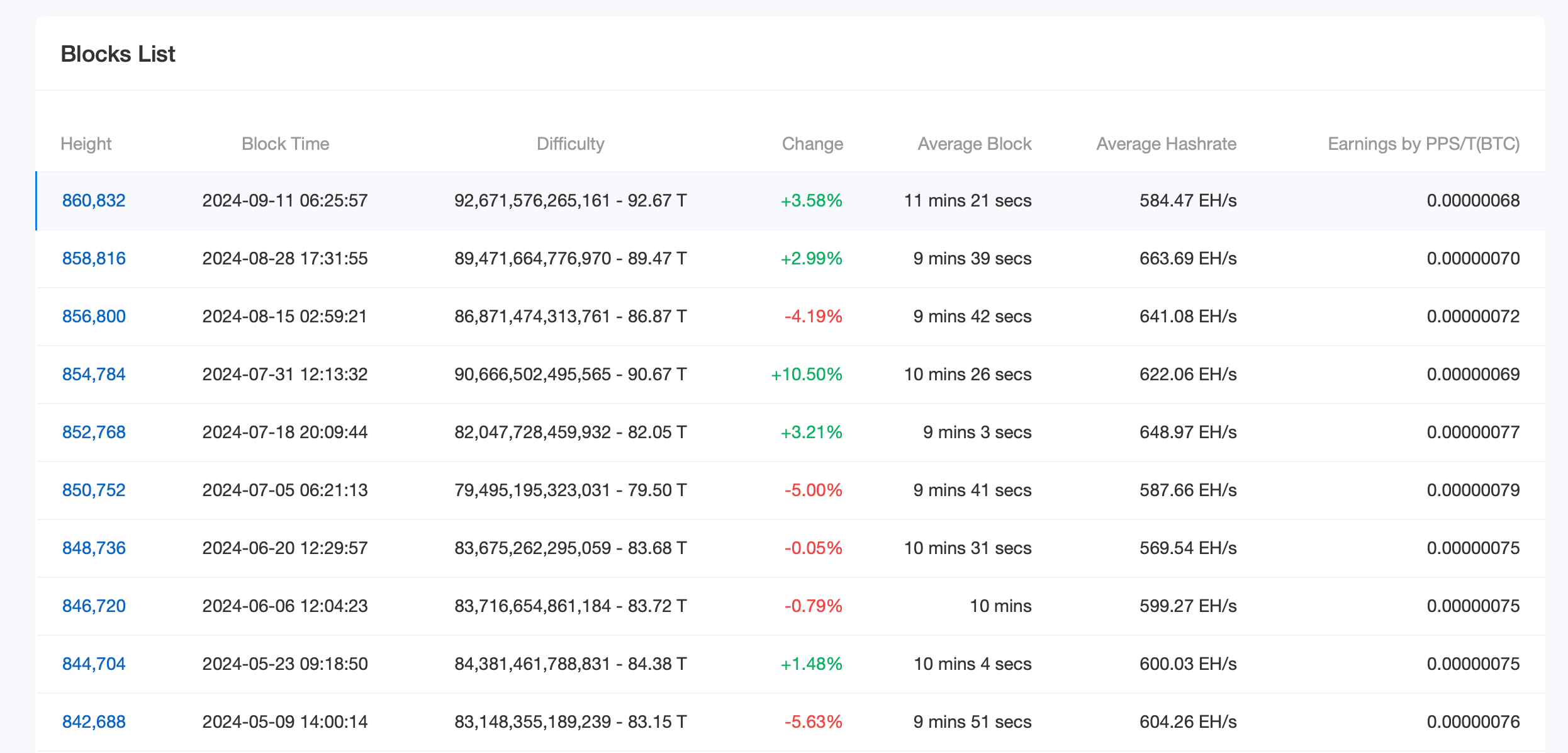
Изменения сложности майнинга Биткоина BTC

Это значит, что один и тот же ASIC-майнер сейчас зарабатывает как никогда мало в криптовалютном выражении. Ну а условия в мире добычи цифровых активов не становятся проще.

Что происходит с майнингом Биткоина?

Средний доход майнеров в сутки от одного экзахеша мощности оборудования упал на 11.8 процента по сравнению с июлем. Вот цитата экспертов по данному поводу, которую приводит CoinDesk.

Сентябрь обещает быть ещё одним сложным месяцем, поскольку цена BTC остаётся ниже уровня 60 тысяч долларов, а хешрейт сети продолжает расти.


Хешрейт сети Биткоина преимущественно растёт из-за активности крупных компаний, которые обладают соответствующими ресурсами для расширения и доступом к инновационным и доступным источникам электроэнергии. За счёт этого общая прибыль для майнеров BTC снижается, тогда как мелкие игроки порой и вовсе вынуждены выходить из игры.

Хотя эффективность работы способна падать и у крупных майнеров. Например, на прошлой неделе об итогах августа отчитались представители Riot Platforms. За август они добыли 322 BTC, что существенно ниже итога в 370 биткоинов за июль. Несмотря на это, Riot смогла накопить 10 тысяч монет в качестве резервов.
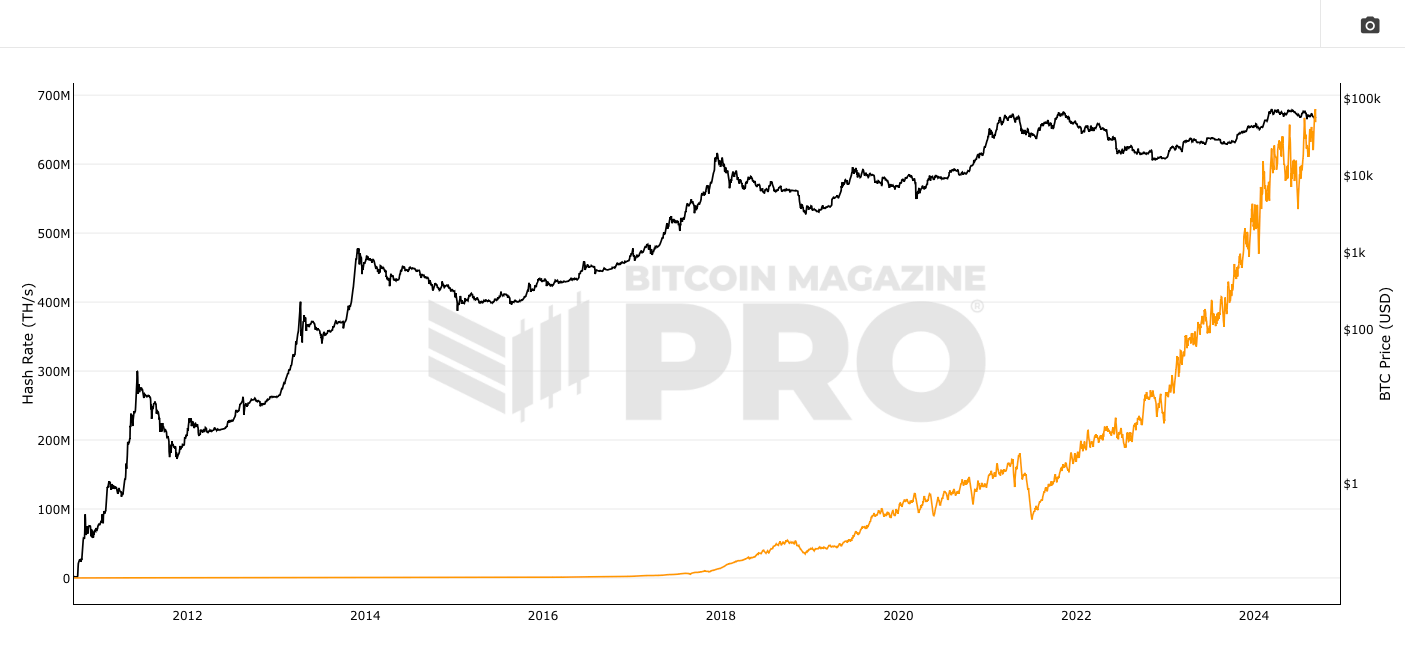
Цена и хешрейт сети Биткоина

Этим летом было меньше дней экстремальной жары, что означало более продолжительное время работы для крупнейших майнинговых центров. К примеру, в августе криптофермы компании Marathon Digital работали суммарно 88 процентов времени. Хотя в августе прошлого года этот показатель был на уровне 75 процентов.

Впрочем, руководитель упомянутой выше компании Riot Джейсон Лес подтвердил влияние высоких температур на эффективность работы оборудования. Вот его цитата.

Август исторически является наиболее жарким месяцем года в Техасе, а это приводит к периодам наиболее масштабного спроса на электроэнергию в сети.

В среднем для десяти крупнейших майнинговых фирм, которые отслеживает банк, непрерывное время работы в прошлом месяце составило около 83 процентов по сравнению с 76 процентами год назад и 79 процентами в августе 2022 года. Вот комментарий по этому поводу.

В то время как экономика майнинга наверняка движется в неправильном направлении, операционная эффективность повышается.
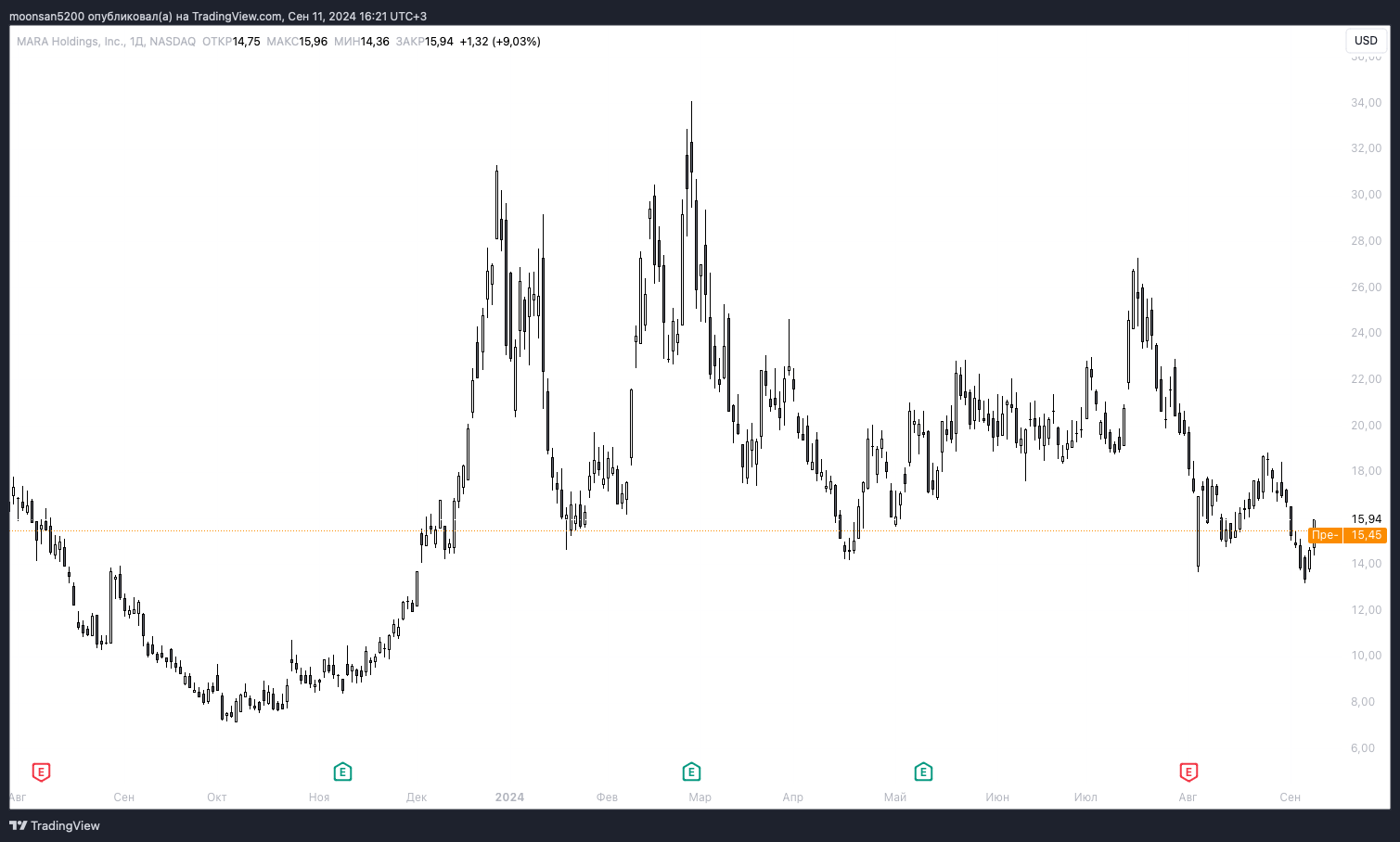
Изменение стоимости акций Marathon Digital

В августе зарегистрированные в США майнинговые компании добыли меньшую долю новых BTC, чем месяцем ранее. При этом на них приходится 19.9 процента от общей вычислительной мощности сети.

Больше всего монет в прошлом месяце добыла Marathon – 673 BTC. Компания CleanSpark заняла второе место с 478 BTC.

Вопреки всем трудностям, хорошо зарабатывать могут даже соло-майнеры, которые добывают криптовалюту в одиночку, то есть за пределами пулов. Накануне это доказал один из них.

Во вторник анонимный майнер первой криптовалюты сам получил награду в размере 3.125 BTC за успешную добычу блока 860749 с помощью своего оборудования. То есть анониму досталось вознаграждение на сумму около 181 тысячи долларов.
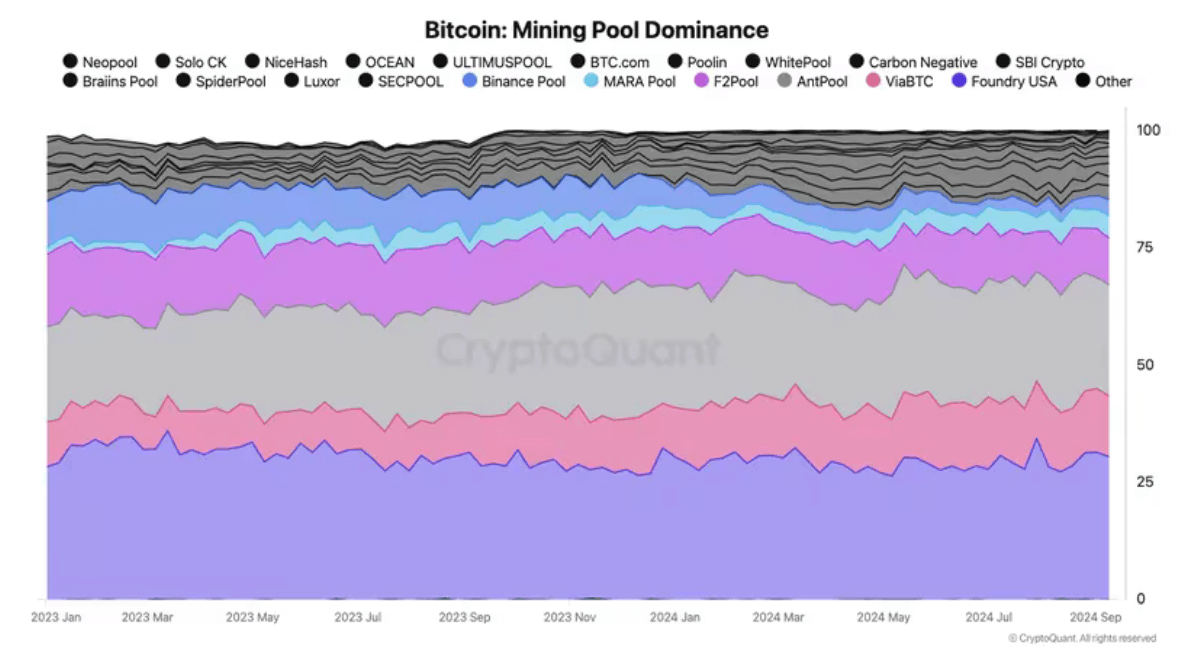
Доли рынка крупных майнинговых пулов

Обычно соло-майнеры имеют ограниченную вычислительную мощность для добычи блоков. И если майнить в одиночку с неплохими результатами небольшие альткоины вполне реально, то с Биткоином и прочими популярными криптовалютами подобное не работает.

Так что в целом «выигрыш» блока BTC соло-майнером можно сравнить с победой в лотерею — особенно с учётом того, что хешрейт и сложность сети сейчас находятся на рекордных уровнях. Поэтому добывать Биткоин целесообразно в составе майнингового пула.


Пока всё указывает на то, что майнинг Биткоина постепенно становится всё менее доступным для относительно небольших игроков. Всё же сложность добычи установила очередной рекорд, тогда как хешрейт продолжает расти и достигать всё новых максимумов. Соответственно, меньшим участникам целесообразнее переключиться на добычу альткоинов с помощью видеокарт. Выбрать наиболее подходящий из них по традиции поможет калькулятор 2CryptoCalc.
Leituras Relacionadas

No Sales Team, $20 Million in Revenue: How Did AI Employee Viktor Win Over 30,000 Companies?

The AI employee Viktor, developed by a team with DeepMind background, has achieved $20 million in annual revenue without a traditional sales team, serving over 30,000 companies. Its core innovation lies in positioning itself as a "Tier 3 AI Coworker" capable of "end-to-end execution and delivery of results," moving beyond the "draft and wait for human completion" model of typical AI assistants. Users can simply mention Viktor in Slack or Microsoft Teams using natural language commands, and it autonomously performs tasks like pulling sales data from a CRM, generating reports, or even cross-tool operations like creating board meeting PPTs by aggregating data from six different sources. Key to its growth is a pure Product-Led Growth (PLG) model, eliminating complex implementation cycles and per-seat licensing. Instead, it charges based on task credits or consumption, lowering the trial barrier with a $100 free credit offer and no credit card required. This enabled viral, bottom-up adoption within organizations. Viktor's interaction paradigm removes the barrier of prompt engineering, allowing non-technical employees to delegate complex workflows seamlessly. It also features proactive, automated task execution (e.g., overnight bookkeeping, scheduled reports) based on triggers, effectively embedding AI as an automated "process layer" within business operations. However, its expansion into Microsoft Teams—a platform with 320 million users—highlights challenges. Large enterprises require stringent IT compliance, security reviews (e.g., SOC 2), and governance, potentially hindering the frictionless, user-driven adoption that succeeded in Slack. Additionally, the "black box" nature of its autonomous decision-making raises concerns about operational risks, data integrity, and the need for robust audit logs and permission controls. Balancing efficiency gains with security and trust remains a critical hurdle for Viktor and similar AI agents aiming to become core enterprise infrastructure.

marsbitHá 49m

No Sales Team, $20 Million in Revenue: How Did AI Employee Viktor Win Over 30,000 Companies?

marsbitHá 49m

Manus Buyback Plan Emerges: Chinese Investors Plan to Repurchase Equity with $2 Billion, Path to Hong Kong IPO Becomes Clearer

According to a report by The Information, early Chinese investors of Manus, including Tencent, Sequoia Capital China, and ZhenFund, are planning to repurchase the company from Meta for $2 billion—the same price Meta paid in its acquisition last December. This move is a direct response to the Chinese government's prohibition of the foreign acquisition in April. As part of the repurchase plan, Manus is considering establishing a Sino-foreign joint venture within China. This structure is seen as a way to ensure regulatory compliance for its Chinese investors and to pave the way for a future IPO in Hong Kong. Notably, U.S. investor Benchmark will not participate in the buyback, which will concentrate ownership even more among Chinese capital. Since its acquisition by Meta, Manus's business has grown rapidly, with its annualized revenue run rate reportedly increasing four-to-fivefold to $400-$500 million in roughly six months. This strong growth underpins the investors' willingness to repurchase at the original price. Financially, the forced unwinding of the deal may benefit the early investors, allowing them to regain equity at a cost far below the company's current implied valuation, with the added prospect of an independent future listing. However, specific terms of the repurchase, including funding proportions and the joint venture's equity structure, are still under negotiation. This "repurchase-joint venture-Hong Kong IPO" approach could serve as a reference model for other Chinese AI startups navigating cross-border M&A regulations.

marsbitHá 1h

Manus Buyback Plan Emerges: Chinese Investors Plan to Repurchase Equity with $2 Billion, Path to Hong Kong IPO Becomes Clearer

marsbitHá 1h

STRC Loses Peg by 11%, Can Strategy's Perpetual Motion Machine Keep Running?

The article discusses the significant and concerning depegging of MicroStrategy's (MSTR) preferred stock, STRC. Designed to trade near its $100 target par value, STRC has recently fallen sharply, reaching a low of $83.26 and closing at $88.59, representing an over 11% discount. STRC is a core component of MicroStrategy's financial strategy. As a perpetual preferred stock, it allows the company to raise capital through an "at-the-market" (ATM) issuance program without diluting common shareholders (MSTR). This capital is primarily used to purchase Bitcoin, creating a "capital flywheel": issuing STRC → raising cash → buying BTC → increasing net assets → supporting STRC's value. The flywheel's operation depends on STRC maintaining its $100 price. To enforce this, MicroStrategy employs a dynamic dividend mechanism, recently raising the rate to 11.5% and increasing payout frequency. However, this has failed to halt the depegging, indicating market concerns extend beyond yield. Analysts cite two main reasons. First, technical factors like forced liquidations from leveraged arbitrage trades may have exacerbated the sell-off. Second, and more fundamentally, is waning confidence in MicroStrategy's financial resilience. A JPMorgan report highlighted the company's limited cash relative to its ~$1.7 billion annual dividend obligation, raising liquidity concerns. While MicroStrategy counters that its massive Bitcoin holdings provide decades of coverage, this argument relies on the potential need to sell BTC—a departure from its long-standing "never sell" narrative. The company's recent sale of a small amount of Bitcoin for "testing," despite being framed as minor, has intensified these fears. The persistent depegging threatens to cripple MicroStrategy's primary funding channel. If STRC remains discounted, the company's ability to fund further Bitcoin purchases weakens. Should cash reserves dwindle while financing is constrained, the market may increasingly price in the risk of MicroStrategy becoming a forced seller of Bitcoin to meet obligations. This shift from a major marginal buyer to a potential seller could pose significant downside risk to the broader Bitcoin market.

链捕手Há 1h

STRC Loses Peg by 11%, Can Strategy's Perpetual Motion Machine Keep Running?

链捕手Há 1h

Trading

Spot
Futuros
活动图片