Pro-XRP Lawyer Raises Odds To 60% For SEC Appeal Vs Ripple

bitcoinistPublicado em 2024-09-05Última atualização em 2024-09-05

Resumo

Fred Rispoli, a pro-XRP lawyer and the founder of HODL Law, has adjusted the likelihood of an SEC appeal in...

Fred Rispoli, a pro-XRP lawyer and the founder of HODL Law, has adjusted the likelihood of an SEC appeal in the case against Ripple to 60%. This comes after a new legal development where Ripple and the SEC agreed to secure 111% of a monetary judgment in an escrow, a move suggesting an anticipation of an appeal.

XRP Lawsuit: Why The Appeal Odds Are Higher Now

Rispoli explained via X that the agreement to place such a substantial sum in trust signals a potential move by the SEC towards appealing the case. He noted, “SEC vs Ripple Update: Well, the odds have increased of an appeal. Ripple and SEC have agreed to an arrangement where 111% of monetary judgment will be held in trust, to be paid to SEC only on (1) 30 days after appeal deadline or (2) after appeal concludes.”

He added that this does not guarantee an appeal, but the odds increased. “Putting that kind of money in a trust is not something that is done unless SEC is being evasive to Ripple lawyers as to whether it intends on appealing. Again, still possible that no appeal happens but odds have increased,” Rispoli stated.

The nature of the escrow sparked questions among X users, with one asking whether this could be a strategy by Ripple to leverage it for a settlement with the SEC. Rispoli suggested that this is definitely a possibility. He remarked, “Yes, it’s possible. It doesn’t seem like the SEC really cares about losing money, but this move delays the SEC from taking a dime during any possible appeal and allows Ripple to earn interest while it’s $125M is locked up.”

When pressed by another user about his current view on the likelihood of an appeal, Rispoli estimated the chances at 60% in favor of an appeal happening. This represents a nuanced shift from his previous estimates which were initially 55% following the Kraken case ruling by US District Judge William H. Orrick III, and even earlier, an 80% probability.

Additionally, Rispoli attempted to moderate the concerns within the XRP community about the potential for an extended legal battle. He reassured his followers by suggesting that the outcome of this case would not likely be decided until 2026, thus reducing immediate anxieties.

“To those freaking out over possible #SECvRipple appeal: Don’t. There won’t be a ruling until 2026. SEC suing exchanges and alleging multiple tokens as securities has lessened the sting dramatically. If Ripple and/or #XRP don’t make it now, it’s not because of the SEC’s case,” the pro-XRP lawyer remarked.

Complementing Rispoli’s commentary, Jeremy Hougan, another pro-XRP lawyer, speculated that the SEC might still be undecided about pursuing an appeal. Hougan reasoned, “Speculation time: Most likely the SEC just hasn’t made a decision whether it will appeal yet. Why? Filing a Notice of Appeal – see sample below – takes only 15 minutes (you file the Notice and then have 70 days to file the actual brief). If the decision to appeal was already made, there’s no reason to delay filing the Notice – especially when you think its bad case authority out there.”

This new speculation comes on the heels of Ripple’s latest filing on September 4 in the US District Court for the Southern District of New York. Ripple’s lawyers requested a stay on the monetary portion of an August 7 judgment that mandated the firm to pay $125 million. They proposed that Ripple should place roughly $139 million, or 111% of the judgment amount, into a bank account until either 30 days after the appeal period expires or any ongoing appeal is resolved.

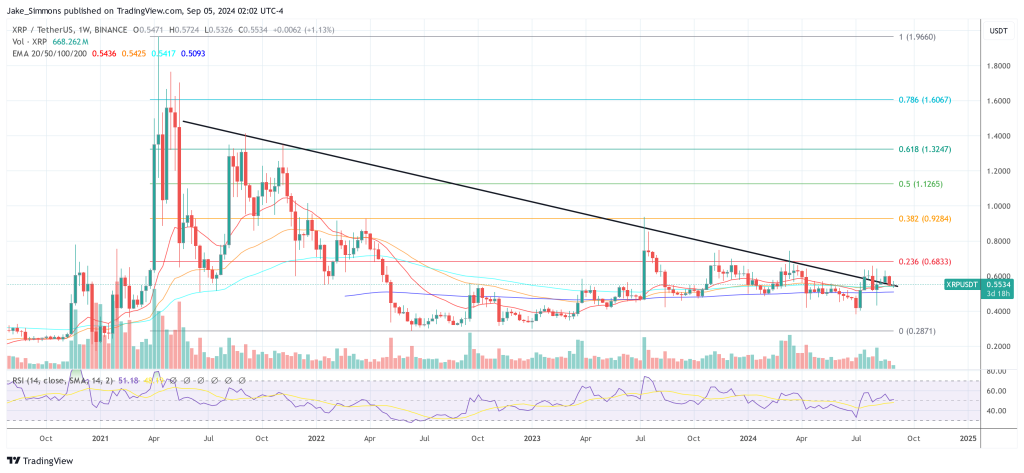
At press time, XRP traded at $0.5534.
XRP price
XRP still holds above the trendline, 1-week chart | Source: XRPUSDT on TradingView.com
Featured image from YouTube, chart from TradingView.com
Jake Simmons

Jake Simmons

Jake Simmons has been a Bitcoin enthusiast since 2016. Ever since he heard about Bitcoin, he has been studying the topic every day and trying to share his knowledge with others. His goal is to contribute to Bitcoin's financial revolution, which will replace the fiat money system. Besides BTC and crypto, Jake studied Business Informatics at a university. After graduation in 2017, he has been working in the blockchain and crypto sector. You can follow Jake on Twitter at @realJakeSimmons.

Criptomoedas em alta

Leituras Relacionadas

A Group of Suzhou Engineers Unexpectedly Attain Financial Freedom

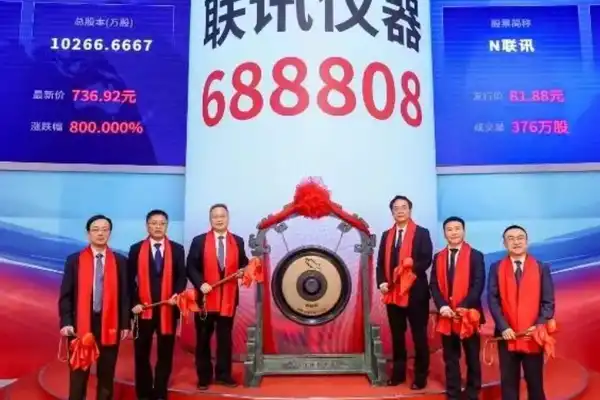
In Suzhou, a group of engineers from Lianxun Instruments, a leader in optical communication testing equipment, have achieved remarkable wealth after the company's IPO. Listed just two months ago on the STAR Market, the company's stock price surged approximately 30 times, making it the only A-share stock priced above 2,000 yuan. This surge created substantial fortunes for nearly 100 technical employees who held a collective 15.91% stake through employee stock ownership platforms, valued at over 36 billion yuan at the current market cap. Among them, nearly 40 became billionaires, while even the smallest holdings exceeded 5 million yuan in value. Founded in 2017 by Hu Haiyang, Yang Jian, and Huang Jianjun, Lianxun Instruments was established to address China's reliance on foreign high-end testing instruments. The company grew rapidly with a strong focus on R&D, where technical staff make up nearly 80% of its workforce. Early implementation of employee stock plans helped retain this core talent. The company's explosive growth is fueled by booming AI computing demand, with clients including major global optical module leaders. Its revenue skyrocketed from 276 million yuan in 2023 to 1.194 billion yuan in 2025, turning a profit in 2024. The IPO has also generated massive returns for early investors, including Suzhou's state-owned capital, which saw a hundredfold return. This story reflects a broader trend in China's markets, where technology firms in AI, semiconductors, and optics are creating new wealth, rewarding engineers and technical teams who are now central to modern capital-driven success stories, marking a shift from previous eras dominated by internet and real estate tycoons.

marsbitHá 2h

A Group of Suzhou Engineers Unexpectedly Attain Financial Freedom

marsbitHá 2h

NVIDIA's Annual 'Most Dangerous' Paper: AI Self-Replicating Code, Unlimited Leveling and Evolution

NVIDIA's "Red Queen Gödel Machine" (RQGM) paper proposes a potentially groundbreaking AI self-evolution framework. It breaks from the long-stalled concept of the "Gödel Machine," which required mathematically proven beneficial self-modifications, by adopting an evolutionary approach. The core, and most striking, innovation is that the AI does not just evolve its own code in a static environment. Instead, it co-evolves both the "student" (the task-performing agent) and the "examiner" (the evaluation system that judges it). This creates a dynamic, recursive self-improvement loop inspired by the biological "Red Queen Hypothesis"—where continuous adaptation is needed just to maintain relative fitness. The mechanism operates in epochs. Within an epoch, a fixed examiner evaluates all candidate code variants. At epoch boundaries, a new, potentially more rigorous examiner can replace the old one, but only if it proves statistically superior on a held-out "ground truth" dataset. This "controlled utility evolution" aims to ensure progress is measurable and grounded. The paper demonstrates RQGM's effectiveness across three domains: 1. **Code Generation:** It achieved a 71.7% test-set pass rate (improving over a 69.9% SOTA) while using 1.35-1.72x fewer computational tokens. 2. **Paper Writing:** In a subjective task, the co-evolved writer and reviewer achieved a 40.5% acceptance rate by a fixed human panel, up from 21.8%. 3. **Math Proofs:** It evolved more accurate graders (at 3x lower cost) and higher-scoring provers. Notably, RQGM also mitigated a known LLM bias where AI reviewers favor AI-generated content. By specifically rewarding reviewers that correctly rejected AI-written papers from a historical pool, the evolved system achieved impartiality while maintaining 80% accuracy. The research has sparked significant discussion about the acceleration of Recursive Self-Improvement (RSI). Some, like Anthropic's Jack Clark, have predicted a high probability of highly autonomous, self-evolving AI emerging by 2028. The paper suggests that when an AI begins to design its own evaluators and push itself toward ever-higher standards in a recursive loop, it may be taking a fundamental step toward redefining intelligence and autonomy.

marsbitHá 2h

NVIDIA's Annual 'Most Dangerous' Paper: AI Self-Replicating Code, Unlimited Leveling and Evolution

marsbitHá 2h

Apple and the Power Rebalancing with 'The Microns': Dissecting the Profit Ledger Behind the iPhone

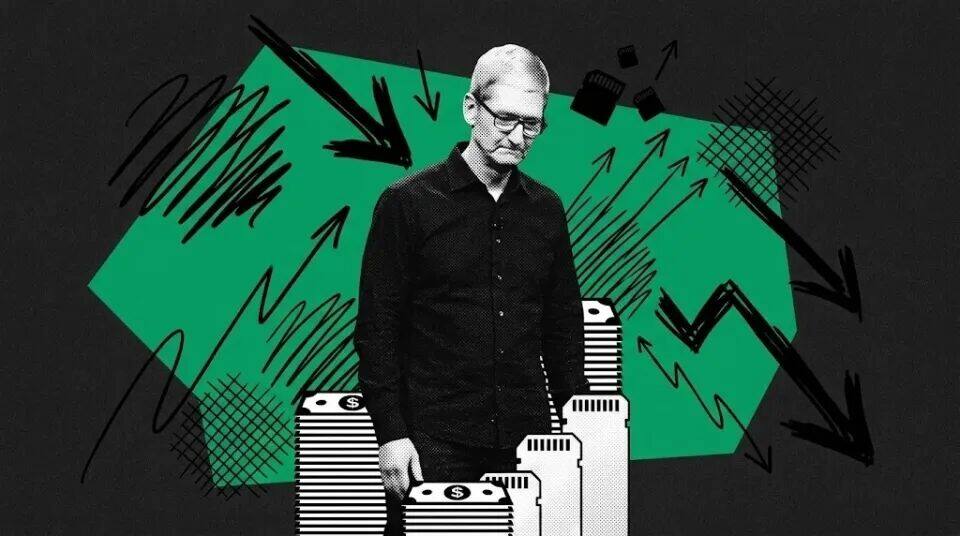
The article analyzes the shifting profit dynamics and power balance between Apple and memory suppliers like Micron within the iPhone supply chain. It highlights a social media post criticizing Apple for raising iPhone prices while blaming memory chip cost increases, despite historically paying suppliers like Micron very little. An estimated iPhone 18 cost breakdown is referenced. Historically, memory was a minor cost component. In 2017's iPhone X, memory accounted for only about 1.6-2.3% of the price, with Apple capturing nearly 50% net profit. Over time, memory's share of the Bill-of-Materials (BOM) cost has grown significantly, reaching an estimated 12-15% for the iPhone 17 series. The core driver of this change is soaring demand for memory from the AI industry, particularly for High Bandwidth Memory (HBM) and AI servers, which is diverting production capacity and squeezing supply for consumer electronics. Memory manufacturers, after enduring periods of low profits, now hold greater pricing power. This is reflected in their recent strong financials, like Micron's 84.6% gross margin. Apple CEO Tim Cook initially described the memory price pressure as unprecedented in his 40-year career, later calling it a "once-in-a-century flood," before Apple announced price hikes across several product lines, causing a significant stock drop. Elon Musk echoed Cook's sentiment about the dramatic cost surge. The article concludes that the era of memory suppliers being at the mercy of Apple's pricing power has temporarily reversed, thanks to AI-driven demand. It notes Apple is reportedly seeking to diversify its supply chain, including exploring chips from China's CXMT.

Odaily星球日报Há 4h

Apple and the Power Rebalancing with 'The Microns': Dissecting the Profit Ledger Behind the iPhone

Odaily星球日报Há 4h

Trading

Spot

Artigos em Destaque

O que é XRP 2.0

XRP 2.0: Uma Nova Fronteira no Landscape das Criptomoedas Introdução ao XRP 2.0 No reino em constante evolução das criptomoedas, novos projetos surgem continuamente, lutando por atenção e adoção. Uma dessas iniciativas promissoras é o XRP 2.0, um novo projeto de criptomoeda concebido para aproveitar a tecnologia de blockchain avançada e as metodologias de criptografia robustas. Embora o nome tenha paralelos com o XRP da Ripple, é crucial notar que o XRP 2.0 opera de forma independente, focando em melhorar a segurança das transações, a privacidade e a escalabilidade. À medida que o panorama financeiro digital abraça cada vez mais soluções descentralizadas, o XRP 2.0 visa contribuir de forma significativa para a web3 e a expansão global dos projetos de criptomoedas. O que é o XRP 2.0? No seu núcleo, o XRP 2.0 é um projeto de criptomoeda que visa criar um ecossistema de moeda digital seguro e descentralizado. Sua tecnologia fundamental integra princípios de blockchain sofisticados com técnicas de criptografia de ponta. O objetivo abrangente do XRP 2.0 é estabelecer-se como uma plataforma confiável e eficiente que possibilita a execução rápida de transações, priorizando a proteção de privacidade aprimorada para os seus usuários. O projeto é promovido como uma solução para muitas limitações enfrentadas pelas criptomoedas existentes, propondo um sistema que pode lidar com um volume maior de transações com velocidade e privacidade melhoradas. Esta versatilidade posiciona o XRP 2.0 como um concorrente significativo em um mercado repleto de várias moedas digitais. Quem é o Criador do XRP 2.0? A identidade do criador por trás do XRP 2.0 foi identificada como 'Wilbur.' No entanto, detalhes abrangentes sobre Wilbur ou a sua entidade associada permanecem elusivos. O anonimato de muitos criadores de criptomoedas não é um fenômeno incomum na indústria, muitas vezes concebido para manter um grau de privacidade e segurança. Quem são os Investidores do XRP 2.0? Até agora, informações específicas relacionadas às fundações ou organizações de investimento que apoiam o XRP 2.0 não estão disponíveis publicamente. No setor das criptomoedas, o apoio de investidores reputados pode influenciar significativamente a credibilidade e o sucesso de um projeto, no entanto, a transparência em relação aos apoiantes financeiros do XRP 2.0 não foi estabelecida. Como Funciona o XRP 2.0? O XRP 2.0 destaca-se por empregar uma combinação de tecnologia blockchain e algoritmos de criptografia avançados que asseguram transações seguras e descentralizadas. Sua estrutura inovadora inclui características únicas projetadas para fomentar o envolvimento dos usuários e ampliar as funcionalidades além das transações convencionais de criptomoedas. Entre essas características, o XRP 2.0 incorpora capacidades potenciadas por IA, como funcionalidades de texto-para-imagem e texto-para-fala. Estas adições são projetadas para melhorar a experiência interativa dos usuários, promovendo uma maior aplicabilidade em vários setores. Ao unir avanços tecnológicos com um design centrado no utilizador, o XRP 2.0 pretende captar a atenção de uma diversa gama de indivíduos e empresas que procuram integrar soluções de criptomoedas em suas estruturas operacionais. Cronologia do XRP 2.0 Compreender o XRP 2.0 requer examinar os marcos que definiram sua jornada até agora: 23 de Julho de 2023: O XRP 2.0 é apresentado como um novo projeto de criptomoeda, visando revolucionar as capacidades de transação seguras e descentralizadas no domínio do blockchain. 8 de Setembro de 2023: O lançamento de outro projeto, XRP20, ocorre, marcando o surgimento de um token ERC-20 na blockchain Ethereum que permanece não relacionado ao XRP 2.0. 13 de Novembro de 2023: O XRP Ledger passa por uma atualização significativa com o lançamento da versão 2.0.0 do software do servidor rippled. É importante notar que este desenvolvimento está desconectado do projeto de criptomoeda XRP 2.0. Pontos-chave sobre o XRP 2.0 Para destilar a essência do XRP 2.0, vários fatores críticos emergem: Características Únicas: A inclusão de características como texto-para-imagem e texto-para-fala potenciadas por IA diversifica ainda mais as aplicações potenciais do XRP 2.0. Tecnologia Blockchain: A estrutura utiliza mecanismos de blockchain avançados e protocolos de criptografia, assegurando um ambiente seguro e descentralizado para transações. Escalabilidade e Privacidade: O XRP 2.0 prioriza proteção de privacidade aprimorada nos processos de transação e a escalabilidade necessária para acomodar uma base de utilizadores crescente. Sem Afiliação com a Ripple: Importante, apesar do seu nome, o XRP 2.0 não tem qualquer lealdade ou colaboração com o XRP da Ripple, distinguindo sua estrutura operacional e objetivos dentro do ecossistema das criptomoedas. Conclusão O XRP 2.0 representa uma empreitada ambiciosa no domínio das criptomoedas, visando oferecer uma combinação de segurança, privacidade e eficiência em transações digitais. Ao integrar tecnologias sofisticadas e características amigáveis ao utilizador, o projeto propõe-se a ampliar os horizontes do que as criptomoedas podem alcançar na economia digital atual. Embora o anonimato do seu criador e a falta de investidores divulgados possam levantar questões para alguns, o foco do XRP 2.0 em funcionalidades avançadas e descentralização aumenta seu apelo num mercado de criptomoedas cada vez mais congestionado. À medida que o panorama das criptomoedas continua a evoluir, o XRP 2.0 pode ainda emergir como um jogador crucial na expansão de soluções de blockchain seguras e escaláveis.

108 Visualizações TotaisPublicado em {updateTime}Atualizado em 2024.12.03

O que é XRP 2.0

Como comprar XRP

Bem-vindo à HTX.com!Tornámos a compra de XRP (XRP) simples e conveniente.Segue o nosso guia passo a passo para iniciar a tua jornada no mundo das criptos.Passo 1: cria a tua conta HTXUtiliza o teu e-mail ou número de telefone para te inscreveres numa conta gratuita na HTX.Desfruta de um processo de inscrição sem complicações e desbloqueia todas as funcionalidades.Obter a minha contaPasso 2: vai para Comprar Cripto e escolhe o teu método de pagamentoCartão de crédito/débito: usa o teu visa ou mastercard para comprar XRP (XRP) instantaneamente.Saldo: usa os fundos da tua conta HTX para transacionar sem problemas.Terceiros: adicionamos métodos de pagamento populares, como Google Pay e Apple Pay, para aumentar a conveniência.P2P: transaciona diretamente com outros utilizadores na HTX.Mercado de balcão (OTC): oferecemos serviços personalizados e taxas de câmbio competitivas para os traders.Passo 3: armazena teu XRP (XRP)Depois de comprar o teu XRP (XRP), armazena-o na tua conta HTX.Alternativamente, podes enviá-lo para outro lugar através de transferência blockchain ou usá-lo para transacionar outras criptomoedas.Passo 4: transaciona XRP (XRP)Transaciona facilmente XRP (XRP) no mercado à vista da HTX.Acede simplesmente à tua conta, seleciona o teu par de trading, executa as tuas transações e monitoriza em tempo real.Oferecemos uma experiência de fácil utilização tanto para principiantes como para traders experientes.

1.7k Visualizações TotaisPublicado em {updateTime}Atualizado em 2026.06.02

Como comprar XRP

Discussões

Bem-vindo à Comunidade HTX. Aqui, pode manter-se informado sobre os mais recentes desenvolvimentos da plataforma e obter acesso a análises profissionais de mercado. As opiniões dos utilizadores sobre o preço de XRP (XRP) são apresentadas abaixo.

活动图片