Hackers Target Trump Family X Accounts In Bold Crypto Scam

bitcoinistPublicado em 2024-09-05Última atualização em 2024-09-05

Resumo

The social media accounts of Lara and Tiffany Trump were hacked to promote a fraudulent cryptocurrency scheme. That breach has...

The social media accounts of Lara and Tiffany Trump were hacked to promote a fraudulent cryptocurrency scheme. That breach has called attention not just to implications for the Trump family but also to greater issues involving digital security in the cryptocurrency space.

This incident comes at a time when the Trump family is trying to establish a foothold in the digital asset market.

The Trump X Account Hack Unfolds

The breach started when unauthorized posts began appearing on the X accounts of Lara Trump, the co-chair of the Republican National Committee, and her sister Tiffany Trump.

The posts in question spoke about a new cryptocurrency outfit called World Liberty Financial that was going to “take power away” from the banks and return it to the people. They were directed to what appeared to be the official channel, where they could purchase a governance token on the Solana blockchain through links.

The website was registered through an anonymous service linked to a notorious dark-web marketplace. Lara’s husband Eric Trump immediately weighed in on the matter with a posting to his own X account: “This is a scam!!!”

He said both women’s accounts had been hacked, thanking X “for shutting them down in minutes.” Still, the posts gathered momentum, as hundreds of users clicked on the links before they were removed.

Implications For Cryptocurrency

However, the hacked posts misled not only the followers but also the cryptocurrency market badly. The price of Solana mentioned in those posts rose 9% before bouncing after the fraudulent announcements.

All this is particularly distressing given the Trump family’s continued attempts to cozy up to the crypto community. Donald Trump himself has staked out a rhetorical posture as an advocate of digital assets–even going so far as to tease, upon occasion, that he intends to create some sort of national Bitcoin reserve, should he be elected.

Total crypto market cap currently at $1.95 trillion. Chart: TradingView

But with scams bearing the Trump name hitting the market, such ambitions get decidedly more complicated. If that were not enough, in the past, attempts to issue tokens linked with the Trump family were terribly scandals, as is the case with a token at the center of a rug pull earlier this year.

A Wake-Up Call For Digital Security

All these definitely prove that Lara and Tiffany accounts were hacked and it’s the very latent warning of the vulnerabilities in social media and cryptocurrency. Now, scammers use high-profile accounts to add credibility to their scheme. The project itself, World Liberty Financial, had its own share of problems as reports of its counterfeit website have gone up online.

As the Trump family navigates their way through the subtleties of the digital money ecosystem, one thing is becoming resoundingly clear: security will play a major role. The incident once again raises questions regarding the safety of digital assets and user vigilance.

Featured image from WIRED, chart from TradingView

Christian Encila

Christian Encila

Christian, a journalist and editor with leadership roles in Philippine and Canadian media, is fueled by his love for writing and cryptocurrency. Off-screen, he's a cook and cinephile who's constantly intrigued by the size of the universe.

Leituras Relacionadas

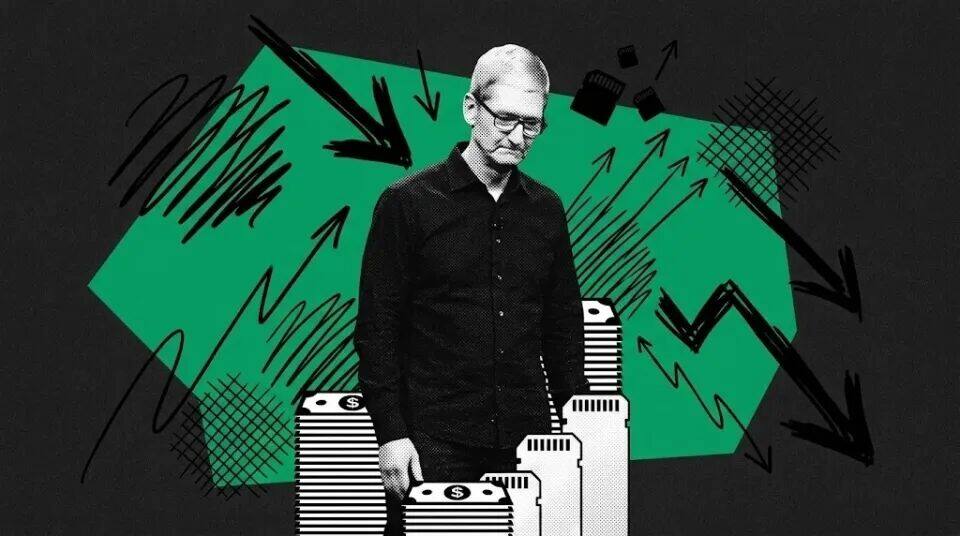
Apple and the Power Rebalancing with 'The Microns': Dissecting the Profit Ledger Behind the iPhone

The article analyzes the shifting profit dynamics and power balance between Apple and memory suppliers like Micron within the iPhone supply chain. It highlights a social media post criticizing Apple for raising iPhone prices while blaming memory chip cost increases, despite historically paying suppliers like Micron very little. An estimated iPhone 18 cost breakdown is referenced. Historically, memory was a minor cost component. In 2017's iPhone X, memory accounted for only about 1.6-2.3% of the price, with Apple capturing nearly 50% net profit. Over time, memory's share of the Bill-of-Materials (BOM) cost has grown significantly, reaching an estimated 12-15% for the iPhone 17 series. The core driver of this change is soaring demand for memory from the AI industry, particularly for High Bandwidth Memory (HBM) and AI servers, which is diverting production capacity and squeezing supply for consumer electronics. Memory manufacturers, after enduring periods of low profits, now hold greater pricing power. This is reflected in their recent strong financials, like Micron's 84.6% gross margin. Apple CEO Tim Cook initially described the memory price pressure as unprecedented in his 40-year career, later calling it a "once-in-a-century flood," before Apple announced price hikes across several product lines, causing a significant stock drop. Elon Musk echoed Cook's sentiment about the dramatic cost surge. The article concludes that the era of memory suppliers being at the mercy of Apple's pricing power has temporarily reversed, thanks to AI-driven demand. It notes Apple is reportedly seeking to diversify its supply chain, including exploring chips from China's CXMT.

Odaily星球日报Há 1h

Apple and the Power Rebalancing with 'The Microns': Dissecting the Profit Ledger Behind the iPhone

Odaily星球日报Há 1h

Conversation with the Founder of 42 Macro: The Fed's 'Boiling the Frog Slowly' and the K-Shaped Economy

In a conversation with Anthony Pompliano, Darius Dale, founder of 42 Macro, discusses the Federal Reserve's monetary policy and the K-shaped U.S. economy. Dale characterizes new Fed Chair Kevin Warsh as a "dove in hawk's clothing," expecting the Fed to signal or enact policy tightening in the coming quarters to create room for later easing. He argues current economic signals, including high deficit spending, debt monetization, and credit growth, strongly indicate inflation is not on a credible path back to 2%, forcing the Fed to act. The discussion highlights the stark "K-shaped" economic reality. While top earners, buoyed by massive cash savings (up ~$8 trillion since pre-pandemic), continue robust spending, those at the bottom face severe financial strain, with delinquency rates on consumer loans reaching crisis-era highs. Dale attributes much of the current social and political anxiety to this divergence, driven by the "Cantillon effects" of monetary expansion, which disproportionately benefits asset owners. He emphasizes that in this environment of "financial repression," individuals must participate in asset markets to avoid being left behind. On equities, Dale notes a rotation from the "Magnificent Seven" tech giants into broader AI-exposed companies, while warning that the tech giants' massive capital expenditure cycles could eventually puncture over-optimistic cash flow projections. Dale concludes by stressing that the core desire across all economic strata is simply the dignity to provide for one's family, a goal currently undermined by systemic policies that act as a "wealth siphon" from the bottom to the top.

marsbitHá 1h

Conversation with the Founder of 42 Macro: The Fed's 'Boiling the Frog Slowly' and the K-Shaped Economy

marsbitHá 1h

The Domestic Answer to Space Computing Power: Photonics Are More Efficient, Musk and Huang's Approaches Are Too Roundabout

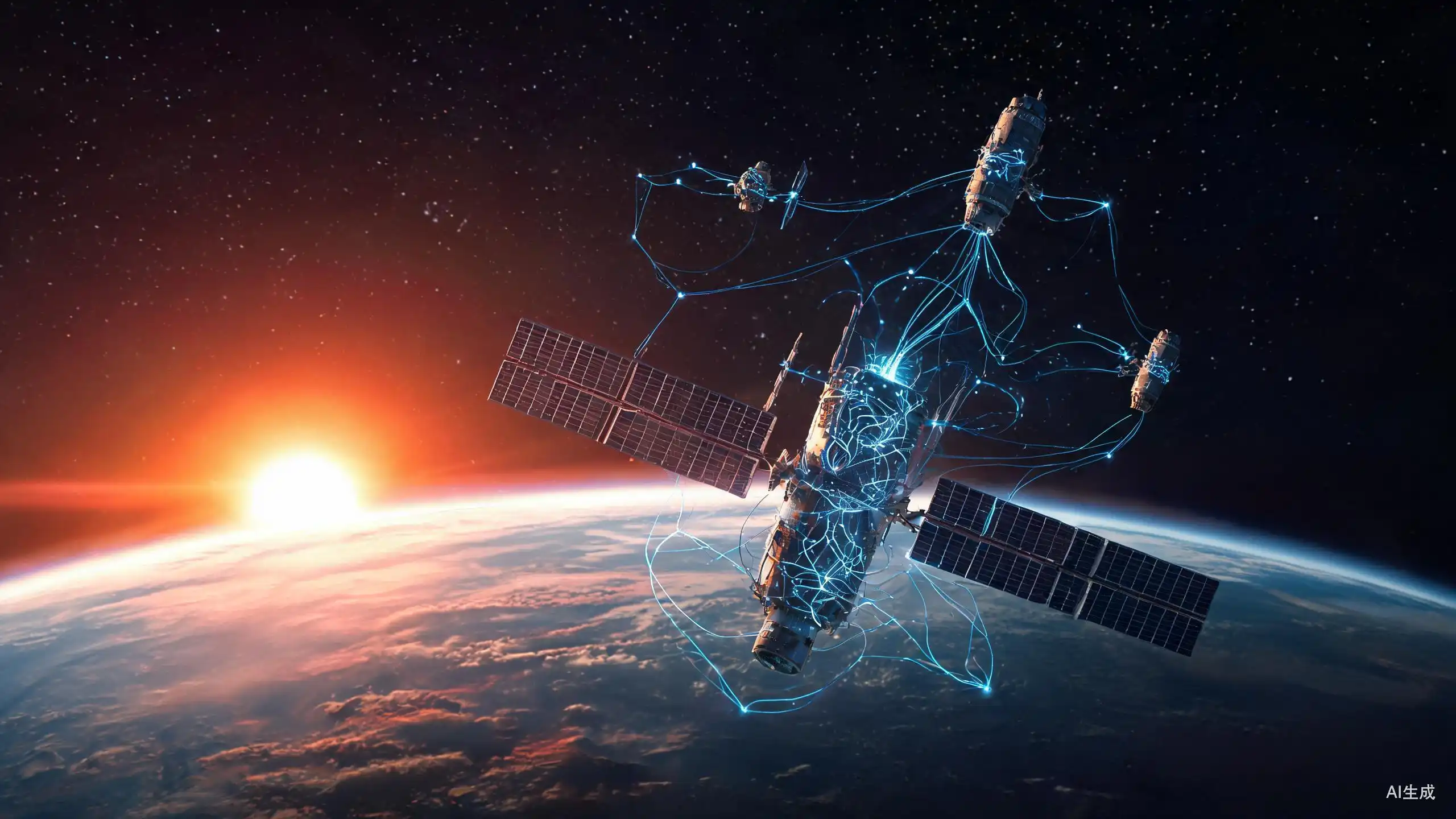
The Space Computing Race: A Photonic Advantage The competition for space-based computing has intensified, with figures like Elon Musk and NVIDIA's Jensen Huang highlighting its potential. Musk predicts solar-powered AI satellites could offer the most cost-effective computing by 2032. However, space presents extreme challenges for traditional electronic chips: radiation from cosmic particles can cause errors, the vacuum environment hinders heat dissipation, and limited solar power constrains energy-hungry systems. Photonic computing, using light instead of electrons, offers a promising solution. Its core advantages for space are threefold: 1) **Radiation Resistance**: Photons are charge-neutral, making them inherently immune to particle interference. 2) **Low Heat Generation**: Light propagation in waveguides generates minimal heat, bypassing critical thermal management issues. 3) **Low Power Consumption**: Photonic chips have near-zero static power draw, aligning perfectly with the energy constraints of satellites. Furthermore, for a given payload weight and volume, photonic systems can potentially deliver higher total compute density. Since they require less bulky cooling and power infrastructure, more space can be allocated to the compute units themselves. While photonic computing holds great promise, current industry approaches face hurdles like the memory-compute bottleneck (separate storage and processing) and challenges in large-scale integration. Engineering for space—withstanding launch vibrations and validating full system operation in orbit—remains a critical step. The path forward resembles the evolution from single GPUs to computing clusters, but via a photonic route. As electronic chips approach physical limits in miniaturization, photonic computing and optical interconnects (光算光联) may provide a key alternative to bypass these constraints and define the next generation of space-based computing capabilities.

marsbitHá 2h

The Domestic Answer to Space Computing Power: Photonics Are More Efficient, Musk and Huang's Approaches Are Too Roundabout

marsbitHá 2h

Trading

Spot
活动图片