Pro-XRP Lawyer Deaton Clinches Republican Nomination For US Senate

bitcoinistPublicado em 2024-09-05Última atualização em 2024-09-05

Resumo

Pro-XRP attorney John Deaton has secured the Republican nomination for the United States Senate after a convincing win in the...

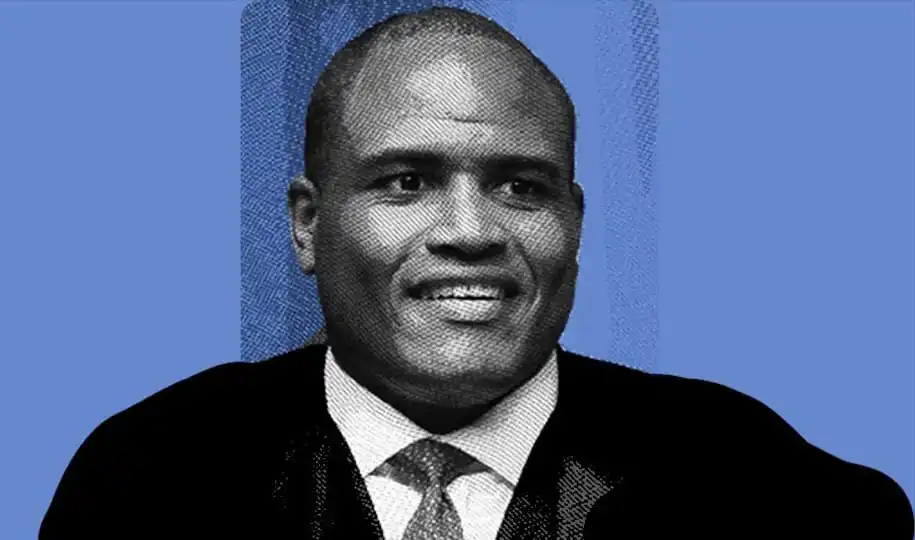
Pro-XRP attorney John Deaton has secured the Republican nomination for the United States Senate after a convincing win in the primary election. Deaton, who is a former Marine and has represented 75,000 holders in the Ripple vs. US Securities and Exchange Commission (SEC) case, secured 64.6% of the votes, leaving his closest rival, industrial engineer Bob Antonellis, trailing with 26.2%, and Quincy city council president Ian Cain, who garnered 9.2% of the vote, in a distant third.

The nomination positions Deaton to challenge incumbent Democratic Senator Elizabeth Warren in the November general election. The primary results, which have been reported with more than 92% of votes counted according to Politico, indicate a decisive victory for Deaton, who has positioned himself as a stark contrast to Senator Warren, particularly on core issues.

Pro-XRP Lawyer Deaton Vs. Warren

Upon his victory, Deaton expressed his appreciation for the electorate’s support and delineated his campaign’s next steps, emphasizing a return to unity and problem-solving in politics.

His statement reads, “I am truly humbled by the tremendous outpouring of support and grateful for the faith the voters have placed in me. Tomorrow, we begin the next phase of the campaign – an effort that will hold Elizabeth Warren accountable for her failures on the border, the unaffordable cost of supporting a family, a broken healthcare system, abandoning our ally Israel, and restoring faith in our politics. Voters are turning their back on divisive partisan politics and are ready to support a message of optimism, unity, and solving problems.”

The reaction from the crypto community was swift and enthusiastic, with several high-profile figures chiming in to celebrate Deaton’s victory. Caitlin Long, the founder and CEO of Custodia Bank, congratulated Deaton through a post on X: “CONGRATS John Deaton! AP called your race already. Gonna be fun to watch you take on Elizabeth Warren in the general election. I hear she’s on the outside in the Dem Party these days…”

Similarly, Mark Cuban, former principal owner and current minority owner of the Dallas Mavericks, conveyed his congratulations: “Congrats John Deaton !!! Only 1 W to go !” Furthermore, Ryan Sean Adams, host of the Bankless podcast, said via X: “John Deaton vs Elizabeth Warren is officially on. Maybe we can force the leader of the anti-crypto army into early retirement.”

In response to Deaton’s nomination, Warren’s campaign has been quick to point out the influence of the crypto industry in this election. Her campaign manager, Janice Rottenberg, issued a statement highlighting the influx of funds from crypto-related entities and individuals, which she claims are attempting to sway the election in favor of their interests.

“A small handful of crypto billionaires and corporate special interests poured more than $2 million into a super PAC to handpick their preferred Republican candidate, and now Massachusetts voters have a clear choice that could determine control of the Senate,” Rottenberg commented to AP.

Deaton’s campaign funding reflects substantial backing from the crypto sector, with major contributions coming from figures like Ripple executives Chris Larsen and Brad Garlinghouse, as well as Gemini founders Cameron and Tyler Winklevoss. According to Federal Election Commission records, Deaton had raised around $1.7 million by July 31.

Notably, Warren has accepted two debate proposals in Boston and Springfield. The incumbent senator is known for her anti-crypto stance, which she has demonstrated in numerous bills in recent years. Deaton could be an important figure for the crypto industry, ending the Warren regime.

At press time, XRP traded at $0.5537.

XRP price
XRP still holds above the trendline, 1-week chart | Source: XRPUSDT on TradingView.com
Featured image from X, chart from TradingView.com
Jake Simmons

Jake Simmons

Jake Simmons has been a Bitcoin enthusiast since 2016. Ever since he heard about Bitcoin, he has been studying the topic every day and trying to share his knowledge with others. His goal is to contribute to Bitcoin's financial revolution, which will replace the fiat money system. Besides BTC and crypto, Jake studied Business Informatics at a university. After graduation in 2017, he has been working in the blockchain and crypto sector. You can follow Jake on Twitter at @realJakeSimmons.

Criptomoedas em alta

Leituras Relacionadas

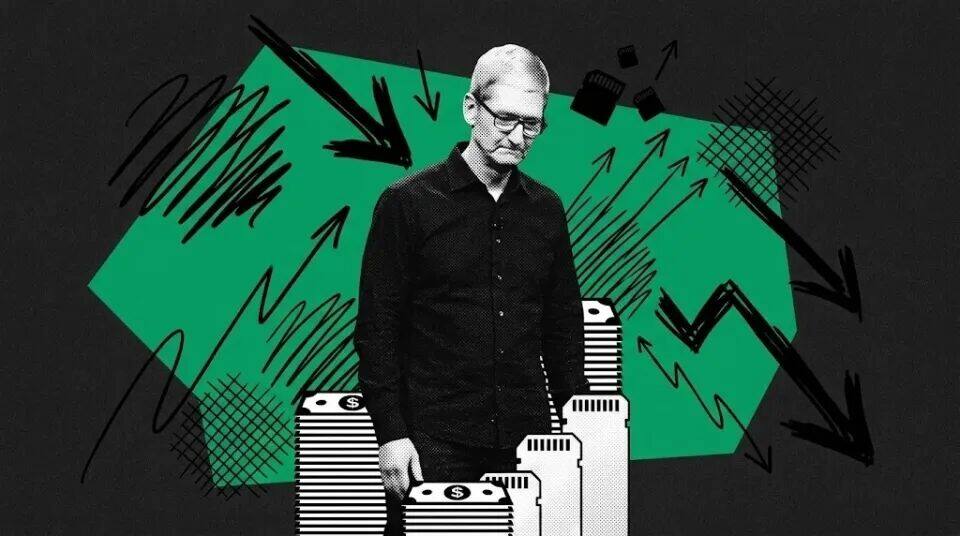
Apple and the Power Rebalancing with 'The Microns': Dissecting the Profit Ledger Behind the iPhone

The article analyzes the shifting profit dynamics and power balance between Apple and memory suppliers like Micron within the iPhone supply chain. It highlights a social media post criticizing Apple for raising iPhone prices while blaming memory chip cost increases, despite historically paying suppliers like Micron very little. An estimated iPhone 18 cost breakdown is referenced. Historically, memory was a minor cost component. In 2017's iPhone X, memory accounted for only about 1.6-2.3% of the price, with Apple capturing nearly 50% net profit. Over time, memory's share of the Bill-of-Materials (BOM) cost has grown significantly, reaching an estimated 12-15% for the iPhone 17 series. The core driver of this change is soaring demand for memory from the AI industry, particularly for High Bandwidth Memory (HBM) and AI servers, which is diverting production capacity and squeezing supply for consumer electronics. Memory manufacturers, after enduring periods of low profits, now hold greater pricing power. This is reflected in their recent strong financials, like Micron's 84.6% gross margin. Apple CEO Tim Cook initially described the memory price pressure as unprecedented in his 40-year career, later calling it a "once-in-a-century flood," before Apple announced price hikes across several product lines, causing a significant stock drop. Elon Musk echoed Cook's sentiment about the dramatic cost surge. The article concludes that the era of memory suppliers being at the mercy of Apple's pricing power has temporarily reversed, thanks to AI-driven demand. It notes Apple is reportedly seeking to diversify its supply chain, including exploring chips from China's CXMT.

Odaily星球日报Há 1h

Apple and the Power Rebalancing with 'The Microns': Dissecting the Profit Ledger Behind the iPhone

Odaily星球日报Há 1h

Conversation with the Founder of 42 Macro: The Fed's 'Boiling the Frog Slowly' and the K-Shaped Economy

In a conversation with Anthony Pompliano, Darius Dale, founder of 42 Macro, discusses the Federal Reserve's monetary policy and the K-shaped U.S. economy. Dale characterizes new Fed Chair Kevin Warsh as a "dove in hawk's clothing," expecting the Fed to signal or enact policy tightening in the coming quarters to create room for later easing. He argues current economic signals, including high deficit spending, debt monetization, and credit growth, strongly indicate inflation is not on a credible path back to 2%, forcing the Fed to act. The discussion highlights the stark "K-shaped" economic reality. While top earners, buoyed by massive cash savings (up ~$8 trillion since pre-pandemic), continue robust spending, those at the bottom face severe financial strain, with delinquency rates on consumer loans reaching crisis-era highs. Dale attributes much of the current social and political anxiety to this divergence, driven by the "Cantillon effects" of monetary expansion, which disproportionately benefits asset owners. He emphasizes that in this environment of "financial repression," individuals must participate in asset markets to avoid being left behind. On equities, Dale notes a rotation from the "Magnificent Seven" tech giants into broader AI-exposed companies, while warning that the tech giants' massive capital expenditure cycles could eventually puncture over-optimistic cash flow projections. Dale concludes by stressing that the core desire across all economic strata is simply the dignity to provide for one's family, a goal currently undermined by systemic policies that act as a "wealth siphon" from the bottom to the top.

marsbitHá 1h

Conversation with the Founder of 42 Macro: The Fed's 'Boiling the Frog Slowly' and the K-Shaped Economy

marsbitHá 1h

The Domestic Answer to Space Computing Power: Photonics Are More Efficient, Musk and Huang's Approaches Are Too Roundabout

The Space Computing Race: A Photonic Advantage The competition for space-based computing has intensified, with figures like Elon Musk and NVIDIA's Jensen Huang highlighting its potential. Musk predicts solar-powered AI satellites could offer the most cost-effective computing by 2032. However, space presents extreme challenges for traditional electronic chips: radiation from cosmic particles can cause errors, the vacuum environment hinders heat dissipation, and limited solar power constrains energy-hungry systems. Photonic computing, using light instead of electrons, offers a promising solution. Its core advantages for space are threefold: 1) **Radiation Resistance**: Photons are charge-neutral, making them inherently immune to particle interference. 2) **Low Heat Generation**: Light propagation in waveguides generates minimal heat, bypassing critical thermal management issues. 3) **Low Power Consumption**: Photonic chips have near-zero static power draw, aligning perfectly with the energy constraints of satellites. Furthermore, for a given payload weight and volume, photonic systems can potentially deliver higher total compute density. Since they require less bulky cooling and power infrastructure, more space can be allocated to the compute units themselves. While photonic computing holds great promise, current industry approaches face hurdles like the memory-compute bottleneck (separate storage and processing) and challenges in large-scale integration. Engineering for space—withstanding launch vibrations and validating full system operation in orbit—remains a critical step. The path forward resembles the evolution from single GPUs to computing clusters, but via a photonic route. As electronic chips approach physical limits in miniaturization, photonic computing and optical interconnects (光算光联) may provide a key alternative to bypass these constraints and define the next generation of space-based computing capabilities.

marsbitHá 2h

The Domestic Answer to Space Computing Power: Photonics Are More Efficient, Musk and Huang's Approaches Are Too Roundabout

marsbitHá 2h

Trading

Spot

Artigos em Destaque

O que é XRP 2.0

XRP 2.0: Uma Nova Fronteira no Landscape das Criptomoedas Introdução ao XRP 2.0 No reino em constante evolução das criptomoedas, novos projetos surgem continuamente, lutando por atenção e adoção. Uma dessas iniciativas promissoras é o XRP 2.0, um novo projeto de criptomoeda concebido para aproveitar a tecnologia de blockchain avançada e as metodologias de criptografia robustas. Embora o nome tenha paralelos com o XRP da Ripple, é crucial notar que o XRP 2.0 opera de forma independente, focando em melhorar a segurança das transações, a privacidade e a escalabilidade. À medida que o panorama financeiro digital abraça cada vez mais soluções descentralizadas, o XRP 2.0 visa contribuir de forma significativa para a web3 e a expansão global dos projetos de criptomoedas. O que é o XRP 2.0? No seu núcleo, o XRP 2.0 é um projeto de criptomoeda que visa criar um ecossistema de moeda digital seguro e descentralizado. Sua tecnologia fundamental integra princípios de blockchain sofisticados com técnicas de criptografia de ponta. O objetivo abrangente do XRP 2.0 é estabelecer-se como uma plataforma confiável e eficiente que possibilita a execução rápida de transações, priorizando a proteção de privacidade aprimorada para os seus usuários. O projeto é promovido como uma solução para muitas limitações enfrentadas pelas criptomoedas existentes, propondo um sistema que pode lidar com um volume maior de transações com velocidade e privacidade melhoradas. Esta versatilidade posiciona o XRP 2.0 como um concorrente significativo em um mercado repleto de várias moedas digitais. Quem é o Criador do XRP 2.0? A identidade do criador por trás do XRP 2.0 foi identificada como 'Wilbur.' No entanto, detalhes abrangentes sobre Wilbur ou a sua entidade associada permanecem elusivos. O anonimato de muitos criadores de criptomoedas não é um fenômeno incomum na indústria, muitas vezes concebido para manter um grau de privacidade e segurança. Quem são os Investidores do XRP 2.0? Até agora, informações específicas relacionadas às fundações ou organizações de investimento que apoiam o XRP 2.0 não estão disponíveis publicamente. No setor das criptomoedas, o apoio de investidores reputados pode influenciar significativamente a credibilidade e o sucesso de um projeto, no entanto, a transparência em relação aos apoiantes financeiros do XRP 2.0 não foi estabelecida. Como Funciona o XRP 2.0? O XRP 2.0 destaca-se por empregar uma combinação de tecnologia blockchain e algoritmos de criptografia avançados que asseguram transações seguras e descentralizadas. Sua estrutura inovadora inclui características únicas projetadas para fomentar o envolvimento dos usuários e ampliar as funcionalidades além das transações convencionais de criptomoedas. Entre essas características, o XRP 2.0 incorpora capacidades potenciadas por IA, como funcionalidades de texto-para-imagem e texto-para-fala. Estas adições são projetadas para melhorar a experiência interativa dos usuários, promovendo uma maior aplicabilidade em vários setores. Ao unir avanços tecnológicos com um design centrado no utilizador, o XRP 2.0 pretende captar a atenção de uma diversa gama de indivíduos e empresas que procuram integrar soluções de criptomoedas em suas estruturas operacionais. Cronologia do XRP 2.0 Compreender o XRP 2.0 requer examinar os marcos que definiram sua jornada até agora: 23 de Julho de 2023: O XRP 2.0 é apresentado como um novo projeto de criptomoeda, visando revolucionar as capacidades de transação seguras e descentralizadas no domínio do blockchain. 8 de Setembro de 2023: O lançamento de outro projeto, XRP20, ocorre, marcando o surgimento de um token ERC-20 na blockchain Ethereum que permanece não relacionado ao XRP 2.0. 13 de Novembro de 2023: O XRP Ledger passa por uma atualização significativa com o lançamento da versão 2.0.0 do software do servidor rippled. É importante notar que este desenvolvimento está desconectado do projeto de criptomoeda XRP 2.0. Pontos-chave sobre o XRP 2.0 Para destilar a essência do XRP 2.0, vários fatores críticos emergem: Características Únicas: A inclusão de características como texto-para-imagem e texto-para-fala potenciadas por IA diversifica ainda mais as aplicações potenciais do XRP 2.0. Tecnologia Blockchain: A estrutura utiliza mecanismos de blockchain avançados e protocolos de criptografia, assegurando um ambiente seguro e descentralizado para transações. Escalabilidade e Privacidade: O XRP 2.0 prioriza proteção de privacidade aprimorada nos processos de transação e a escalabilidade necessária para acomodar uma base de utilizadores crescente. Sem Afiliação com a Ripple: Importante, apesar do seu nome, o XRP 2.0 não tem qualquer lealdade ou colaboração com o XRP da Ripple, distinguindo sua estrutura operacional e objetivos dentro do ecossistema das criptomoedas. Conclusão O XRP 2.0 representa uma empreitada ambiciosa no domínio das criptomoedas, visando oferecer uma combinação de segurança, privacidade e eficiência em transações digitais. Ao integrar tecnologias sofisticadas e características amigáveis ao utilizador, o projeto propõe-se a ampliar os horizontes do que as criptomoedas podem alcançar na economia digital atual. Embora o anonimato do seu criador e a falta de investidores divulgados possam levantar questões para alguns, o foco do XRP 2.0 em funcionalidades avançadas e descentralização aumenta seu apelo num mercado de criptomoedas cada vez mais congestionado. À medida que o panorama das criptomoedas continua a evoluir, o XRP 2.0 pode ainda emergir como um jogador crucial na expansão de soluções de blockchain seguras e escaláveis.

108 Visualizações TotaisPublicado em {updateTime}Atualizado em 2024.12.03

O que é XRP 2.0

Como comprar XRP

Bem-vindo à HTX.com!Tornámos a compra de XRP (XRP) simples e conveniente.Segue o nosso guia passo a passo para iniciar a tua jornada no mundo das criptos.Passo 1: cria a tua conta HTXUtiliza o teu e-mail ou número de telefone para te inscreveres numa conta gratuita na HTX.Desfruta de um processo de inscrição sem complicações e desbloqueia todas as funcionalidades.Obter a minha contaPasso 2: vai para Comprar Cripto e escolhe o teu método de pagamentoCartão de crédito/débito: usa o teu visa ou mastercard para comprar XRP (XRP) instantaneamente.Saldo: usa os fundos da tua conta HTX para transacionar sem problemas.Terceiros: adicionamos métodos de pagamento populares, como Google Pay e Apple Pay, para aumentar a conveniência.P2P: transaciona diretamente com outros utilizadores na HTX.Mercado de balcão (OTC): oferecemos serviços personalizados e taxas de câmbio competitivas para os traders.Passo 3: armazena teu XRP (XRP)Depois de comprar o teu XRP (XRP), armazena-o na tua conta HTX.Alternativamente, podes enviá-lo para outro lugar através de transferência blockchain ou usá-lo para transacionar outras criptomoedas.Passo 4: transaciona XRP (XRP)Transaciona facilmente XRP (XRP) no mercado à vista da HTX.Acede simplesmente à tua conta, seleciona o teu par de trading, executa as tuas transações e monitoriza em tempo real.Oferecemos uma experiência de fácil utilização tanto para principiantes como para traders experientes.

1.7k Visualizações TotaisPublicado em {updateTime}Atualizado em 2026.06.02

Como comprar XRP

Discussões

Bem-vindo à Comunidade HTX. Aqui, pode manter-se informado sobre os mais recentes desenvolvimentos da plataforma e obter acesso a análises profissionais de mercado. As opiniões dos utilizadores sobre o preço de XRP (XRP) são apresentadas abaixo.

活动图片