Bloomberg: банкротства криптокомпаний принесли юридическим фирмам $751 млн

cryptonews.ruPublicado em 2024-06-30Última atualização em 2024-08-30

  • Аналитики посчитали общий объем гонораров юридических контор, полученный в ходе работы над делами о банкротстве криптокомпаний.
  • С 2022 года они запросили и получили выплаты на $751 млн.
  • Четыре адвокатские фирмы заработали $484 млн, а самую большую прибыль в размере $215 млн зафиксировала Sullivan & Cromwell.

Юридические фирмы с 2022 года запросили и получили гонорары на общую сумму в $751 млн по делам, связанным с банкротством криптовалютных компаний, пишет Bloomberg.

По имеющимся данным, группа из 22 адвокатских контор работает над семью процессами, которые касаются краха фирм из сектора цифровых активов. Упомянутая сумма была выплачена компаниям по состоянию на август 2024 года. Иными словами, это не финальный размер их гонораров, поскольку некоторые из дел далеки от своего завершения.
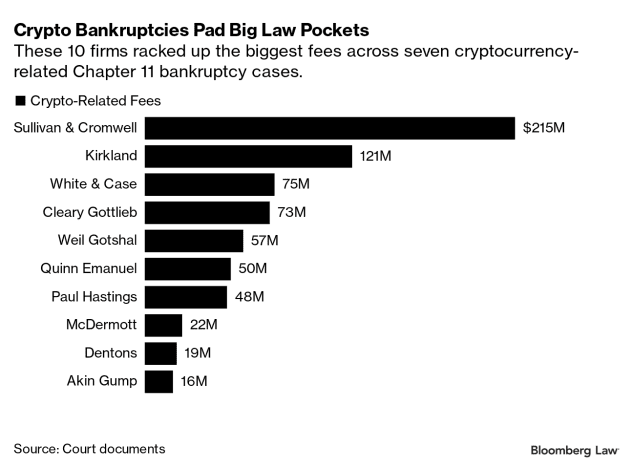
Десять юридических фирм, получивших наибольшие гонорары по делам о банкротстве криптокомпаний. Источник: Bloomberg.

Четыре компании разделили между собой суммарные выплаты на $484 млн:

  • Sullivan & Cromwell;
  • Kirkland and Ellis;
  • White & Case;
  • Cleary Gottlieb.

Лидером по объему полученных выплат стала юридическая фирма Sullivan & Cromwell. Именно ее представители выступают в роли адвокатов потерпевшей крах биржи FTX. Вплоть до января 2024 года компания получала по $10 млн ежемесячно от своего клиента. С февраля этого года фирма снизила запрашиваемый гонорар до $7 млн за каждые 30 дней работы.

В общей сложности Sullivan & Cromwell получила по делу о банкротстве FTX выплаты в размере $215 млн, подчеркивают в СМИ.

На втором месте по этому показателю находится контора Kirkland and Ellis с доходами в размере $120 млн. Компания получила средства от таких клиентов, как Voyager, BlockFi и Celsius.

Третье место числится за White & Case. В деле Genesis она представляла интересы комитета необеспеченных кредиторов. Фирма также работала с кредиторами Celsius и участвовала в расследовании дела экс-генерального директора компании Алекса Машински. За свои услуги White & Case получила $75 млн.

Замыкает четверку лидеров адвокатская контора Cleary Gottlieb. Ее представители выставили своим клиентам счет в размере $73 млн. Именно эта фирма является ведущим юристом обанкротившейся компании Genesis. Команда Cleary Gottlieb получает по $2,5 млн ежемесячно.

Напомним, мы писали, что FTX выплатила консультантам и юристам более $670 млн с начала банкротства.


Leituras Relacionadas

Dialogue with Yihui Capital, SoundAI Technology, Ling Universe, and Zhongbo Jili: Opportunities and Challenges in the AI Smart Hardware Track

On June 28, 2026, an event titled "New Opportunities in AI Hardware: The Battle for Interactive Entry Points Begins" was held in Beijing. It featured a report from ITJuzi and discussions with experts from SoundAI, Ling Universe, One Reed Capital, and Zhongbo Juli on the opportunities and challenges in China's AI hardware sector. Key report findings highlight the sector's intense activity: 327 out of 431 startups founded post-2023 have secured funding, with 179 investments in H1 2026 alone. The landscape is dominated by embodied intelligent robots, while wearable tech like smart rings and AI glasses shows rapid growth. Geographically, Shenzhen leads, leveraging its superior hardware supply chain, followed by Beijing and Shanghai. The overarching trend is for companies to focus on micro-innovations within specific scenarios rather than reinventing foundational technology. Industry leaders shared several critical insights: 1. **Balancing Innovation & Market Readiness**: Entrepreneurs face the "hammer looking for a nail" dilemma. Success requires balancing technical capability with user acceptance, cost control, and incremental design improvements rather than chasing disruptive innovation. 2. **Competitive Landscape**: The future interactive entry point may not be a single super-device but a mix of universal terminals and specialized, scenario-specific hardware. While large companies have ecosystem advantages, startups can win by deeply targeting vertical markets and specific user groups. 3. **Core Challenges & Business Models**: Key hurdles include deep understanding of AI models and navigating non-transparent hardware supply chains. Viable business models may involve selling hardware at cost and generating revenue through software subscriptions, but this requires tight control over both hardware BOM and model inference costs. 4. **The Road to Commercialization**: The ultimate test is market validation—achieving sales growth and sustainable cash flow. Companies must find the right application scenario, use edge computing effectively, and close the loop from technology to commercial success. 5. **The Future of Interaction**: Proactive, context-aware interaction is the next frontier, though it's currently limited by issues like model hallucinations and environmental perception. The near-term focus should be on identifying target users and creating a coherent experience in specific domains, such as health wearables. In summary, to succeed in the competitive AI hardware arena, companies must strategically choose their niche, build a team with the right geographical advantages (e.g., leveraging Shenzhen's supply chain), and most importantly, execute a flawless commercialization strategy that translates technology into market-accepted products and sustainable business growth.

marsbitHá 26m

Dialogue with Yihui Capital, SoundAI Technology, Ling Universe, and Zhongbo Jili: Opportunities and Challenges in the AI Smart Hardware Track

marsbitHá 26m

CryptoQuant Founder: The Cost to Double BTC Has Increased by 20,000 Times, Where Will the $100 Billion Buying Power Come From?

CryptoQuant founder Ki Young Ju analyzes Bitcoin's current capital challenge. He notes that the cryptocurrency market has grown too large for retail-driven momentum alone to generate massive price increases as in past cycles. His calculations show that in 2011, approximately $2.7 million in capital inflow could push BTC's price up by 550x, whereas the current cycle requires an estimated $101 billion in new capital just for a 100% price increase. This shift underscores that sustaining a bull run now depends on attracting large-scale, long-term institutional capital rather than short-term speculative trading. Recent outflows from US spot Bitcoin ETFs, totaling nearly $10 billion since May, highlight the fragility of current demand and challenge the narrative of deep institutional support. While surveys indicate continued institutional interest, these entities prioritize regulated products, risk management, and portfolio integration over speculative gains. For the next significant bull market, Bitcoin must transition to being a core macro asset. The key drivers are no longer just more buyers, but capital allocation from larger, slower-moving entities like wealth advisors, corporate treasuries, banks, and sovereign wealth funds. This new phase pits Bitcoin against other major asset classes like AI for a share of institutional capital, making its growth trajectory dependent on sustained, high-quality inflows from diversified financial balance sheets.

marsbitHá 29m

CryptoQuant Founder: The Cost to Double BTC Has Increased by 20,000 Times, Where Will the $100 Billion Buying Power Come From?

marsbitHá 29m

Trading

Spot
活动图片