Сеть AIOZ сотрудничает с Абердинским Университетом, чтобы произвести революцию в медицинской визуализации с помощью DePIN

cryptonews.ruPublicado em 2023-08-23Última atualização em 2024-08-23

Недавно сеть AIOZ подписала новое партнерство с Абердинским Университетом с целью дальнейшего развития медицинской визуализации. Партнерство направлено на решение перспективных технологий для 3D-реконструкции инструментов, используемых в эндоваскулярных процедурах. Основная цель — усовершенствовать процесс медицинской визуализации и визуализации, которая играет решающую роль в хирургии и медицинских областях в целом.

Исследовательский проект будет использовать DePIN от AIOZ, а именно, Decentralized Physical Infrastructure Network. Эта технология лучше всего подходит для безопасного обмена информацией, что является предпосылкой для управления большими наборами медицинских данных. Внедрение технологии DePIN увеличит скорость исследований и качество данных, полученных для медицинских изображений.

Такие процедуры, как эндоваскулярные операции, которые проводятся внутри и вокруг кровеносных сосудов, требуют подробных изображений для позиционирования и подтверждения функциональности используемых инструментов. Процесс реконструкции этих инструментов в 3D на основе данных визуализации является сложной задачей, и ее решение может потенциально привести к изменению точности хирургии и, возможно, даже спасти жизни людей.

Изображение: Bitcoinsensus

Criptomoedas em alta

Leituras Relacionadas

Continuous Net Outflows from ETFs, Are Institutions Exiting?

US spot Bitcoin ETFs have experienced approximately $6 billion in net outflows over the past six weeks, marking the longest consecutive weekly withdrawal streak since their launch in 2024. The iShares Bitcoin Trust (IBIT) from BlackRock has been particularly affected, accounting for over 70% of recent outflows. On-chain analysis indicates that long-term Bitcoin holders (holding for over 155 days), who control about 83% of the circulating supply, remain steadfast. The selling pressure is primarily coming from allocators who entered through ETF brokerage accounts. This represents the first major collective capitulation since Bitcoin gained mainstream Wall Street recognition, driven more by risk-off portfolio adjustments than a fundamental rejection of the asset. Factors such as rising inflation, a hawkish shift in Federal Reserve policy, massive capital inflows into AI infrastructure, and attractive IPO opportunities have redirected speculative funds. Bitcoin, treated as a high-beta risk asset, was among the first to be sold. While the pace of outflows has slowed significantly—from $1.72 billion in early June to $226.8 million mid-month—the structural issue remains. IBIT's large size means its outflows alone exert substantial market pressure. With spot market volume thin, new capital inflows absent, and ETF buying muted, the market lacks sufficient buying support to absorb this selling. The coming sessions are critical. If IBIT outflows decelerate and Bitcoin reclaims $60,000, this phase could be seen as a healthy reset. However, if heavy IBIT redemptions resume and the price falls below $58,000, it would signal a more sustained institutional exit, requiring non-ETF buyers to shoulder the entire selling pressure alone. The ETF, while lowering entry barriers, has not removed Bitcoin's inherent volatility.

marsbitHá 1m

Continuous Net Outflows from ETFs, Are Institutions Exiting?

marsbitHá 1m

Introduction to the Concept of World Models: A Story from Psychology to the Main Battlefield of AI

**World Models: From Psychology to AI's Core Concept** "World model" is a trending but often confusing term in AI, describing a system that allows machines to internally simulate, predict, and rehearse potential outcomes before taking real-world action—like a mental "sandbox." While definitions vary—Yann LeCun emphasizes physical understanding, OpenAI's Sora is a video-based "world simulator," Google DeepMind's Genie 3 creates interactive 3D environments, and companies like Alibaba and Tesla focus on practical applications—the core goal is consistent: reduce reliance on vast real-world data by creating an internal, predictive model for safer and more efficient AI. The concept has deep roots, tracing back to psychologist Kenneth Craik (1943). In AI, it was revitalized by researchers like David Ha and Jürgen Schmidhuber (2018). Major technical approaches include: 1) generative video models (e.g., Sora) for visual realism; 2) abstract predictive models (e.g., LeCun's JEPA) for efficiency and physical reasoning; and 3) explicit 3D simulators (e.g., NVIDIA Omniverse) for precision. Fei-Fei Li proposes a classification based on the AI action loop: renderers (output observations), simulators (output world states), and planners (output actions). The emerging "World Action Model" (WAM) paradigm aims to unify future prediction and action generation. An industry framework is forming: upstream (data, compute, sensors), midstream (general and vertical platforms), and downstream applications (autonomous driving, robotics, gaming, etc.). Autonomous driving is currently the most mature use case. The current lack of a unified definition reflects the field's early, dynamic stage, similar to past tech revolutions. Different approaches—focusing on pixels, physics, or behavior—represent parallel explorations of how best to compress and understand the world. This diversity, while seemingly chaotic, signals that world models have moved from an academic idea to a critical industrial battleground, ultimately aiming to give machines the ability to understand, imagine, and reason about the world.

marsbitHá 26m

Introduction to the Concept of World Models: A Story from Psychology to the Main Battlefield of AI

marsbitHá 26m

Building the Bright Path While Secretly Crossing Chencang: Is Walsh Paving the Way for a September "Rate Cut"?

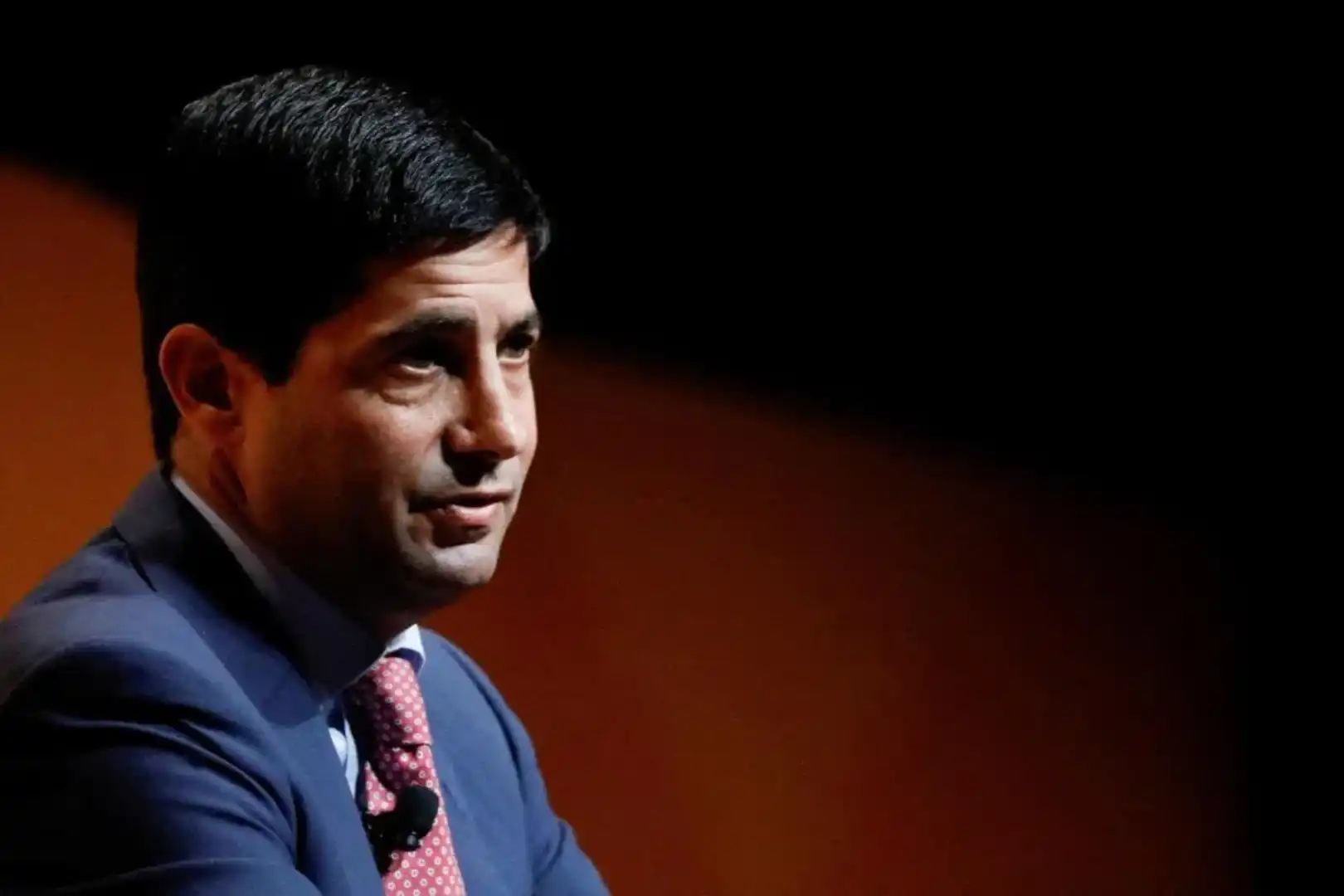
The title "Building the Plank Road Openly While Secretly Crossing at Chencang: Is Walsh Paving the Way for a September 'Rate Cut'?" suggests Federal Reserve Chair Kevin Walsh's hawkish stance may be a deliberate smokescreen. Academy Securities analyst Peter Tchir argues in a report that markets, currently pricing a 75% chance of a September hike, are missing a potential path to a September rate cut that Walsh himself might be quietly preparing. Tchir posits that Walsh's hawkish rhetoric aims to suppress long-term yield risks (with the 10-year Treasury yield falling recently) while creating room for a narrative shift based on upcoming data. The potential political endgame, according to this view, could be rate cuts in September and October, ahead of the midterm elections. This hinges on a political logic where the Trump administration's preference for lower rates remains unchanged. A core part of Tchir's argument involves redefining inflation metrics. He contends the Fed under Walsh may deprioritize the PCE index, criticizing its lagging components like Owners' Equivalent Rent (OER). Instead, he points to alternative, more real-time indicators like the New Tenant Repeat Rent Index (NTRR) and the Truflation daily index, which shows core inflation around 1.45%. He suggests the Fed could shift its data narrative to justify policy easing. Furthermore, Tchir downplays AI-driven inflation fears. He argues that consumer price sensitivity, evidenced by negative market reactions to price hikes (e.g., Apple), contradicts persistent inflation narratives. He also separates AI/data center spending—which he sees as relatively rate-insensitive—from broader consumer affordability issues, implying rate hikes are misdirected. Based on this analysis, Tchir sees a re-pricing of rate cut expectations as likely, creating opportunities in short-duration Treasuries. He maintains a neutral-to-slightly-bullish view on the long end of the yield curve. For equities, he recommends a significant overweight in energy (especially global nuclear assets) and, within defense/security themes, an overweight in biotech/pharma versus an underweight in semiconductors, expressing caution on AI/data center valuations.

marsbitHá 53m

Building the Bright Path While Secretly Crossing Chencang: Is Walsh Paving the Way for a September "Rate Cut"?

marsbitHá 53m

Trading

Spot

Artigos em Destaque

Como comprar AIOZ

Bem-vindo à HTX.com!Tornámos a compra de AIOZ NETWORK INC (AIOZ) simples e conveniente.Segue o nosso guia passo a passo para iniciar a tua jornada no mundo das criptos.Passo 1: cria a tua conta HTXUtiliza o teu e-mail ou número de telefone para te inscreveres numa conta gratuita na HTX.Desfruta de um processo de inscrição sem complicações e desbloqueia todas as funcionalidades.Obter a minha contaPasso 2: vai para Comprar Cripto e escolhe o teu método de pagamentoCartão de crédito/débito: usa o teu visa ou mastercard para comprar AIOZ NETWORK INC (AIOZ) instantaneamente.Saldo: usa os fundos da tua conta HTX para transacionar sem problemas.Terceiros: adicionamos métodos de pagamento populares, como Google Pay e Apple Pay, para aumentar a conveniência.P2P: transaciona diretamente com outros utilizadores na HTX.Mercado de balcão (OTC): oferecemos serviços personalizados e taxas de câmbio competitivas para os traders.Passo 3: armazena teu AIOZ NETWORK INC (AIOZ)Depois de comprar o teu AIOZ NETWORK INC (AIOZ), armazena-o na tua conta HTX.Alternativamente, podes enviá-lo para outro lugar através de transferência blockchain ou usá-lo para transacionar outras criptomoedas.Passo 4: transaciona AIOZ NETWORK INC (AIOZ)Transaciona facilmente AIOZ NETWORK INC (AIOZ) no mercado à vista da HTX.Acede simplesmente à tua conta, seleciona o teu par de trading, executa as tuas transações e monitoriza em tempo real.Oferecemos uma experiência de fácil utilização tanto para principiantes como para traders experientes.

369 Visualizações TotaisPublicado em {updateTime}Atualizado em 2026.06.02

Como comprar AIOZ

Discussões

Bem-vindo à Comunidade HTX. Aqui, pode manter-se informado sobre os mais recentes desenvolvimentos da plataforma e obter acesso a análises profissionais de mercado. As opiniões dos utilizadores sobre o preço de AIOZ (AIOZ) são apresentadas abaixo.

活动图片