深度解析wBTC、Ordinals和Runes发展现状

Odaily星球日报Publicado em 2024-08-21Última atualização em 2024-08-21

Resumo

桥接BTC将面临激烈竞争,代币协议需要更好地发展。

原文作者:xparadigms & wowitsjun_(hashed_official)

原文编译:深潮 TechFlow
深度解析wBTC、Ordinals和Runes发展现状

* 这是四部分系列文章的第三部分,探讨当前扩展比特币生态系统的解决方案。

在整体加密货币市场中,比特币拥有最有价值的品牌和资产,其资产类别不仅限于其本土的 BTC。比特币不仅可以被包装并发送到其他区块链使用,还包括比特币铭刻资产,如 Ordinals 和 Rune 协议。此外,比特币还拥有一个不断扩展的 NFT 市场,NFT 是通过 Ordinals 协议发行的。

在这篇观点文章中,我们将探讨比特币生态系统中的资产类别以及每个资产类别的表现。

1. 背景 - 桥接 BTC 和比特币代币协议
深度解析wBTC、Ordinals和Runes发展现状

1.1 桥接 BTC

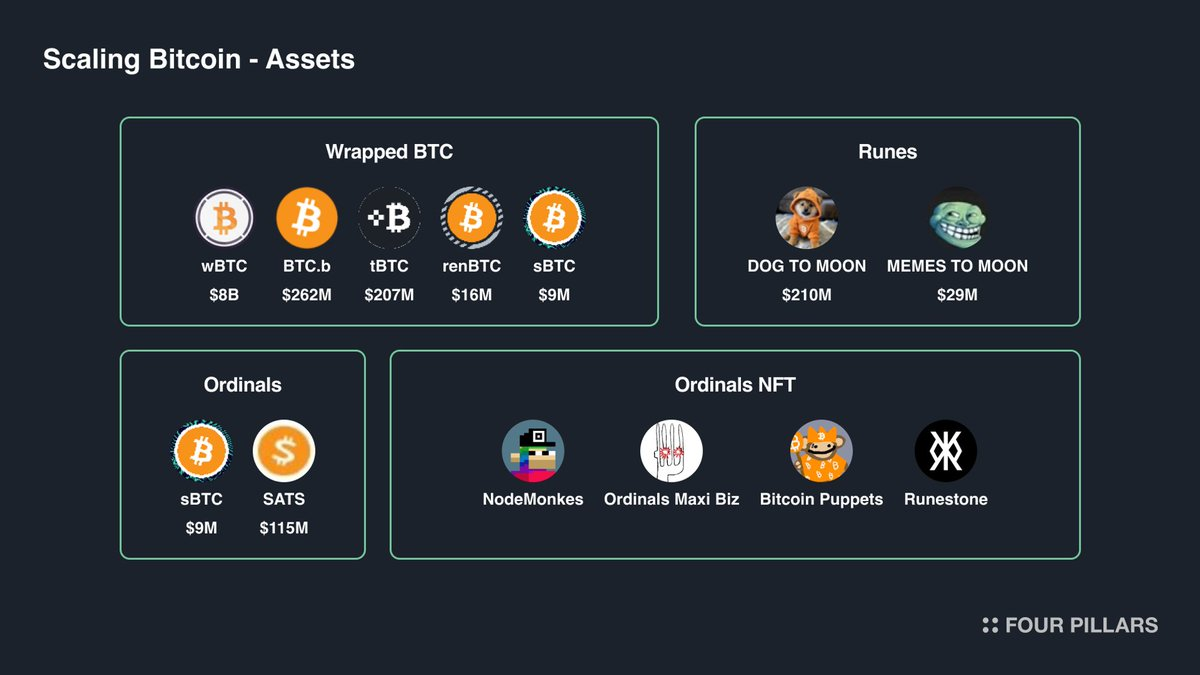
截至 2024 年,比特币仍然是市值最大的加密货币,总价值超过 1.3 万亿美元,占整个加密市场的 53% 。。然而,由于比特币在其本土生态系统中缺乏应用场景,因此它被桥接到其他基于智能合约的区块链上,称为桥接 BTC。桥接 BTC 指的是以 1: 1 比率包装或代币化的比特币,以便在其他区块链网络的去中心化金融(DeFi)中使用。

桥接 BTC 的例子包括 wBTC、tBTC 和 BTC.b:

  • Wrapped Bitcoin (wBTC):Wrapped Bitcoin 是以太坊区块链上的一种 ERC-20 代币,代表比特币。每个 wBTC 都由储备中的比特币以 1: 1 的比例支持,目前由 BitGlobal 操作。

  • tBTC:它通过一套智能合约和一个去中心化签名者网络来运作,这些签名者管理铸造和赎回过程。用户将比特币存入一个多重签名钱包,作为回报,他们在以太坊上获得等量的 tBTC。

  • BTC.b:这是另一种在 Avalanche 上的包装比特币,作为 LayerZero 的跨链代币标准。

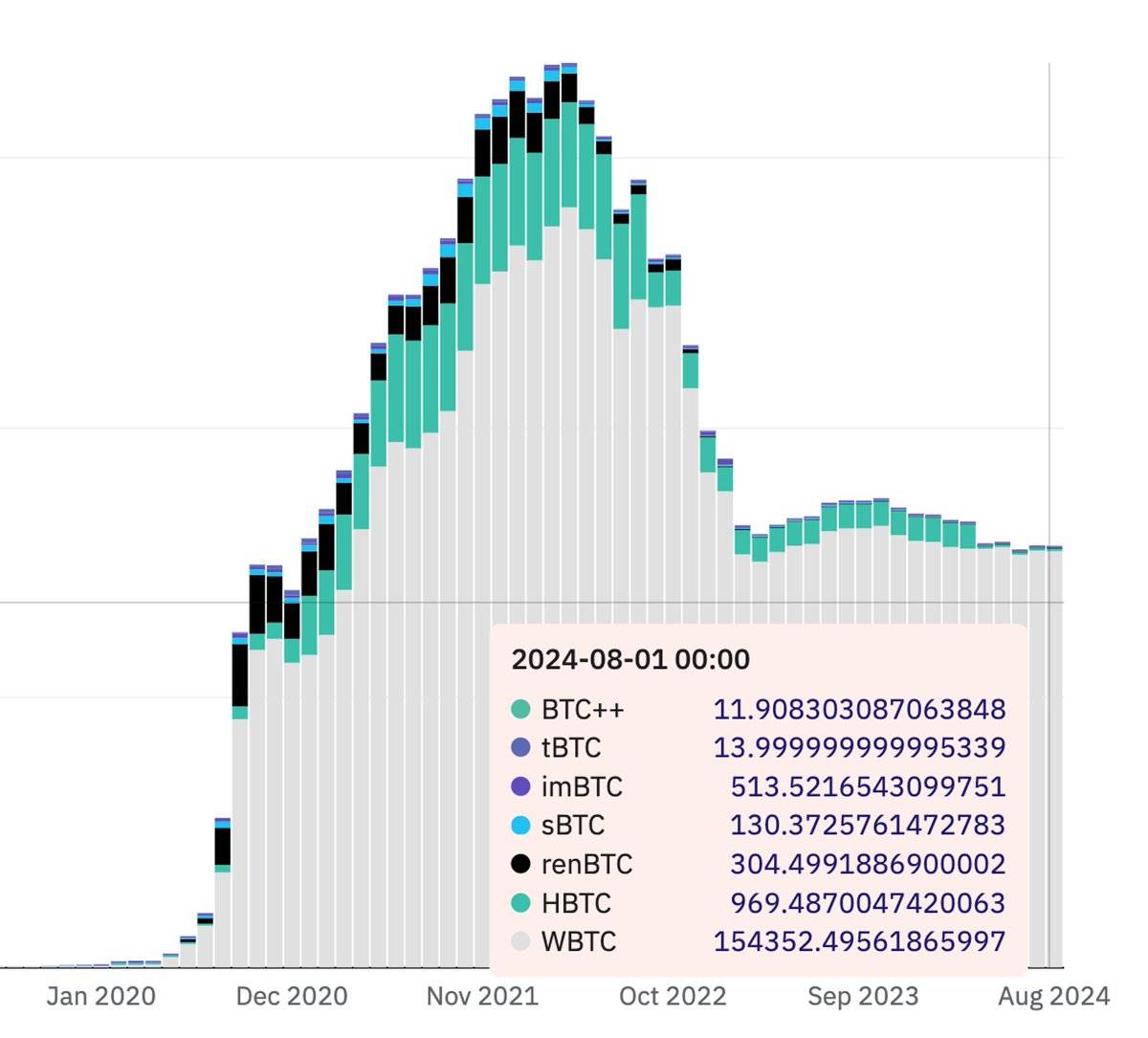
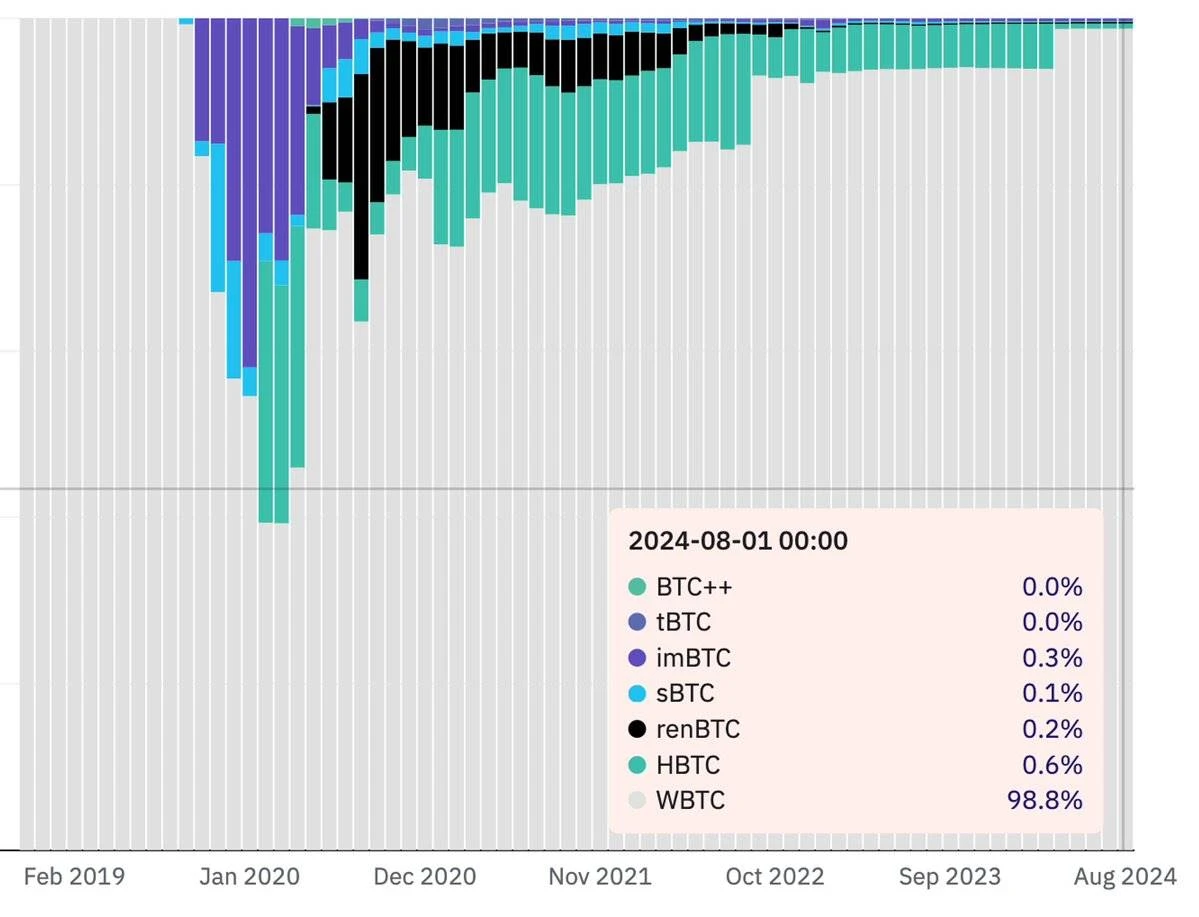
在这些桥接的 BTC 中,wBTC 占据了大多数供应,并已成为以太坊 DeFi 生态系统中的事实上的 BTC 资产。最近,BitGo 宣布与 Bit Global 在香港的合资企业,并计划将其支持 WBTC 的多重签名钱包的三把密钥中的一些分发给香港的 Bit Global。这引发了关于 wBTC 是否安全的辩论,并且正在讨论和潜在开发其他替代方案。
深度解析wBTC、Ordinals和Runes发展现状

来源:btc on ethereum (WBTC, renBTC 等)

1.2 比特币代币协议 - Ordinals 和 Runes

比特币铭刻资产,如 Ordinals 和 Runes,是直接在比特币区块链上铭刻的协议,利用其基础设施进行代币的创建和管理。这两个协议由 Casey Rodarmor 开发,突出了比特币区块链的不同用例,其中 Ordinals 专注于 NFT,而 Runes 则增强了比特币生态系统中可替代代币的可扩展性。

  • Ordinals 协议:Ordinals 协议于 2023 年 1 月推出,允许在比特币区块链上创建独特的数字资产,即 NFT,或可替代代币(BRC-20)。该协议允许用户将数据铭刻到单个 satoshi(比特币的最小单位)上,创造出一种新的数字收藏品形式。BRC-20 代币是一种类似于以太坊 ERC-20 的代币标准,但构建在比特币区块链上,而比特币 Ordinals 通常被视为 NFT 的一种形式。

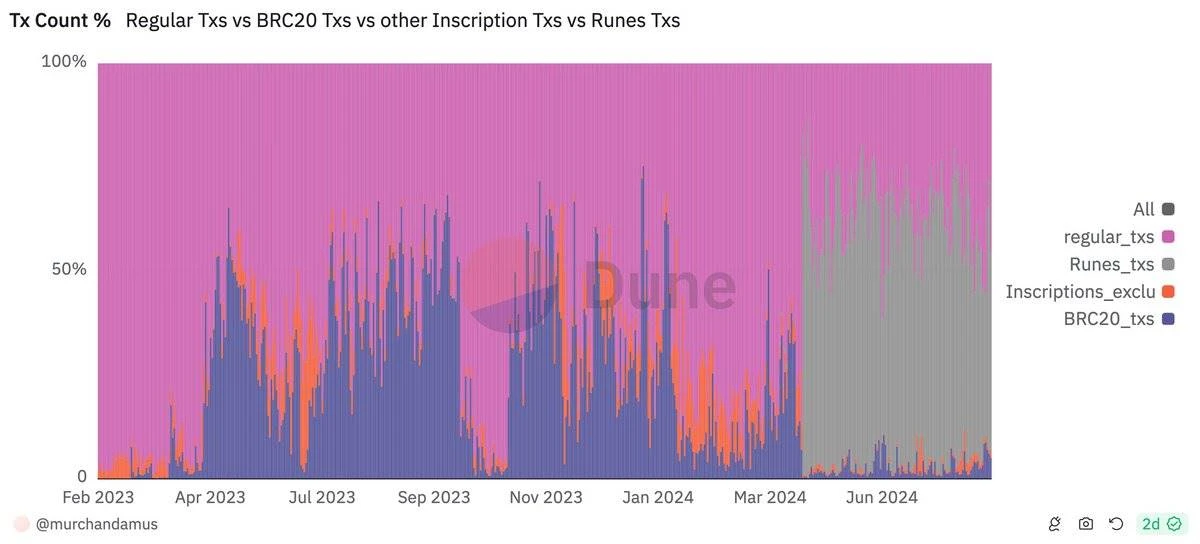
  • Runes 协议:这是一个利用比特币 UTXO 模型的可替代代币标准。与 BRC-20 标准不同,后者由于“垃圾”UTXO 的激增导致网络拥堵,Runes 利用比特币固有的 UTXO 模型创建具有最小链上占用的代币。该协议使用比特币现有的 UTXO 模型,并结合一个允许在区块链上包含少量数据而不影响交易输出的脚本。嵌入在比特币交易输出中的专用结构称为 runestones,包含创建、铸造或转移代币的指令。这种方法允许更高效的数据存储,并减少网络膨胀的潜在风险。
深度解析wBTC、Ordinals和Runes发展现状

来源:常规交易与 BRC 20 交易与其他铭刻交易与 Runes 交易

1.3 Ordinals NFT

过去一年,比特币 NFT 市场经历了显著增长,尽管更广泛的 NFT 市场却在收缩。该领域正在成为比特币生态系统中一个显著的资产类别,形成了一个紧密的社区。

比特币 NFT 市场的扩展是由于对基于比特币的 NFT 日益增长的兴趣。根据 CryptoSlam 的数据,在按区块链划分的 NFT 历史交易量中,比特币位居第三,仅次于以太坊和 Solana。
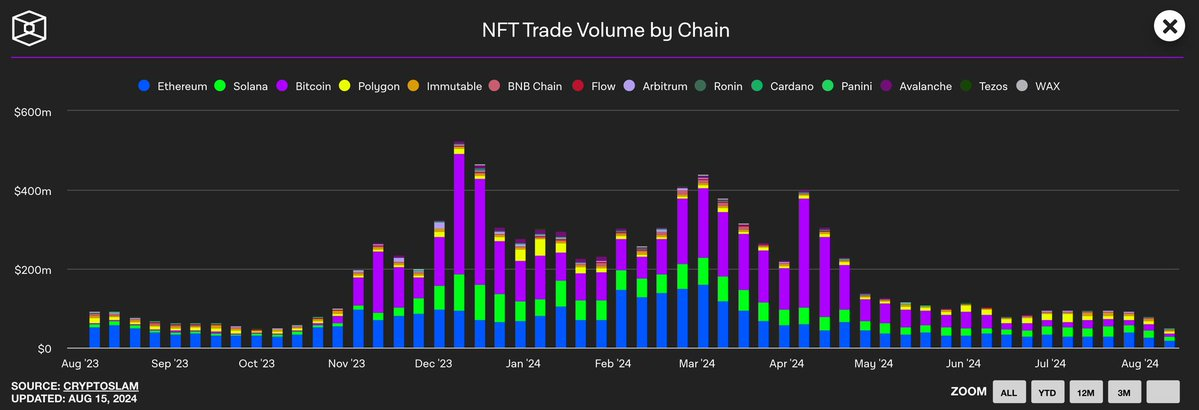
深度解析wBTC、Ordinals和Runes发展现状

来源:按链划分的 NFT 交易量

2.总结 - 桥接 BTC 将面临激烈竞争,代币协议需要更好地发展

作者:xparadigms,来自 Four Pillars

2.1 关于桥接 BTC(例如 wBTC) - 新的桥接 BTC 将面临激烈竞争

比特币除了作为数字黄金以实现价格增值外,通常还作为桥接 BTC 被发送到其他区块链,以用作抵押或在 DeFi 协议中获得收益,尤其是在以太坊上。这使得 DeFi 用户能够轻松接触到 BTC。

本周,wBTC 的运营方宣布计划将部分控制权交给 Bit Global,这是由 Justin Sun 共同创办的合资企业。在三把多重签名密钥中,两把将由 Bit Global 处理,一把将由 BitGo 处理。由于 Justin Sun 在过去的项目(如 TUSD 和 stUSDT)中并未完全透明,公众对由于 Justin Sun 的“声誉风险”而产生的“保管风险”表示担忧。由于 wBTC 占据了以太坊中超过 95% 的比特币资产,这可能对生态系统产生负面影响,如果处理不当,可能导致与其他桥接 BTC 相比出现折扣。

现在这个问题已经被识别,更多项目可能会尝试进行市场宣传(例如 tBTC、BTC.b),并创建新的包装比特币(例如 Coinbase cbBTC)。
深度解析wBTC、Ordinals和Runes发展现状

来源:btc on ethereum (WBTC, renBTC, more)

2.2 比特币代币协议 - “目前,这仅仅依赖于社区驱动”

大多数比特币铭刻资产,如 meme 币,缺乏产生收入或增值的方式,因此它们高度依赖于社区的兴趣。这意味着如果市场情绪下降,整体市场可能会遭遇崩溃。例如,ORDI 并不产生传统的收入,其价值主要来源于市场投机以及对 Ordinals 协议和 BRC-20 代币的关注。虽然 Ordinals 的使用增加了交易费用,从而使比特币矿工受益,但这并不会直接为 ORDI 本身带来收入。这种对社区热情的依赖使得这些资产变得非常不稳定,如果社区兴趣减弱,它们的价值可能会迅速下滑。

随着比特币二层(L2)技术的发展,改善用户在创建和交易比特币代币时的体验,可能会吸引更多的关注,就像在比特币上推出一个 pump.fun 版本一样。为了让这些比特币代币协议得以蓬勃发展,仍需进行进一步的开发。

原文链接

Leituras Relacionadas

In Such a Crowded Cross-border Payment Track, Where Does the Next Stop Lie in the Future?

The crowded cross-border payments industry faces a paradox: intense competition above water with financing and narratives, while beneath, price wars and shrinking margins in basic PSP services are common. The path forward lies not in simple "cross-border" solutions but in deep **localization**. Success requires mastering the fragmented and tightening regulations of fiat currencies in each market—the "last mile" of compliance, banking, and settlement. Many Chinese PSPs have succeeded by following Chinese merchants overseas but have not deeply penetrated mainstream local merchant ecosystems abroad. Their strong product capabilities need to be applied to new, complex markets. The future belongs to companies that evolve from single-channel providers to **cross-border capital network operators**. This means moving beyond competing on transaction fees to creating internal networks that optimize capital efficiency through multi-directional matching, netting, and position reuse across countries and currencies. For Web3 and stablecoins, the key is integration, not replacement. Stablecoins offer efficiency gains but cannot bypass the foundational trust, compliance, and legal frameworks of traditional finance. The realistic path is the gradual adoption and "taming" of Web3 technologies by established financial institutions. The ultimate solution is a **dual clearing infrastructure** combining deep local fiat capabilities (local accounts, compliance, banking) with lightweight stablecoin-native capabilities (on-chain settlement, wallets). The biggest opportunity lies not in oversaturated mainstream corridors but in complex, underserved regional corridors (e.g., specific CIS, Middle East-Southeast Asia, or Latin American trade pairs). The winners will be those who build hard-to-replicate, deep capabilities in these areas—acting as the essential "clearing shovels" or infrastructure providers. The future keywords are **more local, more networked, and more stablecoin-native**. High-profit opportunities remain in the non-standardized, difficult-to-replicate deep waters of the industry, requiring genuine on-the-ground presence and long-term patience.

链捕手Há 1h

In Such a Crowded Cross-border Payment Track, Where Does the Next Stop Lie in the Future?

链捕手Há 1h

Lightning Fast Five-Whip Combo! Strategy's Self-Rescue Plan Officially Released

Strategy, amidst the STRC de-pegging crisis, has unveiled its "Digital Credit Capital Framework" self-rescue plan. The five-part framework includes: 1) **Cash Reserves**: Management of ~$2.55B in USD reserves, dedicated solely to covering ~17.4 months of preferred stock dividends and debt interest, with a 12-month minimum coverage floor. 2) **Dividend Policy**: STRC's dividend yield rises to 12% from July 1st, with monthly reviews. Strategy clarifies de-pegging does not automatically trigger further hikes. 3) **Preferred Stock Buyback**: A $1B authorization, prioritizing STRC repurchases to support its price, reduce future dividend obligations, and signal commitment, using funds separate from dividend reserves. 4) **Common Stock Buyback**: A separate $1B authorization for MSTR stock, aimed at creating shareholder value when the stock is deemed undervalued, establishing a two-way capital management mechanism. 5) **Bitcoin Monetization**: Formal authorization to sell BTC (up to $1.25B earmarked) to build USD reserves, cover dividends/interest, or fund buybacks, marking a strategic shift where BTC becomes a managed asset rather than a strictly "hold-only" reserve. Market reaction saw MSTR and STRC shares rise pre-market, while BTC remained stable. The plan aims to restore confidence in STRC, ensure dividend sustainability, and reopen Strategy's funding channels.

Odaily星球日报Há 2h

Lightning Fast Five-Whip Combo! Strategy's Self-Rescue Plan Officially Released

Odaily星球日报Há 2h

The Sword of Damocles Over the AI Bull Market: Not Just in South Korea, Leverage in U.S. Stocks Is Equally Staggering

Global equity markets are hitting new highs driven by the AI boom, but the fuel behind this rally is becoming increasingly dangerous. From the US to South Korea, margin debt and leveraged ETF assets have soared to historical extremes, with their pro-cyclical nature amplifying tail risks in market volatility. In the US, margin debt rose 54% year-over-year in May, reaching a record $1.4 trillion. Simultaneously, leveraged ETF assets nearly doubled in under 70 days to over $220 billion by early June, with intense focus on tech, semiconductor indices, and single stocks like NVIDIA and Tesla. A warning sign appeared in South Korea, where the KOSPI index experienced extreme volatility, plunging 10% to trigger a circuit breaker, then sharply rebounding before halting again, partly driven by concentrated, highly leveraged positions in chip stocks. Analysts are raising alarms. Barclays warns that leveraged funds have accumulated roughly $300 billion in equity-linked derivatives since late March, creating a major source of non-discretionary risk. Morgan Stanley notes an unprecedented reliance on leveraged financing by marginal buyers, with financing becoming more expensive and scarce. Charles Schwab has tightened margin requirements. The core risk lies in the mechanics: leveraged ETFs and derivatives can create a "tail wags the dog" effect, where fund flows force market makers to buy underlying stocks, amplifying gains. This process reverses in a downturn, triggering a self-reinforcing selling spiral as funds deleverage. Additionally, the cost of borrowing to buy stocks has spiked to multi-year highs. Morgan Stanley warns this sets up a nonlinear risk: high financing costs stall momentum, a price decline triggers forced deleveraging, and selling pressure is multiplied by leverage, potentially leading to outsized declines. The current market breadth is narrow, with gains heavily concentrated in tech, making the rally vulnerable to a pullback in leveraged positions. In summary, the AI-fueled bull market is increasingly propped up by record leverage. When this trend reverses, the deleveraging process could magnify losses, posing a significant threat to financial stability.

marsbitHá 3h

The Sword of Damocles Over the AI Bull Market: Not Just in South Korea, Leverage in U.S. Stocks Is Equally Staggering

marsbitHá 3h

Trading

Spot
活动图片