玩转SunPump之工具合集:基建尚处早期,大有追撵pump.fun之势

Odaily星球日报Publicado em 2024-08-21Última atualização em 2024-08-21

Resumo

已有5个代币超千万美元市值;日交易5次以上建议租赁能量。

原创 | Odaily星球日报(@OdailyChina

作者|南枳(@Assassin_Malvo

玩转SunPump之工具合集:基建尚处早期,大有追撵pump.fun之势

近期,孙宇晨旗下的 Pump.fun 类 Meme 平台 SunPump 热度逐渐上升,出现了部分造富效应明显的代币。由于平台推出时间不长,相关基建和工具不全,大部分用户仍处于手动交易阶段。Odaily 将于本文对目前市面上的常规工具进行梳理。

交易模块

目前原生支持交易的分别为SunPump本体和SUN Swap前者内外盘交易均可使用,后者仅支持外盘交易,外盘交易阶段二者没有本质区别。

K 线工具

SunPump 的原生 K 线和进度模块目前存在数据有误、显示不全,若只在 SumPump 交易建议读者基于对应币种页面的 Marketcap 数据(如下图位置)判断交易进度。
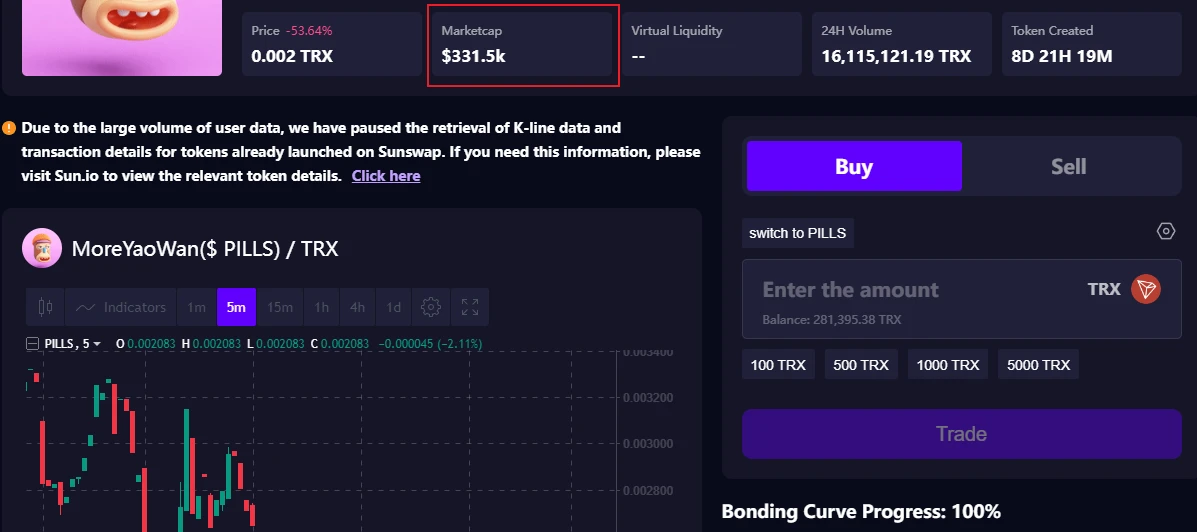
玩转SunPump之工具合集:基建尚处早期,大有追撵pump.fun之势

外部可用的 K 工具包括有DextoolsAve.ai和官方合作的Dexscreener。但基于个人对 1 分钟线的测试结果来看,Dextools 速度略快于 Ave.ai,而前二者又显著快于 Dexscreener

能量租赁

在 Tron 网络中,带宽(Bandwidth)和能量(Energy)是两种关键资源,用于处理不同类型的操作和交易。带宽用于处理常规的交易,例如转账 TRX 或其他 TRC-10 代币。能量用于执行智能合约,例如 TRC-20 代币转账、DApp 操作等。

Tron 中可以燃烧 TRX 替代能量消耗,但由于近期网络活动明显上升,通过该方式进行交易的单次费用已上升至数美元,堪比以太坊网络,因此使用“冻结 TRX 获得的能量”会更为经济

TRX 提供能量租赁是一项悠久且庞大的业务,但同样由于网络活动的剧烈上升,全市场能量已严重不足,能量成本大约为此前的两倍,本处整理了部分能量租赁平台,但注意租赁前确认平台能量是否充足

交易 Bot

目前社区有部分用户反馈 Tron 资金被盗情况,部分是由于 Bot 私钥泄露导致(当 TRX 也被转移是私钥泄露,授权问题只影响 U)。因此本处仅推荐两个用户数较多的 Bot,即NFDTron Trading Bot,需注意不要存入过多资金。

其他工具

  • 地址监控

目前地址监控方面尚未有成熟工具,多数社区仍为个人自行编写的状态,我使用的公开工具为bidashi,目前支持监控十个地址。该工具同样支持能量租赁,但本人并未测试过,可作为能量租赁的备选。

  • 进度推送 Sun-Pump

该工具目前主要功能为推送内盘进度达 30% 的 SunPump 代币,社区支持查询前十名持有者信息。

  • 推文监控工具 starkDexbot

该工具功能为汇总在 X 平台发布 SunPump 链接的原文链接和 SunPump 链接,附带该账号开盘次数信息。用户需关注原文发布时间与工具推送时间差。

Leituras Relacionadas

The Next Generation of Payments Lies Not in the Payment Layer

The Next-Generation of Payment is Not in the Payment Layer This is the second piece in a series analyzing Stripe's AI strategy. The series stems from Stripe's vision of becoming the economic infrastructure for the AI Agent era, announced at Stripe Sessions 2026. A key debate centers on whether Know Your Agent (KYA) is merely an upgrade to existing payment systems. The author argues the opposite: payment will become a subsystem of KYA, not the other way around. Historically, major payment innovations (online banking, mobile wallets, QR codes) emerged from new transaction scenarios that broke the underlying assumptions of old systems, not from optimization within the payment layer itself. Agent economy is that new scenario, and KYA is the foundational infrastructure growing to support it. KYA's proposed five layers—Agent Identity, Authorization Scope, Intent Signing, Liability Chain Auditing, and Credit Rating—extend far beyond payments. Only authorization and auditing directly touch the payment链路. Identity, intent, and credit layers serve broader needs like cross-platform calls, AI alignment, and permission management. Stripe's strategic moves validate this view. Its focus on "economic infrastructure for AI," investments in protocols like Agentic Commerce Protocol (an identity/session protocol), Shared Payment Tokens, stablecoin infrastructure, embedded wallets, and its own Tempo blockchain for settlement, all point to building the KYA layer, not just optimizing payments. Data shows the core challenge in AI commerce has shifted upstream: determining "who this is, what they intend to do, and if they deserve resources" happens long before checkout. This is why Stripe is moving its Radar fraud prevention from the transaction moment to the entire user lifecycle—a KYA-layer concern. Legally, ultimate responsibility will still fall on a human, as laws like AB 316 dictate. However, in a distributed,网状 liability chain involving users, Agent platforms, model providers, and payment protocols, KYA's role is to use cryptography to make every entity's actions and roles verifiable and traceable. This enables accountability where it was previously impossible to pinpoint evidence, fundamentally changing责任追溯, not just payment efficiency. The next-generation payment形态 will not be designed within the payment layer. It will emerge from the Agent economy scenario after the KYA infrastructure is established.

marsbitHá 17m

The Next Generation of Payments Lies Not in the Payment Layer

marsbitHá 17m

The Next Generation of Payments Is Not in the Payment Layer

The next generation of payments won't be designed within the payment layer itself. This article argues that historical payment innovations (e.g., online banking, mobile wallets) emerged from new transactional scenarios, not from optimizing existing payment systems. The new scenario is the Agent economy. Know Your Agent (KYA) is not merely a payment-layer upgrade for efficiency. It is the foundational infrastructure layer for the Agent economy. KYA’s five layers—Agent identity, authorization scope, intent signature, accountability chain audit, and credit rating—primarily serve broader needs like cross-platform identification, AI alignment, and permission management. Payment is just one application built on top of this KYA foundation. Stripe’s strategy exemplifies this shift. Its focus on "economic infrastructure for AI," investments in protocols like the Agentic Commerce Protocol (identity/session layer), stablecoin infrastructure, embedded wallets, and moving risk management (Radar) to the user lifecycle all indicate it is building the KYA layer, not just optimizing payments. While ultimate legal liability remains with a human (as laws like AB 316 stipulate), KYA enables traceability in a distributed,网状 responsibility chain involving multiple entities (user, Agent platform, model provider, etc.). It makes accountability verifiable where previously it was opaque. The conclusion: A new class of economic actors (Agents) forces a new infrastructure layer (KYA) to emerge. This layer redefines identity, authorization, and accountability. On top of it, the next generation of payment will reorganize and emerge from the demands of the scenario, not from within the traditional payment system.

链捕手Há 22m

The Next Generation of Payments Is Not in the Payment Layer

链捕手Há 22m

The "Big Short" Prototype Makes a Major Bet: Shorting Nvidia, Going Long on Software Stocks 'Scared Away' by AI

'The Big Short' Legend Michael Burry Doubles Down on AI Bet: Shorts Nvidia, Buys Beaten-Down Software Stocks As the Nasdaq hits record highs and Nvidia's market cap nears $5.3 trillion, Michael Burry—famed for his 2008 subprime mortgage bet—is making a major contrarian move. He is significantly expanding his bearish wagers against the AI frenzy while buying traditional software stocks he believes have been unfairly punished. Burry's latest portfolio adjustments, revealed in his Substack column, include maintaining and increasing put options on Nvidia and Palantir. He has also initiated new short positions on Palantir and expanded bearish bets on the semiconductor ETF (SOXX), the Nasdaq 100 ETF (QQQ), and Oracle. Simultaneously, he is buying shares of software companies like Adobe, Autodesk, Salesforce, and Veeva Systems. He argues these stocks have been sold off due to "AI disruption" fears and technical selling pressure from private credit funds, not deteriorating fundamentals. Their valuations have fallen to multi-year lows. This creates a complete hedge: short the perceived "AI winners" and long the oversold "AI losers." Burry believes the current AI infrastructure spending boom mirrors the late-1990s internet bubble, with inflated demand projections and questionable accounting practices by large cloud customers extending GPU depreciation schedules. While his Palantir short is currently profitable, his Nvidia put options are deeply underwater as the stock trades near all-time highs. Burry remains steadfast, comparing Nvidia to Cisco during the dot-com era. He anticipates a broad repricing of the AI bubble, where overvalued beneficiaries fall and unfairly battered companies rebound.

marsbitHá 27m

The "Big Short" Prototype Makes a Major Bet: Shorting Nvidia, Going Long on Software Stocks 'Scared Away' by AI

marsbitHá 27m

Trading

Spot
Futuros

Artigos em Destaque

Como comprar PUMP

Bem-vindo à HTX.com!Tornámos a compra de Pump.fun (PUMP) simples e conveniente.Segue o nosso guia passo a passo para iniciar a tua jornada no mundo das criptos.Passo 1: cria a tua conta HTXUtiliza o teu e-mail ou número de telefone para te inscreveres numa conta gratuita na HTX.Desfruta de um processo de inscrição sem complicações e desbloqueia todas as funcionalidades.Obter a minha contaPasso 2: vai para Comprar Cripto e escolhe o teu método de pagamentoCartão de crédito/débito: usa o teu visa ou mastercard para comprar Pump.fun (PUMP) instantaneamente.Saldo: usa os fundos da tua conta HTX para transacionar sem problemas.Terceiros: adicionamos métodos de pagamento populares, como Google Pay e Apple Pay, para aumentar a conveniência.P2P: transaciona diretamente com outros utilizadores na HTX.Mercado de balcão (OTC): oferecemos serviços personalizados e taxas de câmbio competitivas para os traders.Passo 3: armazena teu Pump.fun (PUMP)Depois de comprar o teu Pump.fun (PUMP), armazena-o na tua conta HTX.Alternativamente, podes enviá-lo para outro lugar através de transferência blockchain ou usá-lo para transacionar outras criptomoedas.Passo 4: transaciona Pump.fun (PUMP)Transaciona facilmente Pump.fun (PUMP) no mercado à vista da HTX.Acede simplesmente à tua conta, seleciona o teu par de trading, executa as tuas transações e monitoriza em tempo real.Oferecemos uma experiência de fácil utilização tanto para principiantes como para traders experientes.

333 Visualizações TotaisPublicado em {updateTime}Atualizado em 2026.05.09

Como comprar PUMP

Discussões

Bem-vindo à Comunidade HTX. Aqui, pode manter-se informado sobre os mais recentes desenvolvimentos da plataforma e obter acesso a análises profissionais de mercado. As opiniões dos utilizadores sobre o preço de PUMP (PUMP) são apresentadas abaixo.

活动图片