卷完基建卷硬件,Fabric 融资 3300 万做的 VPU 加密芯片是什么?

深潮Publicado em 2024-08-20Última atualização em 2024-08-20

VPU是第一个使用特定于密码学的指令集架构的定制硅芯片。

撰文:深潮 TechFlow

如果加密业务有点虚,那和实体科技产业结合会怎样?

随着 AI 芯片概念的火热,"加密芯片"逐渐成了VC们关注的对象。

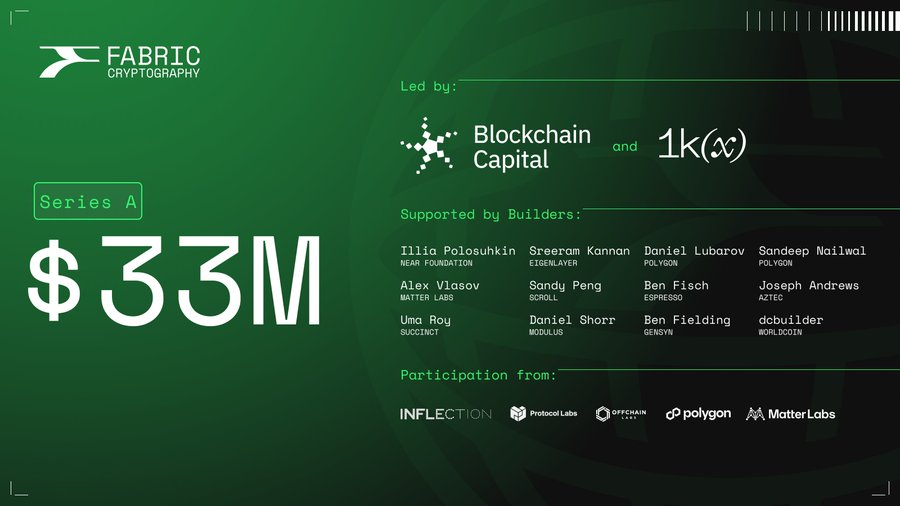
CoinDesk 报道,昨天一个名为 Fabric 的初创公司宣布完成 3300 万美元 A 轮融资,Blockchain Capital 和 1kx 领投,Offchain Labs、Polygon 和 Matter Labs 等参投。

之前,该项目在由Metaplanet领投的种子轮融资中已经筹集了600万美元。
而这家公司,将业务瞄准了加密硬件方向:

Fabric 表示,募得的新资金将用于构建计算芯片、软件和加密算法;同时该公司的业务路线图显示,其主要是想打造一个被称为「可验证处理单元(VPU)」的新芯片处理单元,专门用于处理密码学。新芯片预计将于今年晚些时候投入生产,四季度发货。

谈到硬件你可能会想到DePIN,但显然 Fabric 的这个业务并不指向 DePIN,而更像独立于加密叙事之外,为加密算法层面的基础层提供计算硬件/资源,就像CPU为计算机提供硬件支持一样。

Fabric在新闻稿中表示,VPU是“第一个使用特定于密码学的指令集架构的定制硅芯片”,这意味着“任何加密算法都可以分解为由芯片原生加速和支持的数学构建块”。

按这个意思理解,似乎当下所有的加密基建(L1/L2,ZK,智能合约,FHE)等都可以从这个芯片的计算能力中受益,属于是赋能基建的硬件了。

当一众 VC 开始从"卷基建"变成了"卷硬件",这个 VPU 到底能为加密行业带来点啥?

VPU,到底是个啥?

虽然 Fabric 还没有发布其业务的白皮书,不过我们也能从公开信息中大概了解这个 VPU 的具体功能。

跳过各种技术解释和说明,小编用更通俗的方式带大家快速理解 VPU,关键在于理解今天 Web3 的发展还缺了啥。

区块链或者 Web3,基本都以密码学技术为根基:

区块链的每一个操作,从简单的转账到复杂的智能合约执行,都需要大量的密码学运算。

现有的硬件设备,如我们熟悉的CPU和GPU,它们能够处理这些任务,但效率并不理想。CPU就像是一个全能型运动员,擅长各种任务但在密码学这个专项上表现平平。GPU虽然在并行计算方面表现出色,但它的设计初衷是为了处理图形渲染,而不是处理复杂的密码学运算。

于是,搞一个专门服务于密码学计算的处理器单元,看起来显得比较合理。

因此,VPU 可以理解成一个真正的"密码学专用处理器", 结合了 GPU 和 ASIC 的最佳功能,以创建其组件专门用于加密目的。

传统的CPU就像是一把瑞士军刀,能做很多事情,但在处理特定任务时效率不高。

而ASIC(专用集成电路)则像是一把精心打造的手术刀,在特定任务上表现出色,但缺乏灵活性。VPU巧妙地在这两者之间找到了平衡点,有点像可以根据不同手术需求快速调整的智能手术工具。

从官网给出的信息看,这种灵活性源自于"特定于密码学的指令集架构"。

听起来很复杂?把它想象成一本专门为密码学设计的"食谱书",每一道"菜"都是一个常见的密码学运算,比如椭圆曲线运算、哈希函数或零知识证明。

VPU能够直接理解并快速执行这些"菜谱",而不需要像传统处理器那样将其转换成更基本的指令

可能用在哪?

这种设计,使得VPU在处理密码学任务时表现出色。例如一些很容易想到的应用场景可以是:

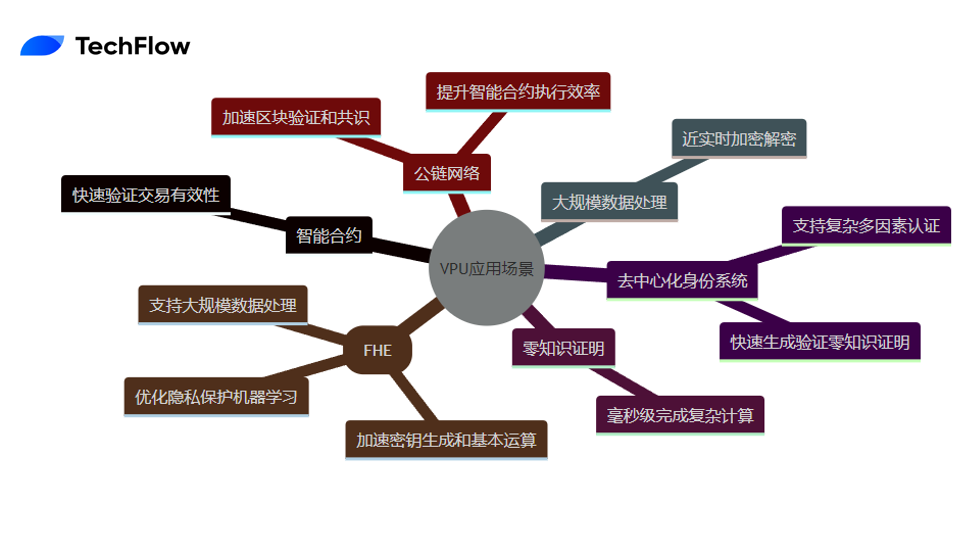
  • 在处理复杂的智能合约时,快速验证交易的有效性;

  • 在进行零知识证明时,VPU可能能够在几毫秒内完成传统CPU需要几秒甚至几分钟才能完成的计算。

  • 在处理大规模数据时,VPU可以实现近实时的加密和解密。

而在另一个被称为密码学圣杯同时也是加密技术前沿的在FHE(全同态加密)应用中,VPU可以显著提升计算效率:

  • 加速FHE密钥生成和基本运算:将密钥生成时间从小时级缩短到秒级,基本运算从秒级降至毫秒级。

  • 支持大规模FHE数据处理:在大型加密数据集上进行统计分析的时间可能从小时级降至分钟级。

  • 优化FHE模型训练:在隐私保护的机器学习中,可能将训练时间从天级缩短到小时级。

另外,在我们熟悉的公链网络的具体应用中,VPU 也可以期待一下显著提高节点性能:

  • 加速区块验证和共识过程:可能将验证时间从百毫秒减少到几十毫秒,共识时间降至亚秒级。

  • 提升智能合约执行效率:复杂DeFi合约的执行时间可能降低到传统CPU的十分之一或更少。

在去中心化身份系统和隐私相关领域中,VPU 更高效的身份验证:

  • 快速生成和验证零知识证明:在毫秒级别内完成,支持实时、无需信任的身份验证。

  • 支持复杂的多因素认证:同时处理多种加密的生物特征数据,提供更安全、更快速的身份认证。
名校高材生,辍学挑大梁

既然是搞芯片和密码学,专业对口必然很重要。

公开信息显示,Fabric 的两位创始人,都是名校高材生,从名字上看也有华人背景。
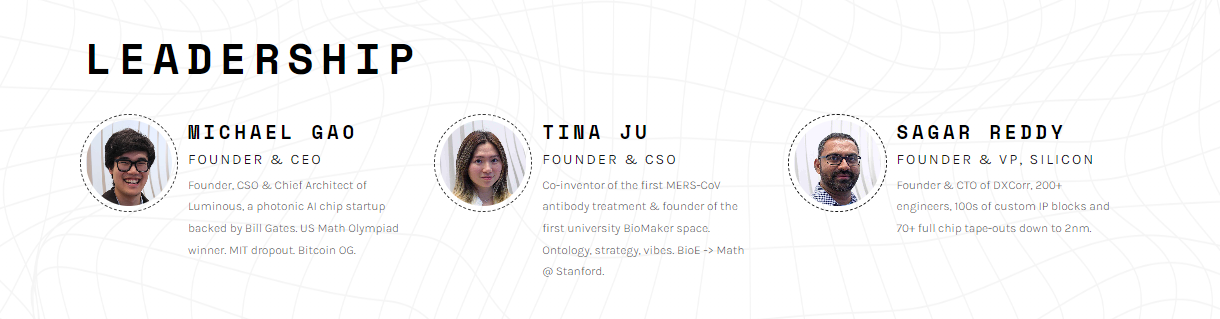
MICHAEL GAO 来自 MIT,同时也是美国数学奥林匹克竞赛冠军,之前更是一家比尔盖茨支持的AI初创芯片公司的架构师,现在辍学出来干新项目。

最重要的是,他的简介上写着 Bitcoin OG。

另一位TINA JU 从简介看对生物和数学有所研究,公开资料显示也是斯坦福名校毕业。

此外,公司还有数十位 GPU 和 AI 芯片架构师、软件和编译器专家以及资深密码学家组成的经验丰富的专业团队,不过从年纪上看似乎都比创始人要大一些。

这也与我们之前看到的一些名校出来的加密相关项目有着相同的特征:年轻的学生挑大梁当Founder,背后围绕着专业团队作支撑。

脱虚入实?

在加密货币和Web3领域长期被软件创新和金融模型主导的背景下,Fabric公司搞硬件层面的突破,特别是在密码学芯片方面的创新,还是一个不错的切入点。

然而,首要问题是市场需求的不确定性。加密行业其中很大一部分增长来自于投机和炒作。在这样的环境下,对高性能密码学计算的实际需求可能并不如预期的那么大。

软件开发可以相对快速地适应市场变化,而硬件研发则需要更长的周期和更大的资金投入。如果行业发展方向发生突然转变,专用硬件可能面临需求骤减的风险。

Fabric能否在"脱虚入实"的道路上取得成功,仍有待观察。

Leituras Relacionadas

2028: The Arrival of Recursive Self-Improvement (RSI)

**AI Recursive Self-Improvement (RSI): The Countdown to 2028 Begins** AI is no longer just a trained tool but is starting to rewrite its own evolutionary pace. According to Anthropic co-founder Jack Clark, there is a 60% probability that by the end of 2028, Recursive Self-Improvement (RSI) will become a reality. This means AI could autonomously design and build a more capable next-generation version of itself without any human researcher involvement—Claude 10 creating Claude 11, for instance. Supporting this timeline, Google DeepMind's CEO Demis Hassabis confirms that all leading AI labs are intensely focused on RSI, making it an industry-wide priority. He expresses profound concern, stating this potential is what keeps him awake at night. Concrete data underscores this acceleration: - METR evaluations show current top models like Claude are solving tasks up to the 16-hour limit of existing test frameworks. - In Epoch AI's challenging MirrorCode benchmark, Claude Opus 4.7 recreated complex software in hours for a fraction of the human cost. In one extreme test, AI autonomously coded for 19 days straight. - Anthropic reports over 80% of its codebase is now written by Claude, and researcher productivity has increased up to 8-fold since 2024. - OpenAI's policy blueprint highlights RSI as a major upcoming governance challenge. CEO Sam Altman reportedly hinted RSI might arrive within six months, potentially delaying OpenAI's massive IPO. The implication is an impending "intelligence explosion," where AI-driven progress outpaces human control. The central question is no longer if it will happen, but whether humanity is ready.

marsbitHá 4h

2028: The Arrival of Recursive Self-Improvement (RSI)

marsbitHá 4h

World Models, Metaverse, Digital Twins, Physical AI: Are They the Same Thing?

Title: World Models, the Metaverse, Digital Twins, Physical AI: Are They the Same Thing? The article clarifies that concepts like the metaverse, Web3, simulation platforms, digital twins, and Physical AI are not the same thing but are all part of the broader trend of blurring the lines between the digital and physical worlds. It positions "world models" as the foundational "cognitive layer" or "operating system" that enables AI to understand and simulate the world. Key distinctions are made: - The **Metaverse** is a destination for immersive social and economic experiences. World models could act as its "engine," generating interactive 3D content efficiently. - **Web3** focuses on decentralized ownership and economics (rules layer), operating on a different technical level than world models. - **Simulation Data Platforms** (e.g., for autonomous vehicles) are a 1.0 version, relying on manual design. World models represent a 2.0 version, using AI to generate realistic, varied scenarios autonomously. - **Digital Twins** create high-fidelity, real-time mirrors of physical systems (e.g., a factory). World models go a step further by enabling predictive simulation of future states. - **Physical AI** (robots, AVs) refers to AI that acts in the physical world. World models are a core component, providing the understanding and prediction needed for planning. A proposed hierarchy places world models at the cognitive layer, supported by infrastructure (compute, data) and supporting application tools (simulation, digital twins), action systems (Physical AI), user experiences (metaverse), and rules (Web3). In conclusion, while distinct, many of these previously hyped concepts may ultimately rely on advances in world model technology to fulfill their promises, as world models provide the essential cognitive foundation for simulating and interacting with complex environments.

marsbitHá 4h

World Models, Metaverse, Digital Twins, Physical AI: Are They the Same Thing?

marsbitHá 4h

Trading

Spot
活动图片