MiCA отрегулировал стейблкоины: что меняется на европейском крипторынке

investing.ruPublicado em 2024-08-06Última atualização em 2024-08-06

Власти большинства стран, наоборот, считали, что криптовалюты должны подпадать под правила регулирования традиционных рынков и в отдельном законодательстве не нуждаются. Помните известную фразу Гэри Генслера о том, что все криптовалютные активы, кроме BTC, являются ценными бумагами?

Свободно плавающее разнообразие

Однако, с ростом рынка, отношение некоторых регуляторов начало меняться. В январе 2019 года Европейская служба банковского надзора (EBA) и Европейское управление по финансовых рынков (ESMA) выпустило отчет, где говорилось о том, что только небольшая часть криптовалютных активов по своей природе подпадает под регулирование законодательства о финансовых инструментах. А именно секьюрити-токены.

Все остальное разнообразие продуктов криптовалютного рынка и правоотношений вокруг них находилось фактически в свободном плавании. С этого момента началась разработка MiCA — регламента (ЕС) 2023/1114 Европейского парламента и Совета о рынке криптоактивов.

Спустя три года, 31 мая 2023 года, общеевропейский свод правил MiCA был принят. Основная часть MiCA вступит в силу только 30 декабря 2024 года. Исключение составляют две главы, №№3 и 4, они вступили в силу 30 июля и касаются регулирования стейблкоинов.

Разница в сроках вступления в силу отражает настороженное отношение властей ЕС к стабильным цифровым монетам. Еще до принятия MiCA и Европарламент, и Европейский банк выпустили отчеты о проблемах такого класса активов как стейблкоины, в числе которых назвали: существование в рамках высоковолатильного рынка, непроверенный уровень обеспечения, непонятные эмитенты. Все это вместе означает, по мысли евровластей, риски для инвесторов.

Правила для стейблкоинов

В итоге в MiCA было прописано жесткое регулирование, не поощряющее эмитентов к запуску большого числа новых стейблкоинов на территории стран ЕС.

Помимо запрета на выпуск алгоритмических стейблкоинов, MiCA устанавил достаточно тяжелые правила обеспечения этого вида активов. По вступившим в силу правилам, эмитент обязан, помимо резервов, иметь собственные средства в обеспечении, которые должны составлять либо не менее 350 000 евро, либо 2% от средств резервного фонда, либо четверть фиксированных накладных расходов за предыдущий год, — в зависимости от того, какая сумма больше.

Собственные средства эмитент не может смешивать с резервным фондом криптоактива. Фонд, в свою очередь, должен быть обеспечен как минимум на 30% той валютой, к которой привязан, а общая сумма обеспечения должна соответствовать сумме стейблкоинов в обращении.

Закон также вводит понятие «значимых стейблкоинов», к которым относят проекты с рыночной капитализацией выше 5 млрд евро. Лицензию на выпуск и обращение таких стейблкоинов необходимо получать непосредственно в EBA. Эти стейблкоины должны быть обеспечены фиатом уже на 60%. Таким образом, ни один европейский стейблкоин не может быть на 100% обеспечен ценными бумагами с доходностью.

Четкие правила, но

Но главная проблема даже не в объеме кэша, который компании обязаны держать для обеспечения. А в том, что, по правлам MiCA, хранить эти средства надо исключительно в специальных лицензированных учреждениях, то есть в европейских банках.

Все риски, связанные с хранением депозитов в европейских банках, эмитент стейблкоина принимает на себя, так как для прохождения регулярных аудитов ему необходимо поддерживать и подтверждать наличие достаточного объема наличных средств.

Не удивительно, что такой подход вызвал критику у эмитентов стейблкоинов. Например, американская компания Circle уже получила лицензию EMI для выпуска стабильных цифровых монет в ЕС. Сделано это было в пику американскому регулятору, который не вводит четкие правила работы у себя в стране, предпочитая разбираться с криптовалютными компаниями в судах.

И тем не менее, гендиректор компании Circle Джереми Эллайр публично высказал свои опасения по поводу необходимости хранить до 60% обеспечения своего стейблкоина в валюте в европейских банках. По мнению бизнесмена, это может «серьезно дестабилизировать индустрию», поскольку у банков, в отличие от операторов стейблкоинов, есть доступ к кредитам. Любой депозит банка всегда несет в себе кредитные и контрагентские риски, — то, чего не может позволить себе оператор стейблкоина.

В итоге, действующие правила MiCA в отношении стейблкоинов позволили использовать средства иностранных компаний для поддержки работы европейских банков. И при этом не допустить компании к участию в кредитно-денежной политике региона, объясняя защитой инвесторов и борьбой с отмыванием средств, полученных незаконным путем.

Да, это четкие понятные правила ведения дел, действие которых распространяется на все страны ЕС и должно быть внедрено в национальные законодательства этих стран уже к 2026 году. Но преимущество ЕС только в том, что MiCA появился раньше остальных.

Читайте оригинальную статью на сайте Bits.media

Leituras Relacionadas

Bitcoin’s path to $80K may hinge on THIS hidden trend

Bitcoin's potential path toward $80,000 is influenced by conflicting market signals. Data shows the Coinbase Bitcoin Premium Index has recorded its longest-ever streak of consecutive negative premiums, indicating muted institutional demand or net selling from U.S. institutions. While such a trend often signals short-term weakness, it doesn't necessarily forecast a long-term bear market. Additionally, a bearish crossover occurred in Bitcoin's Net Unrealized Profit/Loss (NUPL), with its short-term average falling below the longer-term average, suggesting declining investor profitability and waning market momentum. Historically, major bear market bottoms saw the 100-day NUPL drop below zero, but this cycle it remains positive, implying either an unprecedented bottom or a further decline is needed. Currently trading around $63,148, Bitcoin has seen weekly gains but remains below its May peak. Technical indicators present a mixed picture: the MACD shows bullish momentum, while the RSI signals bearish pressure. A positive development is the return of inflows to Bitcoin ETFs after eight weeks of outflows. Analysts hold divergent views; some highlight a key liquidity zone between $48,000-$50,000 where a market bottom could form, while others maintain a more optimistic long-term outlook. Ultimately, while some bullish signs exist, a strong push from institutional investors appears crucial for Bitcoin to challenge the $80,000 level.

ambcryptoHá 10m

Bitcoin’s path to $80K may hinge on THIS hidden trend

ambcryptoHá 10m

Unexpected Weak Non-Farm Payrolls Data Pushes BTC to Rebound 11%, FOMC Minutes to Test the Narrative of This Rally

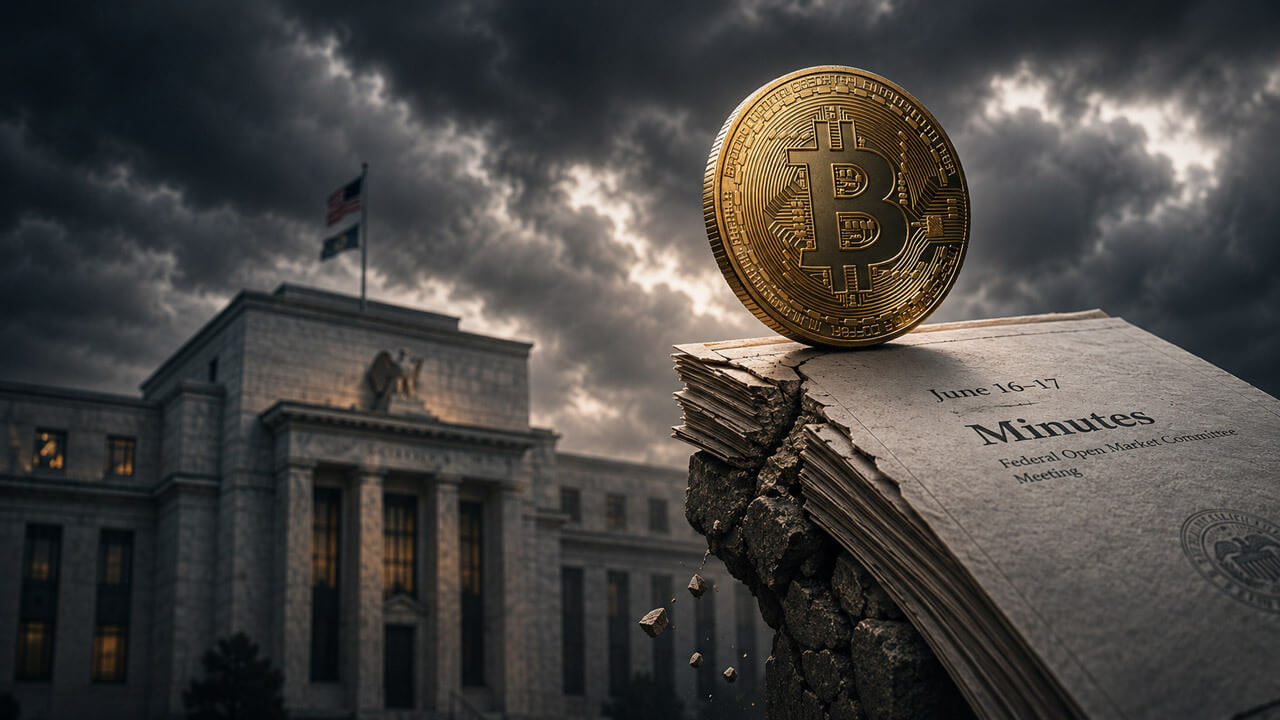
Bitcoin has rebounded 11% from its 21-month low, but the sustainability of this rally hinges entirely on the Federal Reserve's release of the June FOMC meeting minutes. The bounce was triggered by a weaker-than-expected US jobs report, which showed only 57,000 jobs added in June—about half of economists' forecasts. This data prompted traders to scale back bets on further Fed rate hikes, fueling a rally in Bitcoin alongside gold and stocks. The upcoming minutes are critical. They will reveal whether Fed officials, in their mid-June meeting, were already expressing concerns about a weakening labor market, tight credit conditions, or the risks of overtightening—factors that would support the market's recent dovish shift. Conversely, if the discussion focused on persistent inflation and the conditions for more rate hikes, the rally's foundational narrative would crumble. Market indicators show the rebound's fragility. While US spot Bitcoin ETFs saw a significant single-day inflow, it followed a prolonged period of outflows. On-chain data indicates a substantial increase in Bitcoin being moved to exchanges, creating potential sell pressure. Options market positioning suggests key price levels around $60,000 and $62,000 that could either stabilize or accelerate price movement. In essence, Bitcoin's 11% gain is built on speculation about the Fed's private deliberations three weeks ago. The FOMC minutes will replace that speculation with concrete details, and the discrepancy between market expectations and the actual record will determine whether Bitcoin holds above $64,000 or falls back toward $58,000.

marsbitHá 21m

Unexpected Weak Non-Farm Payrolls Data Pushes BTC to Rebound 11%, FOMC Minutes to Test the Narrative of This Rally

marsbitHá 21m

Just Now, The World's First Ultra-High-Frame World Model Was Born, Nvidia Content 0, Racing to 50 FPS

Just Now, Global First Ultra-High-Frame World Model Born, 0% NVIDIA, Speeds to 50 FPS A Chinese team has developed MoWorld, the world's first Flash World Model, achieving real-time interactive inference exceeding 50 FPS. Crucially, it is entirely built on domestic NPUs (National Processing Units), bypassing NVIDIA GPUs. Developed by Moxin Technology in collaboration with Zhejiang University's Pan Yunhe academician team, MoWorld represents a complete, closed-loop system from training and distillation to deployment on domestic computing power. The model tackles the critical industry bottleneck of real-time performance, essential for applications like robotics, gaming, and digital worlds. MoWorld achieves this through a full-stack redesign for NPUs, including a proprietary 3D-annotated data pipeline, system-level optimizations for long-sequence training (up to 2000 frames), and inference optimizations like dynamic mixed-precision quantization. On a Huawei Ascend 910C platform, a 14B MoE parameter model achieves over 50 FPS, reducing typical inference costs by 70% compared to equivalent GPU solutions. This breakthrough lowers the deployment barrier, potentially accelerating the industrialization of world models. Key application areas include gaming/entertainment (offering 6-DoF camera control for immersive exploration), embodied AI/autonomous driving (providing a high-fidelity digital training ground), film pre-visualization, and 3D reconstruction/digital twins due to its strong geometric consistency. MoWorld demonstrates that a full-stack domestic compute ecosystem can support cutting-edge, real-time world models, positioning China at a competitive starting line in defining next-generation spatial intelligence standards. The project underscores a shift in competition from model scale to real-world usability and cost-effective deployment.

marsbitHá 58m

Just Now, The World's First Ultra-High-Frame World Model Was Born, Nvidia Content 0, Racing to 50 FPS

marsbitHá 58m

Pacific 'Fever': How Extreme Weather Becomes Wall Street's Cash Machine?

"Pacific Fever": How Extreme Weather Becomes Wall Street's ATM? The summer of 2026 sees unusually fierce weather across China and globally. The common driver behind this global pattern is a powerful El Niño event, potentially the strongest since 1950, as declared by NOAA. This phenomenon, characterized by warming central/eastern Pacific waters, disrupts global atmospheric circulation, raising risks of floods, droughts, and heatwaves, further intensified by climate change. For financial markets, especially commodities, El Niño is not just weather but a major trading theme. History shows its price impact is profound. In the 1970s, El Niño-driven anchovy collapse in Peru fueled a soybean boom, giving Richard Dennis his first million. Anthony Ward's cocoa empire was built on superior weather intelligence. Most recently in 2024, West African droughts caused cocoa prices to soar over 400%, delivering huge gains for trend-following hedge funds. In 2026, markets are again pricing in future El Niño-induced supply shocks. Despite high current inventories, prices for palm oil, rubber, and sugar have rallied on anticipation of upcoming Southeast Asian droughts and weak Indian monsoons. Analysts identify key indicators to watch: the Niño3.4 index, Indian monsoon rainfall, Malaysian palm oil stocks, and the fundraising scale of specialized weather funds like Moreton Capital. Beyond trading opportunities, a concerning narrative is gaining traction online, linking El Niño with fertilizer shortages and energy supply disruptions to warn of potential global food crises within months. While alarmist, it highlights a deeper truth: the cascading effects of climate-driven weather extremes ultimately translate into higher costs of living for everyone, far beyond the trading floor.

marsbitHá 1h

Pacific 'Fever': How Extreme Weather Becomes Wall Street's Cash Machine?

marsbitHá 1h

Pacific 'Fever': How Extreme Weather Becomes Wall Street's ATM?

"Pacific 'Fever': How Extreme Weather Becomes Wall Street's Piggy Bank" The article examines how the 2026-2027 El Niño, potentially the strongest since 1950, is not only disrupting global weather but also creating major financial opportunities. It links recent extreme events in China and worldwide to this climate phenomenon, which alters atmospheric patterns, increasing risks of floods, droughts, and heatwaves. The core narrative explores how financial markets capitalize on these disruptions. A hedge fund is raising $500 million specifically to bet on El Niño-affected crops like South African corn and Malaysian palm oil. Historically, such strategies have yielded massive profits. Examples include Richard Dennis ("Turtle Trader") making his first fortune in the 1970s soy boom triggered by El Niño's impact on Peruvian anchovies (a key fishmeal source), and Anthony Ward's cocoa empire built on superior weather intelligence. The 2024 cocoa price surge, driven by West African drought, enriched quantitative trend-following funds. Currently, markets are preemptively bidding up palm oil, rubber, and sugar futures based on anticipated future supply shocks, despite high current inventories. The article details El Niño's asymmetric global impacts: causing drought in Southeast Asia (hurting palm oil/rubber) and India (affecting sugar/cotton), but bringing beneficial rains to South American soy and sugarcane. Key metrics to watch include the Niño3.4 index, Indian monsoon data, and Malaysian palm oil stocks. The true price effects often materialize *after* the El Niño peaks, suggesting 2027 may see the real volatility. The conclusion warns that beyond trading gains, the convergence of El Niño, energy shortages, and fertilizer scarcity poses a systemic risk, potentially raising the cost of living for everyone, turning a climate event into a global economic story.

链捕手Há 1h

Pacific 'Fever': How Extreme Weather Becomes Wall Street's ATM?

链捕手Há 1h

Trading

Spot
活动图片