专用 ZK 与通用 ZK,谁才是未来?

深潮Publicado em 2024-08-02Última atualização em 2024-08-02

专用的 ZK 基础设施正变得越来越通用,而通用 ZKVM 也正变得越来越专业化。

撰文:mo

编译:Luffy,Foresight News

专业化和通用化,哪一个才是 ZK 的未来?让我尝试用一张图来回答这个问题:
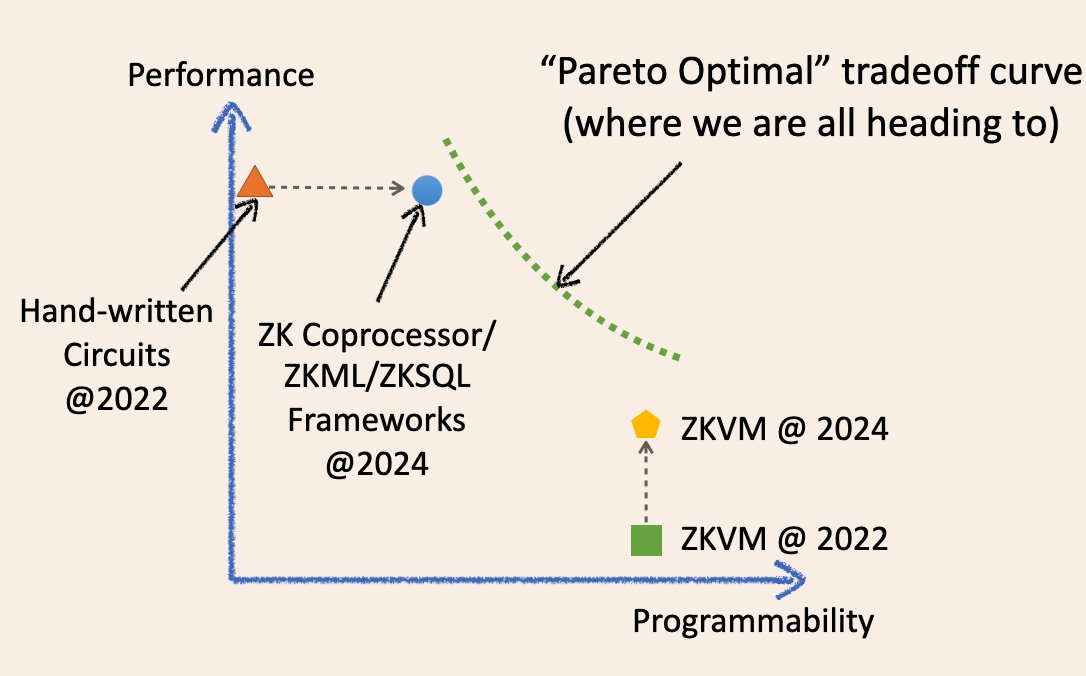
如图所示,未来我们有可能收敛到权衡坐标系上一个神奇的最佳点吗?

不,链下可验证计算的未来是一条连续的曲线,它模糊了专用和通用 ZK 之间的界限。请允许我解释一下这些术语的历史演变,以及它们在未来将如何融合。

两年前,「专用」 ZK 基础设施意味着诸如 circom、Halo2 和 arkworks 之类的低级电路框架。使用这些框架构建的 ZK 应用本质上是手写的 ZK 电路。它们对于特定的任务来说速度快且成本低,但通常难以开发和维护。它们类似于当今 IC(集成电路)行业中的各种专用集成电路芯片(物理硅片),例如 NAND 芯片和控制器芯片。

然而,在过去的两年里,专用 ZK 基础设施逐渐变得更加「通用化」。

我们现在拥有 ZKML、ZK 协处理器和 ZKSQL 框架,它们提供易于使用且高度可编程的 SDK,用于构建不同类别的 ZK 应用,而无需编写一行 ZK 电路代码。例如,ZK 协处理器允许智能合约以无需信任的方式访问区块链历史状态、事件和交易,并对这些数据运行任意计算。ZKML 使智能合约能够以无需信任的方式利用 AI 推理结果来处理广泛的机器学习模型。

这些演变的框架显著提高了其目标领域内的可编程性,同时由于抽象层(SDK/API)单薄且接近于裸机电路,因此仍保持高性能和低成本。

它们类似于 IC 市场中的 GPU、TPU 和 FPGA:它们是可编程的领域专家。

ZKVM 在过去两年中也取得了长足的发展。值得注意的是,所有通用的 ZKVM 都是建立在低级、专用的 ZK 框架之上的。其理念是,你可以用高级语言(甚至比 SDK/API 更方便用户使用)编写 ZK 应用,这些应用可以编译为专用电路和指令集的组合(RISC-V 或类似 WASM)。它们就像 IC 行业中的 CPU 芯片。

ZKVM 是低级 ZK 框架之上的一层抽象层,就像 ZK 协处理器等一样。

正如一位智者曾经说过的,一层抽象可以解决所有计算机科学问题,但同时也会产生另一个问题。权衡,这是关键所在。从根本上讲,对于 ZKVM,我们在性能和通用性之间进行权衡。

两年前,ZKVM 的「裸机」性能确实很糟糕。然而,短短两年间,ZKVM 的性能得到了显著提升。

为什么?

因为这些「通用」的 ZKVM 已经变得更加「专业化」了。性能提升的一个关键原因是「预编译」。这些预编译是专门的 ZK 电路,可以计算常用的高级程序,例如 SHA2 和各种签名验证,速度比将它们分解为指令电路片段的正常流程要快得多。

因此,现在的趋势已经非常明显了。

专用的 ZK 基础设施正变得越来越通用,而通用 ZKVM 也正变得越来越专业化。

过去几年,这两种解决方案的优化都实现了比以前更好的权衡点:在不牺牲另一点的情况下,在某一点上取得进步。这就是为什么双方都觉得「我们绝对是未来」。

然而,计算机科学的智慧告诉我们,在某一时刻,我们会遇到「帕累托最优墙」(绿色虚线),即我们无法在不牺牲另一个性能的情况下改善一个性能。

因此,一个价值百万美元的问题出现了:一个技术是否会在适当的时候完全取代另一个技术?

在借助 IC 行业来理解:CPU 的市场规模为 1260 亿美元,而整个 IC 行业(加上所有「专用」IC)的规模为 5150 亿美元。我确信,从微观角度看,历史会在这里重演,它们不会相互取代。

话虽如此,今天没有人会说,「嘿,我正在使用一台完全由通用 CPU 驱动的计算机」,或者「嘿,这个是由专用 IC 驱动的花哨机器人」。

是的,我们确实应该从宏观的角度来看待这个问题,未来会有一个权衡曲线,让开发者根据自己的需求灵活选择。

未来,专用 ZK 基础设施和通用 ZKVM 可以协同工作。这可以以多种形式实现。最简单的方法现在已经可以实现。例如,你可以使用 ZK 协处理器在区块链交易历史中生成一些计算结果,但这些数据之上的计算业务逻辑非常复杂,你无法简单地在 SDK/API 中表达。

你可以做的是获取数据和中间计算结果的高性能和低成本的 ZK 证明,然后通过证明递归将它们汇聚到通用 VM。
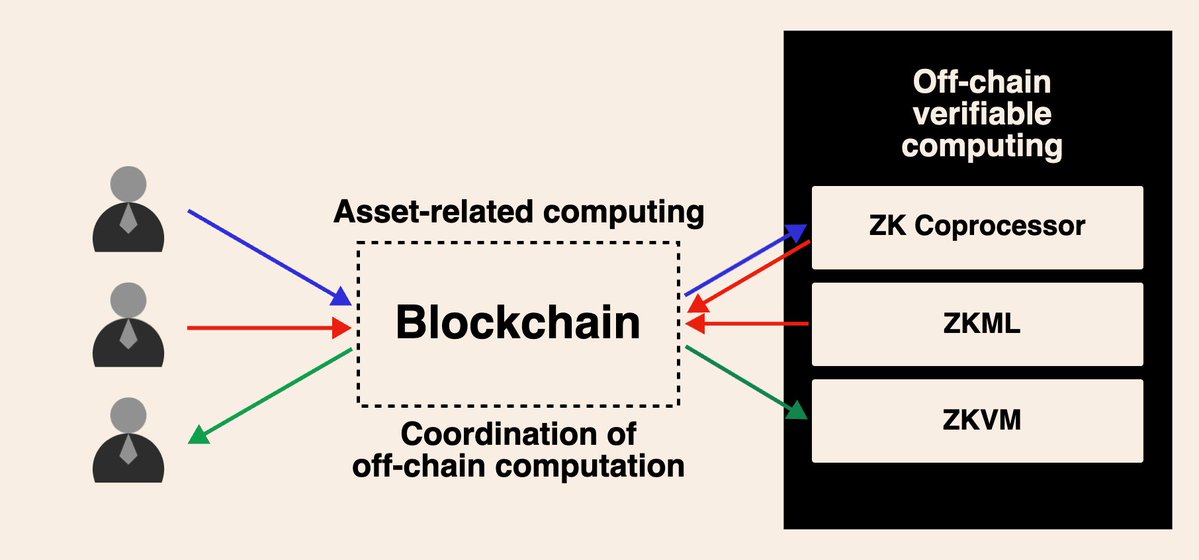
虽然我认为这类辩论很有趣,但我知道我们都在为区块链构建这种由链下可验证计算驱动的异步计算未来。随着未来几年大规模用户采用的用例出现,我相信这场辩论终会出现结果。


Criptomoedas em alta

Leituras Relacionadas

Investing 300 Million Yuan in a Leap to Optical Chips: Can Jinzi Ham, with Its History of Repeated Cross-Industry Setbacks, Succeed This Time?

Jinzi Ham, a Chinese listed company traditionally known for its "Jinhua Ham," is making a significant 3 billion yuan bet by investing in the semiconductor sector. Through its wholly-owned subsidiary Jinzi Semiconductor, the company has completed two rounds of funding totaling 3 billion yuan to acquire up to a 20% stake in Zhongsheng Microelectronics, a company specializing in high-speed optical communication chips for AI and data centers. This move comes as Jinzi Ham faces pressure on its core business. The company reported its first semi-annual net loss since its 2010 IPO in the first half of 2026, with revenue from its ham products dropping significantly. Changing consumer preferences towards low-salt, low-fat diets and a broader market contraction for cured meats have impacted its traditional operations. The investment in Zhongsheng Micro represents Jinzi Ham's latest attempt to find a new growth engine through cross-sector diversification. Historically, such ventures have yielded poor results. Past forays into rare earth minerals (2013-2017), internet finance (2014-2016), healthcare (2016-2018), and computing power (2023) mostly ended in divestment or losses, failing to create sustainable value and sometimes dragging down overall profitability. The current chip investment carries similar risks. Zhongsheng Micro is currently loss-making, and its high valuation presents potential impairment risks. While the deal includes performance guarantees and an IPO/repurchase clause by 2029 to mitigate risk, the fundamental disconnect between ham production and advanced semiconductor manufacturing remains a major challenge. The article questions whether this "chase for light" in the optical chip sector will break the company's cycle of failed diversification or become another short-term gamble on a hot trend.

marsbitHá 6m

Investing 300 Million Yuan in a Leap to Optical Chips: Can Jinzi Ham, with Its History of Repeated Cross-Industry Setbacks, Succeed This Time?

marsbitHá 6m

Fidelity Bets on ETH Staking Dividends, Small Ethereum ETFs Face Survival Crisis

On August 12th, Fidelity announced plans to introduce staking and quarterly cash dividends to its Fidelity Ethereum Fund (FETH). According to amended filings, the fund can stake up to 100% of its Ethereum holdings, with Fidelity retaining 85% of gross staking rewards. After covering operational expenses, the remaining net rewards will be distributed to investors as cash dividends. Fidelity may also sell some ETH to fund these payouts. FETH, with approximately $1.34 billion in assets under management (AUM), ranks fourth among U.S. spot Ethereum ETFs. It follows leaders like BlackRock's iShares Ethereum Trust ETF ($7.21B AUM) and Grayscale's Ethereum Trust ETF ($3.46B AUM). This move aligns with a trend, as Grayscale and 21Shares have already added staking to their Ethereum products, while BlackRock launched a separate staked ETF. Currently, about 33% of Ethereum's supply is staked, yielding an annualized reward rate of roughly 2.6%. ETF net yields for investors are typically lower due to fees and the need to maintain liquidity buffers. For example, Grayscale's ETHE has a gross yield of 2.75% but a net yield of 2.11% after sponsor and custodian fees. Analysts estimate Fidelity's net yield for investors may fall between 1.5% and 2%. The introduction of staking rewards by major players like Fidelity is expected to intensify competition in the Ethereum ETF market, potentially drawing assets away from smaller funds that lack this feature. The market is already highly concentrated, with the top five Ethereum ETFs holding over 98% of the total AUM. This trend mirrors the Bitcoin ETF market, where smaller funds like Hashdex's DEFI have faced liquidation due to insufficient scale.

marsbitHá 9m

Fidelity Bets on ETH Staking Dividends, Small Ethereum ETFs Face Survival Crisis

marsbitHá 9m

Chip Giant with 700 Billion Market Cap Sees Soaring Inventory

"Chips Giant with 700 Billion Market Cap Sees Inventory Soar" In its 2026 first-half financial report, Cambricon, a leading Chinese AI chip design company, reported significant growth in both revenue and profit. Revenue reached 59.96 billion yuan, up 108.13% year-on-year, while net profit grew 122.61% to 23.11 billion yuan. However, a major point of investor focus was the sharp rise in the company's inventory, which surged 66.83% from the end of the previous year to 82.48 billion yuan. This inventory now represents 45.32% of its total assets. The increase is primarily attributed to a substantial growth in raw materials (up 77.95% to 52.78 billion yuan) and work-in-process with contract manufacturers (up 61.85% to 24.18 billion yuan). Cambricon management explained that the inventory build-up was due to increased purchases of raw materials and outsourced processing. The company acknowledged the risk of inventory impairment should market conditions change. Industry analysts noted that as a fabless chip designer, such inventory accumulation is a strategic move to secure wafer capacity. However, it carries significant risk due to the industry's rapid technological iteration. If downstream demand slows, the company could face substantial inventory write-downs. Additionally, Cambricon's prepayments soared nearly threefold to 29.14 billion yuan. Brokerage analyses interpret the concurrent rise in prepayments and inventory as a positive indicator, suggesting strong future order fulfillment and pointing towards significant revenue growth in the third quarter. Despite strong operational metrics, the company's cash and cash equivalents have shown a declining trend over the past three years, dropping to 6.26 billion yuan by mid-2026. Cambricon's stock price hit a historic high of 1,620 yuan per share in June, briefly pushing its market capitalization above one trillion yuan. As of August 13th, its share price was 1,105.5 yuan, with a total market cap of approximately 694.6 billion yuan.

marsbitHá 53m

Chip Giant with 700 Billion Market Cap Sees Soaring Inventory

marsbitHá 53m

Trading

Spot

Artigos em Destaque

Como comprar ZK

Bem-vindo à HTX.com!Tornámos a compra de ZKsync (ZK) simples e conveniente.Segue o nosso guia passo a passo para iniciar a tua jornada no mundo das criptos.Passo 1: cria a tua conta HTXUtiliza o teu e-mail ou número de telefone para te inscreveres numa conta gratuita na HTX.Desfruta de um processo de inscrição sem complicações e desbloqueia todas as funcionalidades.Obter a minha contaPasso 2: vai para Comprar Cripto e escolhe o teu método de pagamentoCartão de crédito/débito: usa o teu visa ou mastercard para comprar ZKsync (ZK) instantaneamente.Saldo: usa os fundos da tua conta HTX para transacionar sem problemas.Terceiros: adicionamos métodos de pagamento populares, como Google Pay e Apple Pay, para aumentar a conveniência.P2P: transaciona diretamente com outros utilizadores na HTX.Mercado de balcão (OTC): oferecemos serviços personalizados e taxas de câmbio competitivas para os traders.Passo 3: armazena teu ZKsync (ZK)Depois de comprar o teu ZKsync (ZK), armazena-o na tua conta HTX.Alternativamente, podes enviá-lo para outro lugar através de transferência blockchain ou usá-lo para transacionar outras criptomoedas.Passo 4: transaciona ZKsync (ZK)Transaciona facilmente ZKsync (ZK) no mercado à vista da HTX.Acede simplesmente à tua conta, seleciona o teu par de trading, executa as tuas transações e monitoriza em tempo real.Oferecemos uma experiência de fácil utilização tanto para principiantes como para traders experientes.

218 Visualizações TotaisPublicado em {updateTime}Atualizado em 2026.06.02

Como comprar ZK

Discussões

Bem-vindo à Comunidade HTX. Aqui, pode manter-se informado sobre os mais recentes desenvolvimentos da plataforma e obter acesso a análises profissionais de mercado. As opiniões dos utilizadores sobre o preço de ZK (ZK) são apresentadas abaixo.

活动图片