Odaily编辑部投资操作全记录(7月19日)

Odaily星球日报Publicado em 2024-07-19Última atualização em 2024-07-19

Resumo

主网Meme形势一片大好;静待以太坊ETF带来明确趋势。

本新栏目为 Odaily 编辑部成员真实投资经历分享,不接受任何商务广告,不构成投资建议(因为本司同事都很擅长亏钱),旨在为读者扩充视角、丰富信源,欢迎加入 Odaily 社群(微信@Odaily 2018 ,Telegram 交流群X 官方账号)交流吐槽。

Odaily编辑部投资操作全记录(7月19日)

推荐人:Wenser(X:@wenser 2010 

简介: 不关心美国大选但喜欢看政坛撕 X 选手,Solana 生态基础件系代币看好者

分享

  1. 币安的 hodler 奖励上币项目确定是 trading bot banana gun,近期和一个 AIxCrypto 项目创始人交流也有提到过,这一类的项目虽然筹码分发意愿并不强,但符合中小市值、有真实收入和真实需求以及有一定市场关注流量,所以后续可以多关注下这个方向。

  2. Polymarket 交易额和协议收入又破新高了,Signum Capital 的 Ash 也有看这个赛道,他觉得同赛道已发币的 Azuro 有潜力,自己也有持仓,感觉可以长期关注。另附帖子:https://x.com/ahboyash/status/1810956494558614004?s=46

  3. JUP走势还不错,JTO 也紧随其后,SOL 也在逐步修复之前超跌的部分,有希望回到 180 以上,可以少量埋伏。

  4. Base 生态的 meme 币 Miggles 因为 Coinbase 官方喊单也暴涨,星球也有第一时间跟进,可以观察后续有没有新的金狗出来,如果有的话 Base 的 meme 热潮应该还会有一周的行情。

  5. 个人观点:大盘目前还是震荡区间了,下周再看看趋势;另外以太坊 ETF 交易如果顺利的话下周可能开启,如果没有门头沟砸盘等黑天鹅,ETH 有希望继续上行突破。

推荐人:南枳(X:@Assassin_Malvo

简介:链上玩家,数据分析师,除了 NFT 什么都玩

分享

  1. Solana Meme 明显式微,难以给 SOL 带来 Alpha 收益,因此再次将所有的 SOL 都兑换为了 JLP。

  2. 主网 Meme 形势很好,不是小好,不是中好,而是一片大好,虽然 FIGHT 所有退潮,但近期关于 Trump 仍将有多个事件,关注发酵概念,例如今日金狗 TRUMPAMANIA。

推荐人:Vincent(X:@vincent 31515173 

简介:买卖时机看感觉、见好就收选手

分享

  1. 关于 TON 基金会推出的 TON Teleport 跨链桥,本质上是将其他生态优质代币汇聚在 TON 区块链,改变目前 TON 生态资产贫瘠状态。Teleport 推出后,可能会影响 TON 区块链 DeFi 项目的代币价格上涨,可以重点关注哪些项目在其推出后率先采用,或者目前提前布局已发币的 DeFi 项目,比如 STON.fi 等。

  2. ONDO 依旧持有,暂无卖出打算,依旧看到 1.3 USDT。

推荐人:Asher(X:@Asher_ 0210 

简介:短线合约、低市值山寨长线埋伏、链游打金、撸毛党

分享

  1. BTC:看回调,准备在 58000-59000 接多,是回调,接到就是赚到,最后的抄底机会。

  2. 上次推荐的山寨币表现:周三下午推荐的 TAO,没想到晚上灰度公布的 AI 持仓就有,直接拉盘,并且这两天少见走势强劲的山寨,该止盈就止盈一部分。LISTA 是真的拉……弃坑了。FIGHT 选了 SOL 链的……无光明未来……

  3. 本次山寨币推荐:因为 BTC 看回调,强势的山寨币很少,手中多单清的差不多了,SATS 就拿着不动了。目前这个位置不打算直接接多其他山寨,等 BTC 跌破 59000 开始陆续接,先接 PEPE、FLOKI,再接 XLM、ONDO,其他再看。

往期记录

7 月 8 日

7 月 15 日

7 月 17 日

推荐阅读

特朗普遇刺,BTC 强势重回 6.2 万美元,市场已经见底?

Solana vs 以太坊,Meme 选择哪家强?

Leituras Relacionadas

Monero Price Forecast for 2026-2032: Is it Worth Buying XMR Now?

**Article Summary: Monero (XMR) Price Forecast for 2026-2032 and Investment Outlook** This article analyzes the potential future price trajectory of privacy-focused cryptocurrency Monero (XMR). Based on technical analysis and market sentiment, it presents a bullish long-term forecast. **Key Price Predictions:** * By the end of 2026, XMR is projected to reach **$825.20**. * A maximum price of **$1,016.93** is forecast for late 2029. * The price could surge to **$1,753.23** by 2032. **Current Market Analysis (as of August 2026):** * The current price is approximately $430.66, having faced resistance at $450. * Market sentiment is labeled as "Bullish," though short-term volatility persists with support found around $430. * Technical indicators like moving averages suggest a mixed but generally positive outlook. **Investment Thesis:** Monero is presented as a compelling investment due to its core focus on transaction privacy and security, which drives demand. Its decentralized development model and growing utility are cited as foundations for long-term growth. However, the article cautions investors about significant risks, including regulatory scrutiny, market volatility, and the cryptocurrency's association with illicit activities, which could hinder mainstream adoption. **Conclusion:** While the forecast is optimistic, the article strongly advises investors to conduct thorough personal research and consult experts before investing in the volatile cryptocurrency market. The potential for XMR to reach $1,000 or surpass its all-time high is deemed possible under favorable conditions but remains highly dependent on regulatory developments and broader market dynamics.

cryptonews.ruHá 34m

Monero Price Forecast for 2026-2032: Is it Worth Buying XMR Now?

cryptonews.ruHá 34m

Livio, CEO of New Huo Group: RWA Will Become the Bridge Connecting Carbon-Based Humans and Silicon-Based AI, Crypto's Next 100 Million Users to Come from AI Agents

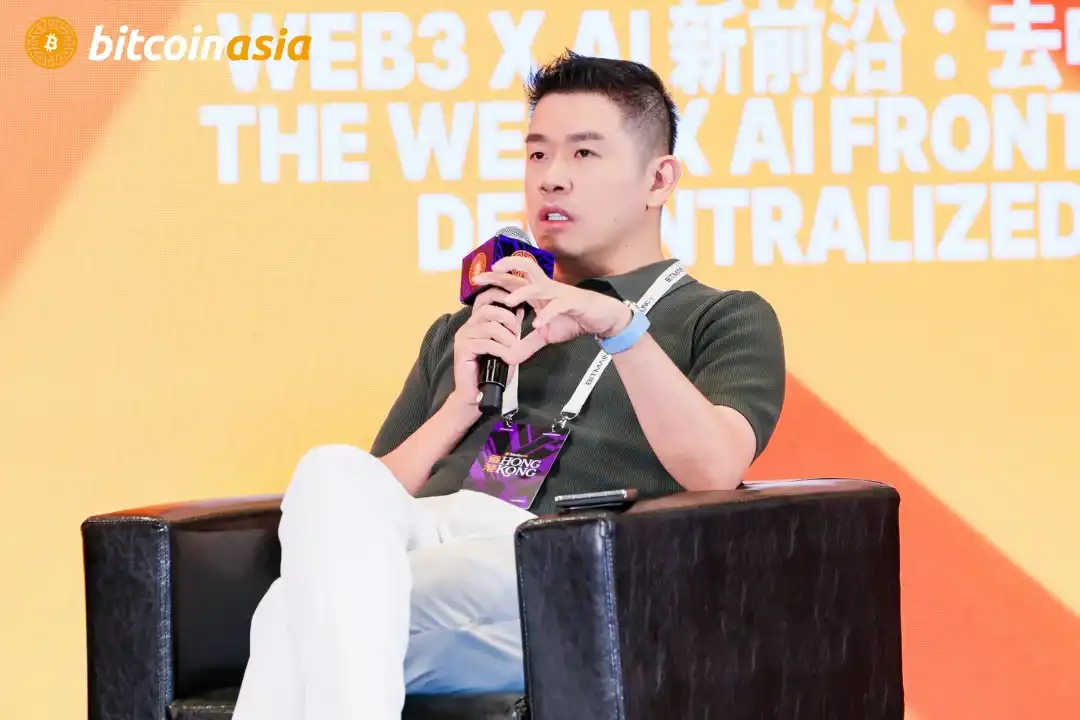
At the "Deep Integration of AI and Crypto" roundtable during the Bitcoin Asia conference, Livio Weng, CEO of Bitfire at New Huo Group, stated that the core narrative for AI and Crypto convergence in the coming years will likely focus on the "agential economy." As infrastructure for AI identity recognition, authorized wallets, and payment protocols matures, AI will progressively gain the ability to autonomously use, manage, and transact assets, deeply integrating with existing crypto sectors like trading, prediction markets, asset management, and payments. Livio believes Real World Assets (RWA) will serve as a crucial bridge connecting carbon-based humans and silicon-based AI. On one hand, RWA can tokenize traditional assets, enabling AI to use and trade assets from human society. On the other hand, "AI assets" such as computing power, data, and AI-generated services can also be made accessible to humans through RWA formats for purchase, analysis, and trading. This process will drive deeper integration between humans and AI. "The next 100 to 200 million new crypto users may not be humans, but AI Agents," Livio suggested, noting that future critical infrastructure and applications might be autonomously generated by AI rather than primarily coded by humans. As AI evolves from an information assistant to a wealth management assistant and further into an autonomous task executor, AI Agents are poised to become significant participants in the Crypto ecosystem. Livio also highlighted that deep AI-Crypto integration requires robust underlying infrastructure, including settlement layers for autonomous machine transactions, identity and authorization layers for AI independent identity and recognition, and incentive/disincentive layers to address fraud and misconduct. Protocols like X402 and EIP-8004 are exploring related applications, but challenges in security, governance, and ethics remain. In practice, New Huo is actively embracing RWA to seize opportunities from AI-Crypto convergence. The group recently launched comprehensive RWA operator services and released Hong Kong's first compliant crypto asset quantitative strategy. By incorporating RWA assets, this strategy aims to offer cross-asset allocation and risk hedging opportunities, helping investors navigate volatility across different asset classes and market cycles. Livio concluded that RWA is not only a vehicle for traditional assets to enter the on-chain world but also potential key infrastructure for AI to participate in the real economy, utilize real-world assets, and provide services to humans. As the machine economy develops, the intersection between AI and Crypto will expand, offering substantial room for innovation and growth.

marsbitHá 40m

Livio, CEO of New Huo Group: RWA Will Become the Bridge Connecting Carbon-Based Humans and Silicon-Based AI, Crypto's Next 100 Million Users to Come from AI Agents

marsbitHá 40m

Successes of Cheburnet: the share of free mobile internet in Central Russia decreased to 30.5%

Russia's "Sovereign Internet" project continues to advance, significantly impacting mobile internet access. In July 2026, only 30.5% of mobile data sessions in Central Russia were unrestricted, with the majority routed through a state-approved "whitelist." This represents a 31% increase in whitelist usage since January. The implementation is geographically uneven: Moscow and St. Petersburg see higher rates of free access (~49% and ~44% respectively), while border regions like Belgorod have seen unrestricted access plummet to around 12%. International forces are also contributing to digital isolation. Major certificate authority GlobalSign began revoking TLS certificates for Russian domains in June to comply with international sanctions, affecting thousands of domains, including those of major corporations like Rosneft. While its market share is small, the move aligns with the trend of separating the Russian internet segment. Domestically, authorities are preparing alternatives to maintain critical services. The government has tasked officials with ensuring the operation of key platforms like healthcare portals and payment systems during internet restrictions. The Ministry of Digital Development promotes a transition to certificates from a Russian National Certification Authority, which are natively supported by domestic browsers but may require manual installation for other devices. An AI analysis raises concerns, comparing the plan to Kazakhstan's failed 2019 attempt to mandate a state root certificate, which was blocked by major browsers as a security threat. This poses a future risk: users may eventually face a choice between foreign browsers potentially incompatible with Russian certificates or domestic software that fully trusts state-issued ones.

cryptonews.ruHá 1h

Successes of Cheburnet: the share of free mobile internet in Central Russia decreased to 30.5%

cryptonews.ruHá 1h

985 Professors Group Ventures into Embodied Intelligence, Raising Over ¥100 Billion in Funding This Year

In 2026, the embodied AI sector in China is witnessing a significant surge in venture capital, with individual funding rounds reaching billions of RMB. A notable trend within this boom is the rise of "academic factions," where university professors are actively founding companies. According to an IT桔子 report, over 70 embodied AI companies have founders who are or were university professors. A stricter definition identifies 18 core "academic" companies, which have collectively raised an estimated 15 billion RMB in the first eight months of 2026. These companies fall into two main categories. The first consists of firms founded by professors from top-tier universities like Tsinghua, Peking, Zhejiang, Shanghai Jiao Tong, and Fudan. Examples include Xingdong Jiyuan (陈建宇, Tsinghua), accelerating evolution (赵明国 team, Tsinghua), Galaxy Universal (王鹤, Peking University), Yunchushenchu (朱秋国, Zhejiang University), Qiongche Intelligence (卢策吾, Shanghai Jiao Tong), and Zhujidongli (张巍, Southern University of Science and Technology). The second category comprises companies incubated directly by research institutes, such as Qiuzhi Technology (from Tsinghua AIR), Delta Intelligence (from BIGAI), Xingyuan Intelligence (from Beijing智源研究院), and Zero to the Power (jointly incubated by Tsinghua). Key observations highlight Tsinghua University's dominant presence, the increasing direct investment from university-affiliated funds into these startups, and the unprecedented involvement of tenured professors. While these academic teams possess deep technical expertise in areas like robotics and control systems, they face the challenge of adapting to commercial imperatives like mass production and supply chain management. This wave represents an evolution in China's academia-to-industry model, shifting from mere patent licensing to professors leading funded ventures with institutional support, potentially accelerating the development of physical AI.

marsbitHá 1h

985 Professors Group Ventures into Embodied Intelligence, Raising Over ¥100 Billion in Funding This Year

marsbitHá 1h

Trading

Spot
活动图片