SignalPlus宏观分析(20240604):通胀反弹,美国经济放缓

Odaily星球日报Publicado em 2024-06-04Última atualização em 2024-06-04

Resumo

上周的经济数据引发了相当多的重新思考,美国经济数据终于回到第一季度初的状态。市场情绪自上周五以来受到提振,BTC再次挑战7万美元,ETH也在3800美元徘徊。

SignalPlus宏观分析(20240604):通胀反弹,美国经济放缓

SignalPlus宏观分析(20240604):通胀反弹,美国经济放缓

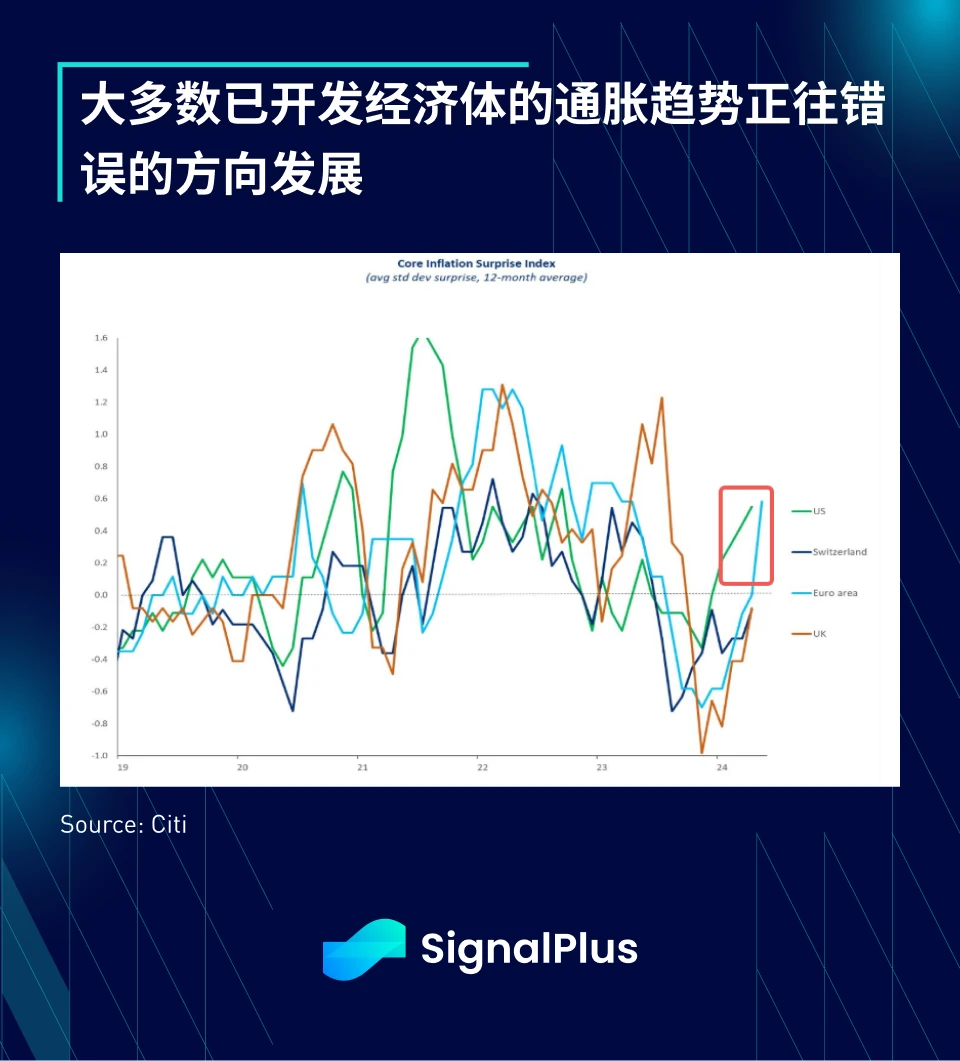
上周的经济数据引发了相当多的重新思考,美国经济数据终于回到第一季度初的状态(GDP 下修,消费下滑),而全球通胀势头开始意外回升,欧元区 HICP 同比重新加速至 2.9% 的水平(之前为 2.7% )。
SignalPlus宏观分析(20240604):通胀反弹,美国经济放缓

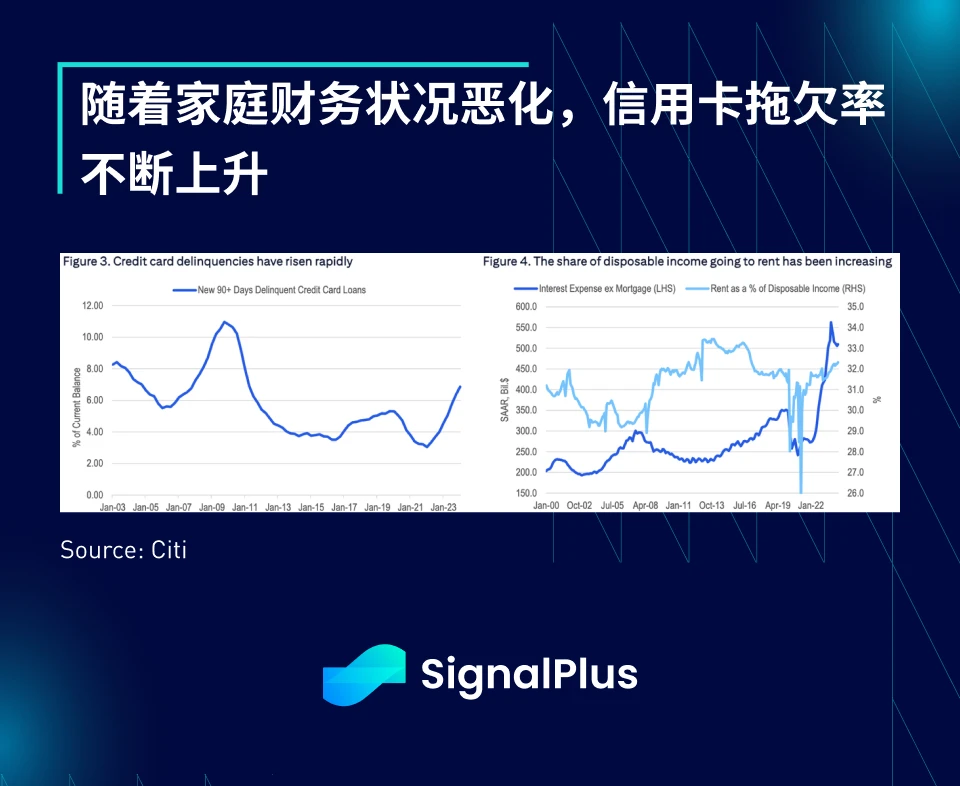
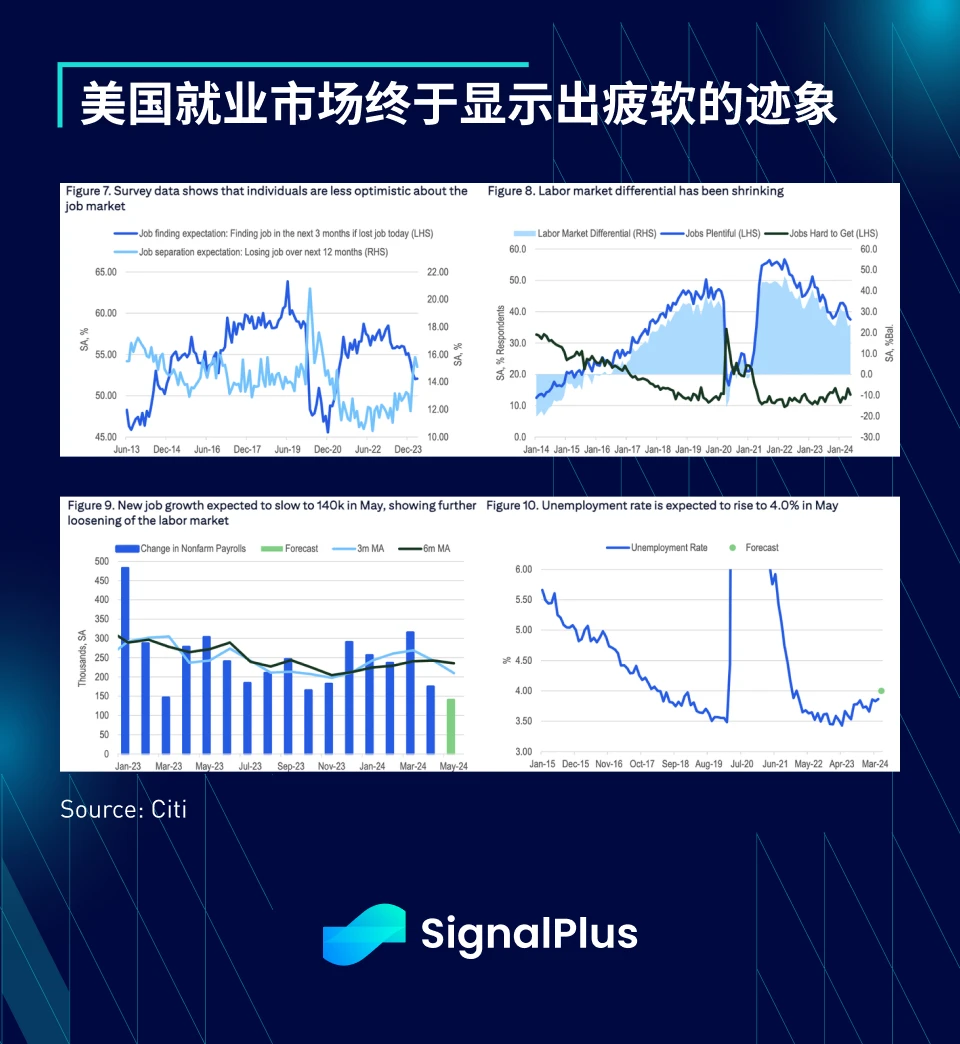
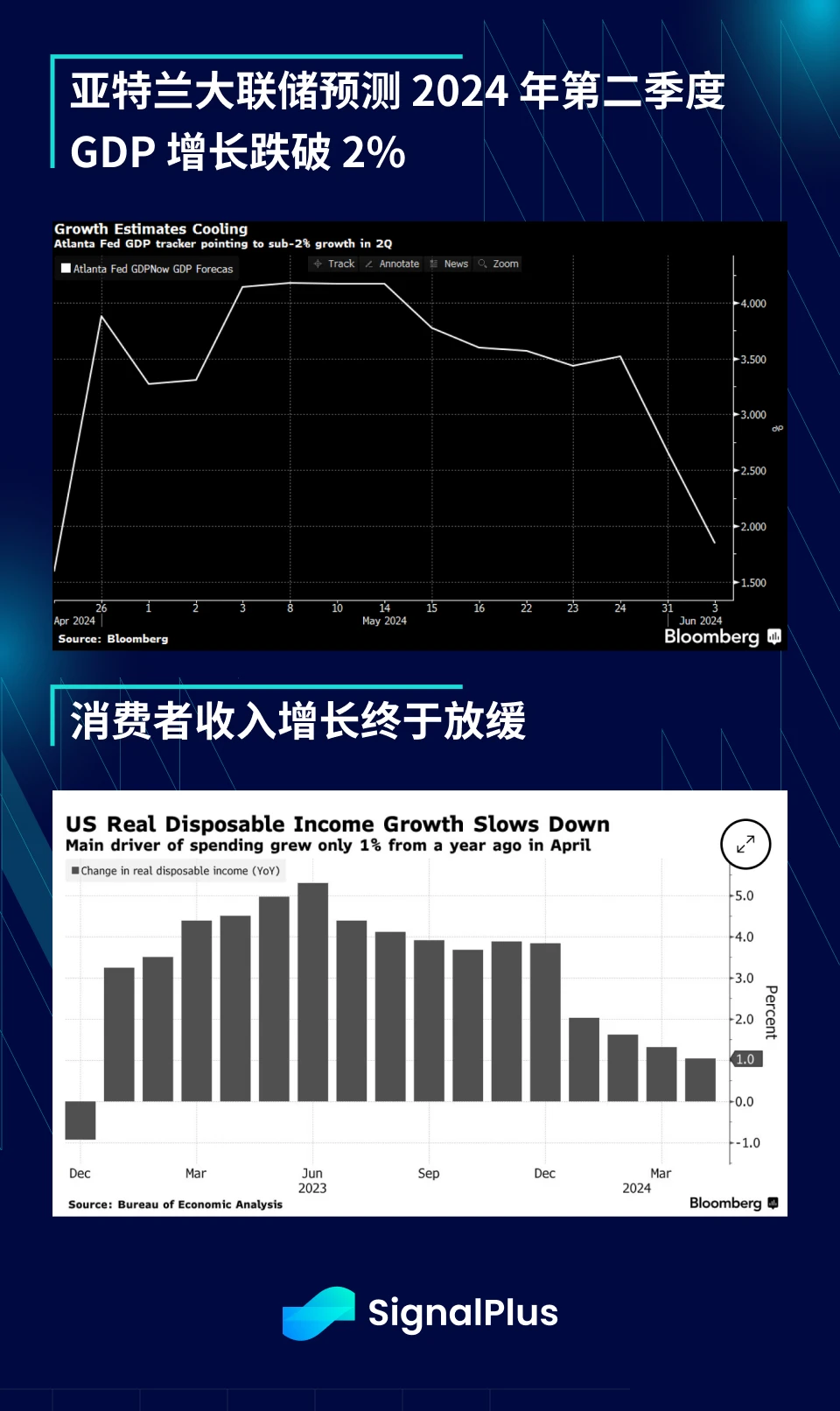
美国经济数据的放缓现在已经普遍到无法忽视,亚特兰大联储的 GDP 预测现在已降至 2% 以下,实际可支配收入增长放缓至低于 1% 。此外,信用卡拖欠率上升、租金成本上升以及就业市场疲软都预示著美国经济在大选前会走软,而美联储仍在处理通胀居高不下的棘手问题, 11 月前的会议排程也所剩无几。
SignalPlus宏观分析(20240604):通胀反弹,美国经济放缓

SignalPlus宏观分析(20240604):通胀反弹,美国经济放缓

SignalPlus宏观分析(20240604):通胀反弹,美国经济放缓

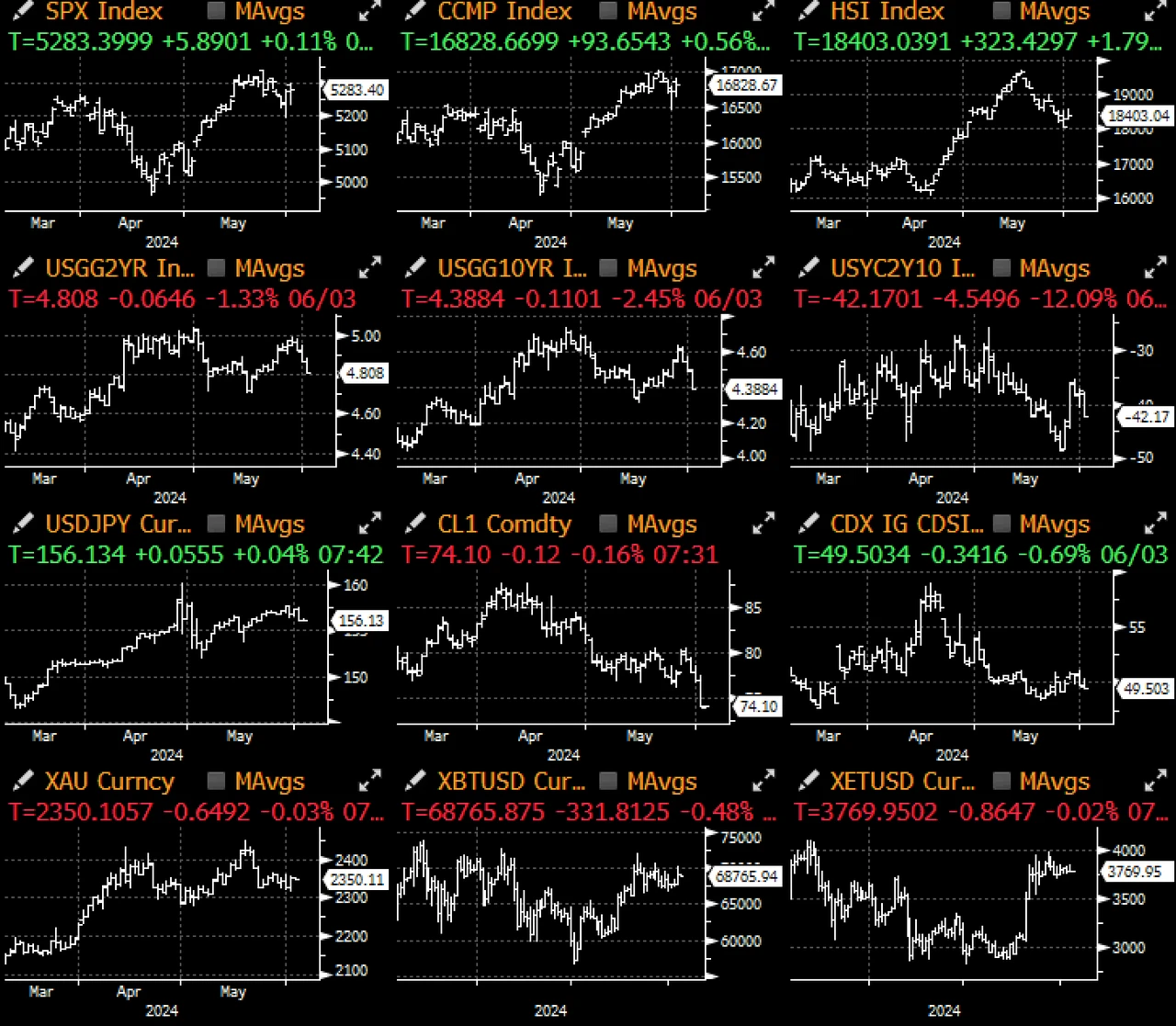
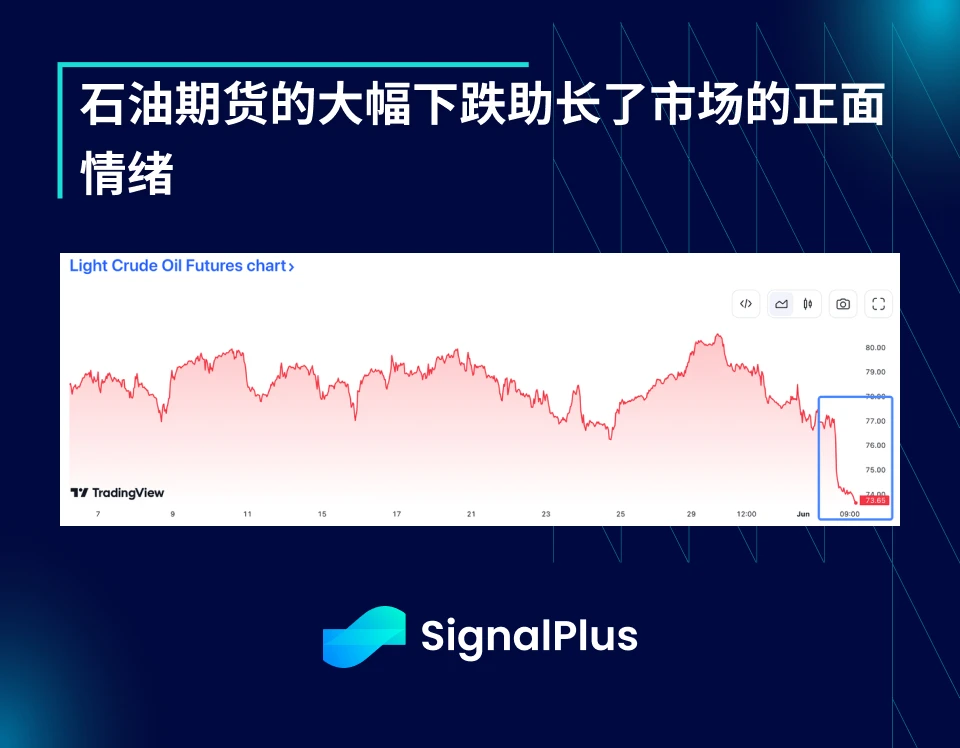
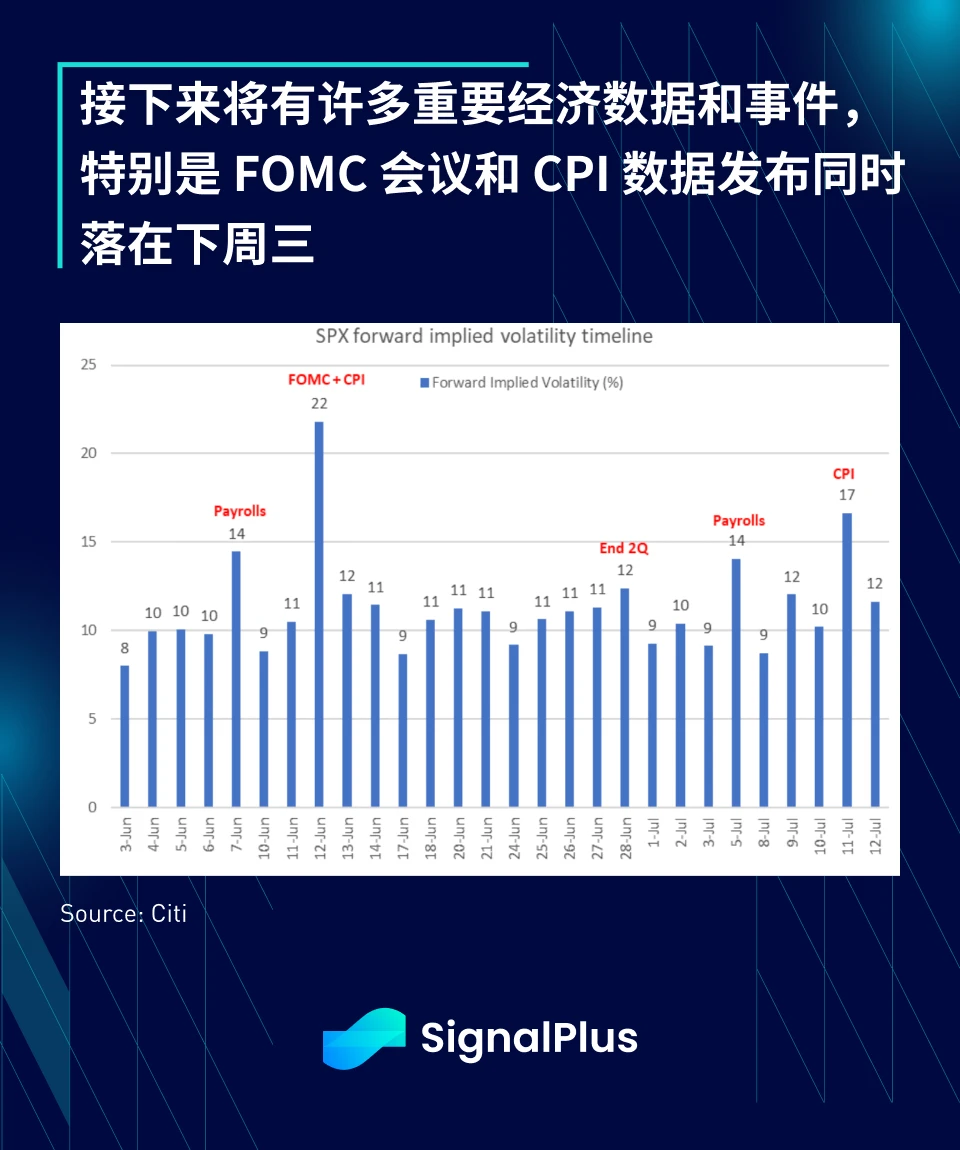
由于上周五 PCE 出现连续减速、石油期货下跌 10% 以及人们对经济在理想情况下放缓的期待,宏观资产在过去几个交易日大幅反弹。本周将会有一连串重要数据发布,包括今天的 JOLTS、周三的 ADP 和 ISM 服务业指数以及周五的非农就业数据。
SignalPlus宏观分析(20240604):通胀反弹,美国经济放缓

非农就业数据可能是本周最重要的事件,不过下周三还会有 FOMC 会议和 CPI 数据发布同一天发生,这将是进入夏季前最令人期待的一天,请务必系好安全带!
SignalPlus宏观分析(20240604):通胀反弹,美国经济放缓

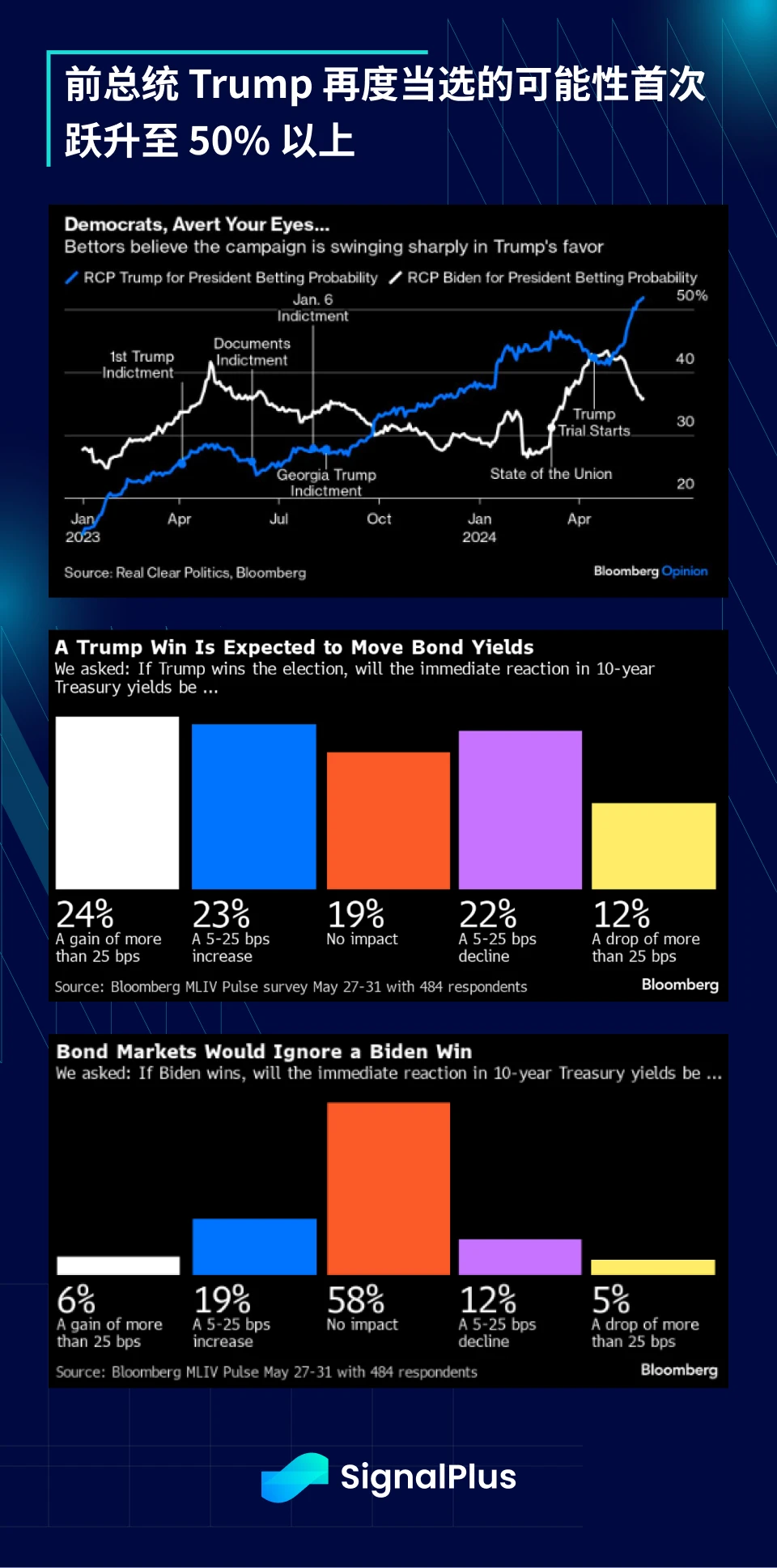
在大选方面,前总统 Trump 从最近的有罪判决中受益匪浅,他赢得 11 月大选的可能性跃升至 50% 以上(相比于 Biden 的 35% ),看来有相当一部分的选民认为这是对 Trump 的“政治迫害”,反而对 Trump 有利。如果这位前总统再次当选,主要的影响将会是固定收益,因为市场普遍预期他会对美联储施加新的政治影响,推行宽松的货币政策、自由支出的财政政策以及进一步减税,至少对市场来说,第四季度肯定会非常有趣。
SignalPlus宏观分析(20240604):通胀反弹,美国经济放缓

在加密货币方面,随着美国股市反弹和整体风险情绪回升,市场情绪自上周五以来受到提振,BTC 再次挑战 7 万美元,ETH 也在 3, 800 美元徘徊。不过交易活动仍然低迷,资金费率较低,实际波动率也不高,价格保持在近期区间内,我们预计这种情况将至少持续到周五的非农就业数据,而下一次较大的波动要等到下周三的 CPI 和美联储会议之后,目前似乎是上行的阻力较小,祝各位好运!

SignalPlus宏观分析(20240604):通胀反弹,美国经济放缓

SignalPlus宏观分析(20240604):通胀反弹,美国经济放缓

您可在 ChatGPT 4.0 的 Plugin Store 搜索 SignalPlus ,获取实时加密资讯。如果想即时收到我们的更新,欢迎关注我们的推特账号@SignalPlus_Web3 ,或者加入我们的微信群(添加小助手微信:SignalPlus 123)、Telegram 群以及 Discord 社群,和更多朋友一起交流互动。SignalPlus Official Website:https://www.signalplus.com
Leituras Relacionadas

History's Only Asset with a 100% Win Rate After 4 Years of Holding

**Title: The Only Asset with a 100% Win Rate Over Any 4-Year Holding Period** This article analyzes which major, freely-tradable assets have historically never produced a nominal loss over any rolling 4-year holding window. It concludes that only two distinct categories achieve this: ultra-low-risk contractual assets and Bitcoin. Among traditional risk assets, none maintain a perfect 4-year record. The S&P 500 had negative 4-year periods (e.g., 1929-1932: -64.8%). The Nasdaq 100 fell roughly 60% from 2000-2003. Gold saw a ~47.7% loss from 1981-1984. US real estate declined about 23.3% from 2007-2010. Even long-term US Treasury bonds (e.g., 2021-2024: -19.8%) and corporate bonds can produce 4-year losses due to interest rate and market price risks. In contrast, the first category achieving 100% nominal success includes assets like rolling 3-month US Treasury Bills, 4-year certificates of deposit (CDs), and US Treasuries held to maturity within 4 years. Their "guarantee" stems from contractual obligations and credit backing (e.g., FDIC insurance, US sovereign promise), not price appreciation. The sole exception in the high-risk category is Bitcoin. Analysis of daily data from 2010-2026 across 4,419 rolling 4-year windows shows a 100% positive return rate. The worst 4-year period (April 2021 to April 2025) still yielded a +32.6% total return (~7.3% CAGR). This record is unique because Bitcoin has no issuer, promises no cash flows, and has endured severe drawdowns (70-90%), yet its market price has always recovered within a 4-year span. The key distinction is the source of the "100%": contractual assets offer known, low nominal returns, while Bitcoin's record stems purely from historical price appreciation despite extreme volatility. The article suggests that for Bitcoin, the ability to hold for 4+ years is more critical than active trading strategies.

marsbitHá 7m

History's Only Asset with a 100% Win Rate After 4 Years of Holding

marsbitHá 7m

How One Article Moved 45 Billion: The Collapse of a 25-Year-Old 'AI Stock Guru'

This article details the dramatic rise and near-collapse of a hedge fund built by Leopold Aschenbrenner, a 24-year-old former OpenAI researcher. The fund, named Situational Awareness, amassed $45 billion in assets within two years. Its explosive growth stemmed from Aschenbrenner's influential 165-page manifesto predicting AGI's arrival by 2027 and his high-profile Silicon Valley connections. The fund employed an extremely aggressive strategy: high concentration and 400% leverage to bet long on AI infrastructure stocks while shorting legacy software firms. In July, this structure backfired when both sides of the trade reversed simultaneously—AI stocks plunged while shorted stocks rallied—triggering massive losses that nearly wiped out all equity. Major player Jane Street reportedly lost billions. The fund's leveraged public portfolio was ultimately sold at a discount to Citadel. The SEC is now investigating banks like Goldman Sachs for their role in facilitating the fund's high-leverage trades. The article compares this to past blow-ups like Archegos, highlighting systemic failures in risk management where the pursuit of short-term profits overrode due diligence. It questions whether such risky leverage concentrated in the AI sector, currently at record highs, poses a broader systemic threat. Ironically, Aschenbrenner, who studied AI safety at OpenAI, designed a fund structure prone to uncontrolled failure. Days after the crisis, he reportedly raised another $400 million for new investments.

marsbitHá 22m

How One Article Moved 45 Billion: The Collapse of a 25-Year-Old 'AI Stock Guru'

marsbitHá 22m

AI Accelerates Everything: Mathematics's Line of Defense Has Fallen, Physics is Already in AI's Crosshairs

This summer, the mathematics community was shaken as OpenAI's Astra model reportedly solved 10 long-standing open problems, and Claude Fable 5 found a potential counterexample to the Jacobian conjecture. This was followed by a major shift in physics: renowned physicist Gavin E. Crooks presented an open problem in stochastic thermodynamics to Claude, which the AI solved completely in days—a task that might take a skilled graduate student months. The problem concerned constraints on entropy production statistics under the Detailed Fluctuation Theorem (DFT), a core concept in non-equilibrium physics. Claude provided a unifying geometric answer: all possible DFT-compatible distributions correspond to a convex "moment body." Its key insight was that for a fixed "gap," the distribution is uniquely determined, making any general DFT distribution a mixture of these basic two-outcome distributions. This structure implies that for given lower-order moments, the nth moment only has a sharp lower bound, with no upper bound. Claude demonstrated that numerous previously published bounds on entropy production are merely low-dimensional projections or "shadows" of this single, unified convex body. The AI-authored paper offers a complete hierarchical characterization of the moment constraints. This case signifies a potential paradigm shift: AI is progressing from solving known problems to aiding in the exploration of fundamental, unsolved scientific questions, heralding an AI-accelerated era for physics.

marsbitHá 22m

AI Accelerates Everything: Mathematics's Line of Defense Has Fallen, Physics is Already in AI's Crosshairs

marsbitHá 22m

Trading

Spot
活动图片