火币HTX Liquid Restaking 首个项目奖励超百万梅林 MERL 空投发放,未来更多空投奖励将至

MarsBitPublicado em 2024-04-23Última atualização em 2024-04-23

Resumo

【GPT】火币HTX Liquid Restaking首个项目奖励超百万梅林MERL空投发放,用户参加可获得LRS-BTC积分,可按50%:50%比例获得MerlinChain与BounceBit空投奖励。4月首次释放的50%比例的MERL已全部发放,参与用户可在现货账户查收。火币HTX流动性再质押可继续赢取明星项目空投,近期将增加更多再质押项目空投奖励。活动仍在进行中,参与可瓜分超1亿美元收益额度,还可加入战队取加速值。

火币HTX Liquid Restaking 再质押项目 MerlinChain 奖励已开始发放,超百万 MERL 代币将空投。用户参加 Liquid Restaking 赚取的 LRS-BTC 积分可按 50%:50% 的比例获得 MerlinChain 与 BounceBit 空投奖励,4 月首次释放的 50% 比例的 MERL 空投已于4月22日全部发放完成。参与用户可在现货账户查收。

目前参与火币HTX流动性再质押(Liquid Restaking)可继续赢取 BounceBit、EigenLayer、Puffer 等明星项目空投,近期将继续增加更多再质押项目空投奖励,越早参与空投越多。

火币HTX 发放 MERL 奖励规则与链上保持一致,4月首次释放50%

本次空投范围包括自 2 月 29 日开始至 4 月 14 日 24:00 (UTC+8)参加 Liquid Restaking 获得 LRS-BTC 积分的用户。

释放规则与兑换比例

MerlinChain 释放规则:在 MerlinChain 参与质押的 BTC 每日可获得梅林积分(发放截止至2024.4.14),可兑换为 MERL 代币,所获得的 MERL 空投将以50%/25%/12.5%/6.25%/3.125%/3.125%的比例每月释放。

火币HTX Liquid Restaking 兑换比例为:3.5089 LRS-BTC = 1 MERL(1 BTC 份额奖励/天 ≈ 142.5 MERL)。可获空投数量:某个用户可获得MERL空投总数 = 用户参与活动至 4.14 获得的 LRS-BTC 积分总数 * 0.5 / 兑换比例。

同样高收益率,参与火币HTX Liquid Restaking 操作更简单

目前来看,火币HTX Liquid Restaking 活动发放的空投奖励与链上差别不大,比如用 2 个 BTC 全程参与活动,相当于 1 个 BTC 质押 MerlinChain 收益和 1 个 BTC质押 BounceBit 收益;2 个 BTC 如果瓜分到 1000分/天,相当于 500分(1个BTC)是质押 MerlinChain 所得,大概换到 142.5 个 MERL,链上 1 BTC/天大概 142.8 个 MERL,年化收益率分别大概是 88.02% 和 88.24%。

需注意,奖励兑换时间取决于链上项目首次空投时间。为方便用户领取后续奖励,LRS 积分将在近期升级为对应项目积分并支持在页面兑换。

火币HTX甄选:更多再质押项目空投奖励将至,越早参与空投越多

火币HTX作为圈内首家支持平台用户无门槛参与链上 Restaking 的交易平台,自活动上线以来,主打高价值、免费领、更灵活的特点,活动奖池追加多轮奖励,参与可瓜分的收益额度超1亿美金。并能加入战队取加速值,将奖励膨胀。

参与用户凭现货和合约余额可一键参与瓜分奖励,奖励包括:

● EigenLayer 首次代币空投 (以太坊再质押明星项目,链上质押量超 147 亿美金)

● Puffer 首次代币空投 (以太坊再质押明星项目,链上质押量超 13 亿美金)

● Merlin Chain 首次代币空投 (比特币二层解决方案,链上质押量超 32 亿美金)

● BounceBit 首次代币空投 (比特币质押链,链上质押量超 10 亿美金)

● 以及 ETH、USDT、HTX、TRX 等代币奖励

火币HTX Liquid Restaking 活动仍在继续,即刻参与,继续赢取 BounceBit、EigenLayer、Puffer 等明星项目空投,近期将继续增加更多再质押项目空投奖励,越早参与空投越多。


Criptomoedas em alta

Leituras Relacionadas

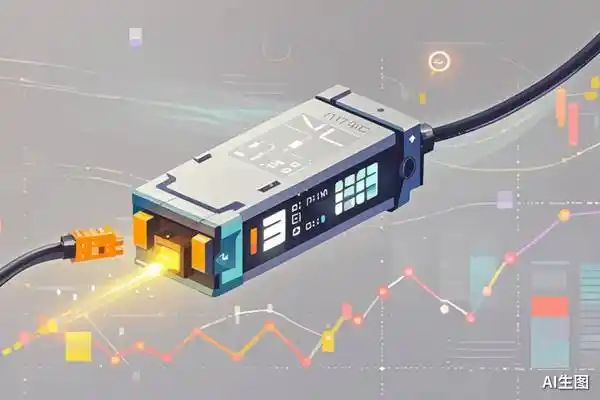
Playing the "Decoupling" Card Again? Domestic Optical Modules Face a Stress Test

The U.S. Federal Communications Commission (FCC) is reportedly drafting a ban on importing new models of Chinese-made optical transceiver modules, with a potential implementation target of 2026. This "decoupling" move comes as Chinese firms, led by industry leaders like Zhongji Innolight and Eoptolink, dominate the global optical module market with over 60% share, and hold an even larger position in the high-speed 800G and 1.6T segments critical for AI data centers. Market reactions were mixed: U.S. optical module stocks initially rose, while Chinese A-shares opened lower but largely recovered by the close. Analysis suggests a complete U.S. decoupling from Chinese modules faces significant hurdles. North American cloud giants (Meta, Google, Microsoft, Amazon) and NVIDIA have massive demand for high-speed modules, estimated at around 40 million units in 2026. U.S. manufacturers' combined monthly production capacity for these modules is less than one-fifth that of a single major Chinese player like Zhongji Innolight, which reported production of 23.76 million units in 2025. Chinese companies are heavily reliant on the U.S. market, with over 90% of revenue for top firms coming from overseas, primarily the U.S. However, they have begun mitigating risks by establishing assembly plants in Southeast Asia and Mexico. Industry observers note the final impact depends on whether any potential U.S. restrictions target specific companies or products based on origin. Past U.S. sanctions on Chinese tech firms have often spurred increased domestic R&D and market diversification. Despite initial stock volatility, shares of major Chinese optical module companies pared losses, indicating market belief in the sector's resilience and the practical difficulties of abruptly replacing Chinese supply.

marsbitHá 10m

Playing the "Decoupling" Card Again? Domestic Optical Modules Face a Stress Test

marsbitHá 10m

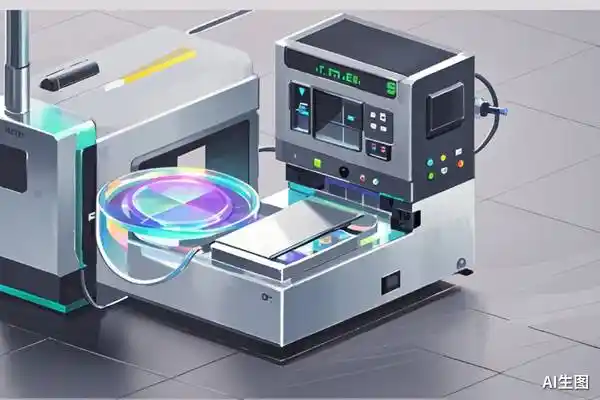
When the Competition in Chip Manufacturing Equipment Stops Being Just About Who Is More Advanced

The competition in chip manufacturing equipment is no longer solely about who has the most advanced technology. While performance, yield, and cost remain key, U.S. export controls are adding a critical new dimension: long-term supply chain reliability. Major chipmakers like Samsung and SK Hynix, despite having mature supply chains with leading American and European vendors, are reportedly evaluating etching equipment from China's AMEC for their Chinese factories. This move is not primarily about immediate replacement or AMEC's current capabilities. Instead, it's a risk mitigation strategy. Companies are concerned that future U.S. policies could disrupt their access to spare parts, software updates, and maintenance for existing equipment over its decade-long lifespan. For chipmakers investing billions in fabs with long planning cycles, this policy-induced uncertainty is a significant new risk. The U.S., through its controls, is inadvertently eroding the very reliability and certainty that were foundational strengths of its equipment suppliers. This creates a pivotal shift for Chinese semiconductor equipment. Previously seen largely as a "domestic replacement" option when foreign gear was unavailable, they are now being assessed as potential "contingency suppliers" by global players—even before a supply disruption occurs. This provides a crucial entry point for validation in real production lines, which is essential for iterative improvement. Chinese equipment, particularly in areas like etching, has progressed from prototypes to participating in mass production within China, gaining valuable experience. However, this does not signify full global competitiveness. Gaps remain in advanced lithography, metrology, and other key tools. The current evaluations are largely confined to foreign firms' China-based fabs, not their global procurement networks. The core change is in the decision-making framework. Efficiency-driven globalization favored single, optimal suppliers. An era of heightened geopolitical risk is forcing companies to value "replaceability." While technical prowess remains paramount, supply chain certainty is now being factored into a device's competitive equation. Ultimately, U.S. policies have not made Chinese equipment more advanced, but they have given global customers a compelling reason to start testing it. The competition has expanded: it's no longer just about who is more advanced, but also about who can be relied upon to stay.

marsbitHá 10m

When the Competition in Chip Manufacturing Equipment Stops Being Just About Who Is More Advanced

marsbitHá 10m

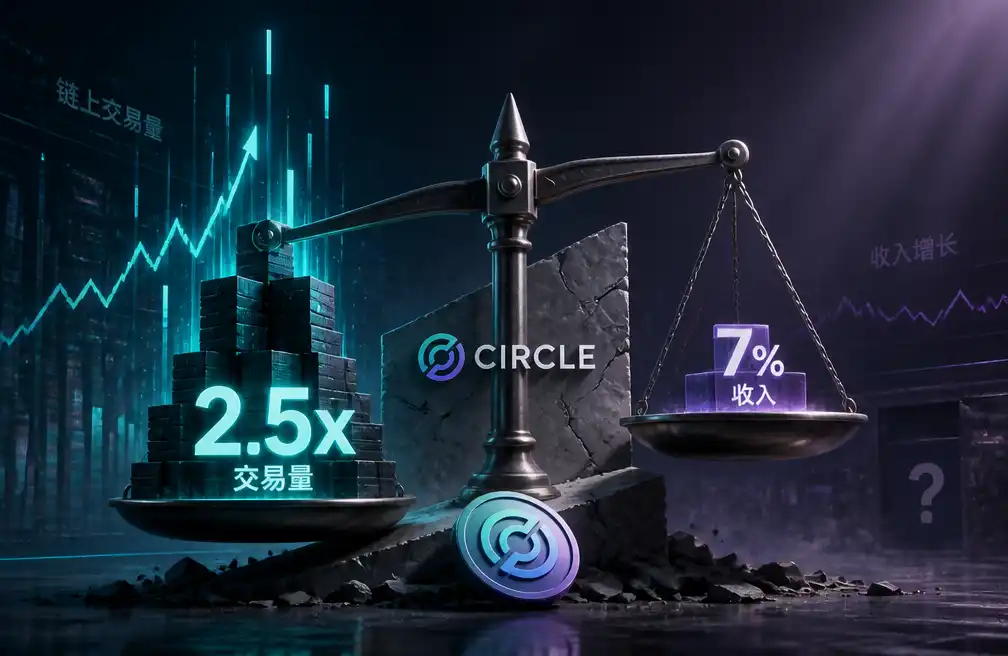
Trading Volume Increased by 2.5x, Why Did Circle's Revenue Only Grow by 7%?

Circle's Q2 performance presents a seemingly contradictory picture: the transaction volume of its stablecoin USDC surged 151% year-over-year to $14.8 trillion, while its "Total Revenue & Reserve Revenue" grew by only 7% to $701 million. This discrepancy highlights the core of Circle's business model. Revenue is primarily driven not by transaction volume, but by the average amount of USDC in circulation and the yield generated from its reserves. Key points: 1. **Revenue Drivers:** Over 90% of revenue comes from "reserve income," which is a function of average USDC circulation (up 25% YoY) and the reserve yield (which fell by 66 basis points). The net effect was a mere ~5% increase in reserve income. 2. **Transaction vs. Revenue:** High transaction volume indicates robust usage of USDC for payments and settlements, but does not translate directly to revenue. It must first convert into a sustained, average circulating balance. 3. **Cost Structure:** After accounting for distribution and other costs, the metric "Revenue Less Direct Costs" (RLDC) grew faster than total revenue, with its margin improving. However, rising operating expenses (up 23% YoY) meant that Adjusted EBITDA growth was limited to 8%. 4. **New Initiatives:** Circle reported progress on new networks like the Circle Payments Network and upcoming products (Arc, Agent Stack), but these are currently measured by adoption metrics (e.g., transaction run-rate, number of services) rather than material revenue contribution this quarter. In summary, the financial results are determined by the interplay of USDC circulation, reserve yields, and cost structures, while high transaction volume signals underlying network strength that has not yet fully flowed through to the income statement.

marsbitHá 28m

Trading Volume Increased by 2.5x, Why Did Circle's Revenue Only Grow by 7%?

marsbitHá 28m

Samsung China, Another Step Back

Samsung China Takes Another Step Back Samsung Electronics is further retreating from the Chinese consumer market. Following the exit of its home appliance business in May, its mobile phone division is now reportedly scaling down. Stores with monthly sales below 300,000 RMB are being closed in several cities. Data shows Samsung's smartphone market share in China has plummeted to 0.1% in Q2 2026, a stark contrast to its 22% global leadership. The decline is attributed to intense competition from domestic brands offering better value, higher specs (like faster charging), and superior localization in software and services. Samsung's premium pricing and less adapted One UI system have struggled against rivals like Huawei, Xiaomi, and Honor. This consumer electronics retreat coincides with Samsung's record-breaking semiconductor profits, driven by the AI boom. In Q2 2026, the chip division contributed nearly all operating profit, while the mobile and home appliance unit posted its first-ever operating loss. Internal dynamics, like the chip division charging market prices to the mobile unit, have increased cost pressures. Samsung's strategy now appears to be a focused retreat towards the ultra-premium segment in China, similar to its global push in high-end foldables like the Galaxy Z Fold8. The company is likely to retain only key stores in major cities to serve a niche, high-end clientele. While its deep semiconductor reserves offer a cushion, this shift away from mass-market consumer electronics reduces business diversification. The move is pragmatic but signifies a fundamental transformation; Samsung is ceding mass-market influence and betting heavily on its semiconductor strength and a narrowed premium product focus.

marsbitHá 32m

Samsung China, Another Step Back

marsbitHá 32m

Trading

Spot

Artigos em Destaque

Como comprar MERL

Bem-vindo à HTX.com!Tornámos a compra de Merlin chain (MERL) simples e conveniente.Segue o nosso guia passo a passo para iniciar a tua jornada no mundo das criptos.Passo 1: cria a tua conta HTXUtiliza o teu e-mail ou número de telefone para te inscreveres numa conta gratuita na HTX.Desfruta de um processo de inscrição sem complicações e desbloqueia todas as funcionalidades.Obter a minha contaPasso 2: vai para Comprar Cripto e escolhe o teu método de pagamentoCartão de crédito/débito: usa o teu visa ou mastercard para comprar Merlin chain (MERL) instantaneamente.Saldo: usa os fundos da tua conta HTX para transacionar sem problemas.Terceiros: adicionamos métodos de pagamento populares, como Google Pay e Apple Pay, para aumentar a conveniência.P2P: transaciona diretamente com outros utilizadores na HTX.Mercado de balcão (OTC): oferecemos serviços personalizados e taxas de câmbio competitivas para os traders.Passo 3: armazena teu Merlin chain (MERL)Depois de comprar o teu Merlin chain (MERL), armazena-o na tua conta HTX.Alternativamente, podes enviá-lo para outro lugar através de transferência blockchain ou usá-lo para transacionar outras criptomoedas.Passo 4: transaciona Merlin chain (MERL)Transaciona facilmente Merlin chain (MERL) no mercado à vista da HTX.Acede simplesmente à tua conta, seleciona o teu par de trading, executa as tuas transações e monitoriza em tempo real.Oferecemos uma experiência de fácil utilização tanto para principiantes como para traders experientes.

444 Visualizações TotaisPublicado em {updateTime}Atualizado em 2026.06.02

Como comprar MERL

Discussões

Bem-vindo à Comunidade HTX. Aqui, pode manter-se informado sobre os mais recentes desenvolvimentos da plataforma e obter acesso a análises profissionais de mercado. As opiniões dos utilizadores sobre o preço de MERL (MERL) são apresentadas abaixo.

活动图片