Taiwanese Crypto Exchange Founder Charged With Money Laundering And Fraud

bitcoinistPublicado em 2024-04-10Última atualização em 2024-04-11

Resumo

David Pan, the founder of the Taiwanese crypto exchange ACE, alongside six other suspects, has been charged by prosecutors with...

David Pan, the founder of the Taiwanese crypto exchange ACE, alongside six other suspects, has been charged by prosecutors with fraud and money laundering. According to the official press release, a court ruled the confiscation of Pan’s assets.

Crypto Fraud Investigation Ends With Indictment And Seizing Of Assets

In January 2024, news broke of one of the largest crypto exchanges in Taiwan being under police investigation for alleged fraud. The investigation unveiled a “well-organized” scheme by ACE exchange founders David Pan and Lin Nam to “deceive” victims into investing in worthless virtual currencies.

The police raided over 15 locations, including ACE headquarters, and arrested 14 individuals, including Pan and Lin, as part of the investigation. Additionally, over NT$200 million, worth $6.4 million, were seized during the raids.

The investigation of the suspected money laundering and fraud of ACE and its investee company, Fu Hai Digital Innovation Company, continued. As a result, the Taichung District Attorney’s Office prosecutors indicted Pan and six other suspects with criminal charges this week.

The defendants are accused of violating the Organized Crime Prevention Ordinance, aggravated fraud, and money laundering. The press release states that 162 victims were affected, and the money lost in the fraud amounts to over NT$340 million, worth around $10.7 million.

The prosecutors asked the Taiwanese court to consider that the “circumstances of the crime are significant, and the malice is grave.” As a result, a judge approved the seizing of property of the seven individuals accused.

Around NT$3.48 million in crypto was seized, alongside NT$ 27.5 million in real estate properties, NT$140,000 in deposits, and NT$485,000 in cash. The total amount seized reaches over NT$31.6 million.

Web of Lies And ACE’s Response

Prosecutors found that the defendants engaged in “offline and over-the-counter transactions of virtual currencies through the ‘Alfred Wallet’ App.”

According to the press release, Fu Hai created the Alfred Wallet and offered the A+Card, which was used for fraud. The virtual currency stored-value cards were sold in cooperation with fake investment online groups that promoted them.

With the help of social media groups, the fraudsters promoted and hyped investing in virtual currencies, as crypto “could yield considerable returns.” Moreover, they promoted the purchase of TIDE tokens from specific dealers.

Per the investigation, the accused took advantage of the broad belief that physical stores are more trustworthy. As a result, they urged the victims to purchase their tokens at local stores authorized to operate Fu Hai’s Alfred Wallet.

Personnel in the store would aid the victims in using the A+Card to store their tokens in the Alfred Wallet. However, the defendants used the “operation mode” of the app to manage the wallets. Using this method, the “transfer of currency flows could not be publicly queried in the blockchain ledger.”

Subsequently, the system was used to manipulate the addresses of users’ wallets and control the funds from the backend. When victims tried withdrawing their funds, the members of the fraudulent group would find excuses like “wrong orders” and “account problems” or refuse to give reasons.

Following the indictment, ACE published a statement distancing itself from its founder. The crypto exchange clarified that the Alfred Wallet was not an ACE product, as it “was developed by a third party commissioned by the former director Pan.”

Finally, the exchange reassured users that its trading and operating conditions were normal, guaranteeing the safety of its users’ assets.
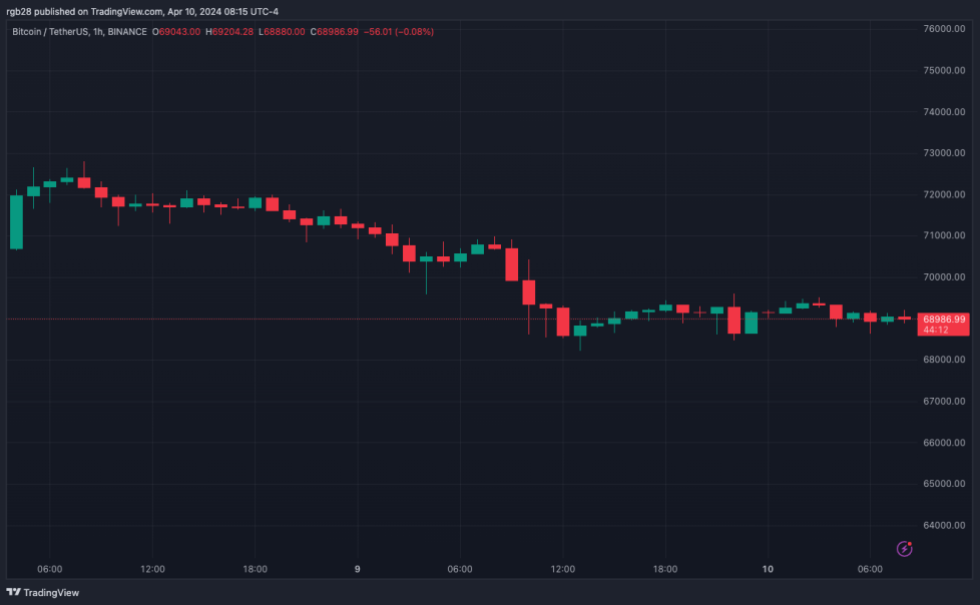
BTC, BTCUSDT, Bitcoin , Crypto

Bitcoin price performance in the 1-day chart. Source: BTCUSDT on Tradingview
Featured Image from Unsplash.com, Chart from TradingView.com
Rubmar Garcia

Rubmar Garcia

Rubmar is a crypto enthusiast who likes learning and improving constantly. She enjoys reporting on the latest news and developments in the crypto industry. Rubmar also enjoys scrapbooking, crafting, simulation games, and watching football.

Leituras Relacionadas

Uncovering the Truth About Agent Commerce, Payments, and Infrastructure

Decoding Agent Commerce, Payments, and Infrastructure: The Reality Over the past year, I've been building infrastructure for the Agent economy, engaging with major players like Stripe, Visa, Coinbase, Google, and dozens of startups. A clear conclusion emerges: true, large-scale demand does not yet exist. Startups face structural challenges. Data points illustrate this gap. Stripe's Agent commerce platform has over 1,000 merchants but only single-digit transacting agents. Visa's Agent payment token requires 9-month KYC and a $250M revenue threshold, accessible only to giants like Amazon. On-chain analysis reveals actual daily Agent transaction volume is around $17k, half of which are test transactions. The article analyzes four potential markets: **1. Agent-to-Merchant (A2M):** Current AI shopping UX is often inferior to traditional e-commerce for visual, comparison-heavy purchases (clothing, electronics). Chat interfaces are a step back. Real merchant interest is defensive "Agent Engine Optimization," fearing future obsolescence, not current demand. Potential exists in high-frequency, low-decision purchases (e.g., food delivery) or simplifying terrible UX (complex checkouts, non-native shoppers), but these require massive consumer distribution channels dominated by giants like DoorDash and Amazon. **2. Agent-to-API (A2A):** Developers already have subscriptions and billing for core APIs (compute, data). The argument for micro-payments via crypto for sub-dollar API calls is addressed by pre-paid balances today. The deeper issue is supplier resistance; major SaaS firms rely on enterprise contracts, not fractional cent pricing. Opportunity lies in the long tail of niche services, but this is a smaller market catering to developers, a historically low-paying group. **3. Agent-to-Agent (A2A):** This remains a theoretical long-term vision with near-zero current transaction volume. It involves unique challenges: discovery, trust, negotiation, dispute resolution. When it materializes, it will require a fundamentally new settlement infrastructure for high-speed, variable-value, multi-party transactions. It's a real long-term bet, but not the current market. **4. Agent-to-Finance (A2F):** This is the only category with existing, paying demand. Integrating AI into financial workflows (trading, portfolio management) is a natural evolution and enables new capabilities like autonomous rebalancing. However, competition favors incumbents with regulatory licenses, compliance infrastructure, and existing client relationships. **The Real Issue:** Why is infrastructure still being built? Incumbents can afford long-term bets, and payment companies see every problem as a nail for their payment hammer. However, payment is just one piece. The core challenge is *coordination*—orchestrating work between Agents and humans, verifying outcomes, and settling results. Payment is part of settlement, which is part of coordination. Companies that solve the coordination problem will subsume payments, not the other way around. Startups lack the infinite runway of giants and must find today's real market, which, after a year of exploration, lies outside these four categories—in an area with real, growing, and underserved activity.

marsbitHá 6h

Uncovering the Truth About Agent Commerce, Payments, and Infrastructure

marsbitHá 6h

Trading

Spot
Futuros

Artigos em Destaque

Como comprar ACE

Bem-vindo à HTX.com!Tornámos a compra de Fusionist (ACE) simples e conveniente.Segue o nosso guia passo a passo para iniciar a tua jornada no mundo das criptos.Passo 1: cria a tua conta HTXUtiliza o teu e-mail ou número de telefone para te inscreveres numa conta gratuita na HTX.Desfruta de um processo de inscrição sem complicações e desbloqueia todas as funcionalidades.Obter a minha contaPasso 2: vai para Comprar Cripto e escolhe o teu método de pagamentoCartão de crédito/débito: usa o teu visa ou mastercard para comprar Fusionist (ACE) instantaneamente.Saldo: usa os fundos da tua conta HTX para transacionar sem problemas.Terceiros: adicionamos métodos de pagamento populares, como Google Pay e Apple Pay, para aumentar a conveniência.P2P: transaciona diretamente com outros utilizadores na HTX.Mercado de balcão (OTC): oferecemos serviços personalizados e taxas de câmbio competitivas para os traders.Passo 3: armazena teu Fusionist (ACE)Depois de comprar o teu Fusionist (ACE), armazena-o na tua conta HTX.Alternativamente, podes enviá-lo para outro lugar através de transferência blockchain ou usá-lo para transacionar outras criptomoedas.Passo 4: transaciona Fusionist (ACE)Transaciona facilmente Fusionist (ACE) no mercado à vista da HTX.Acede simplesmente à tua conta, seleciona o teu par de trading, executa as tuas transações e monitoriza em tempo real.Oferecemos uma experiência de fácil utilização tanto para principiantes como para traders experientes.

108 Visualizações TotaisPublicado em {updateTime}Atualizado em 2026.06.02

Como comprar ACE

Discussões

Bem-vindo à Comunidade HTX. Aqui, pode manter-se informado sobre os mais recentes desenvolvimentos da plataforma e obter acesso a análises profissionais de mercado. As opiniões dos utilizadores sobre o preço de ACE (ACE) são apresentadas abaixo.

活动图片














