SushiSwap: $40 Million Restructuring Proposal Sparks Community Outrage

cryptodailyPublicado em 2024-04-09Última atualização em 2024-04-10

Table of Contents

SushiSwap: $40 Million Restructuring Proposal Sparks Community Outrage

SushiSwap has voted on the so-called "Labs model" aimed at enhancing development speed and efficiency. Voting on the proposal, which began on April 3, concluded today with more than 62% voting "Yay" for restructuring SushiSwap's DAO and treasury.

However, the proposal unveiled on March 26 by the SushiSwap team has ignited a fierce debate within the community, flagging issues such as lack of transparency, power centralization, and unfair allocation of project resources. Crucially, the ability of the 'ruling party' to hold such an outsized share of the vote raised serious concerns about the viability of decentralization voting.

Sushi Labs vs Sushi DAO

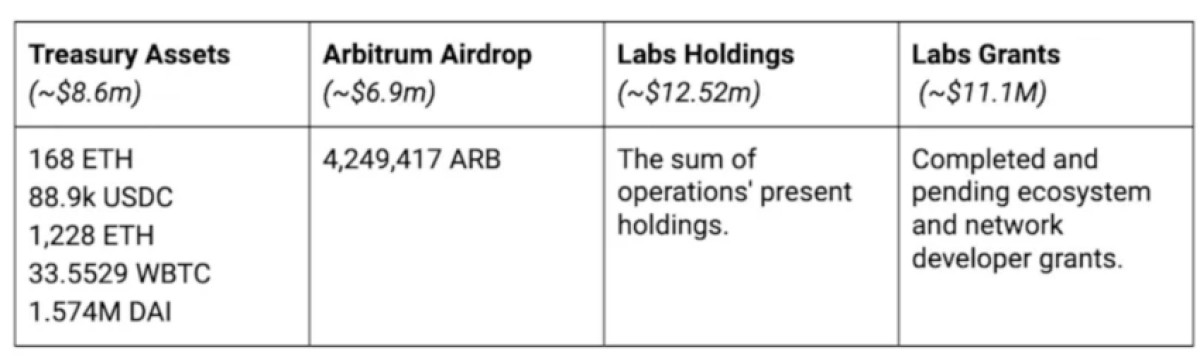
The proposal suggests creating "Sushi Labs" as a new entity with significant autonomy over project development and daily operations. This separate body would be granted a hefty financial package – a whopping 25 million SUSHI tokens, valued at roughly $38.5 million based on current market prices. Sushi Labs would receive a treasure trove of assets from the Sushi DAO treasury:

“We request that Sushi DAO award a grant of 25 million Sushi tokens to Sushi Labs, including assets from the Arbitrum airdrop, business development, and partner grants, Kanpai 2.0, Sushi 2.0, rewards, stablecoins, and ‘Sushi House’each address holdsfunds."
SushiSwap: $40 Million Restructuring Proposal Sparks Community Outrage
Deployment of Treasury Assets for Sushi Labs - source: SushiSwap

Titled "Evolving Sushi - Burū no Shinka [Signal]", the full text outlined a significant restructuring of the decentralized exchange (DEX)'s decentralized autonomous organization (DAO) and treasury.

This is not SushiSwap's first foray into utilizing treasury funds for ecosystem growth. In February 2023, the DEX launched Sushi Studios, a decentralized incubator that provides resources like funding and technical expertise to external developers and independently-funded projects. The DEX said the new platform aims to foster innovation without directly tapping into the DAO treasury. SushiSwap has not released any information on Sushi Studios since the launch. The community discussion thread was archived on March 6. It is uncertain whether the Sushi Studios framework is even still active.

SushiSwap's meteoric rise in August 2020 was almost immediately followed by controversy. The project's anonymous founder and former CEO, Chef Nomi, attempted to abruptly withdraw a large amount of SUSHI tokens, sparking fears of a "rug pull" and leading to a loss of community trust. Though Chef Nomi ultimately returned the funds, the incident eroded trust within the SushiSwap community from the get-go and cast a long shadow over the project's leadership and commitment to transparency.

Community members worry about Sushi Labs' potential power grab and argue that such a structure directly contradicts SushiSwap's core principle of decentralization. An opponent, identified as sushicitizens.eth, pledged a significant amount of SUSHI tokens (4.4 million or around $8 million at the time) against the proposal. Other members pointed out that the DEX neglected to announce the proposal on social media upon release.

The DAO Voting

The proposal utilized a Snapshot vote, a common method used in decentralized governance to determine voting power based on a specific point in time.

💡
Snapshot is a voting platform that allows DAOs and DeFi protocols to cast their votes without gas fees. Instead of voting by 'calling' on-chain smart contracts, in Snapshot users only need to connect their wallet to Snapshot's website and it will allow a vote to be cast on any open proposals on the site.

In the case of SushiSwap's proposal, a snapshot was taken to capture the SUSHI token holdings of all wallet addresses at a predefined time. The number of SUSHI tokens each address holds determines their voting power in the proposal.

The main issue is that the SushiSwap governance team (sushigov.eth) was top of the voting board, with 5.5 million SUSHI tokens cast in favor of the proposal. The ability to wield a large block of votes (about 73% for SushiSwap) swayed the vote and contradicted the DEX's ethos: decentralization.

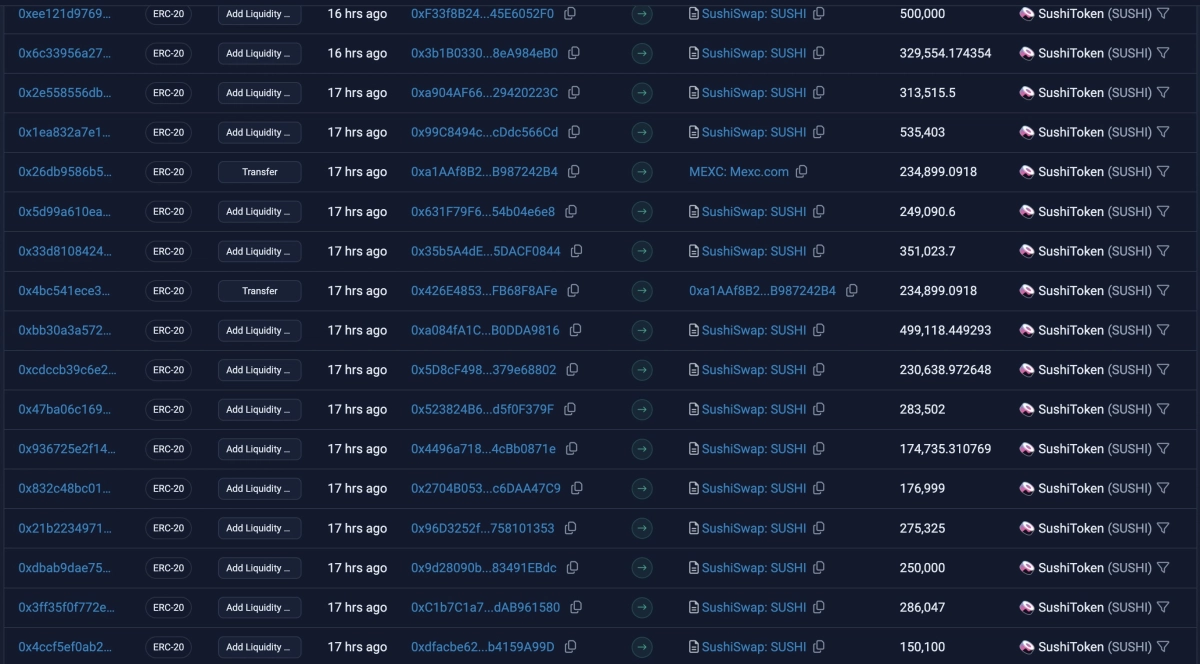
On April 3, a vocal opponent to the proposal, Naïm Boubziz, noted on X that suspicious transactions could be seen in the lead-up to the Snapshot vote. He pointed to instances where new wallets seemingly added liquidity to SUSHI pools just before the Snapshot date, potentially inflating their voting power. These same wallets withdrew liquidity shortly after the snapshot.
SushiSwap: $40 Million Restructuring Proposal Sparks Community Outrage
Transactions preceding the Snapshot vote - source: twitter.com

Community members also pointed out that 4 million SUSHI tokens, representing a substantial portion of the 5.5 million currently supporting the proposal, originated from the DEX's multisig wallet. This concentration of voting power raises questions about SushiSwap's transparency and potential conflicts of interest.

#Sushsiwap : Lol .

Sushiswap voted for themselves with the Ops multisig wallet.

Does this seem clearer to you now? https://t.co/NHtOQOXtt9 pic.twitter.com/OlDPSJ0BfN

— Naïm Boubziz (@BrutalTrade) April 8, 2024

Boubziz's accusations of potential manipulation surrounding the Snapshot vote have significantly escalated tensions within the SushiSwap community. While the exact intent behind the observed liquidity activity remains unclear without a formal investigation, these allegations raise serious questions about the fairness and integrity of the entire voting process.

In an April 8 post, the Sushi's CEO, also known as "Head Chef," confirmed that he had asked the Sushi team to vote using the OPs multisig wallet "due to the threat of a hostile takeover." Grey said that "Humpy," a SUSHI whale, has been pushing for "an extortive governance attack attempt" for almost half a year.

While Jared Grey cites the potential threat of a hostile takeover by a community member to justify the Sushi team's vote using the multisig wallet, this action raises a critical question: Doesn't this undermine the very foundation of a DAO?

DAOs are built on the principle of distributed power and community-driven decision-making. By centralizing a significant voting block in the hands of the Sushi team, Grey's decisions contradict the ethos of decentralization that SushiSwap claims to uphold. Overall, this incident highlights the ongoing tension between ensuring decentralized governance and safeguarding against potential attacks on projects through their DAOs.

Disclaimer: This article is provided for informational purposes only. It is not offered or intended to be used as legal, tax, investment, financial, or other advice.

Read on Observers Investment Disclaimer

Leituras Relacionadas

Uncovering the Truth About Agent Commerce, Payments, and Infrastructure

Decoding Agent Commerce, Payments, and Infrastructure: The Reality Over the past year, I've been building infrastructure for the Agent economy, engaging with major players like Stripe, Visa, Coinbase, Google, and dozens of startups. A clear conclusion emerges: true, large-scale demand does not yet exist. Startups face structural challenges. Data points illustrate this gap. Stripe's Agent commerce platform has over 1,000 merchants but only single-digit transacting agents. Visa's Agent payment token requires 9-month KYC and a $250M revenue threshold, accessible only to giants like Amazon. On-chain analysis reveals actual daily Agent transaction volume is around $17k, half of which are test transactions. The article analyzes four potential markets: **1. Agent-to-Merchant (A2M):** Current AI shopping UX is often inferior to traditional e-commerce for visual, comparison-heavy purchases (clothing, electronics). Chat interfaces are a step back. Real merchant interest is defensive "Agent Engine Optimization," fearing future obsolescence, not current demand. Potential exists in high-frequency, low-decision purchases (e.g., food delivery) or simplifying terrible UX (complex checkouts, non-native shoppers), but these require massive consumer distribution channels dominated by giants like DoorDash and Amazon. **2. Agent-to-API (A2A):** Developers already have subscriptions and billing for core APIs (compute, data). The argument for micro-payments via crypto for sub-dollar API calls is addressed by pre-paid balances today. The deeper issue is supplier resistance; major SaaS firms rely on enterprise contracts, not fractional cent pricing. Opportunity lies in the long tail of niche services, but this is a smaller market catering to developers, a historically low-paying group. **3. Agent-to-Agent (A2A):** This remains a theoretical long-term vision with near-zero current transaction volume. It involves unique challenges: discovery, trust, negotiation, dispute resolution. When it materializes, it will require a fundamentally new settlement infrastructure for high-speed, variable-value, multi-party transactions. It's a real long-term bet, but not the current market. **4. Agent-to-Finance (A2F):** This is the only category with existing, paying demand. Integrating AI into financial workflows (trading, portfolio management) is a natural evolution and enables new capabilities like autonomous rebalancing. However, competition favors incumbents with regulatory licenses, compliance infrastructure, and existing client relationships. **The Real Issue:** Why is infrastructure still being built? Incumbents can afford long-term bets, and payment companies see every problem as a nail for their payment hammer. However, payment is just one piece. The core challenge is *coordination*—orchestrating work between Agents and humans, verifying outcomes, and settling results. Payment is part of settlement, which is part of coordination. Companies that solve the coordination problem will subsume payments, not the other way around. Startups lack the infinite runway of giants and must find today's real market, which, after a year of exploration, lies outside these four categories—in an area with real, growing, and underserved activity.

marsbitHá 1h

Uncovering the Truth About Agent Commerce, Payments, and Infrastructure

marsbitHá 1h

Kalshi, MTS, and a16z's Ambition

The article "Kalshi, MTS, and a16z's Ambition" explores prediction markets as a focal point of excitement in 2025 for investors, crypto enthusiasts, and media. It traces their intellectual lineage from Friedrich Hayek's ideas on dispersed knowledge and market coordination to Robin Hanson's Logarithmic Market Scoring Rule (LMSR), which incentivizes truthful information sharing. The piece argues that a16z's significant investment in prediction market platform Kalshi (valued at $220B) transcends mere financial speculation. a16z frames prediction markets as a new form of "media" that provides "presence"—a way for individuals to actively engage with and influence world events through financial stakes, countering postmodern detachment. By wagering on outcomes, users become "super observers," and the market's aggregated probabilities gain authoritative power to define event truth and importance. The article uses media company MTS ("Monitoring The Situation") as a case study of a16z's "new media" strategy: rapidly producing high-intensity, multi-format content to "take over the timeline." However, prediction markets like Kalshi are presented as the ultimate piece in this media empire. Their real-money, crowd-sourced probabilities possess a unique "reality distortion field" and perceived objectivity, potentially swaying public opinion and granting a private company unprecedented interpretive power over reality. Ultimately, Kalshi's immense valuation is attributed not just to its exchange model, but to its role as a foundational component in a16z's envisioned new media landscape, where prediction markets define narrative and truth.

链捕手Há 1h

Kalshi, MTS, and a16z's Ambition

链捕手Há 1h

Trading

Spot
Futuros

Artigos em Destaque

Como comprar SUSHI

Bem-vindo à HTX.com!Tornámos a compra de Sushi (SUSHI) simples e conveniente.Segue o nosso guia passo a passo para iniciar a tua jornada no mundo das criptos.Passo 1: cria a tua conta HTXUtiliza o teu e-mail ou número de telefone para te inscreveres numa conta gratuita na HTX.Desfruta de um processo de inscrição sem complicações e desbloqueia todas as funcionalidades.Obter a minha contaPasso 2: vai para Comprar Cripto e escolhe o teu método de pagamentoCartão de crédito/débito: usa o teu visa ou mastercard para comprar Sushi (SUSHI) instantaneamente.Saldo: usa os fundos da tua conta HTX para transacionar sem problemas.Terceiros: adicionamos métodos de pagamento populares, como Google Pay e Apple Pay, para aumentar a conveniência.P2P: transaciona diretamente com outros utilizadores na HTX.Mercado de balcão (OTC): oferecemos serviços personalizados e taxas de câmbio competitivas para os traders.Passo 3: armazena teu Sushi (SUSHI)Depois de comprar o teu Sushi (SUSHI), armazena-o na tua conta HTX.Alternativamente, podes enviá-lo para outro lugar através de transferência blockchain ou usá-lo para transacionar outras criptomoedas.Passo 4: transaciona Sushi (SUSHI)Transaciona facilmente Sushi (SUSHI) no mercado à vista da HTX.Acede simplesmente à tua conta, seleciona o teu par de trading, executa as tuas transações e monitoriza em tempo real.Oferecemos uma experiência de fácil utilização tanto para principiantes como para traders experientes.

134 Visualizações TotaisPublicado em {updateTime}Atualizado em 2026.06.02

Como comprar SUSHI

Discussões

Bem-vindo à Comunidade HTX. Aqui, pode manter-se informado sobre os mais recentes desenvolvimentos da plataforma e obter acesso a análises profissionais de mercado. As opiniões dos utilizadores sobre o preço de SUSHI (SUSHI) são apresentadas abaixo.

活动图片












