CoinDeskPolicyPublicado em 2024-04-08Última atualização em 2024-04-09

Resumo

In South Korea’s election, voters casting their ballot based on crypto policies could be decisive given the predictions of a tight election.

  • South Koreans will vote on April 10 having considered crypto-related poll promises that the two main parties have made.
  • The role of crypto may have become even more significant in this election than the previous one.

In March 2022, former prosecutor Yoon Suk Yeol won the South Korean Presidential election by a margin of less than 1%, or 247,077 votes. It was the closest presidential election in the nation’s history.

Just about two months later, the Terra stablecoin crash wiped away some $60 billion globally, with some 280,000 South Koreans reported to have been victims.

There are more than 280,000 crypto investors in the nation – South Korean prosecutors said there were 6.27 million crypto users in September 2023.

Advertisement
Advertisement

If even 247,078 of these voters had cast their ballot only based on the crypto policies of candidates, the numbers suggest, the election result could have turned out differently. South Korea is one day away from an important election in which crypto has certainly been an issue. The role of crypto may have become even more significant in this election than the previous one.

Young people could play a decisive role, analysts say, in a nation of about 52 million people. The crypto ecosystem of which young people make up a majority, has gone through a frenzy, shaking off and emerging from the shadow of Do Kwon and Terra, but crypto-related political promises may have acted as dopamine to activate voters from the sector.

2024 Legislative Election

On April 10, 2024, the nation is heading into its legislative polls which will see multiple parties and coalitions battle it out for 300 seats in the national assembly. It’s expected to come down to two parties – President Yoon Suk Yeol’s conservative People Power Party (PPP) will be seeking to improve its tally of 114 seats, while the liberal Democratic Party of Korea (DPK) will hope to consolidate its 156-seat hold on the assembly.

Advertisement
Advertisement

South Korea’s legislative elections take place every four years. In 2020, the liberal party (DPK) won the election with ease. Thus, crypto, which was not as prominent as it is today, likely had a minimum impact.

But in this election, political analysts said it will be difficult for either party to get a majority, making any group of voters significant. “I would think so,” said the Seoul-based Head of Legal at Hashed Jin Kang when asked whether crypto could be a deciding factor in the coming election. "In the close presidential election of 2022, a key deciding demographic was the young population in their 20s and 30s. Both parties will be interested in capturing these younger votes." Perhaps what is unclear is whether the crypto-savvy voters will vote as one block.

“A close election is a given,” said Abel Seow, the Seoul-based BitGo Asia-Pacific director. “But it’s hard to say whether crypto will be a deciding factor. What I can say is that with the passage of time and each cycle, the market has become bigger and bigger. Not only the involvement of investors but also traditional corporations. So, at some stage when these traditional corporations come in, and they have a crypto angle, elections could be impacted by the space.”

Crypto-related political promises

In the presidential election of 2022, President Yoon Suk-Yeol pledged to restrict taxes for crypto gains and allow initial coin offerings (ICO).

Advertisement
Advertisement

It is unclear whether his crypto-pledges were decisive in helping him win the historically close election. In the end, he couldn’t live up to the promise of allowing ICOs, and – with bipartisan support in the assembly – the taxes were deferred if not restricted.

But the potential for crypto election influence does explain why both the major parties in South Korea are making new crypto-related pledges in the lead-up to this election.

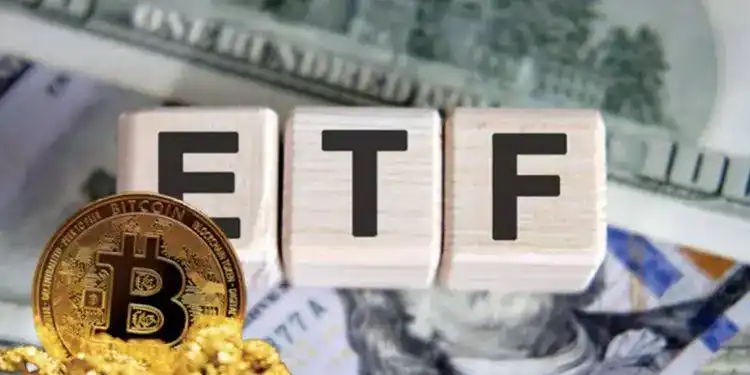
The opposing Democratic Party (DPK) has promised to allow investors to purchase spot bitcoin (BTC) exchange-traded funds (ETFs), while the PPP has said it’s also looking for ways to allow the ETFs.

The slight difference in the promises comes from their political outlook on pending crypto taxation policies.

The PPP has said it would prioritize a regulatory framework before taxation, effectively delaying a crypto gains tax scheduled to be implemented in January 2025.

Taxation on income from virtual assets, as well as income from the “transfer or lending of virtual assets,” was initially delayed from 2023 to 2025. The DPK is expected to propose a comprehensive framework too, and wants to maintain the start of crypto-taxation in 2025. But it wants to put the 22% tax on crypto asset gains exceeding 50 million Korean won ($37,316) instead of the currently proposed 2.5 million Korean won ($1,865).

Advertisement
Advertisement

The PPP has also promised to establish a ‘digital asset promotion committee’ to propose laws and impose sanctions.

“When it comes to taxes, both parties are giving a reason for a crypto-savvy person to vote for them, and the same goes for ETFs,” Seow said. “The fact that the topic of digital assets and whether or not to proceed with a spot bitcoin ETF during an election is a reflection of how the digital asset market has grown and the importance of it to the Korean economy, including to that of institutional investors.”

Crypto-friendly policies for institutions in South Korea may still be a long way off, because in this year of elections, known as the "super election year," lawmakers may want to make sure their framework is not cast in stone before global consensus.

“It is unlikely that we will see a market regulation during this super election year,” Kang said. “South Korean authorities are wary of jurisdictional arbitrage in crypto regulation that may be inconsistent with approaches of major countries such as the EU and the U.S."

South Korea’s election is “part of a slew of upcoming elections across the world that will inevitably influence the direction and pace of crypto policy making, but I think it’s the U.S. presidential elections that will be a major one for crypto policy,” said Angela Ang, a senior policy adviser for blockchain intelligence firm TRM Labs.

Advertisement
Advertisement

Leituras Relacionadas

Critical Game Week: BTC Retracement Confirmation vs. HYPE Support Battle | Guest Analysis

This weekly analysis outlines a critical juncture for BTC and HYPE markets, focusing on key price level confirmations. **BTC Analysis:** BTC is at a pivotal point after a five-wave rally from the June 5th low of $59,100. The price has broken below a short-term rising channel's lower boundary, with the current move seen as a pullback to test this breakdown. Failure to reclaim this level could lead to a retest of the $59,000-$60,000 support zone. The core scenario hinges on this channel retest outcome. * **Key Levels:** Resistance at $64,500-$65,000 (channel boundary) and $69,500-$70,500. Support at $59,000-$60,000 and $55,000. * **Strategy:** A core bearish stance is maintained (20% short from last week), with short-term plans for tactical trades. Three detailed contingency plans (A/B/C) are provided for short positions on resistance tests or breakdowns, emphasizing strict stop-loss discipline. **HYPE Analysis:** HYPE shows strong momentum but is currently in a corrective phase after hitting a new high of $76.94. The price is retesting the crucial $64-$66 support area. * **Key Levels:** Resistance near $77 and $80-$82. Support at $64-$66 and $52-$54. * **Strategy:** The short-term approach is "buy on dips, avoid chasing rallies." A long position is considered only if clear stabilization signals appear at the $64-$66 or deeper $52-$54 support zones, with tight risk controls. **General Risk Management:** A standardized trailing stop-loss protocol is emphasized: set initial stop, breakeven at +1% profit, then trail stops upward to lock in gains. *Disclaimer: All analysis is presented as a personal trading framework, not investment advice. Market conditions are complex and require dynamic adjustment.*

marsbitHá 10m

Critical Game Week: BTC Retracement Confirmation vs. HYPE Support Battle | Guest Analysis

marsbitHá 10m

Research Report Interpretation: Citi Attends AWS Summit, Bullish on Cloud Business Acceleration but Data Governance Remains Key Variable

Citi analyst Tyler Radke's team attended the AWS New York Summit (June 17-18), engaging with over 10 clients and partners. In a June 19 report, they highlighted the summit's focus on scaling agent AI for enterprise deployment. Citi maintains a "Buy" rating on Amazon, forecasting AWS revenue growth to accelerate to 37% in FY27 from 30% in FY26, noting this estimate may be conservative. Key takeaways: 1. **AWS Strategy Shift:** AWS is moving from proof-of-concepts to scalable deployment. New offerings like AWS Context (building enterprise knowledge graphs), Amazon Quick (cross-application AI assistant), and security tool Continuum address core enterprise pain points for AI adoption. 2. **Data Infrastructure Beneficiaries:** Data infrastructure companies like Snowflake, Elastic, Oracle, and ClickHouse are seen as direct beneficiaries of scaling AI workloads, as evidenced by strong growth and use cases presented. 3. **Critical Role of Data Governance:** As AI agents scale from hundreds to thousands, effective data governance becomes the key variable for deploying AI in core business processes. AWS Context represents AWS's strategic extension from providing compute/models to offering a data governance infrastructure layer. The report emphasizes that without solving data governance, AI will remain confined to pilot projects. The investment thesis focuses on AWS revenue acceleration and data infrastructure vendors' growth, while monitoring signals like AWS's quarterly revenue growth, Bedrock AgentCore task volume, and pricing impacts on companies like Elastic.

marsbitHá 16m

Research Report Interpretation: Citi Attends AWS Summit, Bullish on Cloud Business Acceleration but Data Governance Remains Key Variable

marsbitHá 16m

Crucial Week of Contention: BTC Tests Support and HYPE's Key Level Battle | Special Analysis

**Market Enters Critical Week: Bitcoin Pullback Test and HYPE Support Battle** The market enters a crucial phase of contention this week. The marginal shifts in Federal Reserve policy expectations continue to dictate the pricing rhythm for risk assets. Meanwhile, in the crypto market, following a period of sideways consolidation, the divergence between bulls and bears is becoming concentrated at key price levels. **Bitcoin (BTC) Analysis & Strategy** * **Technical View:** The 4-hour chart suggests BTC is in a five-wave structure since the June 5th low near $59,100. Price action shows a short-term rising channel. The recent drop below this channel's lower boundary is now being followed by a pullback attempt (wave 40-41). The outcome of this retest is critical. * **This Week's Outlook:** The core focus is whether BTC can reclaim and hold above the channel's lower boundary. * **Bullish Scenario:** A successful hold could lead to a continued rebound, potentially challenging the $69,500 - $70,500 resistance zone. * **Bearish Scenario:** Failure to hold may trigger a renewed test of the $59,000 - $60,000 core support area, with $55,000 as a deeper support level. * **Operational Strategy:** The author maintains a 20% mid-term short position initiated last week near $64,500, based on a model signaling a shift to a bearish structure. Short-term tactics involve using 30% capital for potential "spread" trades, with three contingency plans (A, B, C) outlined for reacting to resistance tests, breakouts, or support breakdowns. **HYPE Analysis & Strategy** * **Technical View:** On the 4-hour chart, HYPE shows strong momentum, having recently broken to a new high since January. The current pullback presents a clear three-wave correction structure, bringing the price back to the critical $64 - $66 support zone. * **This Week's Outlook:** The focus is on the battle for the $64 - $66 support area. * **Bullish Scenario:** Holding this support could signal a continuation of the uptrend from the June 10th low, leading to new highs. * **Bearish Scenario:** A breakdown could extend the correction, potentially testing the deeper $52 - $54 support band. * **Operational Strategy:** The recommended short-term approach is "buy on dips, avoid chasing rallies." A light long position (under 30% capital) could be considered if HYPE shows stabilization signals at the $64-$66 or $52-$54 support zones, confirmed by model signals. Strict stop-loss discipline is emphasized. **General Risk Management:** A strict trailing stop-loss protocol is advised: set an initial stop; move to breakeven at +1% profit; lock in profits progressively thereafter. *Disclaimer: All analysis is presented as the author's personal technical perspective and trading log, not as investment advice. Markets are complex and dynamic; risk control is paramount.*

Odaily星球日报Há 17m

Crucial Week of Contention: BTC Tests Support and HYPE's Key Level Battle | Special Analysis

Odaily星球日报Há 17m

AI Agents Also Need 'Credit Checks': ERC-8126 is Filling the Gap in On-chain Trust

The article discusses ERC-8126, a proposed standard designed to address the lack of trust and verification for AI Agents operating on-chain. While ERC-8004 provides AI Agents with a basic on-chain identity (answering "Who are you?"), it does not guarantee trustworthiness. ERC-8126 aims to fill this gap by establishing a verification layer (answering "Are you reliable?"). It standardizes how independent verification providers can assess an agent's associated risks across five key areas: Token/Contract Verification (ETV), Media Content Verification (MCV), Solidity Code Verification (SCV), Web Application Verification (WAV), and Wallet Verification (WV). These providers generate a standardized risk score (0-100) and proofs based on their checks, without acting as a single authoritative certifier. This allows wallets, marketplaces, dApps, and other agents to consume these risk signals—for example, to display warnings, filter listings, or make interaction decisions. The standard also incorporates concepts like Private Data Verification (PDV) and Zero-Knowledge Proofs (ZKP) to allow verification without exposing sensitive underlying data. Positioned alongside ERC-8004 (Identity) and ERC-8183 (Commerce for agents), ERC-8126 represents a step toward building a verifiable and accountable infrastructure for the emerging on-chain AI Agent economy, shifting trust assessment from purely user-based judgment to standardized, consumable signals.

marsbitHá 35m

AI Agents Also Need 'Credit Checks': ERC-8126 is Filling the Gap in On-chain Trust

marsbitHá 35m

Rented Conviction: How Much Real Money Is Behind the Bitcoin ETF Flows

Borrowed Belief: How much of Bitcoin ETF flows are real money? Weekly Bitcoin ETF flows, often interpreted as a measure of institutional conviction, are heavily influenced by a hidden arbitrage trade rather than genuine directional buying. A cash-and-carry arbitrage, where traders buy the ETF while simultaneously shorting Bitcoin futures on the CME to lock in a basis spread (the price difference between futures and spot), drives roughly half of the week-to-week flow volatility. This delta-neutral activity appears as ETF inflows but is unrelated to price views. Data shows a strong correlation (0.70) between weekly ETF inflows and increases in hedge fund short positions on CME futures, while Bitcoin’s weekly price returns have almost no explanatory power. However, this arbitrage activity dominates short-term *fluctuations*, not the cumulative *stock* of investments. Of the total ~$55 billion in net ETF inflows since launch, only about $1 billion currently represents net arbitrage exposure. The vast majority consists of steady, directional buying averaging around $400 million per week. The arbitrage trade has been unwinding for two years, with hedge fund short positions peaking near $14 billion in late 2024 and declining to ~$4.5 billion. Recent ETF outflows partly reflect this ongoing unwind as the basis compresses, not a loss of faith in Bitcoin. Thus, ETF flows overstate the *volatility* of belief, not its *level*. The headline number is more a gauge of arbitrage desk activity than conviction. For accurate interpretation, monitor the CME basis relative to Treasury yields and hedge fund net shorts—these reveal how much of the reported “demand” is truly directional.

marsbitHá 37m

Rented Conviction: How Much Real Money Is Behind the Bitcoin ETF Flows

marsbitHá 37m

Trading

Spot
Futuros
活动图片