Illicit Funds in Crypto Ecosystem Shrank 9% Last Year, Yet Criminals Still Handled Nearly $35B: TRM Labs

CoinDeskPolicyPublicado em 2024-03-26Última atualização em 2024-03-27

Resumo

Almost half of all illicit crypto volume occurred on the TRON Blockchain, the report said.

  • A new TRM Labs report has found that illicit funds in the crypto ecosystem shrunk by 9% from 2022 to 2023.
  • Yet criminality through crypto has risen in some forms. For example, sales of illicit drugs on darknet marketplaces grew to $1.6 billion from $1.3 billion recorded in 2022.
2.5K

Illicit activity in the cryptocurrency ecosystem appears to have reduced, with the total illicit funds shrinking by 9% in 2023 compared to 2022, even though criminals still handled nearly $35 billion worth of cryptocurrencies, blockchain analytics firm TRM Labs found.

TRM Labs published a report titled The Illicit Crypto Economy” on Wednesday, which looked at the key trends of 2023.

The firm found that scams and frauds accounted for nearly a third of all crypto crimes 2023. Critically, the share of illicit funds in crypto fell over 2023, even though TRM found it is still substantially higher than existing industry estimates.

Advertisement
Advertisement

Regulatory pressure appears to have resulted in a drop in hacked and sanctions-exposed funds volumes. The report said the U.S. alone “tripled the number of crypto crime-linked entities and individuals subject to sanctions.” However, hackers linked to North Korea made off with 30% less than they did in 2022. Hack proceeds fell by over 50% to $1.8 billion from $3.7 billion in 2022.

The report also stated that sales of fentanyl and its precursor materials dropped by 150% in volume between 2023 and 2022. Yet, vendor sales increased by over 97% year-on-year, from $16 million to $33 million.

However, sales of illicit drugs on darknet marketplaces grew to $1.6 billion from $1.3 billion recorded in 2022.

The report said almost half of all illicit crypto volume (45% in 2023, up from 41% in 2022) occurred on the TRON Blockchain. Stablecoin Tether (USDT) had the largest share of illegal volume, at $19.3 billion, compared to Ethereum (24%) and Bitcoin (18%).

Regarding terrorism financing, the number of unique TRON addresses that received Tether rose by 125% in 2023. TRON representatives did not immediately respond to a CoinDesk request for comment.

Edited by Parikshit Mishra.

Leituras Relacionadas

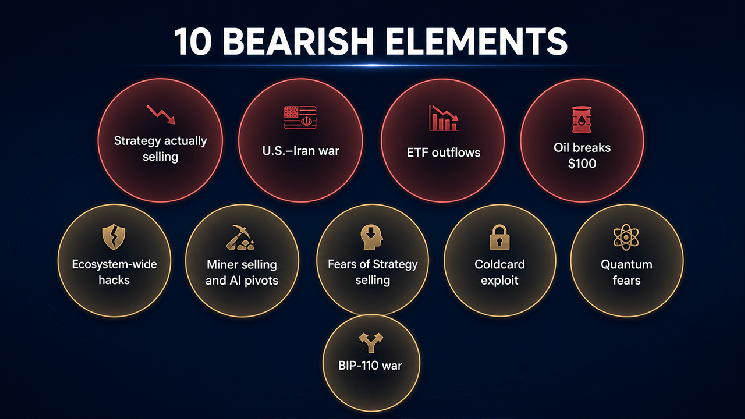
Bitcoin Withstood 10 Bearish Blows in 2026, Yet Experienced Its Mildest Bear Market

Bitcoin, the leading cryptocurrency by market cap, peaked above $126,000 in early October before entering a prolonged decline. By August, it was mainly trading between $63,000 and $65,400, inflicting losses on late buyers but resulting in what is, historically for Bitcoin, an unusually shallow bear market—down about 49% from its peak, compared to typical 75-80% plunges. Throughout 2026, Bitcoin faced multiple headwinds yet demonstrated notable resilience. Geopolitical tensions in the Middle East and volatile oil prices revived inflation concerns but failed to trigger the panic-driven sell-offs seen in prior cycles. A significant psychological blow came from corporate seller MicroStrategy, a longtime accumulator, which began strategic sales to bolster its cash position, reducing its holdings. U.S. spot Bitcoin ETFs also faced sustained outflows, though a late-week inflow hinted at potential relief. Pressure also came from within the ecosystem. A contentious blockchain proposal, BIP-110, failed after a minority chain stalled. Miners, facing tighter economics, sold reserves and pivoted infrastructure toward AI. A major security breach involving Coldcard hardware wallets saw an estimated 2,000 BTC stolen, shaking confidence in self-custody. Long-term threats like quantum computing resurfaced in discussions. Despite this confluence of corporate selling, ETF outflows, miner capitulation, geopolitical shocks, internal conflict, and security issues—any one of which could historically cause sharp declines—Bitcoin stubbornly held above a key $60,000 support level. Deeper market liquidity, regulated products, and long-term holders appear to be absorbing selling pressure that once would have caused deeper crashes. This resilience suggests a maturing market structure, though risks remain. Another shock could still push Bitcoin toward $50,000. For now, its 49% decline, severe for most assets, is relatively moderate by Bitcoin's own volatile standards. The remaining months of 2026 will test whether $60,000 is a durable floor or merely the next major line of defense.

cryptonews.ruHá 45m

Bitcoin Withstood 10 Bearish Blows in 2026, Yet Experienced Its Mildest Bear Market

cryptonews.ruHá 45m

Korean Financial Supervisory Service to Revise Compensation System for Phishing Losses Involving Crypto Transfer

The South Korean Financial Supervisory Service (FSS) is overhauling its system for reimbursing victims of voice phishing scams. Starting in October, the new system will be able to calculate and compensate losses held in cryptocurrency, not just in Korean won. Previously, the reimbursement system assumed stolen funds were in won, failing to fully compensate victims whose money was converted into digital assets. The upgraded software will apply a recovery ratio to determine the specific type and quantity of tokens owed to each victim, based on the token's value at the time the payment was frozen. It will also better track cases where fraud proceeds are split across multiple accounts and later consolidated. These changes follow March 31st amendments to the Act on Reimbursement of Losses from Telecommunications Fraud, which now classify virtual assets as both damaged and recoverable property. Major Korean crypto exchanges like Upbit and Bithumb must now comply with the same anti-phishing obligations as banks, including verifying transaction purposes and tracking suspicious funds. The revised law takes effect October 1st, with the FSS allocating a three-month period and a budget of 118.53 million won for system implementation and troubleshooting. The update addresses schemes where stolen money is intentionally laundered through cryptocurrency for overseas transfer. Notably, telecom fraud losses in South Korea rose 14.1% to 433.8 billion won in 2025, a five-year high.

cryptonews.ruHá 55m

Korean Financial Supervisory Service to Revise Compensation System for Phishing Losses Involving Crypto Transfer

cryptonews.ruHá 55m

Trading

Spot
活动图片