Crypto Fan Won Ohio Senate Primary That Could Alter the Industry's U.S. Destiny

CoinDeskPolicyPublicado em 2024-03-19Última atualização em 2024-03-20

Resumo

Bernie Moreno will be the Republican nominee for Senate in Ohio, facing Sen. Sherrod Brown in this year's general election.

  • The Republican primary win of blockchain businessman Bernie Moreno in Ohio has set up the congressional race to watch for the crypto industry.
  • Moreno will face off in the general election against crypto doubter Sen. Sherrod Brown, the chairman of the Senate Banking Committee who has been a legislative roadblock for digital assets regulation.

Ohio's U.S. Senate race may be the biggest congressional contest this year for the crypto industry, now pitting a digital assets booster against Sen. Sherrod Brown (D-Ohio), the sitting Senate Banking Committee chairman who has stood in the way of the development of regulatory legislation.

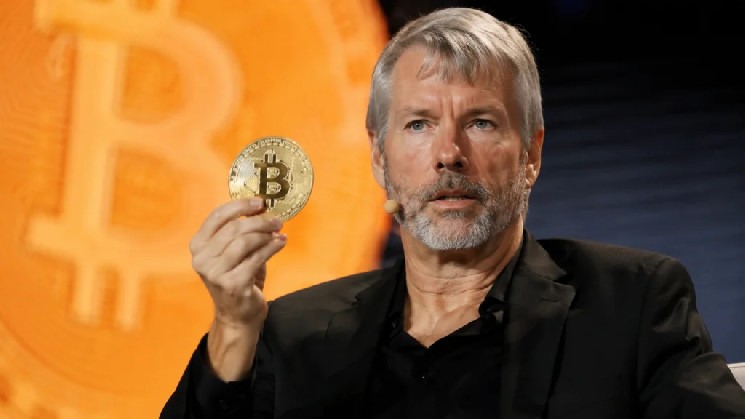
Bernie Moreno, an Ohio businessman and crypto enthusiast who founded a blockchain startup that focuses on property titles, won the Republican nomination Tuesday in the battleground state where Brown has previously held his ground, despite most of its statewide offices being held by Republicans. Moreno carried the endorsement of former President Donald Trump, who is again his party's standard-bearer in the presidential election.

Brown has been a vocal critic of the digital assets sector, especially the frauds and company implosions that have cost consumers money. He's expressed some interest in moving legislation that would deal with the illicit use of crypto, but not yet in bills that would set up rules of the road for the industry.

Advertisement
Advertisement

If Brown loses, it not only changes the leadership of the committee, but it may also change the party with majority status in the Senate. In this session, the Senate has teetered at a 50-50 split that's broken to the Democrats' benefit by the vice president. It only takes one seat to shift and grant Republicans the majority, which would also give the party control of all the chairs (and the agendas) of the committees that would need to pass crypto bills.

Moreno had a complication arise in recent days when the Associated Press reported an account on a casual-sex meetup website was linked to an email address belonging to Moreno, though a past intern reportedly said he'd created it as a joke account. However, Moreno's primary result was a dominant win among Ohio Republicans, with 50% of the vote in a three-candidate race, according to preliminary results with more than 70% of precincts reporting.

While the crypto industry is flooding millions of dollars into congressional races across the country, it hasn't gone after Brown other than with targeted campaigning on crypto matters.

Advertisement
Advertisement

Primary votes also took place Tuesday in Illinois, Florida and Arizona, where candidates battled for the vacated seat of Sen. Kyrsten Sinema (I-Ariz.) – one of those responsible for the crypto taxation provision that made it into an infrastructure law and is generally loathed by the industry. Important states New York and Pennsylvania are set to vote next month as the primaries continue into September.

The presidential candidates from both parties have already won sufficient delegates to win their parties' nominations.

For the crypto industry, the person who occupies the White House next year will have hiring and firing power over key government officials, including the chair of the U.S. Securities and Exchange Commission and the secretary of the Treasury. But the majorities and the committee leaderships in Congress may be just as important as lawmakers close in on the legislation that will govern how the U.S. digital assets sector operates.

Edited by Nikhilesh De.

Leituras Relacionadas

CPU Makes a Comeback to the Table, A $170 Billion "Power Seizure" Drama Begins

A new era is dawning for the server CPU (Central Processing Unit), driven by the shift from AI model training to large-scale reasoning and the rise of Agentic AI. This article explores how the CPU is reclaiming a central role in the AI data center. For years, the focus has been on the GPU (Graphics Processing Unit) for AI training. However, as AI moves to the inference and Agent phase—where tasks involve complex, multi-step reasoning, tool calls, and data management—the workload balance is flipping. Studies show CPUs now handle over 70% of the workload in Agentic AI, up from 10-30% in training. This is because Agent tasks generate massive intermediate data (KV Cache) that exceeds GPU memory, forcing it to be offloaded to the CPU's larger, more scalable memory pools. This increased importance is translating into market changes. Major players are taking note: NVIDIA launched its first standalone CPU line, Vera, based on ARM architecture and optimized for Agent performance. AMD doubled its server CPU market forecast to over $1200 billion by 2030. Analyst reports project the total server CPU market could reach $1700 billion by 2030, with AI-driven demand being a primary driver. Furthermore, the classic ratio of CPUs to GPUs in AI servers is rapidly changing, converging from 1:8 toward 1:1 for Agent deployments. This surge in demand has led to a rare industry-wide price increase of 10-15% for server CPUs from Intel and AMD, breaking a decade-long trend of "more performance for the same price." Demand is bifurcating into high-core-count CPUs for in-rack GPU support and moderate-core CPUs for standalone Agent task orchestration. In China, this global trend presents an opportunity for domestic CPU manufacturers like Hygon (海光信息) and Huawei Kunpeng, who are bolstered by both growing AI infrastructure needs and national policies promoting technological self-reliance ("xin chuang"). The maturity of their software ecosystems is also accelerating, evidenced by faster adaptation to new AI models. In conclusion, the narrative is shifting from a GPU-centric view to one where CPU-GPU synergy is critical. The CPU is no longer a peripheral component but a performance-defining bottleneck and a key growth driver in the AI hardware stack, opening a massive new market estimated in the hundreds of billions of dollars.

marsbitHá 10h

CPU Makes a Comeback to the Table, A $170 Billion "Power Seizure" Drama Begins

marsbitHá 10h

TechFlow Intelligence: AMD AI Director Publicly Criticizes Claude Code for "Becoming Dumber and Lazier", Trump Claims Full Ceasefire in Hormuz But Strait Still Has 80 Unexploded Mines

TechFlow Intelligence Report: This daily digest covers key developments in AI, crypto, hardware, and geopolitics. In AI, SK Telecom faces US export control scrutiny over its partnership with Anthropic, while a Gemini user reports being misled in a scam scenario, sparking safety debates. China's Z.AI launches the GLM-5.2 model, rivaling Claude Opus without NVIDIA chips. In crypto, Bithumb lists ReProtocol, and Upbit delists KernelDAO. On the hardware front, MIT researchers build a custom OS to study chips, ASML denies US claims its advanced lithography machines are in China, and Amazon considers selling its in-house AI chips. Apple's future A21 Pro chip may use TSMC's latest N2P process. Major tech issues include 10,000 GitHub repositories distributing malware and Apple patching a critical eavesdropping flaw in Beats earbuds. US stocks rise, led by semiconductors, with Intel surging 10.6%, while SpaceX falls 3.5%. Geopolitically, despite a US-Iran deal, the Strait of Hormuz remains risky with ~80 uncleared mines, stalling 80M barrels of oil on standby tankers. Iran postpones Switzerland talks, and Trump calls the agreement an "unconditional surrender." The report highlights a contrast: temporary geopolitical calm versus the ongoing, fundamental restructuring of tech supply chains and chip independence.

marsbitHá 10h

TechFlow Intelligence: AMD AI Director Publicly Criticizes Claude Code for "Becoming Dumber and Lazier", Trump Claims Full Ceasefire in Hormuz But Strait Still Has 80 Unexploded Mines

marsbitHá 10h

Trading

Spot
Futuros
活动图片