2026 Prediction Market: The Seven Differentiated Strategies for New Players to Break Through

marsbitPublicado em 2026-02-12Última atualização em 2026-02-12

Resumo

By 2026, the prediction market landscape is expected to become highly competitive, with new entrants leveraging differentiation to capture market share. Established platforms, while holding liquidity and regulatory advantages, are often burdened by technical debt, creating opportunities for agile newcomers. Differentiation can be achieved across seven key dimensions: 1. **Product Quality**: Superior UX, API stability, transparent fees, and diverse order types. 2. **Asset Variety**: Offering exclusive markets, especially in underserved niches. 3. **Capital Efficiency**: Utilizing yield-bearing collateral and innovative margin mechanisms. 4. **Oracle & Settlement**: Enhancing reliability with hybrid or AI-driven oracles for new markets. 5. **Liquidity Provision**: Incentivizing market makers or adopting pooled liquidity models. 6. **Regulatory Compliance**: Tapping into restricted markets via localized licensing. 7. **Strategic Focus**: Choosing between horizontal (infrastructure-focused) or vertical (end-to-end user experience) approaches. Success will hinge on excelling in one or more of these areas to challenge incumbents.

Author: Jake Nyquist, Founder of Hook Protocol

Compiled by: Blockchain Knight

In 2026, major institutions are launching new prediction markets.

From the competitive battles of the past five years between NFTs and perpetual contract exchanges, we have learned that differentiated products can quickly capture market share.

Although leading platforms currently hold advantages in liquidity and regulation, they are burdened with heavy technical debt, making it difficult to respond flexibly to new players.

So how should newcomers compete? In my view, the core of differentiation in prediction markets revolves around seven dimensions:

1. Product Quality

Founding teams can differentiate in areas such as front-end user experience, API stability, development documentation, market structure, and fee mechanisms.

Currently, many established platforms have obvious shortcomings: unreasonable tier settings, opaque fee rules, slow and unstable APIs, and limited order types.

A high-quality product experience, especially services for API-based programmatic traders, is itself a lasting core advantage, enabling a platform to hold its ground even against competitors with stronger channel capabilities.

3. Capital Efficiency

Capital efficiency determines how effectively traders can use their collateral. Currently, there are two key levers:

First, yield-bearing collateral: Instead of letting idle funds earn only treasury yields, platforms can offer higher returns, similar to Lighter supporting LP deposits as collateral or HyENA's USDC-margined perpetual contract model.

Second, margin mechanisms. Due to gap risk, the value of leverage in prediction markets is generally underestimated. However, platforms can offer limited leverage for continuous markets or implement portfolio margin for hedging positions.

Exchanges can also subsidize lending pools or act as market-making counterparties to internalize gap risk, rather than passing losses on to users.

4. Oracles and Market Settlement

Oracle reliability remains a systemic weakness in the industry. Settlement delays and incorrect outcomes significantly amplify trading risks.

Beyond improving stability, platforms can implement innovative oracle mechanisms: human-machine hybrid systems, zero-knowledge proof-based solutions, AI-driven oracles like Context, etc., to unlock new markets that traditional oracles cannot support.

5. Liquidity Provision

Exchanges cannot survive without liquidity. Viable approaches include: paying to onboard professional market makers, using token incentives to encourage ordinary users to provide liquidity, and adopting Hyperliquid's HLP aggregated liquidity model.
Some platforms can also fully internalize liquidity, emulating FTX's model of relying on Alameda as an internal trading team.

6. Regulatory Compliance

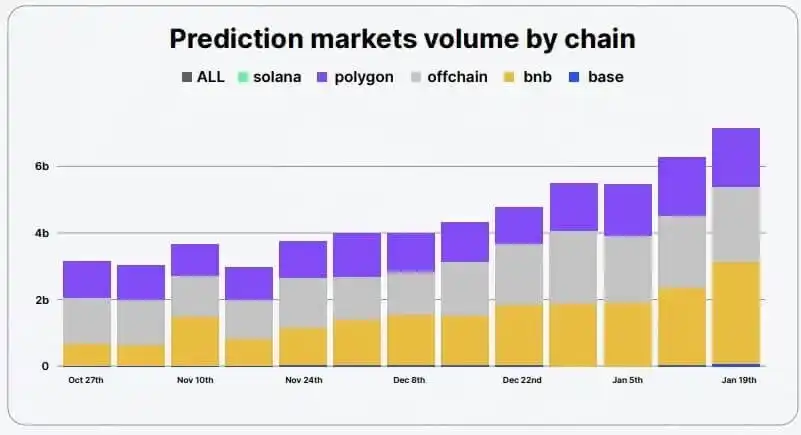
Kalshi, with its US regulatory approval, has achieved embedded distribution through Robinhood and Coinbase, capturing retail traffic that Polymarket cannot reach.

There are still numerous jurisdictions and regulatory frameworks available for exploration. Compliant prediction markets can unlock similar channels, such as adapting to US state gambling regulations.

7. Vertical Strategy vs. Horizontal Strategy

Horizontal Strategy: Similar to Hyperliquid in the perpetual contracts space, focusing on building top-tier underlying trading infrastructure, inviting third parties to build front-ends and vertical scenarios, and encouraging ecosystem builders to add markets and develop revenue-generating front-ends (e.g., Phantom) through proposals.

Vertical Strategy: Exemplified by Lighter, which controls the front-end, launches mobile apps, and creates an end-to-end user experience, focusing on integrated experiences and direct user connections.

Polymarket's resistance to deeply embedded partnerships, contrasted with Kalshi's open attitude, is a clear reflection of the trade-offs between these two strategies.


Perguntas relacionadas

QAccording to the article, what are the seven key dimensions for differentiation in the prediction market competition?

AThe seven key dimensions are: 1. Product Quality, 2. Asset Types and Market Selection, 3. Capital Efficiency, 4. Oracles and Market Settlement, 5. Liquidity Provision, 6. Regulatory Compliance, and 7. Vertical Strategy vs. Horizontal Strategy.

QHow can new prediction market exchanges compete with established platforms that have liquidity and regulatory advantages?

ANew players can compete by focusing on product differentiation, such as superior user experience, stable APIs, better documentation, unique market offerings, innovative capital efficiency mechanisms, reliable oracles, creative liquidity solutions, navigating different regulatory frameworks, and adopting a focused vertical or horizontal strategy.

QWhat two core methods are mentioned for improving capital efficiency in prediction markets?

AThe two core methods are: 1. Interest-bearing collateral, which allows idle funds to earn higher yields, and 2. Margin mechanisms, which can provide limited leverage for continuous markets or portfolio margin for hedged positions.

QWhat is the difference between a horizontal strategy and a vertical strategy for a prediction market platform, as described in the article?

AA horizontal strategy, like Hyperliquid's, focuses on building top-tier underlying trading infrastructure and inviting third parties to build front-ends and verticals. A vertical strategy, like Lighter's, involves controlling the front-end, launching mobile apps, and crafting a full user experience to connect directly with users.

QWhich platform is cited as an example of using regulatory compliance to gain access to retail traffic unavailable to competitors like Polymarket?

AKalshi is cited as the example, as it leveraged its US compliance credentials to achieve embedded distribution with platforms like Robinhood and Coinbase.

Leituras Relacionadas

Annual Salary of Millions Competing for Electricians, Meta Rushes to Open Its Own Technical School

The AI boom is facing an unexpected bottleneck: a severe shortage of skilled construction workers and electricians. As tech giants like Meta, OpenAI, and Alphabet race to build massive data centers—such as OpenAI's $16 billion "Stargate" project—they are hitting a critical labor wall. The U.S. needs an estimated 130,000 more electricians, 240,000 construction workers, and 150,000 supervisors by 2030 for AI infrastructure alone, but tens of thousands of electrician jobs go unfilled each year. While AI companies offer high premiums, with electricians earning up to $280,000 annually, worker scarcity still causes massive losses—delays on a single project can cost $14.2 million per month. The complexity of building AI data centers, which require immense power (equivalent to powering hundreds of thousands of homes), sophisticated electrical systems, and advanced liquid cooling solutions, demands highly skilled technicians who are in short supply. To combat this, companies are investing heavily in training. Meta has committed $115 million to a free training school offering tuition, housing, and stipends, targeting 5,000 new workers. OpenAI is partnering with unions to secure skilled labor. These efforts are paying off, with a significant rise in Gen Z interest in trade schools over college. However, the power demands are staggering. AI data centers are driving a rapid surge in electricity consumption, projected to account for up to 12% of U.S. power use by 2028 and raising costs for consumers. Furthermore, the construction boom is project-based, leading to a potential future glut of trained workers once building peaks, which could depress wages industry-wide. The race for AI supremacy now depends as much on skilled hands as on advanced chips.

marsbitHá 1h

Annual Salary of Millions Competing for Electricians, Meta Rushes to Open Its Own Technical School

marsbitHá 1h

OpenAI No Longer Sells Its Most Expensive Model for Profit

OpenAI is shifting its business strategy away from promoting its most expensive, flagship models for every task. Recent price cuts—80% for GPT-5.6 Luna and 20% for Terra—signal a deeper change: the company now actively advises users that many tasks don't require the most powerful model. Instead, OpenAI recommends a tiered approach: use the high-end GPT-5.6 Sol for complex planning and analysis, then delegate execution to cheaper models like Luna. This mirrors moves by Anthropic, which recently launched Claude Opus 5 at half the price of its top model, Fable 5. Both companies are de-emphasizing flagship models as primary revenue drivers, using them instead for brand prestige and technological showcases. The industry is entering a "mass-market" phase, similar to automotive, where high-volume, cost-effective models handle daily operations and drive scale. OpenAI's price reductions are partly enabled by AI models themselves optimizing underlying code and infrastructure, creating a self-reinforcing cycle of efficiency gains and cost reduction. Competition is shifting from "who is smartest" to "who offers the best value." The goal is no longer selling individual models but fostering widespread API adoption and ecosystem lock-in. By making AI calls cheap and ubiquitous, companies like OpenAI aim to become the indispensable, utility-like infrastructure powering automated workflows—the "water and electricity" of software, quietly embedded everywhere.

marsbitHá 1h

OpenAI No Longer Sells Its Most Expensive Model for Profit

marsbitHá 1h

Trading

Spot
活动图片




