2026 Davos Annual Meeting: How Did Web3 Giants Discuss the Future?

marsbitPublicado em 2026-01-26Última atualização em 2026-01-26

Resumo

At the 2026 World Economic Forum in Davos, Web3 leaders and traditional finance executives debated the mainstream integration of blockchain technology. Binance founder Changpeng Zhao (CZ) argued that banks must adopt blockchain infrastructure to improve efficiency and prevent liquidity crises, advocating for 100% reserve models. He highlighted discussions with multiple governments on national asset tokenization and predicted a Bitcoin "super cycle," with crypto becoming essential "fuel" for AI-driven economies. Coinbase CEO Brian Armstrong clashed with the French Central Bank Governor, defending Bitcoin's decentralization and the right for stablecoin holders to earn interest. He asserted that tokenization enhances financial efficiency and democratizes investment access. Key traditional finance figures, including BlackRock's Larry Fink and Standard Chartered's Bill Winters, endorsed tokenization as the future of finance, emphasizing its potential to boost liquidity and reduce costs. However, they stressed the need for collaboration between banks and blockchain. The event also saw the signing of the "Davos Declaration 2026" by Web3 leaders, committing to principles like inclusivity, decentralization, sustainability, and regulatory compliance in advancing blockchain and AI technologies.

Original Author: Eric, Foresight News

2025 was considered a landmark year for Web3 practitioners to enter the main agenda of the World Economic Forum (WEF) on a large scale for the first time. "Crypto at a Crossroads" appeared in the main agenda for the first time, discussing whether cryptocurrencies have entered the mainstream era. One year later, with the entry of Western financial giants, Web3 has evolved from last year's crossroads to truly becoming mainstream.

At this year's World Economic Forum main venue, tokenization and stablecoins became two important topics. Binance founder Changpeng Zhao (CZ) was also invited to participate in a discussion titled "New Era for Finance." Unlike speaking freely on CT (Crypto Twitter), the remarks of Web3 representatives on such a large occasion were noticeably more restrained, but they still did not hide the ambition that "Web3 will change the world."

So, at the 2026 Davos Annual Meeting, where Crypto was recognized as mainstream by traditional finance with a scale of trillions of dollars, what exactly did the big shots say?

Changpeng Zhao: "If Banks Don't Change, We Will Change Banks"

The last time a well-known entrepreneur criticized banks at a large economic and financial conference may date back to the 2020 Bund Financial Summit.
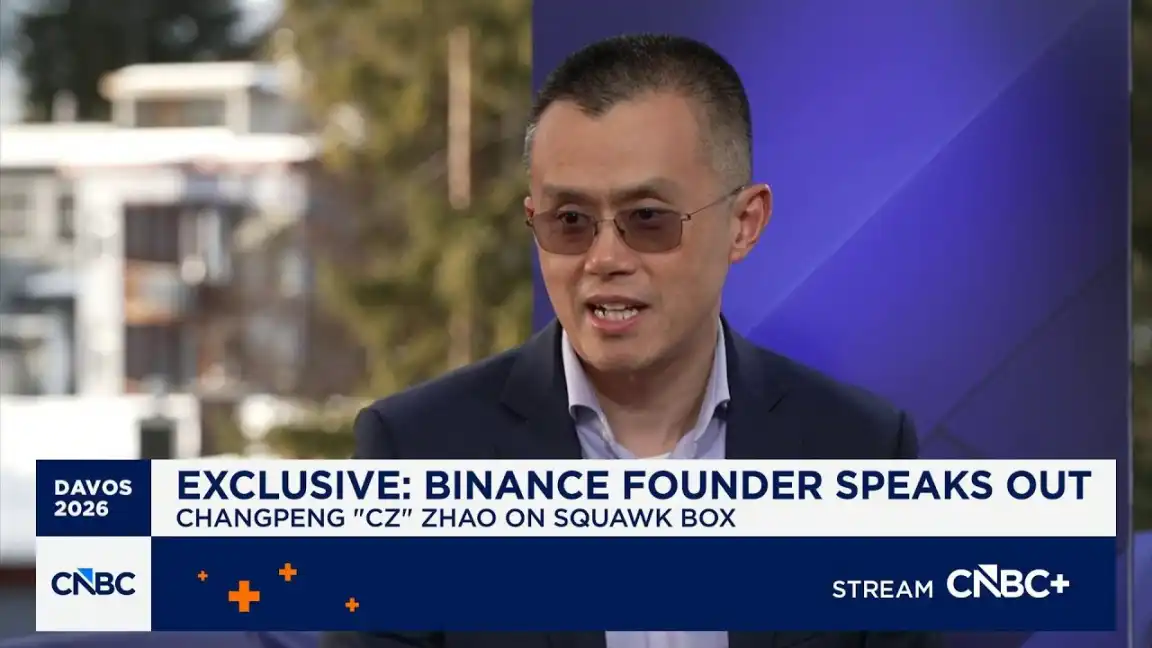
Changpeng Zhao (CZ) participated in the main venue roundtable titled "New Era for Finance" at this Davos Annual Meeting and also gave interviews to media outlets including CNBC. Overall, CZ's viewpoint was not to "replace banks" but rather that banks should embrace blockchain infrastructure, as the two are complementary. His main points include:

  • The reserve system of banks is the root cause of liquidity crises, making it difficult to handle billion-dollar-level withdrawals in a short time without issues, unlike Binance. The 100% reserve model of cryptocurrency exchanges is safer and more reliable. Traditional banks have their value but should embrace blockchain as their infrastructure to improve efficiency and reduce costs;
  • CZ is currently discussing national asset tokenization with governments of more than a dozen countries (such as Pakistan, Malaysia, Kyrgyzstan, etc.), including infrastructure, real estate, commodities, and government bonds. Tokenization can avoid debt issues and improve liquidity, attracting a broader range of investors;
  • Bitcoin's 4-year cycle will be broken, and 2026 will be Bitcoin's "super cycle." Meme tokens are similar to previous NFTs and the metaverse, being highly risky and speculative. Meme tokens with cultural value may exist long-term, but most meme tokens will disappear;
  • Traditional payments are merging with crypto payments, but risk awareness is necessary. AI Agents will use cryptocurrencies as a native payment method. In the future, AI will rely on blockchain for real-time, reliable payments, and cryptocurrencies will become the "fuel" for the AI economy;
  • The crypto industry needs to focus on risk management and regulatory reality, rather than blind optimism, balancing innovation and compliance.

In addition to these points, CZ also revealed details such as his mindset during his previous imprisonment in an interview with CNBC and mentioned on X that more details would be disclosed in his new book to be published in late February or early March.

Coinbase Founder Debates with French Central Bank Governor

In a discussion titled "Is Tokenization the Future," Coinbase founder Brian Armstrong repeatedly interrupted French Central Bank Governor François Villeroy de Galhau and refuted his views on Bitcoin and stablecoin yields.

François Villeroy de Galhau expressed the following views:

  • Strongly opposes private companies paying interest to holders of their issued stablecoins, believing this threatens monetary sovereignty and financial stability;
  • Emphasizes that trust in currency must come from public institutions (central banks) with democratic mandates, not private issuers;
  • Criticizes stablecoins and Bitcoin as private currencies that could lead to systemic risks, promoting the digital euro as a tool to maintain sovereignty;
  • Warns that without improving financial literacy, tokenization could become a "disaster."

Brian Armstrong's "counterarguments" included:

  • Arguing that Bitcoin has no issuer, and its decentralized nature makes it more independent and anti-inflationary than traditional currencies;
  • Asserting that users have the right to earn yields from stablecoins and that allowing stablecoin interest is part of a country's competitiveness;
  • Emphasizing that Bitcoin and central banks should be in "healthy competition," with public choice becoming the strongest accountability mechanism for fiscal deficits and pushing central banks to be more responsible;
  • Refuting that stablecoins are fully backed by reserves, unlike bank deposits;
  • Tokenization can solve financial efficiency issues, achieve real-time settlement, reduce costs, and "democratize investment access," providing investment channels for 4 billion adults without access to brokerage services, and predicting significant progress in this technology in 2026.

In addition to this highly anticipated clash between "old finance" and "new finance," Brian Armstrong also mentioned in interviews or other occasions that during the meeting, a senior executive from a global top-ten bank told him that cryptocurrencies have now become the bank's "top priority," even seen as a "matter of survival." Armstrong stated that many financial leaders he met at the conference were not only open to cryptocurrencies but were actively seeking ways to enter the market.

Furthermore, Armstrong mentioned that although AI has diverted some attention from cryptocurrencies, the two are closely connected, and in the future, AI will likely use stablecoins by default instead of the existing banking payment system for payments.

In addition to the two main figures, many other well-known figures in the Web3 industry attended the meeting and expressed their views. Ripple CEO Brad Garlinghouse stated that the role of cryptocurrencies has shifted from a "threat" to economic infrastructure, believing that stablecoins will become a global payment bridge but need to protect monetary sovereignty. Brad Garlinghouse did not express the view that crypto payments would "replace" traditional payments but consistently emphasized that Ripple is building a bridge between the two.

Web3 Industry Representatives Sign the "Davos Declaration 2026"

During the side event "Davos Web3 Roundtable" at the Davos Annual Meeting, dozens of Web3 industry leaders, investors, and policymakers, including Animoca Brands co-founder Yat Siu, Unstoppable Domains executive Sandy Carter, and 0G Foundation representative Jonathan Chang, signed the "Davos Declaration 2026."

The declaration emphasizes that when embracing powerful technologies like blockchain and AI, the following principles must be adhered to ensure that technology serves human well-being:

  • Inclusivity: Enable more people (especially in developing countries and marginalized groups) to benefit from Web3 technology.
  • Decentralization: Uphold the core value of Web3 and avoid concentration of power.
  • Sustainability: Promote environmentally friendly and long-term viable innovation.
  • Accountability and Trust: Emphasize compliance, transparency, and responsible development.
  • Long-Term Value Creation: Shift from "hype" to practicality, regulatory friendliness, and institutional-grade infrastructure.

Traditional Finance's View on Web3

In addition to some criticisms of Web3 by the French Central Bank Governor, the meeting also saw recognition of Web3 by financial giants.
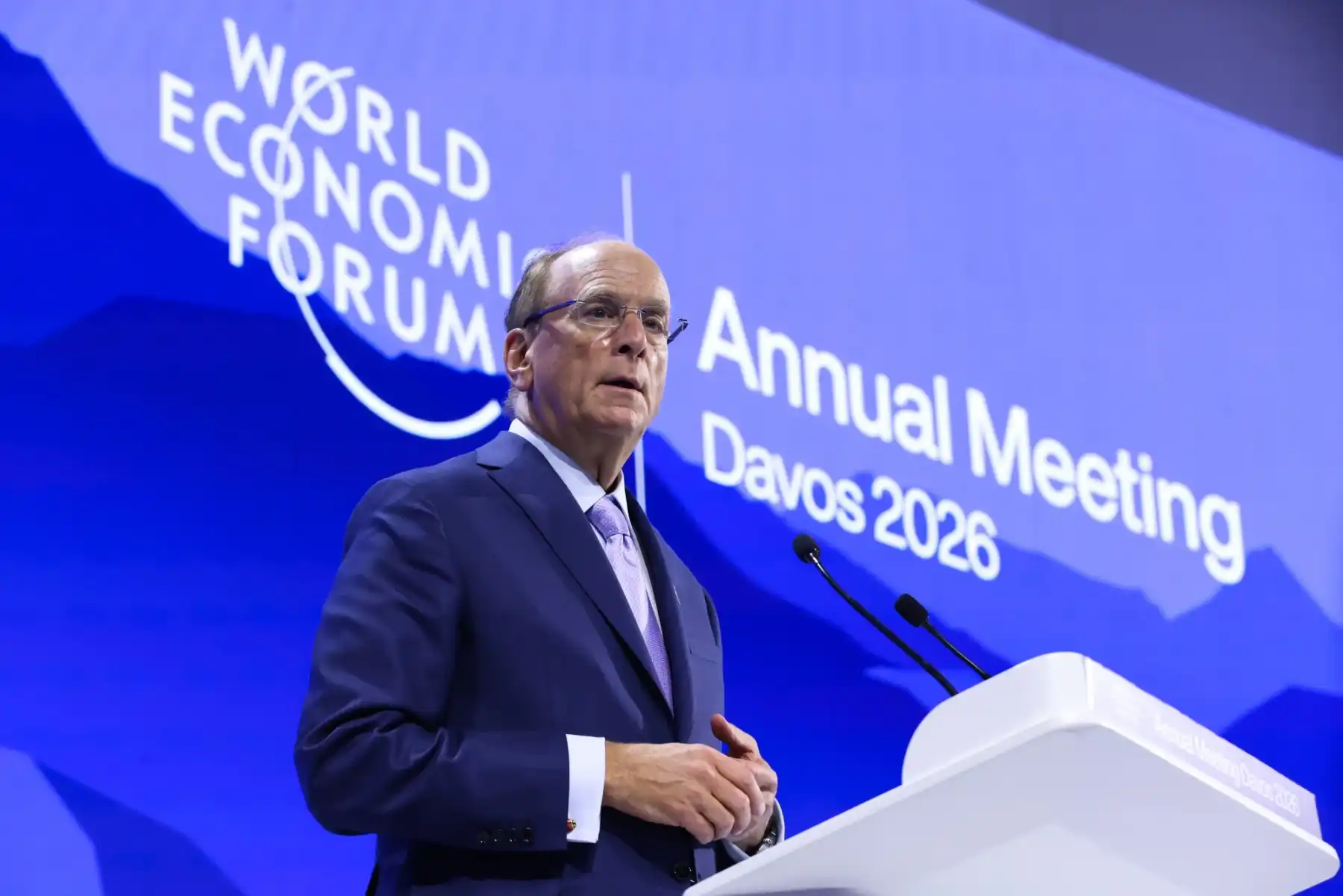
BlackRock CEO Larry Fink believes that tokenization is the future of the financial system, and the entire financial system should migrate to "a common blockchain" (Garrett Jin stated that this blockchain refers to Ethereum) as soon as possible to achieve seamless asset transfers. Tokenization will solve liquidity issues, reduce costs, and make asset transfers between money market funds more efficient. Crypto and tokenization have become themes driving the market, and BlackRock views them as institutional-grade infrastructure.

Standard Chartered Bank Group CEO Bill Winters stated that tokenization and stablecoins will bring progress in global financial delivery, including reducing transaction costs and improving cross-border payment efficiency. The integration of traditional banking and blockchain has become a reality, and stablecoins have become the first truly universal blockchain use case.

Other traditional financial giants participating in the main venue roundtable mostly expressed recognition of tokenization, digital assets, and programmable currency in reshaping financial capabilities but also believed that banks should collaborate with blockchain rather than oppose it.


Perguntas relacionadas

QWhat were the main topics discussed by Web3 leaders at the 2026 Davos Annual Meeting?

AThe main topics included tokenization, stablecoins, the role of banks, Bitcoin's future, and the integration of AI with cryptocurrency payments. Key figures like CZ and Brian Armstrong emphasized the importance of blockchain infrastructure, regulatory compliance, and the transformative potential of Web3 technologies.

QWhat was CZ's (Changpeng Zhao) stance on traditional banks and blockchain technology?

ACZ argued that banks should embrace blockchain infrastructure to improve efficiency and reduce costs. He criticized the fractional reserve system as the root of liquidity crises and advocated for 100% reserve models like those used by crypto exchanges. He also highlighted his discussions with several governments on national asset tokenization.

QHow did Brian Armstrong respond to the French Central Bank Governor's criticism of stablecoins and Bitcoin?

ABrian Armstrong defended Bitcoin's decentralized nature as more independent and inflation-resistant than traditional currencies. He argued that users should have the right to earn interest on stablecoins, viewing it as a matter of national competitiveness. He also emphasized that stablecoins are fully backed by reserves, unlike bank deposits, and that tokenization can democratize investment access.

QWhat principles were outlined in the 'Davos Declaration 2026' signed by Web3 leaders?

AThe declaration emphasized inclusivity, decentralization, sustainability, accountability and trust, and long-term value creation. It called for ensuring that Web3 technologies serve human welfare, particularly benefiting developing countries and marginalized groups, while maintaining core values and avoiding centralization of power.

QHow did traditional financial leaders like Larry Fink and Bill Winters view the future of Web3 and tokenization?

ALarry Fink, CEO of BlackRock, stated that tokenization is the future of the financial system and should migrate to a common blockchain (likely Ethereum) for seamless asset transfers. Bill Winters, CEO of Standard Chartered, highlighted that tokenization and stablecoins would advance global finance by reducing costs and improving cross-border payment efficiency, with stablecoins being the first truly universal blockchain use case.

Leituras Relacionadas

When Doing Cryptocurrency Payment, the First Thing is Licenses, What is the Second?

When launching a crypto payment business, obtaining the necessary licenses is the crucial first step. However, the second, and arguably more critical, step is designing a comprehensive operational framework that forms a coherent business loop. This loop must be clearly understood and executable by all stakeholders: banks, payment partners, exchanges, on-chain analytics providers, regulators, and your internal team. Many projects mistakenly believe a single license permits all operations. Licenses merely grant entry; they don't define how the specific business functions. The real challenge lies in detailing every aspect of the workflow. This involves clarifying the customer base, the flow of fiat and crypto assets, the settlement process, and establishing clear lines of responsibility for risks like AML compliance, sanctions screening, chargebacks, and regulatory inquiries. A robust framework must answer seven core questions: Who are the clients and merchants? Who collects fiat and crypto? Who handles conversion and custody? And who is ultimately accountable for compliance and risk management? Projects often fail not from a lack of licensing, but during due diligence when they cannot convincingly explain these operational details. Therefore, beyond securing licenses, the priority must be constructing a closed-loop system. This system ensures the business model is transparent, risks are managed, responsibilities are delineated, contracts are aligned, and the entire process is comprehensible to partners and regulators. The true competitive edge in crypto payments lies not in acquiring a license quickly, but in integrating licensing, banking, compliance, and operations into a sustainable and executable whole.

marsbitHá 23m

When Doing Cryptocurrency Payment, the First Thing is Licenses, What is the Second?

marsbitHá 23m

Arthur Hayes Analysis: AI Bubble Nears Burst, Crypto Market Faces Short-Term Pressure

Arthur Hayes argues that the current AI market is a bubble poised to burst, which will exert downward pressure on the crypto market in the near term. The core trigger is rising oil prices due to the US-Iran conflict and a blockade of the Strait of Hormuz. Higher energy costs directly increase the operational expenses of AI data centers, squeezing profit margins for companies like Google, Anthropic, and OpenAI. Hayes predicts that persistent inflation from high oil prices will force Trump, in a bid to win the November election, to turn public sentiment against the AI industry. He may propose regulations and taxes on data centers and AI companies to appeal to voters concerned about costs and job displacement. Such political rhetoric could shatter market confidence. Furthermore, the market is unlikely to healthily absorb the massive concurrent IPOs of SpaceX, Anthropic, and OpenAI, which together seek valuations in the trillions. The combination of soaring energy costs, overwhelming equity supply, and negative political pressure will puncture the AI bubble. Hayes notes that nearly all new USD liquidity since 2022 has flowed into AI, leaving crypto like Bitcoin behind. When the AI bubble bursts, liquidity will contract sharply, pulling down all risk assets, including cryptocurrencies. In response, Hayes's fund, Maelstrom, has sold all AI-related stocks and non-core cryptocurrencies. It maintains core positions in Bitcoin and Ethereum while increasing exposure to energy sector equities, betting on rising oil and gas prices. He expects Bitcoin to bottom after the AI-led market decline, before rallying again with future monetary easing.

Foresight NewsHá 37m

Arthur Hayes Analysis: AI Bubble Nears Burst, Crypto Market Faces Short-Term Pressure

Foresight NewsHá 37m

To C, To B, and the Next Big Thing Called To A

After To C and To B, the Next Wave is To A: Serving AI Agents In a recent quarterly earnings call, Meituan's Wang Xing introduced a new concept: To A (To Agent), signifying that future business services will increasingly target AI Agents as primary clients, not just consumers or merchants. This shift implies that internet giants must now consider how to make their services more appealing for AI Agents to recommend, fundamentally altering traditional distribution logic. This "To A era" is prompting an unusual trend of alliances among major tech companies. Unlike previous competitive battles, firms like Meituan, Tencent, JD.com, Huawei, OPPO, and OpenAI are rapidly forming partnerships. The reason is strategic: as AI Agents become the primary user interface, handling tasks from a single command (e.g., "Book a Japanese restaurant for tomorrow"), the risk for platforms is being bypassed entirely. Companies are positioning themselves within this new value chain. Three primary strategies are emerging: 1. **Super-Entry Points + Service Providers:** Platforms like Tencent's Yuanbao, WeChat, and ChatGPT aim to be the first-stop Agent, integrating various services (food delivery, shopping, travel) from partners like Meituan and JD.com. 2. **Apps as Callable Services:** Companies like Meituan, JD.com, and Uber are ensuring their core services remain accessible and callable by external Agents, shifting from front-end apps to back-end capabilities. 3. **System-Level Agent Entry Points:** Smartphone makers (Huawei, Honor, OPPO) are leveraging their OS-level AI assistants to control the initial user command, redistributing it to relevant service apps. While alliances offer mutual benefit—entry points gain service capabilities, and service providers gain traffic—inherent conflicts of interest exist. A dominant Agent platform could eventually attempt to connect directly with suppliers (restaurants, hotels), bypassing current aggregators like Meituan or Ctrip. Other unresolved challenges include the potential for Agent recommendations to become a new form of paid ranking and unclear accountability for faulty recommendations. The current rush to form alliances is a defensive move by service providers to secure their position before the landscape solidifies. In this To A-driven restructuring, the greatest risk is not losing the race but failing to hear the starting gun.

marsbitHá 46m

To C, To B, and the Next Big Thing Called To A

marsbitHá 46m

The More Lifelike the Robot, the More Terrifying? Unveiling the 'Uncanny Valley Effect' in the Era of Humanoid Robots

As humanoid robots become increasingly lifelike, they confront a significant psychological barrier known as the "Uncanny Valley Effect," a concept proposed by Japanese roboticist Masahiro Mori in 1970. This phenomenon describes a dip in human comfort and acceptance when robots appear almost, but not perfectly, human. Minor imperfections in facial expressions, eye movements, or skin texture trigger a subconscious sense of unease, as the brain detects something trying, yet failing, to mimic a person. Examples range from the controversial human-like robot Sophia to animated characters in films like *The Polar Express*. The effect poses a key design challenge for robotics companies. Some, like Boston Dynamics, avoid it entirely by creating highly capable but visibly mechanical robots. Others, like Hanson Robotics, push for greater human likeness despite the risk. For consumer robots, especially in homes, most manufacturers opt for stylized or clearly mechanical designs to ensure broader acceptance. While the Uncanny Valley remains a powerful force, its impact may diminish over time through technological advancements that achieve near-perfect realism or through generational familiarity as people grow accustomed to interacting with humanoid machines. Ultimately, navigating this psychological frontier requires as much understanding of human perception as of robotics technology itself.

marsbitHá 46m

The More Lifelike the Robot, the More Terrifying? Unveiling the 'Uncanny Valley Effect' in the Era of Humanoid Robots

marsbitHá 46m

Trading

Spot
Futuros
活动图片




