SignalPlus波动率专栏(20240304):BTC站上65K关口冲击ATH

Odaily星球日报Publicado em 2024-03-04Última atualização em 2024-03-04

Resumo

数字货币方面,BTC日内上涨逾4%,期权收盘前又一波拉盘将币价推上65K关口,向着All Time High发出挑战。

SignalPlus波动率专栏(20240304):BTC站上65K关口冲击ATH

SignalPlus波动率专栏(20240304):BTC站上65K关口冲击ATH

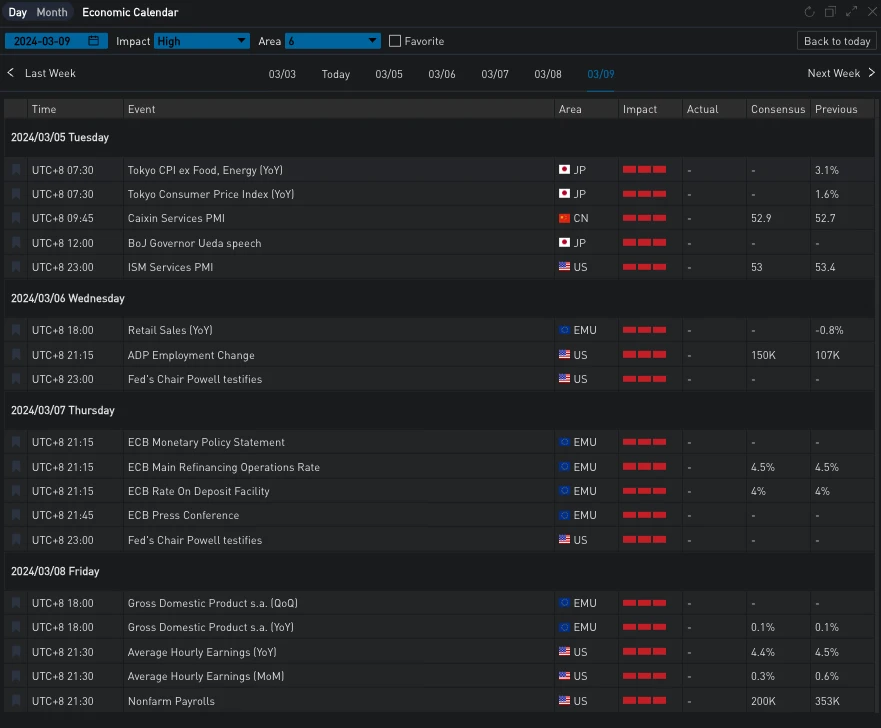
上周五美联储公布了半年度货币政策报告,指出了银行体系健全且有韧性的,但金融稳定方面仍存在一些弱点,此外,美联储官员高度关注通胀风险,在更有说服力的评估数据公布之前并不急于降息。数据方面,周五公布的经济数据普遍低于预期,增强了市场对降息的预期,美国三大股指齐涨,美债收益率逐步回落,当前两年期/十年期分别为 4.552% /4.204 。
SignalPlus波动率专栏(20240304):BTC站上65K关口冲击ATH

Source: SignalPlus, Economic Calendar

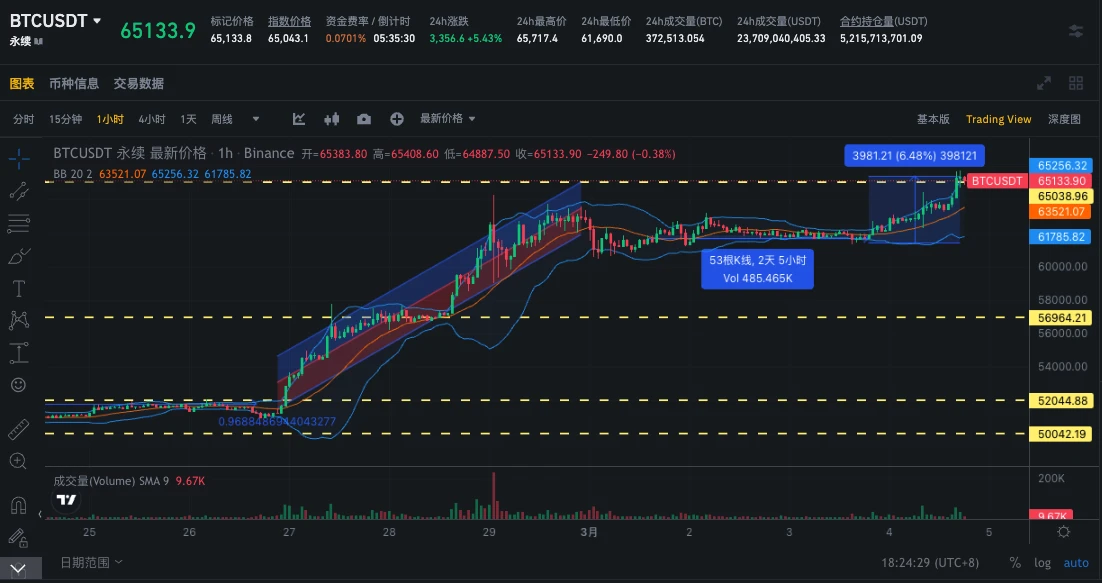
数字货币方面,BTC 日内上涨逾 4% ,期权收盘前又一波拉盘将币价推上 65 K 关口,向着 All Time High 发出挑战。此轮上涨行情的重要催化剂当属 BTC Spot ETFs 带来的资金流入,日均 10000 BTC 价值的购买需求已经远远超出 BTC 挖矿的产量,更别提即将到来的 Bitcoin Halving 将再度减少比特币一半的产出,加剧供需不平衡的现状。
SignalPlus波动率专栏(20240304):BTC站上65K关口冲击ATH

Source: Binance & TradingView

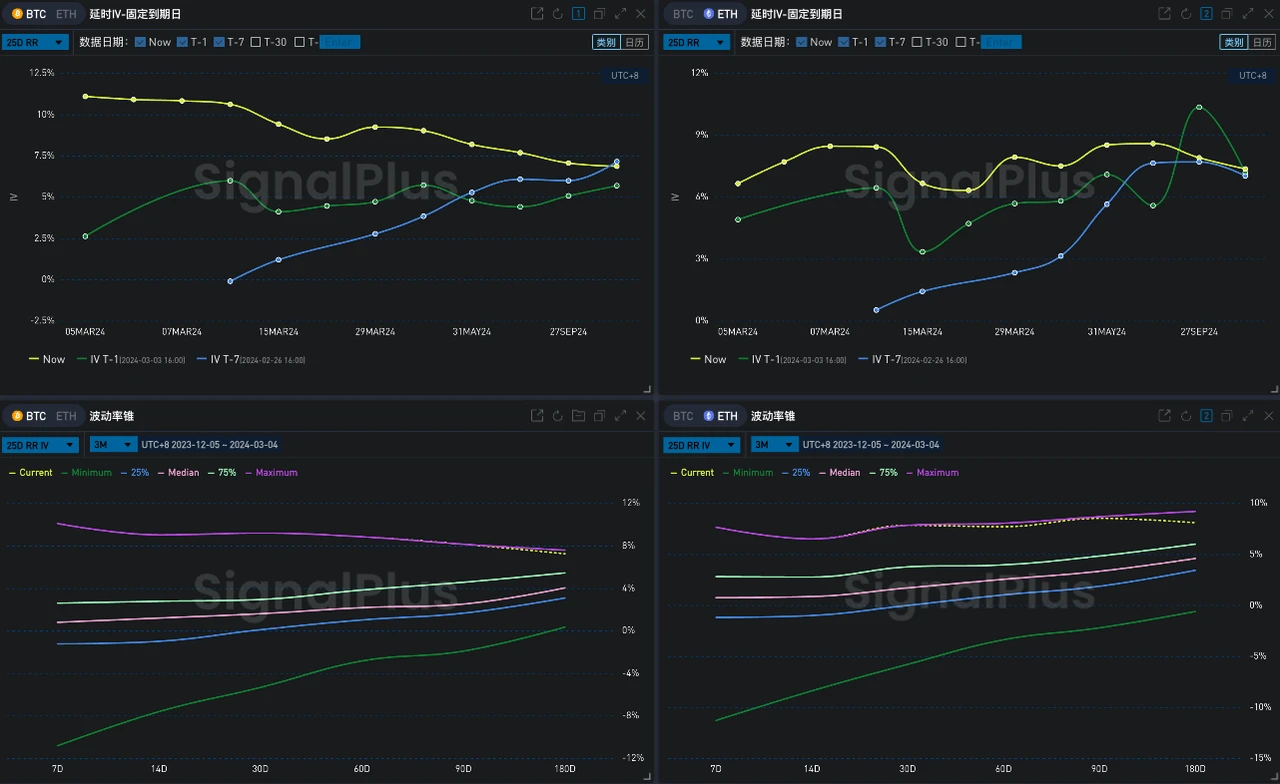
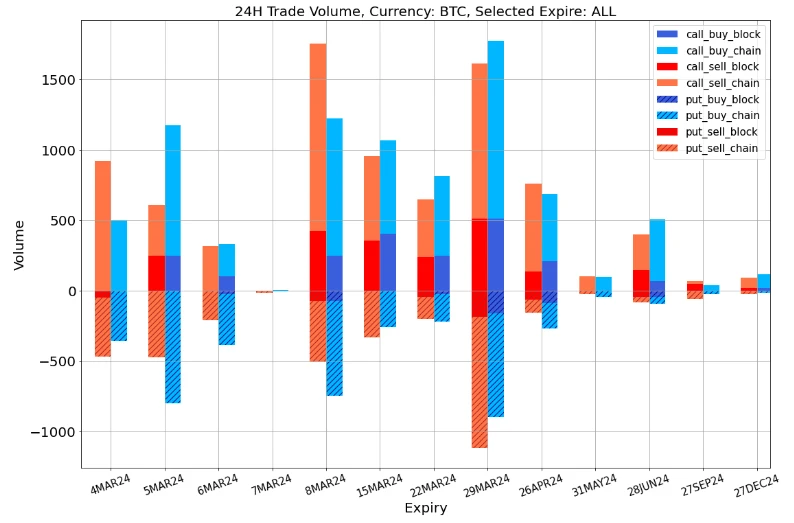
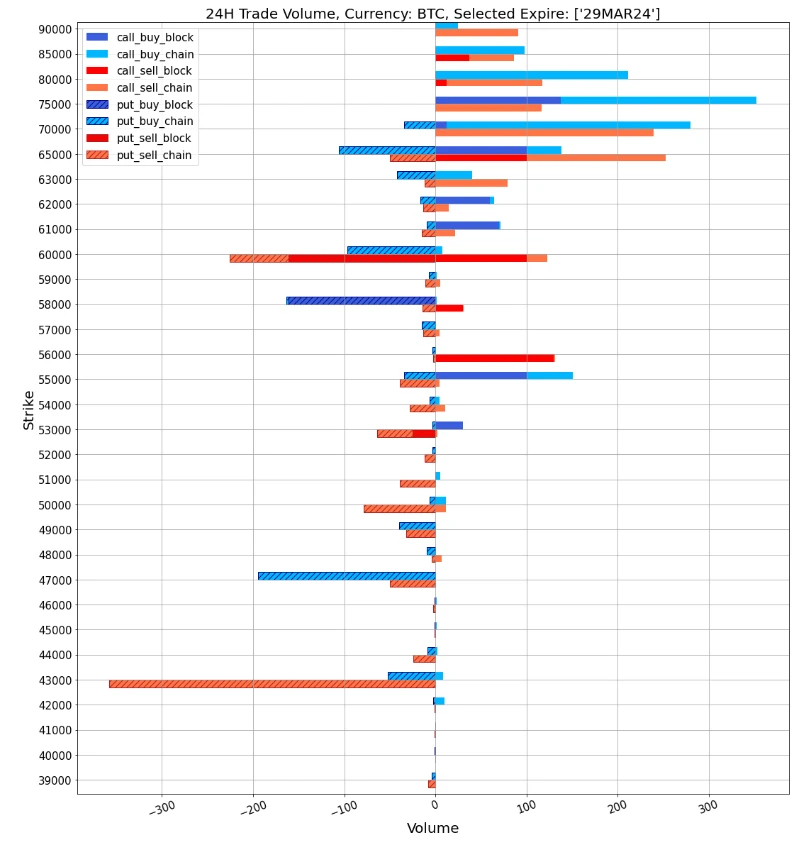
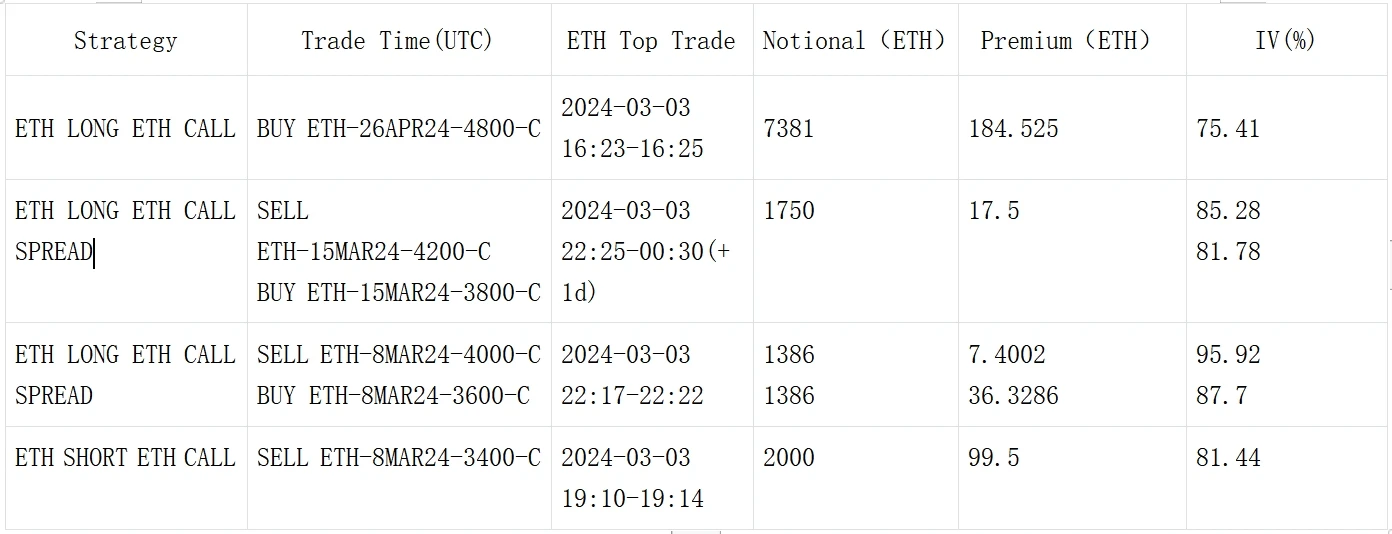
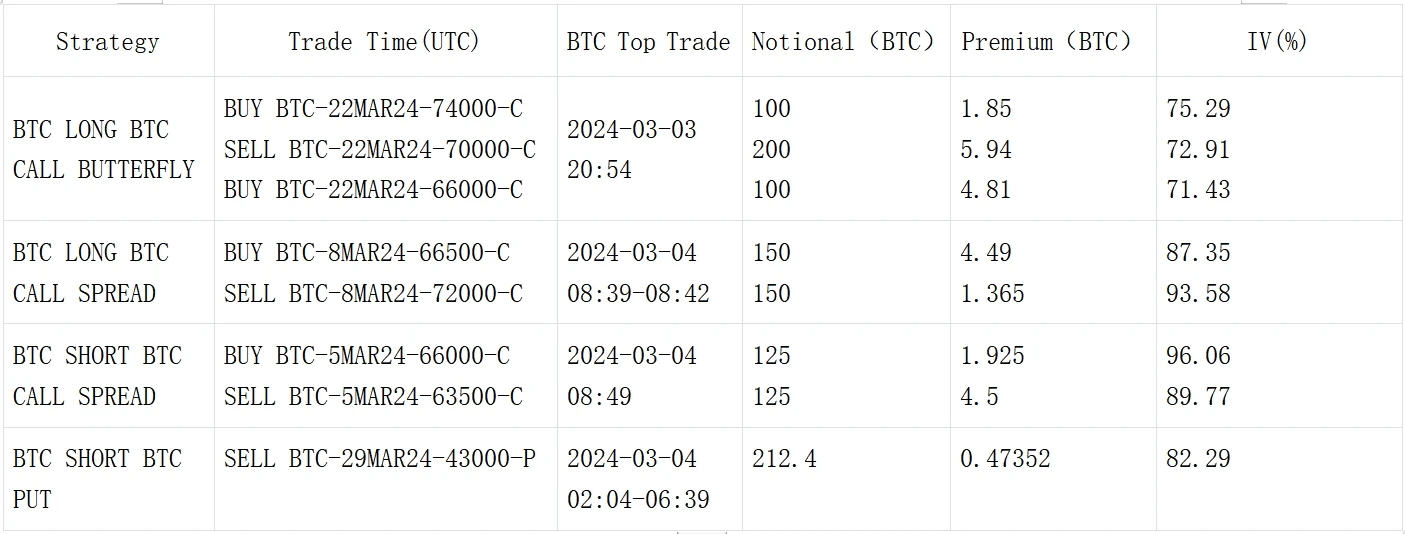
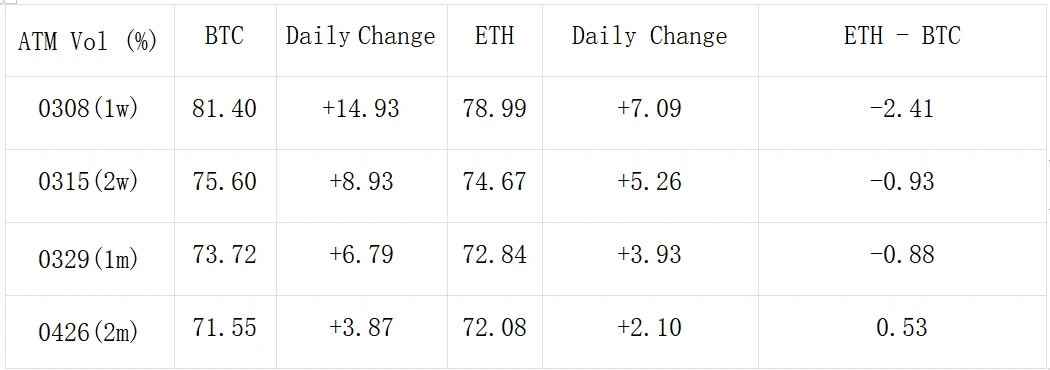
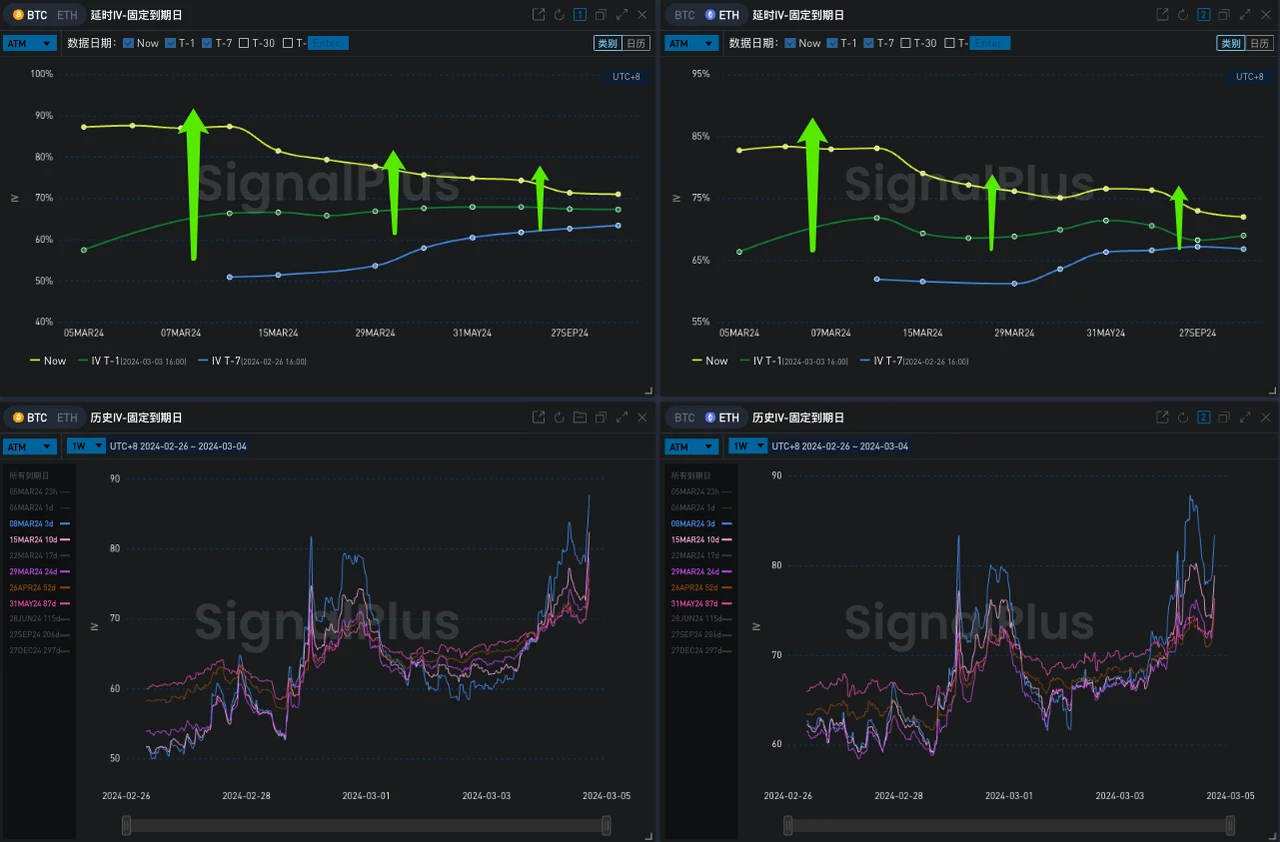
若币价能延续上行势能,突破历史最高点的时刻想必也不会遥远,期权市场也在日内将前端隐含波动率指数再度推高至 BTC 90% / ETH 85% 的高峰,同时衡量曲面斜率的 25 d RR 指标也再度上升打破过去三个月的最高点。从交易上看,以 Long Call Spread/Call Butterfly 为代表的大宗策略成为交易的热门,表达了有限看涨的观点。
SignalPlus波动率专栏(20240304):BTC站上65K关口冲击ATH

Source: Deribit (截至 4 MAR 16: 00 UTC+ 8)
SignalPlus波动率专栏(20240304):BTC站上65K关口冲击ATH

Source: SignalPlus

SignalPlus波动率专栏(20240304):BTC站上65K关口冲击ATH

Source: SignalPlus

SignalPlus波动率专栏(20240304):BTC站上65K关口冲击ATH

SignalPlus波动率专栏(20240304):BTC站上65K关口冲击ATH

Data Source: Deribit,BTC 成交分布

SignalPlus波动率专栏(20240304):BTC站上65K关口冲击ATH

SignalPlus波动率专栏(20240304):BTC站上65K关口冲击ATH

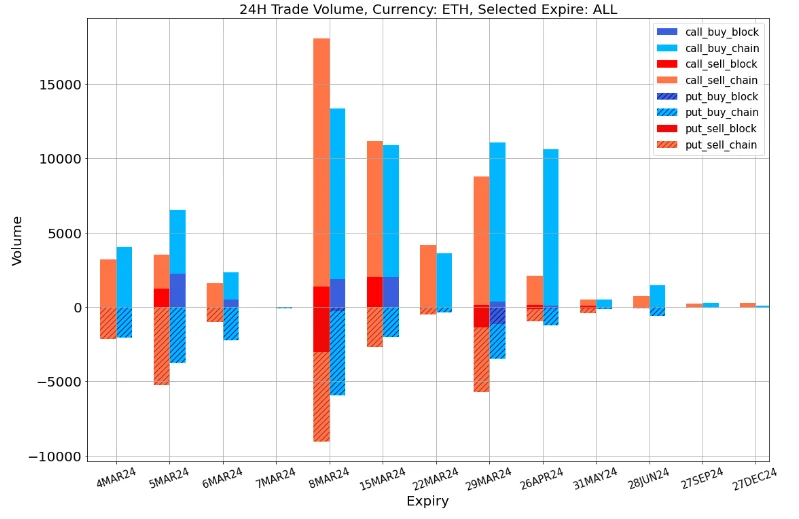
Data Source: Deribit,ETH 成交分布

SignalPlus波动率专栏(20240304):BTC站上65K关口冲击ATH

Source: Deribit Block Trade

SignalPlus波动率专栏(20240304):BTC站上65K关口冲击ATH

Source: Deribit Block Trade

SignalPlus波动率专栏(20240304):BTC站上65K关口冲击ATH

您可在 ChatGPT 4.0 的 Plugin Store 搜索 SignalPlus ,获取实时加密资讯。如果想即时收到我们的更新,欢迎关注我们的推特账号@SignalPlus_Web3 ,或者加入我们的微信群(添加小助手微信:SignalPlus 123)、Telegram 群以及 Discord 社群,和更多朋友一起交流互动。

SignalPlus Official Website:https://www.signalplus.com

Leituras Relacionadas

Two Giants' Credit Expansion: Loan Balances of $9.9 Billion vs. $14.6 Billion, Brazil Emerges as the Main Battlefield

Title: Two Giants "Credit" Surge: Loan Balances of 99 Billion vs. 146 Billion USD, Brazil Emerges as Main Battlefield Summary: The article compares the rapid expansion of credit businesses by two major e-commerce and fintech players, Sea (via Monee) and Mercado Libre (via Mercado Pago), in overseas markets like Southeast Asia and Latin America, contrasting with a slowing domestic Chinese credit market. Using Q1 2026 financial data, it highlights their significant growth. Sea's Monee reached a loan balance of $99 billion, up 71% year-over-year (YoY), contributing 17.5% to Sea's total revenue. Mercado Pago's loan balance hit $146 billion, up 87% YoY, contributing 45% to its parent company's revenue. Both maintained stable risk metrics (e.g., Monee's 90+ day NPL at 1.1%) despite rapid scaling. Brazil is identified as a key and accelerating growth market for both. Sea's Brazilian operations saw loan volumes exceed $10 billion, growing 250% YoY, with SPayLater GMV penetration still low (~10%) indicating high potential. Sea also secured a key Brazilian financial credit license (SCFI). Mercado Libre's Brazil segment contributed over half (54%) of total group revenue, with its credit business there generating $11.24 billion in revenue, up 89% YoY and accounting for 12.7% of global revenue. Mercado Pago's credit portfolio, especially credit cards (46% of loans, +105% YoY), is a strategic focus, described as crucial as building logistics was a decade ago. Its net interest margin after loss (NIMAL) remains high at 17.8%. The article concludes that while Brazil presents immense opportunities, the success is largely driven by these integrated "e-commerce + fintech" giants with proprietary transaction data and ecosystems, making it challenging for standalone fintech players to compete effectively.

链捕手Há 17m

Two Giants' Credit Expansion: Loan Balances of $9.9 Billion vs. $14.6 Billion, Brazil Emerges as the Main Battlefield

链捕手Há 17m

Research Report Analysis: Is Intel Making a Comeback with Apple? Bernstein's Calculations Show the Right Direction, but the Price Is Already Overvalued

Bernstein analyst Stacy A. Rasgon published a report on June 18 regarding Intel, assessing the potential impact of recent political support for a US-based PC chip design and manufacturing collaboration between Apple and Intel. The report views this as a significant signal for the foundry landscape shift but concludes the initial financial contribution would be minimal. Key conclusions: 1) An Apple deal is seen as a small-scale "proof of concept." Even if Intel wins 40% of Apple's premium notebook chip orders (~5 million units/year), Bernstein estimates it would generate only about $500M in annual revenue and ~$0.03 EPS, negligible against Intel's ~$55B revenue. 2) Political encouragement is not equivalent to enforceable mandates. Winning orders ultimately depends on Intel demonstrating competitive technology (like its 18A node), cost, and reliable supply. 3) The path from validation to large-scale production involves significant challenges, capital investment, and time. Due to these uncertainties, Bernstein maintains a Market-Perform (Hold) rating with a $100 price target, implying potential downside from the ~$121.10 price at the report date. The analysis highlights the tension between near-term validation value—serving as a crucial trust signal for Intel's foundry ambitions and US supply chain resilience—and the long-term opportunity to attract larger cloud and AI chip customers. The investment thesis hinges on successful 18A execution and sustained policy support, not on immediate financial gains from Apple.

marsbitHá 41m

Research Report Analysis: Is Intel Making a Comeback with Apple? Bernstein's Calculations Show the Right Direction, but the Price Is Already Overvalued

marsbitHá 41m

27-Year Reign Ends: SK Hynix Market Cap Surpasses Samsung for First Time, an AI-Driven Reshuffle of Korean Chip Power

On June 22, 2026, SK Hynix made history by surpassing Samsung Electronics in market capitalization, ending Samsung's 27-year reign as South Korea's most valuable company. This dramatic reversal is powered by the AI boom and SK Hynix's dominant position in High Bandwidth Memory (HBM), a critical component for AI model training. Once a heavily indebted firm on the brink of bankruptcy, SK Hynix bet early on HBM, which has evolved from a niche product to essential AI infrastructure. It now commands a 59% share of the global HBM market. Its financial performance is staggering, with Q1 2026 net profit soaring nearly fourfold year-over-year to KRW 40.35 trillion, translating to over 2 billion RMB in daily net profit. HBM now drives roughly 40% of its revenue with exceptionally high margins. In contrast, Samsung, with its broad portfolio spanning memory chips, smartphones, and foundry services, has lagged in the HBM race while facing headwinds in other divisions. This shift signifies a deeper restructuring of South Korea's economy, moving from consumer electronics to AI-driven growth. However, the future remains competitive. With major capacity expansions planned industry-wide by 2028 and Samsung aiming to catch up in HBM technology, the new market leader cannot afford complacency. This event marks a pivotal moment in the global semiconductor industry's ongoing power realignment.

marsbitHá 52m

27-Year Reign Ends: SK Hynix Market Cap Surpasses Samsung for First Time, an AI-Driven Reshuffle of Korean Chip Power

marsbitHá 52m

Trading

Spot
Futuros
活动图片