Tornado Cash Developers Storm, Pertsev Raise Over $350K for Legal Defense With Support From Snowden

CoinDeskPolicyPublicado em 2024-01-23Última atualização em 2024-01-24

Resumo

Tornado Cash developers Alexey Pertsev, Roman Storm and Roman Semenov face allegations of money laundering.

A legal fund for the defense of Tornado Cash developers Roman Storm and Alexey Pertsev has received more than $350K and public support from Edward Snowden, the former NSA whistleblower.

Tornado Cash's Roman Storm and Roman Semenov face allegations of money laundering and sanctions violations in the U.S.

Storm, a dual U.S. and Russian citizen, was arrested by the Department of Justice (DOJ)and placed under house arrest in Washington State, with a trial expected in 2024 after he was charged with money laundering and sanctions violations in August 2023. He has pleaded not guilty to the charges. Roman Semenov, another developer and co-founder, was also charged but has not been arrested.

Advertisement
Advertisement

The DOJ alleges that more than $1 billion in crypto was moved through the mixing service, which tries to mask the wallet addresses and provide anonymity for the sender and the receiver. Pertsev has been in jail since 2023 in The Netherlands.

“2024 is the year that will define the rest of my life,” said Storm on X. “Honestly, I’m scared. But also hopeful that this community cares with a passion. Please donate towards my legal defense.”

Snowden retweeted that message asking people to help while adding that “Privacy is not a crime.”

Edited by Parikshit Mishra.

Leituras Relacionadas

a16z: In the AI Era, Company Competition for Talent Starts with Job Title Naming

The article discusses how companies in the AI era are competing for talent through strategic "title arbitrage," or the renaming of key roles to reflect and attract new, high-value capabilities. It uses Palantir's creation of the "Forward-Deployed Engineer" (FDE) as a prime example. This title reframed client-facing technical work from a peripheral "implementation" role into a core, high-status engineering function. The move was strategic, allowing Palantir to attract talent that blended technical skill with business acumen and to dominate the market's perception of this capability. The piece argues that job titles are an organizational language that signals the value and authority of certain work. Effective new titles, like "Data Scientist" or "Site Reliability Engineer," emerge when a role's strategic importance genuinely outgrows its old name. Conversely, mere title inflation without substantive change is ineffective. For AI companies, particularly in B2B, this is a crucial strategy. AI transformation creates new high-leverage roles (e.g., "Legal Engineer," "GTM Engineer") that combine domain expertise with technical automation. By naming these roles, a company can help clients internally legitimize these change-makers. This, in turn, builds market mindshare, associating the company with the new capability. In conclusion, as AI blurs the lines between product and service, the ability to accurately name and organize the critical, client-adjacent work that defines product learning will be a key competitive advantage. The first to define this new organizational language plants a flag in the market's mind.

marsbitHá 43m

a16z: In the AI Era, Company Competition for Talent Starts with Job Title Naming

marsbitHá 43m

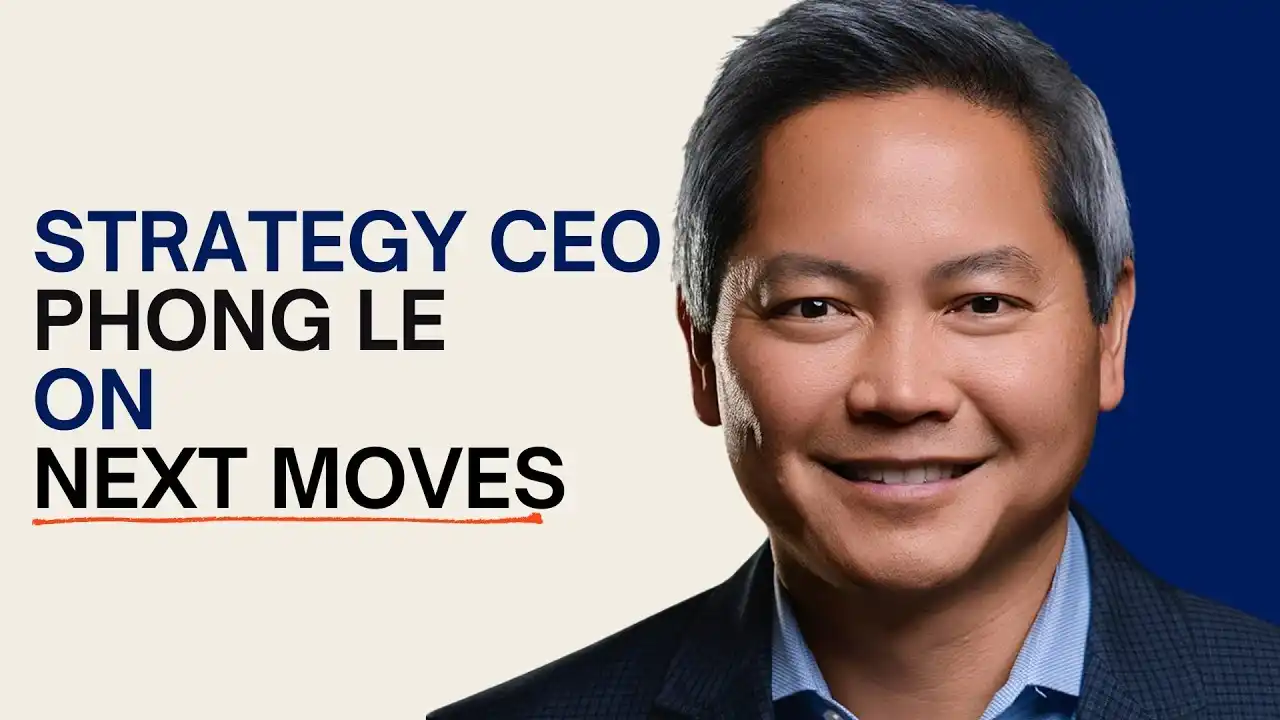
Interview with Strategy CEO: Can STRC Recover After Selling Bitcoin?

Interview with Strategy CEO Phong Le on the recent sale of 32 Bitcoin and its impact. He clarifies the move was a small, strategic action to demonstrate liquidity to debt holders, test internal processes, and prove operational discipline—not a response to fears of a "death spiral" from DeFi protocols leveraging STRC (Strategy's preferred stock product), which he notes holds less than 10% of STRC. Le emphasizes Strategy’s long-term focus as the largest corporate Bitcoin holder, using the adage that markets are a "voting machine" short-term but a "weighing machine" long-term. Decision-making is data-driven, involving the board, complex modeling, and multiple stakeholder considerations, moving beyond a founder-centric model. He outlines various capital options but stresses the strategic importance of "doing nothing" as a valid choice, citing resilience built during the 2022 bear market. Le expresses unwavering belief in Bitcoin's foundational value for global sovereignty and its future role in an AI-driven economy with trillions of autonomous agents. Addressing STRC's current price below its $100 face value, Le explains recent pressure was due to using dollar reserves for bond buybacks. He expects STRC to return to par as reserves are replenished and its semi-monthly dividend payments begin, noting the product is heavily over-collateralized. Finally, Le confirms the company sold Bitcoin the week prior to May 31st, as disclosed in an 8-K filing, leaving prediction market interpretations to others. The overarching philosophy remains "Spread Bitcoin with love," embracing all methods of gaining Bitcoin exposure.

marsbitHá 1h

Interview with Strategy CEO: Can STRC Recover After Selling Bitcoin?

marsbitHá 1h

Trading

Spot
Futuros
活动图片