
随着需求扩大和协议升级,POKT Network有望实现1万亿次中继目标

Odaily星球日报Publicado em 2024-01-17Última atualização em 2024-01-17

Resumo

预计到 2024 年第二季度末将有多达 10 个业务接入。

随着需求扩大和协议升级,POKT Network有望实现1万亿次中继目标

POKT 网络(又名 Pocket Network)已经通过分布在 22 个国家/地区的数千个节点为近 7000 亿个中继提供服务,目标是在下一轮创新周期中达到 1 万亿次 RPC 中继。

 POKT Network (POKT) 于 2017 年开始构建其去中心化物理基础设施网络(DePIN)协议,并于 2020 年部署到主网,比 DePIN 一词的出现还要早两年。 POKT Network (POKT) 提供了一种激励和协作层,可以实现区块链数据在任何应用程序之间进行去中心化传输。

这种架构方式的优势是:

  • 无可比拟的成本优势: POKT Network 的协议费用比中心化替代方案的 RPC 服务成本低 80% 以上;

  • 无与伦比的可扩展性: POKT Network 支持访问 50 多个链,而市场领导者 Alchemy 只支持 8 个链;

  • 强大的基础设施: POKT Network 比中心化提供商更具韧性和稳健性。
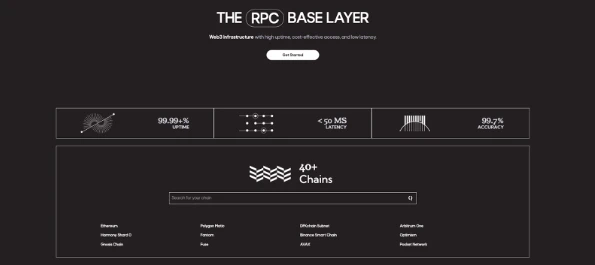
随着需求扩大和协议升级,POKT Network有望实现1万亿次中继目标

经过 3 年主网运营积累的经验,实现了今天(POKT Network)所能提供的性能: 99.99% 的正常运行时间、 99.7% 的中继准确性和小于 50 毫秒的延迟。

所有这些都被纳入一个重大的协议升级中,即以信息论之父 Claude Shannon 的名字命名为「Shannon 升级」,目标是利用 Celestia 模块化区块链技术的最新发展,在 2024 年第二季度末进入主网。

这是建立在 2023 年实现的里程碑的基础上的,随着 POKT Network (POKT)  进入了一个新的成熟阶段,引入了协议收入,将通胀率控制在 5% 以下,关闭了不可持续的需求,并启动了为网络提供新接入点(“网关”)的战略。

这种“网关”策略将在 2024 年进行扩展,使更多的 RPC 业务能够在 POKT Network (POKT)  的 RPC 基础层之上构建,预计到 2024 年第二季度末将有多达 10 个业务接入。这些业务中的每一项都将推动对底层网络的需求,增加协议收入并缩短与 1 万亿次中继目标的距离。

“网关”还支持跨网络的创新。一个网关正在努力引入“webhooks”,这可能会使目前价值 10 亿美元的 RPC 机会增加约 10% ,并且已经在进行升级,使 POKT Network 能够为与任何开源 AI LLM(大型语言模型)交互的应用程序提供数据,这是一个价值 100 亿美元的市场。

“ POKT Network (POKT) 率先扩展了 DePIN 供应侧基础设施和治理的扩展,接下来我们将开启 DePIN 增长新策略。”  POKT Network (POKT)  基金会董事 Dermot O’Riordan 表示。

关于  POKT Network (POKT) 

POKT Network (POKT) (也称为 Pocket Network)是一家领先的 DePIN(去中心化物理基础设施网络),能够以最低的成本、最长的正常运行时间和高度的可扩展性为应用程序提供数据连接。 如今,这些数据连接涉及对分布式远程过程调用 (RPC) 基础设施的多链访问,但未来可能会扩展到服务其他类型的数据连接,包括支持主流社交媒体和开源 AI LLM(大型语言模型)的开源数据库。

POKT DAO 是一个价值驱动、协作、开源社区,负责构建和治理该项目。我们重要的数字基础设施是由用户构建和管理的。

POKT Network 基金会是 POKT DAO 授权的实体,负责执行 POKT Network 的战略愿景。

更多详情可以访问 https://www.pokt.network/ 官网查看。

Leituras Relacionadas

The Entire Internet Hails Noam's Joining, But OpenAI's Loss Bill Just Got Thicker

While the AI community celebrates Noam Shazeer, co-author of the "Attention Is All You Need" paper, joining OpenAI as Head of Architectural Research, the company's audited financials reveal a starkly different reality. In 2025, OpenAI reported $13.07 billion in revenue but a massive $20.92 billion operating loss. Even excluding a one-time accounting charge, the cash burn is severe, with $3.7 billion consumed in Q1 2026 alone. This high-profile hiring occurs against a backdrop of significant internal research talent drain, with key founders and researchers departing as the company's focus shifts from exploratory research to product iteration. Meanwhile, OpenAI's fundamental business model faces a deep crisis. It paid Microsoft $10.59 billion for compute in 2025, while its vast user base of 9 billion weekly actives includes only 50 million paying customers, making growth a direct driver of escalating costs. The article argues Shazeer's recruitment is less about technical necessity and more about crafting a compelling narrative for OpenAI's upcoming IPO, aiming to justify a rumored $1 trillion valuation to future public market investors. It contrasts OpenAI's strategy with Anthropic's reported path to profitability, which relies on a strong enterprise customer base and cost control, rather than star-powered narratives. Ultimately, the piece concludes that while Shazeer's architectural work may take 1-2 years to materialize, OpenAI's financial clock is ticking much faster, with its massive losses undercutting the celebratory headlines.

marsbitHá 1h

The Entire Internet Hails Noam's Joining, But OpenAI's Loss Bill Just Got Thicker

marsbitHá 1h

Market Trend (June 19): US-Iran Deal Drives Out Geopolitical Premium; Chip Stocks Soar to New Highs; Energy Sector Leads Declines

U.S. Market Trends (June 19): U.S.-Iran Deal Eases Tensions, Chip Stocks Soar, Energy Sector Leads Declines. U.S. stocks rallied on Thursday as the signing of a temporary U.S.-Iran deal in Geneva de-escalated Middle East tensions, with Saudi oil tankers transiting the Strait of Hormuz. This geopolitical relief helped markets recover from recent Fed-driven volatility. The S&P 500 rose over 1%, the Nasdaq gained nearly 2%, and the Dow Jones Industrial Average closed at another record high. The Philadelphia Semiconductor Index surged over 6% to a historic peak. Chip stocks were the standout performers. Reports of an Apple-Intel design and foundry deal for certain products, alongside mentions of potential Nvidia and SpaceX collaborations with Intel, propelled the sector. Intel surged ~10.5%, while memory chip makers like Micron also saw significant gains, highlighting sustained confidence in long-term AI capital expenditure. In contrast, the energy sector was the day's sole loser, with the S&P 500 energy sub-index declining as WTI crude fell ~2% to around $74.29/barrel. The reopening of key shipping routes erased prior geopolitical risk premiums. SpaceX extended losses for a second day on news of a potential large bond offering. Market volatility (VIX) dropped sharply, indicating a swift reversal of post-Fed jitters. Treasury yields dipped slightly but remained elevated. The focus now shifts to upcoming economic data, including next week's PCE inflation report and Micron's earnings, which will serve as a key test for the AI trade's durability.

marsbitHá 1h

Market Trend (June 19): US-Iran Deal Drives Out Geopolitical Premium; Chip Stocks Soar to New Highs; Energy Sector Leads Declines

marsbitHá 1h

Trading

Spot
Futuros
活动图片