UK Publishes Regulations for a Digital Securities Sandbox

CoinDeskPolicyPublicado em 2023-12-17Última atualização em 2023-12-18

Resumo

The sandbox will let regulators and companies test solutions, including distributed ledger technology, to tokenize securities.

The U.K. has introduced a new regulation that will allow the country’s financial watchdogs to run a sandbox for tokenized securities, according to a Monday publication.

Sandboxes let companies test new solutions and products under regulatory supervision. With the new regulation – which will take effect on Jan. 8 – the Financial Conduct Authority (FCA) and the Bank of England will be able to operate the Digital Securities Sandbox (DSS), announced earlier this year.

6.6K

Businesses will also get to test distributed ledger technology that powers crypto to digitize or tokenize traditional securities.

Advertisement
Advertisement

Tokenization of real assets is all the rage among financial institutions worldwide, and U.K. regulators are trying to figure out how best to regulate them. Participating in the DSS will subject companies to modified rules in case current ones act as barriers, a document explaining the law said. The regulators themselves will be able to test out things and make rule changes to accommodate developing technologies.

The U.K. is not wasting time using its new powers under the recently passed Financial Services and Markets Act 2023 to establish how it wants to regulate the crypto sector. The DSS regulation is a by-product of the Act.

Edited by Sandali Handagama.

Leituras Relacionadas

Solana Proposals Could Lead to Reduction in Staking Yields to 2.25% and Cut Emissions by $1.5 Billion

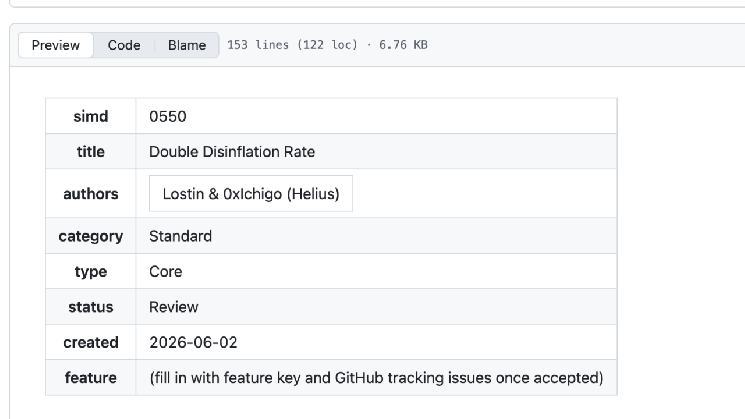
Solana is moving towards a stricter monetary model that could lead to a SOL deficit and significantly reduce staking rewards for holders. Two governance proposals drive these changes. SIMD-550, currently under vote, would double Solana's annual disinflation rate from 15% to 30%, accelerating the timeline to reach a final inflation rate of ~1.5% to the first half of 2029. The second, SIMD-553 (already approved), introduces additional token burning tied to computational units used on the network. Together, these measures could reduce SOL emission by an estimated $1.4-$1.5 billion over six years. The immediate impact would be lower staking yields, potentially falling from the current ~5.25% to approximately 4.34% in year one, 3% in year two, and 2.25% by year three. Analyst Matt Mena from 21Shares suggests inflation should be tied to economic metrics to help offset this decline. The changes also raise concerns for validator economics, with some potentially becoming unprofitable as inflation rewards decrease and voting costs may rise. However, the lower passive yield might push a significant portion of the 67.9% staked SOL into Solana's DeFi ecosystem for activities like lending and trading. This shift could boost network fee revenue to compensate for lower inflation rewards. The proposals aim to trade lower yield today for less dilution tomorrow, betting that network growth and usage will make this a worthwhile trade-off for SOL holders.

cryptonews.ruHá 2h

Solana Proposals Could Lead to Reduction in Staking Yields to 2.25% and Cut Emissions by $1.5 Billion

cryptonews.ruHá 2h

Trading

Spot
活动图片