U.S. Presidential Candidates Chat About Crypto, Target Federal Regulators

CoinDeskPolicyPublicado em 2023-12-11Última atualização em 2023-12-12

Resumo

The three aspiring presidents touched on many of the same pro-crypto points at a Coinbase-linked crypto advocacy event.

Three U.S. presidential candidates vowed to reboot the embattled cryptocurrency ecosystem, a sign the industry's lobbying investments could bear fruit in the coming elections.

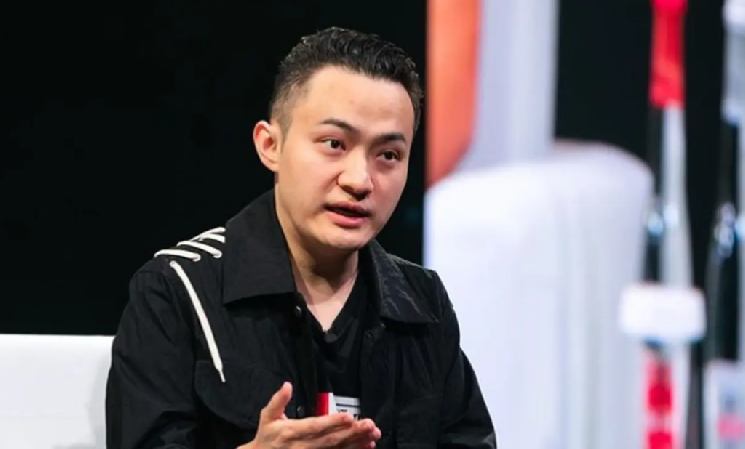
The trio, two Republicans – entrepreneur Vivek Ramaswamy and former Arkansas Gov. Asa Hutchinson – and Democrat Rep. Dean Phillips, promised to ease regulatory pressures on crypto companies during the hours-long event hosted by the Coinbase-backed Stand with Crypto Alliance. While their approaches varied in tone and scope, they shared a common theme: Creating a clear, cohesive regulatory framework for digital assets.

“Whether or not something is a commodity or a security, businesses deserve to know rather than playing regulatory musical chairs,” Ramaswamy said after calling regulatory overreach on the crypto sector a “cancer.”

Advertisement
Advertisement

Each candidate delivered a speech on crypto policymaking and fielded questions from CoinDesk Regulations and Policy Editor Jesse Hamilton. Their comments centered on the creation of a unified regulatory framework, from curbing federal regulators’ powers to educating policymakers about crypto and protecting coders from criminal charges. The consonance between those proposals contrasted with the political dissonance that has stymied recent efforts on Capitol Hill to create a regulatory rulebook for the industry.

Dunking on the SEC, Big Banks

While the speakers’ comments were often constructive, they also degenerated, at times, into shameless self-promoting spiels. All three blasted the Securities Exchange Commission's crackdown on crypto exchanges including Coinbase, Kraken and Binance, and called for the agency’s powers to be curtailed.

“We want to see an SEC that… doesn’t treat everybody they're regulating as an adversary,” Hutchinson said as he called for an end to regulators’ “guidance-by-enforcement” strategies.

VolumeMuteUnmute
'There's More Transparency' in Crypto Than TradFi: Former Arkansas Gov. Hutchinson
0 seconds of 1 minute, 46 secondsVolume 0%
Press shift question mark to access a list of keyboard shortcuts
Keyboard ShortcutsEnabledDisabled
Play/PauseSPACE
Increase Volume
Decrease Volume
Seek Forward
Seek Backward
Captions On/Offc
Fullscreen/Exit Fullscreenf
Mute/Unmutem
Seek %0-9
Settings
OffEnglish
Font Color
White
Font Opacity
100%
Font Size
100%
Font Family
Arial
Character Edge
None
Background Color
Black
Background Opacity
50%
Window Color
Black
Window Opacity
0%
Reset
WhiteBlackRedGreenBlueYellowMagentaCyan
100%75%50%25%
200%175%150%125%100%75%50%
ArialCourierGeorgiaImpactLucida ConsoleTahomaTimes New RomanTrebuchet MSVerdana
NoneRaisedDepressedUniformDrop Shadow
WhiteBlackRedGreenBlueYellowMagentaCyan
100%75%50%25%0%
WhiteBlackRedGreenBlueYellowMagentaCyan
100%75%50%25%0%
00:25
01:21
01:46
 

Ramaswamy vowed to reduce the agency’s workforce as part of his goal to eliminate 75% of bureaucratic jobs, noting that the third U.S. president, Thomas Jefferson, who died nearly 200 years ago, would be “turning in his grave” over the agency’s actions toward crypto, a technology that was invented roughly 15 years ago.

Advertisement
Advertisement

None of the participants are leading in their parties' primary election polls, meaning they probably won't have the powers of the presidency at their disposal to promote crypto.

Later, the hopefuls discussed how blockchain technology could disrupt traditional finance (TradFi), laying the groundwork for a fairer, trustless financial system.

“There's more transparency actually in the crypto market than there is in banks and traditional finance,” Hutchinson said.

Crypto “eliminates so many hands in the pot that take little bits of peoples’ money ... at a time when life is already so unaffordable,” said Phillips.

VolumeMuteUnmute
Rep. Dean Phillips Says Crypto and AI Innovation Should Not Be Stifled
0 seconds of 1 minute, 46 secondsVolume 0%
Press shift question mark to access a list of keyboard shortcuts
Keyboard ShortcutsEnabledDisabled
Play/PauseSPACE
Increase Volume
Decrease Volume
Seek Forward
Seek Backward
Captions On/Offc
Fullscreen/Exit Fullscreenf
Mute/Unmutem
Seek %0-9
Settings
OffEnglish
Font Color
White
Font Opacity
100%
Font Size
100%
Font Family
Arial
Character Edge
None
Background Color
Black
Background Opacity
50%
Window Color
Black
Window Opacity
0%
Reset
WhiteBlackRedGreenBlueYellowMagentaCyan
100%75%50%25%
200%175%150%125%100%75%50%
ArialCourierGeorgiaImpactLucida ConsoleTahomaTimes New RomanTrebuchet MSVerdana
NoneRaisedDepressedUniformDrop Shadow
WhiteBlackRedGreenBlueYellowMagentaCyan
100%75%50%25%0%
WhiteBlackRedGreenBlueYellowMagentaCyan
100%75%50%25%0%
00:25
01:21
01:46
 

Cut to the crypto

While the speakers appeared to be aware of the crypto industry’s unique and numerous challenges, they sometimes lapsed into parroting tired industry lines (“crypto needs clarity”) while skirting opportunities to engage on some of the finer points of the crypto regulatory debate.

Edited by Sheldon Reback.

Leituras Relacionadas

Just now, DeepSeek V4 updates with DSpark, improving inference speed by 80%

DeepSeek has updated its DeepSeek V4 model with the DSpark speculative decoding framework, achieving a significant 60-85% speedup in generation for Flash models and 57-78% for Pro models while maintaining the same overall throughput. This engineering-focused update, rather than a core architectural change, introduces DSpark to address latency and throughput bottlenecks in high-concurrency production environments. DSpark combines high-throughput parallel generation with adaptive load-aware verification. Its key innovations include a semi-autoregressive generation architecture to model dependencies within token blocks and a hardware-aware confidence-scheduled verification system. This system uses a confidence head to predict token acceptance probabilities, allowing it to dynamically optimize verification length per request and allocate compute only to tokens with the highest expected payoff. The asynchronous scheduler is designed for real-world deployment, ensuring zero-overhead scheduling and continuous CUDA graph replay while preserving the target model's output distribution. In tests across mathematical reasoning, code generation, and daily dialogue, DSpark outperformed state-of-the-art models like Eagle3 and DFlash, increasing average acceptance length by 26.7%-30.9% and 16.3%-18.4% respectively on Qwen3 target models. DeepSeek also open-sourced DeepSpec, a full-stack codebase for training and evaluating speculative decoding draft models, providing a standardized toolkit that includes data preparation tools, model implementations, training code, and evaluation scripts.

marsbitHá 7h

Just now, DeepSeek V4 updates with DSpark, improving inference speed by 80%

marsbitHá 7h

Trading

Spot
活动图片