U.S. Federal Reserve's Barr Holds Line on Central Bank Needing Stablecoin Powers

CoinDeskPolicyPublicado em 2023-11-06Última atualização em 2023-11-07

Resumo

Vice Chairman Michael Barr argued that the Fed needs regulatory and enforcement authority over stablecoin issuers – a point of contention in the debate over legislation.

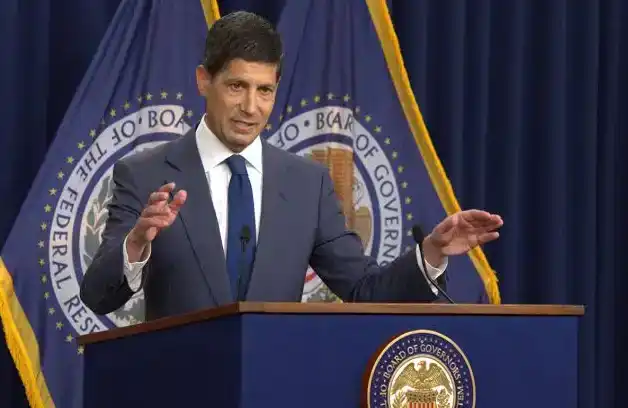
The U.S. Federal Reserve needs to regulate and enforce the law against stablecoin issuers, said Federal Reserve Vice Chairman for Supervision Michael Barr, making the federal-oversight argument that has been the major sticking point as the U.S. House of Representatives debates legislation.

Republican lawmakers have leaned into a state-oversight route for companies issuing stablecoins – the steady tokens whose value is pegged to a less volatile asset such as the dollar – and Democrats have favored a dominant role for the Fed. Barr is decidedly in the latter camp.

"We need a strong federal framework," he said Tuesday at the DC Fintech Week event in Washington. "They're creating a form of private money, and private money needs to be well-regulated."

Lawmakers have moved a stablecoin bill through the House Financial Services Committee, winning some support from a handful of Democrats on that panel. The regulatory effort would still need to pass a floor vote in the House, though possibly attached to another must-pass spending bill. Then it needs Senate approval, which has so far been harder to come by.

Barr also addressed the idea of a central bank digital currency (CBDC) in the U.S., saying the Fed is still entirely in the research phase.

"We haven't made a decision on whether it would be a good idea," he said. And he repeated the recent promises from the central bank that it won't move on a digital dollar unless the White House and Congress "clearly authorize" establishing such a thing.

10

Leituras Relacionadas

Preview of Warsh's Friday Speech: What Is the Market Focusing On?

Fed Chair Kevin Warsh is set to deliver his first Jackson Hole speech this Friday, a key event for markets to gauge his policy framework. The focus is on whether he will continue reducing forward guidance, thereby allowing markets to form their own rate expectations. Analyst Michael J. Kramer suggests a controversial interpretation: Warsh may tolerate a steeper yield curve, where rising long-term yields and bond volatility could tighten financial conditions without an immediate policy rate hike. This could occur through higher mortgage and corporate funding costs and lower equity valuations. Kramer points to the rising term premium on 10-year Treasuries, which, if reverting to pre-QE averages, could push yields above 5% alongside a higher assumed neutral rate. Concurrently, reduced forward guidance could structurally increase bond market volatility (as measured by the MOVE index), further tightening conditions. In this framework, long-end tightening could precede potential short-end rate cuts if it successfully cools demand and inflation. Risks include loss of Fed credibility and uncontrollable financial stress from excessive rate rises. Additionally, Japan's monetary policy normalization, with rising inflation expectations and short-term rate projections, may add upward pressure on global long-term yields. Friday's speech will be crucial for discerning whether Warsh views higher long-end yields as a usable policy tool or an uncontrolled market risk, and whether the "let the long-end do the tightening" narrative holds.

marsbitHá 2m

Preview of Warsh's Friday Speech: What Is the Market Focusing On?

marsbitHá 2m

Darknet Leader Indicates Readiness to Cooperate as $44 Million Bitcoin Kidnapping Case Develops

Tomas Jiríkovský, the main suspect in a major Czech Republic cryptocurrency money laundering case, has indicated a potential willingness to cooperate with authorities. This follows a custody hearing at the Brno City Court where judge Ivana Otrubová ruled to keep him detained. Jiríkovský, a programmer linked to darknet activities and money laundering, had previously refused to speak with investigators. Prosecutors now state he has changed his position regarding darknet marketplace operations and criminal proceeds laundering. The court ordered his continued detention citing a flight risk and the likelihood he still controls some illicit crypto funds. Prosecutors are seeking a sentence of up to 20 years and asset confiscation. Central to the scandal is Jiríkovský's controversial $44 million Bitcoin donation to the Czech Ministry of Justice, which he made in exchange for state assistance in unlocking a confiscated crypto wallet. Former Justice Minister Pavel Blažek accepted the donation, but investigators allege it was a scheme to legitimize illegal darknet proceeds. The fallout led to Blažek's resignation and criminal charges against several high-ranking officials for aiding money laundering and breach of duty. With tens of thousands of pages of evidence, the trial is expected to be lengthy as authorities work to uncover the full scale of the operation.

cryptonews.ruHá 4m

Darknet Leader Indicates Readiness to Cooperate as $44 Million Bitcoin Kidnapping Case Develops

cryptonews.ruHá 4m

Trading

Spot
活动图片