Sam Bankman-Fried Lambasted by Prosecutor Right Before Jurors Begin Deciding His Fate: 'He Thought He Could Fool the World'

CoinDeskPolicyPublicado em 2023-11-01Última atualização em 2023-11-02

Resumo

A verdict in the SBF trial could come before the end of Thursday – on the first anniversary of the CoinDesk scoop that caused his empire to crumble.

Twelve New Yorkers will start deliberating FTX founder Sam Bankman-Fried's fate on Thursday, and a verdict could come later in the day – the first anniversary, coincidentally, of the CoinDesk scoop that spurred former crypto mogul's downfall.

Promising customers that their "assets are safe" and then taking that money and spending it on yourself and your companies, "is not a 'reasonable businesses decision,'" Assistant U.S. Attorney Danielle Sassoon said of Bankman-Fried's behavior during the government's final appeal to jurors on Thursday – invoking a phrase used by Bankman-Fried's defense attorney in his closing argument a day earlier. "That is fraud."

10

The jurors will soon be dispatched to do their duty – reviewing the seven fraud and conspiracy charges Bankman-Fried faces – after Judge Lewis Kaplan finishes reading instructions to them. The government's core argument is that Bankman-Fired misused billions of dollars worth of funds belonging to users of his FTX crypto exchange, siphoning them to businesses, political candidates and real estate ventures via Alameda Research, his crypto trading shop.

A D V E R T I S E M E N T

Bankman-Fried broke a "sacred, unbreakable rule" when dealing with FTX customer money, Sassoon told the jury as she wrapped up the U.S. Department of Justice's case against the disgraced crypto founder: "Your money is your own," she said. "It's not for others to use."

Sassoon's rebuttal was the last time the jury in Bankman-Fried's trial will hear from lawyers before they begin their deliberations.

She used her final remarks to jurors to poke holes in the closing statement of defense attorney Mark Cohen, who appealed to the jury on Wednesday to consider whether a real fraudster would agree to an interview on "Good Morning America" just days after he was accused of committing crimes.

Bankman-Fried's post-collapse media blitz "was part of an effort to present himself as reliable," Sassoon said.

SingleQuoteLightGreenSingleQuoteLightGreen
He still thought he could fool the world.
SingleQuoteLightGreenSingleQuoteLightGreen
Assistant U.S. Attorney Danielle Sassoon

As for why the FTX founder continued to pay back lenders in his crypto empire's final days – rather than hoard customer funds for himself – the prosecutor said that Bankman-Fried didn't plan to "run with the money" and risk being exposed. Even after Nov. 7, the day she said FTX collapsed, "he still thought he could fool the world," she said.

A D V E R T I S E M E N T

The defense argument that most incensed Sassoon, according to her, was Cohen's statement to the jury that the government's star witnesses – top FTX and Alameda executives Caroline Ellison, Gary Wang and Nishad Singh – were incentivized to lie when testifying.

"That's outrageous," Sassoon said loudly, calling it a "desperate and unsupported accusation."

Again and again, she told the jury that Bankman-Fried's testimony and the defense's arguments don't make sense. "You know that it's a made-up story," she said. "You should reject it."

Regarding perhaps the defense's favorite argument, that FTX didn't have a risk manager and thus Bankman-Fried didn't know what he was getting himself into, Sassoon said it proved the opposite of what defense  lawyers claimed: "That's not a defense, it was a strategy."

"The defendant knew what he was doing was wrong, and that's why he didn't hire a chief risk officer," she told the jury.

"Don't fall for his lies," she concluded her statement. "Find him guilty."

Nikhilesh De contributed reporting.

Edited by Nick Baker.

Leituras Relacionadas

Didier Zheng Answers: Will MicroStrategy Enter a Death Spiral? How Will the Macro Trend Unfold in the Second Half of the Year?

In the latest WuShuo Uncensored podcast, investor Didier Zheng analyzes recent market trends. He argues that Bitcoin's recent decline is primarily driven by market anticipation of MicroStrategy potentially selling small amounts of Bitcoin regularly to cover cash flow for its growing priority shares and debt, rather than macro factors or ETF outflows alone. This creates a new dynamic of expected continuous selling pressure. Didier views Token as the new form of labor in the AI era, replacing human roles in execution and driving the ongoing rally in U.S. stocks within the AI supply chain (semiconductors, data centers). This shift is seen as a long-term structural change, boosting corporate profitability. He notes that crypto exchanges are naturally expanding into U.S. stocks and real-world assets due to the scarcity of valuable native crypto assets beyond Bitcoin and major protocols. For traders, the transition may not require a drastic change in strategy, as similar speculative and fundamental assets exist in both markets. The analyst believes the native crypto altcoin rally is likely over, severely damaged by the liquidity destruction from the "1011" crash event. Liquidity has migrated to deeper markets like U.S. equities. For the macro outlook, Didier expresses increased caution for H2 2024 due to potential market pressure from mega-IPOs (e.g., SpaceX) and the U.S. midterm elections. A Democratic sweep could bring stricter regulation for Web3 and AI. Long-term, he remains optimistic about the convergence of AI and blockchain, enabling a more automated, machine-driven economy, but expects a shift towards a more mature, institutional phase for the crypto industry.

marsbitHá 7m

Didier Zheng Answers: Will MicroStrategy Enter a Death Spiral? How Will the Macro Trend Unfold in the Second Half of the Year?

marsbitHá 7m

Strive CEO: US Bond Market Approaching a Critical Point, Bitcoin's "Home Run Moment" Taking Shape

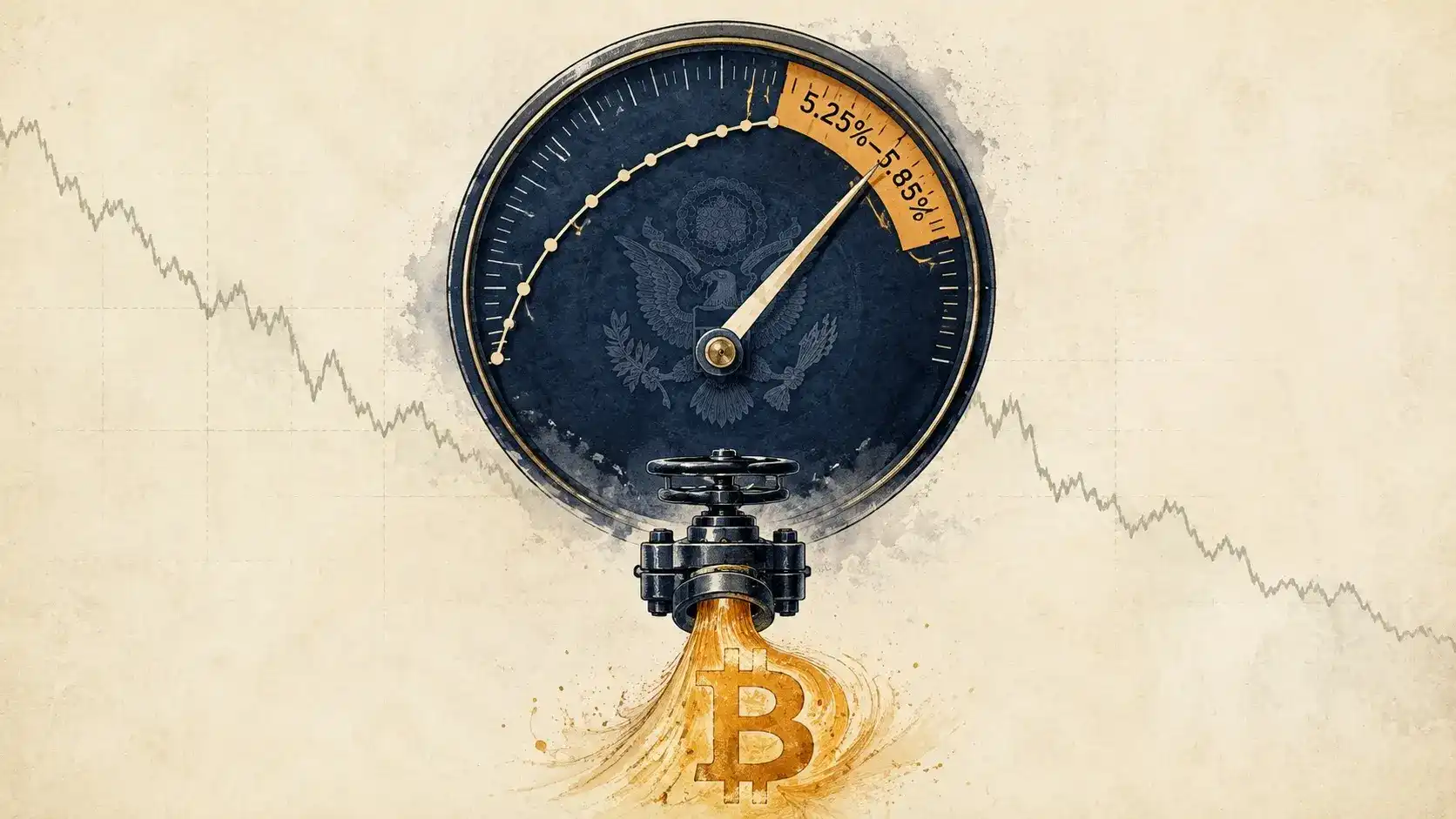
The CEO of Strive argues that the U.S. Treasury market is approaching a critical juncture, setting the stage for a major opportunity in Bitcoin. He highlights that unsustainable U.S. fiscal deficits and expanding entitlement programs are creating fundamental pressure for higher long-term bond yields. However, the political system is unwilling to enact necessary fiscal discipline. Consequently, as the 10-year Treasury yield enters a key resistance zone of 5.25%–5.85%, the narrative will shift to a potential bond market crisis. This will force policymakers (the Treasury or Federal Reserve) to intervene aggressively to suppress yields through tools like large-scale bond buybacks or balance sheet expansion. Since the underlying fiscal imbalance remains unresolved, the adjustment pressure will be transferred to the U.S. dollar, making it the "pressure release valve" of the system. A trend decline in the dollar, potentially to multi-decade lows, would create a historically unique macro environment for Bitcoin. Bitcoin stands to benefit as a scarce, non-sovereign monetary asset, especially as AI erodes the scarcity of traditional corporate moats. The author concludes that if bond market stress causes a Bitcoin dip, it would be a major buying opportunity; if not, having exposure is still crucial. The overall expectation is that the market is still underestimating Bitcoin's long-term upside potential in this unfolding macro shift.

marsbitHá 16m

Strive CEO: US Bond Market Approaching a Critical Point, Bitcoin's "Home Run Moment" Taking Shape

marsbitHá 16m

Trading

Spot
活动图片