High APY and more: Why PrimeEarn High-Yield Tuesday sold out in mere minutes

Huobi ResearchPublicado em 2022-04-19Última atualização em 2022-04-19

Resumo

Tense Russia and Ukraine relations, soaring European commodities prices, inflation in Denmark hitting the highest level in nearly 40 years, and the price of Bitcoin falling below US$40,000 only to rebound.

Tense Russia and Ukraine relations, soaring European commodities prices, inflation in Denmark hitting the highest level in nearly 40 years, and the price of Bitcoin falling below US$40,000 only to rebound. Volatility is the keyword of the day, making it hard for even a crypto veteran to judge where the cryptocurrency market is headed and when. One careless move could spell doom and the erasure of all previous profits.

Everyone with knowledge of financial management understands that time is money. And this begs the question: are there no safe and risk-free ways to gain profits amid such volatility? Is the crypto space too unstable to remain in?

Recently, Huobi Global launched an event called PrimeEarn High-yield Tuesday, which focuses on offering high APY for fixed deposit products for mainstream assets. The previous events saw products sold out within a few days or even minutes. Taking its latest event as an example, ETH and BTC fixed deposit products were sold out within 1 minute and USDT fixed deposits were snapped up in 1.5 minutes. Shocking as it appears, there are good reasons behind PrimeEarn’s popularity with the masses.

Let's start by taking a look at some of the cryptocurrency financial products on the market.

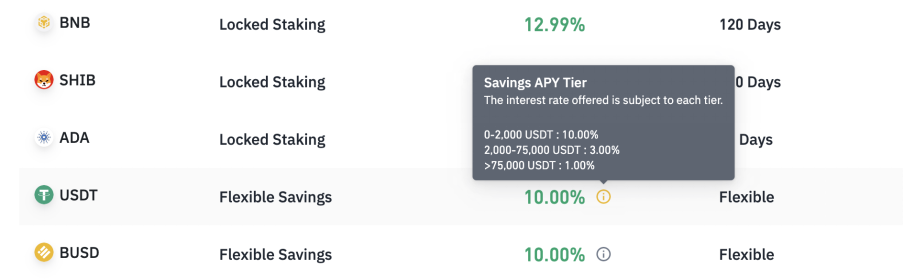
Binance: Most of the deposit products offered for mainstream assets are flexible deposits with a tired APY set. Taking USDT as an example, the APY for the amount exceeding the first 2,000 USDT is 3%, and APY for the amount exceeding the first 75,000 USDT is only 1%, which deems the deposit product rather unattractive to investors who wish to deposit large amounts of digital assets.
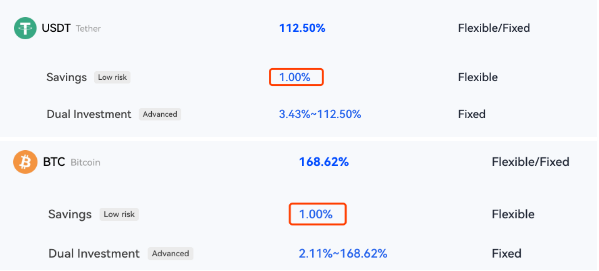
OKX: The APY for depositing mainstream assets BTC, USDT, ETH can go as low as 1%, and all are flexible deposit products.
Let's now delve into how the team at Huobi PrimeEarn caters to investor needs:

1. Going mainstream

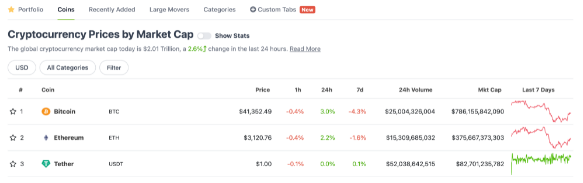
Most financial management products in the crypto market are flexible deposit products for alt-coins, and there are few deposit products for the top mainstream assets by market value. In order to bridge this market gap, Huobi launched the PrimeEarn platform last year, offering investors the opportunity to deposit the most popular mainstream assets such as BTC, ETH, and USDT and gain attractive APYs in return.
2. Enabling investors to profit

Financial management is all about making money and PrimeEarn is gaining popularity because of its ability to bring in risk-free profits for investors. Huobi’s PrimeEarn High-Yield Tuesday enables investors to gain up to 40% APY for depositing mainstream assets such as BTC, ETH and USDT for 14 days, the highest available rate in the market.

3. What you see is what you can earn

In contrast to some competing platforms which set tiered APY for deposit products, PrimeEarn sets no such condition — with no tiered APY, investors truly enjoy returns as advertised.

4. Reduce loss from idle funds

As we know, the longer a product’s deposit period, the higher the expected rate of return. For flexible deposits, the APYs offered can be relatively low, and time is taken up when funds are transferred from account to account, deposited or withdrawn, increasing idle time.

However, the long-term deposit period offered by Huobi PrimeEarn means income loss arising from idle funds can be effectively avoided. What’s more, the APYs for fixed products are usually higher than those of flexible products.

A platform that truly aims to protect investors’ well-being and cater to their needs is bound to earn investor loyalty. PrimeEarn meets all the above criteria and is now highly sought after by discerning users.

Latest High-Yield Tuesday Event

Event 1: Team up to win 40% APY for USDT Deposits

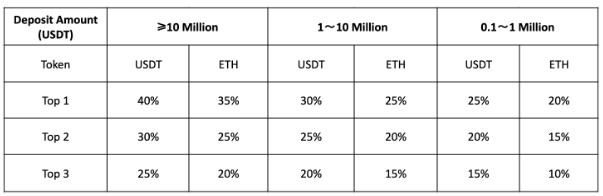
Users will form teams and each team will be ranked based on its total deposit amount. There are three tiers based on the deposit amount, and the top three teams will be selected from each tier to enjoy the highest APY offered. Click here to register and form teams with others.
Event 2: Enjoy 20% APY for USDT deposits

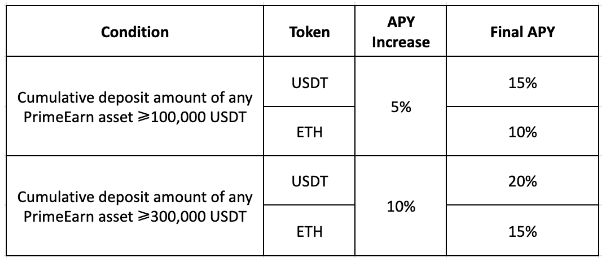
Users can deposit a certain amount of PrimeEarn assets to win APY booster coupons and enjoy APY up to 20% for USDT deposits and 15% for ETH deposits.
This Easter will see the launch of a limited-time, high APY deposit event that allows users to attain APYs of more than 600%. Lucky draw opportunities and APY booster coupons await. Watch this space.


Leituras Relacionadas

From Ethereum to AI's 'CROPS': What Exactly is This Set of 'Slow Variables' That Vitalik Repeatedly Emphasizes?

In recent discussions, Vitalik Buterin has frequently emphasized the concept of "CROPS," a framework defining core values for Ethereum's development. CROPS stands for Censorship Resistance, Capture Resistance, Open Source, Privacy, and Security. Initially outlined in the Ethereum Foundation's "EF Mandate," it represents a commitment to user sovereignty, ensuring that the network resists external control, remains open, protects privacy, and prioritizes security. The relevance of CROPS extends beyond Ethereum's foundational principles, becoming crucial in the context of AI integration. As AI agents begin handling wallet operations and automated transactions, the risk increases that users may cede control over their digital assets, privacy, and intentions to centralized AI service providers. A "CROPS AI" would therefore emphasize local execution where possible, privacy-preserving remote model calls (e.g., using zero-knowledge proofs), and transparent, verifiable processes to maintain user agency. Vitalik highlights a significant convergence between "CROPS Ethereum access layer" and "CROPS AI." Both address the same fundamental challenge: how users can access powerful services—be it blockchain data via RPCs or AI models—without exposing sensitive information or relinquishing ultimate control. This intersection points toward a future digital entry point that is more private, secure, and user-controlled. Ultimately, CROPS is not merely an abstract ideal but a practical guidepost. It steers development—from protocol resilience and wallet design to AI agent safety—towards a future where users retain self-sovereignty even as digital systems grow more complex and powerful. In an era of accelerating AI adoption, these "slow variables" of censorship resistance, openness, privacy, and security may define Ethereum's enduring value.

marsbitHá 7m

From Ethereum to AI's 'CROPS': What Exactly is This Set of 'Slow Variables' That Vitalik Repeatedly Emphasizes?

marsbitHá 7m

Silicon Valley 'Startup Guru' Steve Hoffman: Web3 + AI Could Be a Trap

Silicon Valley investor and "Godfather of Startups" Steve Hoffman warns that combining Web3 with AI is likely a trap, not a promising venture. In an interview, Hoffman argues that while AI is a foundational technology touching all industries, Web3 adds complexity, friction, and regulatory risk without solving mainstream consumer or business needs. He advises founders to focus on deep, specialized applications where startups can out-iterate giants, rather than on generic features easily replicated by large tech companies. Hoffman observes that Silicon Valley will lead foundational AI research, while China excels at rapid, large-scale application and commercialization, particularly in robotics. He stresses that AI-driven autonomous agents capable of collaborative, multi-step tasks are 2-4 years away, which will cause significant job displacement. The solution is not to slow AI but to redesign business models around human-AI collaboration and reform social systems like education and retraining. For startups, Hoffman recommends focusing on vertical, expertise-heavy domains to build defensibility. He sees major opportunities in AI fraud detection and cybersecurity. Key founder mindsets include systemic thinking over feature-focus, relentless customer centricity, building adaptive teams, and deeply understanding AI's capabilities and limits. Hoffman is also leading a non-profit initiative to establish university centers aimed at training future leaders in responsible, human-value-aligned AI innovation.

marsbitHá 1h

Silicon Valley 'Startup Guru' Steve Hoffman: Web3 + AI Could Be a Trap

marsbitHá 1h

Token Inefficient, Economy Tokenless

The article "Tokens Aren't Economical, Economics Aren't Tokenized" analyzes a pivotal shift in the AI industry from a technology-driven narrative to one dominated by capital efficiency. It highlights two concurrent trends: a severe capital shortage due to the exorbitant and recurring costs of compute (e.g., OpenAI's high burn rate) and a wave of corporate spin-offs where major tech companies are separating their AI units (like Kuaishou's Kling and Baidu's Kunlunxin). The core argument is that AI's "anti-internet" business model, where user growth increases costs rather than profits, has created a disconnect between high valuations and actual cash flow. Spin-offs address this by allowing AI assets to be valued independently. Within a parent company, they are seen as cost centers, but as standalone entities, they are priced based on their growth potential and scarcity in the primary market, leading to massive valuation premiums (e.g., Kling's estimated value tripling post-spin-off). The industry is at an inflection point, moving from "model worship" to "value realization." The competition is evolving from a pure compute (GPU) race to a broader focus on systemic efficiency and full-stack engineering (involving CPUs and orchestration) to achieve viable commercialization. The year 2026 is framed as a critical moment where the industry must definitively answer how to economically translate AI capability into tangible business value, reshaping the sector's future power structure.

marsbitHá 1h

Token Inefficient, Economy Tokenless

marsbitHá 1h

Crossing the 'Memory Wall': The Wafer-Level Revolution and Computing Power Routes in the AI Inference Era

In 2026, a historic shift occurred in AI as major cloud providers' inference spending surpassed training spending for the first time, signaling a move from "building large models" to "using large models." This shifts the core challenge from computing power to the "memory wall"—the bottleneck of data movement (model weights, activations, KV Cache) between external DRAM and processors, where energy and latency from data transfer far exceed computation itself. Companies like Nvidia face GPU idle time due to bandwidth limits. In contrast, Cerebras Systems adopts a radical "wafer-scale" approach with its Wafer-Scale Engine (WSE). Instead of cutting a silicon wafer into many chips, Cerebras uses almost the entire wafer as one massive chip (WSE-3). This design provides 44GB of on-chip SRAM, delivering memory bandwidth thousands of times higher than traditional HBM (e.g., 21 PB/s vs. Nvidia B200). For LLM inference, weights are streamed layer-by-layer from external MemoryX storage to the chip, avoiding HBM bottlenecks. This results in token generation speeds 1.5–5 times faster than Nvidia's B200 in some models and significant advantages in first-token latency and long-context tasks. Additionally, Cerebras's architecture offers much lower interconnect power consumption (0.15 pJ/bit vs. GPU's ~10 pJ/bit). However, Cerebras faces challenges: SRAM scaling has slowed with advanced nodes, limiting future capacity gains; the chip requires specialized liquid cooling and custom software stacks; and its external I/O bandwidth (150 GB/s) is low compared to NVLink, hindering multi-system scaling for very large models. Competition is intensifying. Major players are pursuing three paths: 1) Developing proprietary inference ASICs (e.g., Google TPU, Microsoft Maia), 2) Leveraging advanced packaging (e.g., TSMC's SoW) to democratize wafer-scale-like integration, potentially eroding Cerebras's process advantage within a few years, and 3) Exploring optical interconnects for ultimate bandwidth. Commercially, Cerebras is transitioning from a hardware vendor to a service provider, facing the immense challenge of building high-power, specialized data centers to meet large contracts (e.g., 250MW/year from 2026–2028). In conclusion, the AI inference era presents a fundamental architectural trade-off. Cerebras opts for extreme physical optimization for low-latency, single-task performance, while Nvidia prioritizes versatility and massive cluster throughput. The path forward remains uncertain, with technology and business models still evolving in the race toward advanced AI.

marsbitHá 1h

Crossing the 'Memory Wall': The Wafer-Level Revolution and Computing Power Routes in the AI Inference Era

marsbitHá 1h

Trading

Spot
Futuros
活动图片